

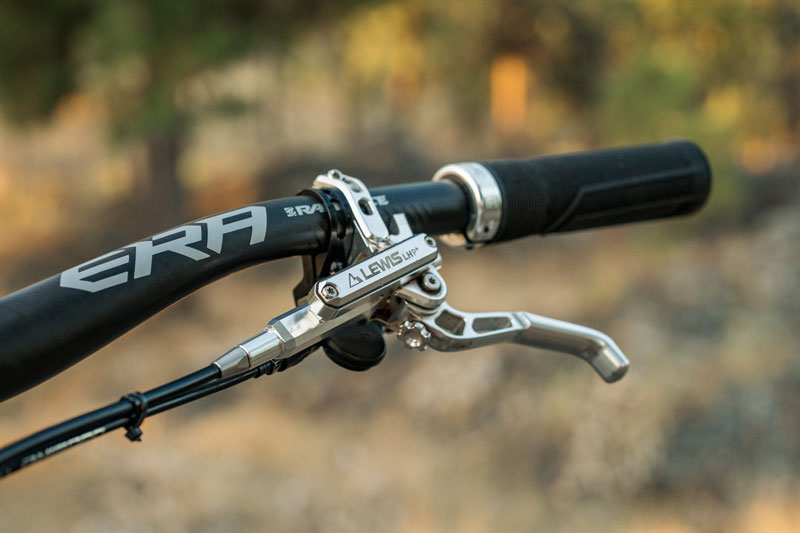
ABOUT THE LEWIS LHP+ U4 BRAKES
The Lewis LHP+ U4 hydraulic disk brake is aimed at DH and Enduro riders but could really be a great addition to any mountain bike or eMTB. They are made from 7075 T6 Aluminum, with four 17mm stainless steel pistons that feature an additional insulation layer to help prevent heat buildup. For further heat dissipation, the LHP+ U4 brakes come with cooling fins pre-installed. These fins are sandwiched between the two halves of the calipers and are not easily removable.
Lewis uses mineral oil for these brakes but does not specify what oil is suited. Most brake-specific mineral oils should be ok, but make sure not to use the new High Viscosity Shimano oil as that is specific to Shimano’s new XT and XTR brakes.
One of the standout features of the Lewis LHP+ levers is how adjustable they are. You can tweak reach and bite points, and there’s also a unique leverage ratio adjustment. While the reach adjustment is tool free, both the bite point and leverage adjustments require an Allen key. The progression adjustment allows you to choose from a more linear lever pull through to a more progressive feel. The linear setting gives you less free stroke in the lever but slightly reduces the overall power the brakes put out. This is great for riders that are looking for maximum modulation. On the other hand, the progressive setting allows for a fair amount of free stroke, but a much sharper distinct bite point. This mechanism changes the angle at which the piston interacts with the lever body, producing a significant change in feel at the lever. The levers rotate on a bearing pressed into both the top and bottom of the lever body.
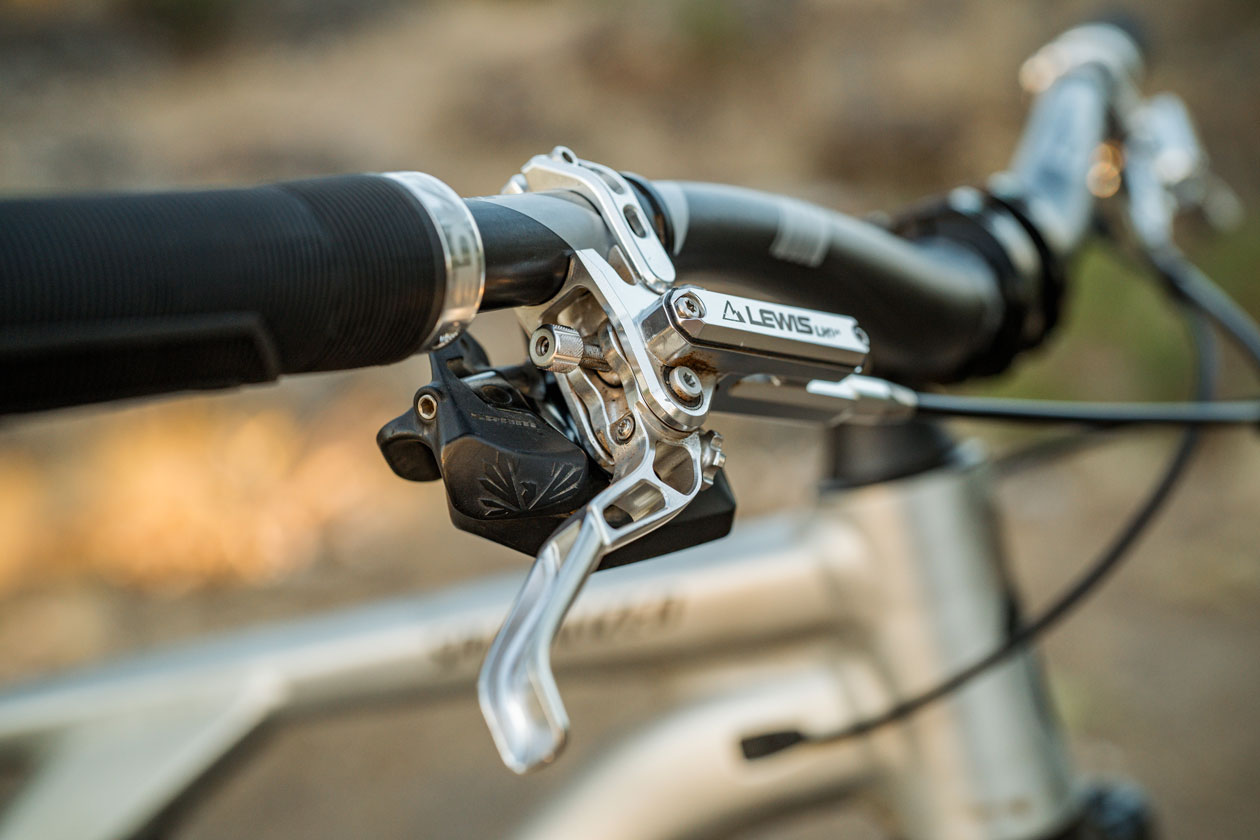
The Anti-Loss hose ends work as they should and make it easy to swap the brakes between frames or between sides. The barb and olive are re-useable, which is cool to see. Lewis has clear instructional videos on their YouTube channel showing how to remove and re-install these. They do include an extra set in the box which is helpful if you yank a barb out and lose it into the garage floor abyss like I did.
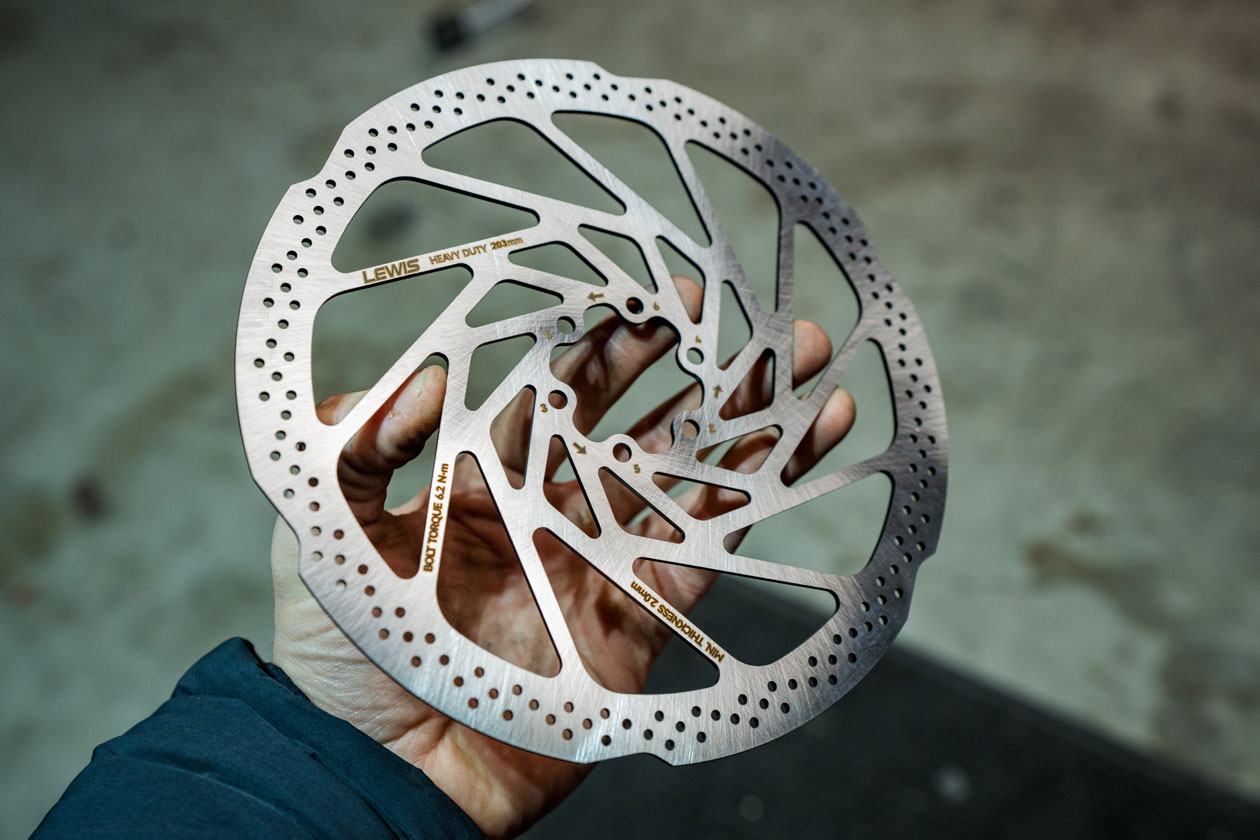
Weight-wise, the system is surprisingly light: the lever is 98g, the caliper 162g (without pads). The brakes work with sintered or semi-metallic pads in the Hope V4 pad standard. They come with braided T200 oil hoses (90cm front, 160cm rear), but rotors aren’t included in the $459 price. Lewis recommends 2.3mm rotors or anything between 2.0–2.5mm thick, and they’ll run with 180mm to 230mm rotors happily.
Lewis offers a variety of branded parts, including brake adaptors and match maker kits for SRAM accessories. We suggest ordering their bleed kit at the time of purchase to make sure you have everything needed for installation, as the bleed port does not work with either Shimano or TRP fittings. Older SRAM fittings will work, but it is best not to re-use a DOT bleed kit with mineral oil to avoid contamination. Their travel bleed funnel is slick. Also, if you are wanting to save a very small amount of weight or add some more bling, they offer a Titanium bolt upgrade for $100. They also offer a full Titanium version that includes Titanium pistons and bolts for $509, this nets a weight savings of 39g.
THE DIRT
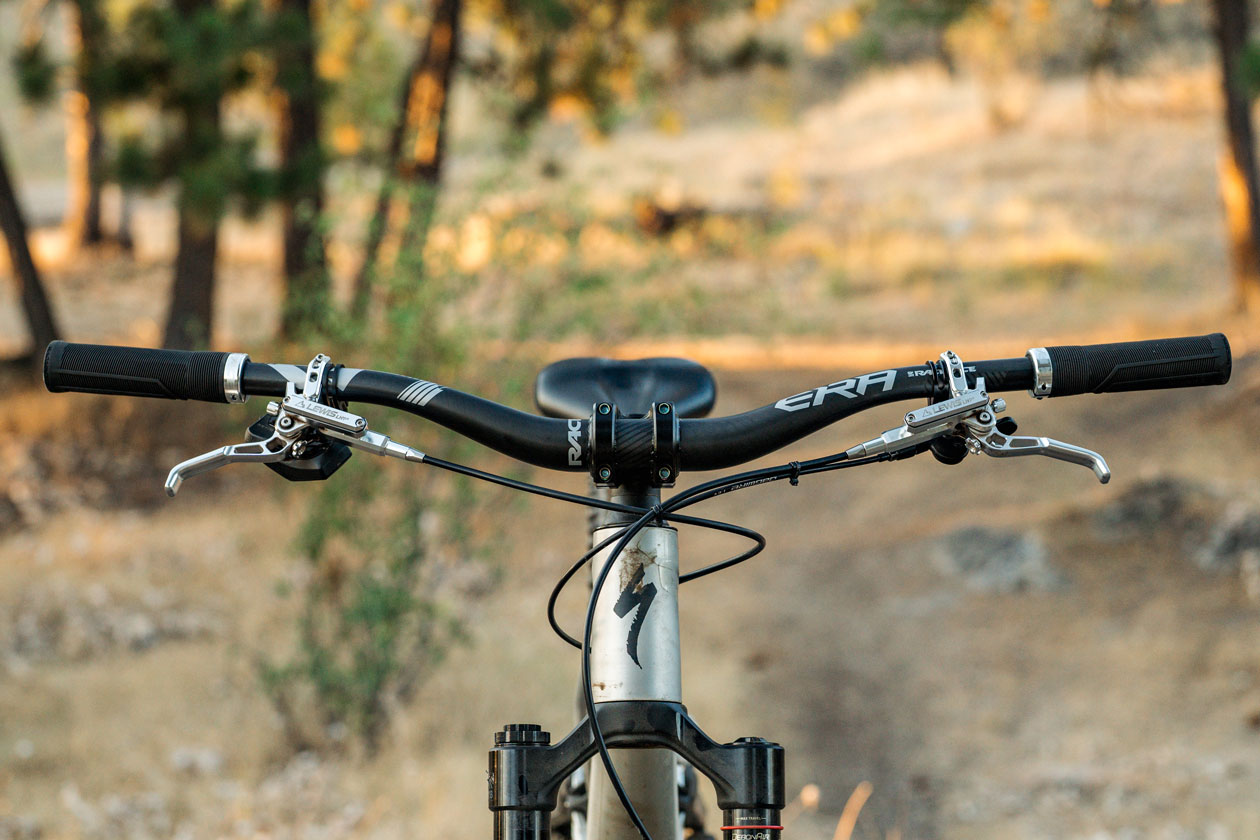
INSTALL AND BLEED | The Lewis LHP+ U4 brakes arrived pre-bled and ready to go. I planned to have these on the bike for quite a while, so I opted to shorten the hoses, which involved removing the barb/olive combo and cutting the hose. Had I read the directions first, I would have realized these were re-usable. Once the hoses were shortened and routed through the frame, I went to do my first of many bleeds on the system. I quickly found out I did not have a bleed kit that worked with the fitting on the lever body. The port sits close to the reservoir, which did not allow any of my fittings to fit properly, and the thread pitch was neither Shimano nor TRP. So, to Amazon I went…
I ordered an EZ Bleed kit, which ended up being quite useful, as there were tons of separate extensions and fittings included. I opted for Maxima Mineral Oil over the EZ bleed oil. If you order these brakes, I’d recommend getting the Lewis bleed kit and travel bleed cup for quick lever bleeds.
I watched the instructional video posted by Lewis on their bleed procedure, which was nothing out of the norm. My first try resulted in a mushy lever in the LHP+ U4s. The 2nd was better, and on the 3rd attempt I had a good end of stroke feel. I later did a lever top-off by leaving the lever pulled to the bars overnight like I do with TRP brakes, and that gave me the final feeling I was after. No further bleeds were needed in the nearly 8-month test period.
The post-mount holes on the U4 calipers have a machined groove that requires you to use the Lewis provided bolt spacers. These have a smaller diameter than normal spacers. You can fit normal spacers into this location, but it will severely limit how much left and right movement you must center the caliper on the rotor. I ran into issues trying to fit a Live Valve Neo sensor, as I needed the sensor to sit up above the CNC’d area of the bolt hole. This could be easily solved with some better planning – I would suggest getting a few more spacers in the same diameter to keep in your toolbox, just in case.
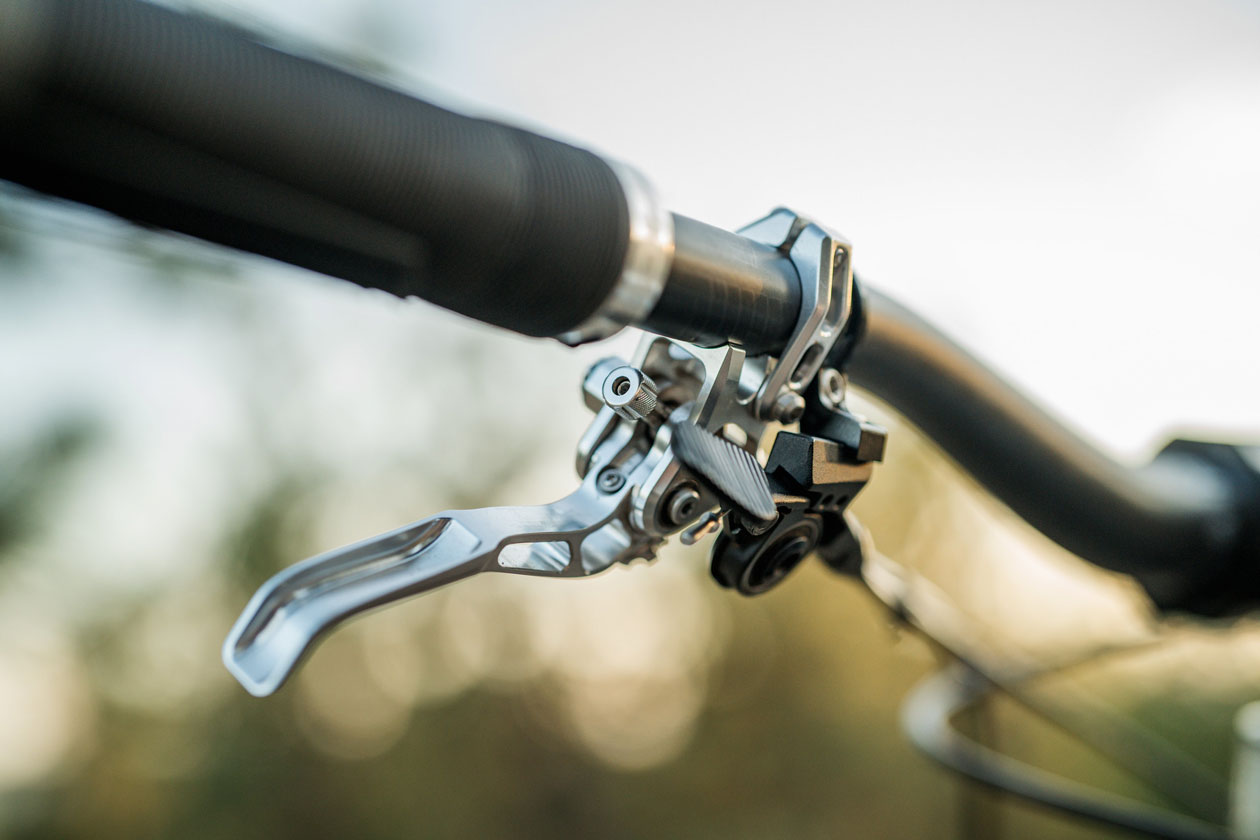
ADJUSTABILITY | The main selling point of the Lewis LHP+ brakes is how adjustable they are, besides the looks. The pad contact adjustment makes a noticeable difference compared to SRAM’s adjustability range. The amount the pads move is significant, and it further aids in tweaking the lever feel to your preference. There is an insane range available: you can almost have the lever pointed straight out in front of you or touching the bar. Pair that with the leverage rate adjustment, and there is a setting in there for even the pickiest riders. I would say that riders who prefer the lever blade to sit ultra close to the grips may have a hard time getting the bite point to fully engage before bottoming out on the grip. While this is not my preferred position, I did try it out just to see what was possible. Your attention to detail on the bleeding process will dictate how close you can run the levers to the bars, just as with any other system.
I found myself to prefer the pad contact dialed all the way in, with the leverage rate adjustment in the most progressive setting. There is an indicator dial at the lever pivot, with both oval and square shapes. The dot on the screw dictates the position, with the ovals being linear and the squares being progressive. I would like to note that this is what the product pictures show, and I have seen on other brakes. Mine, however, did not have these indicators, so it took some trial and error to figure out where I was in the settings.
There is a combination of adjustment settings that can cause the reach adjustment dial to bottom out on the lever of the LHP+ brakes, thus not giving you a true end of stroke when you pull. This is something Dale Stone brought to light and is a legit safety concern, so make sure before you hit the trails you have full range of motion at the lever, plus a little extra clearance to be sure.
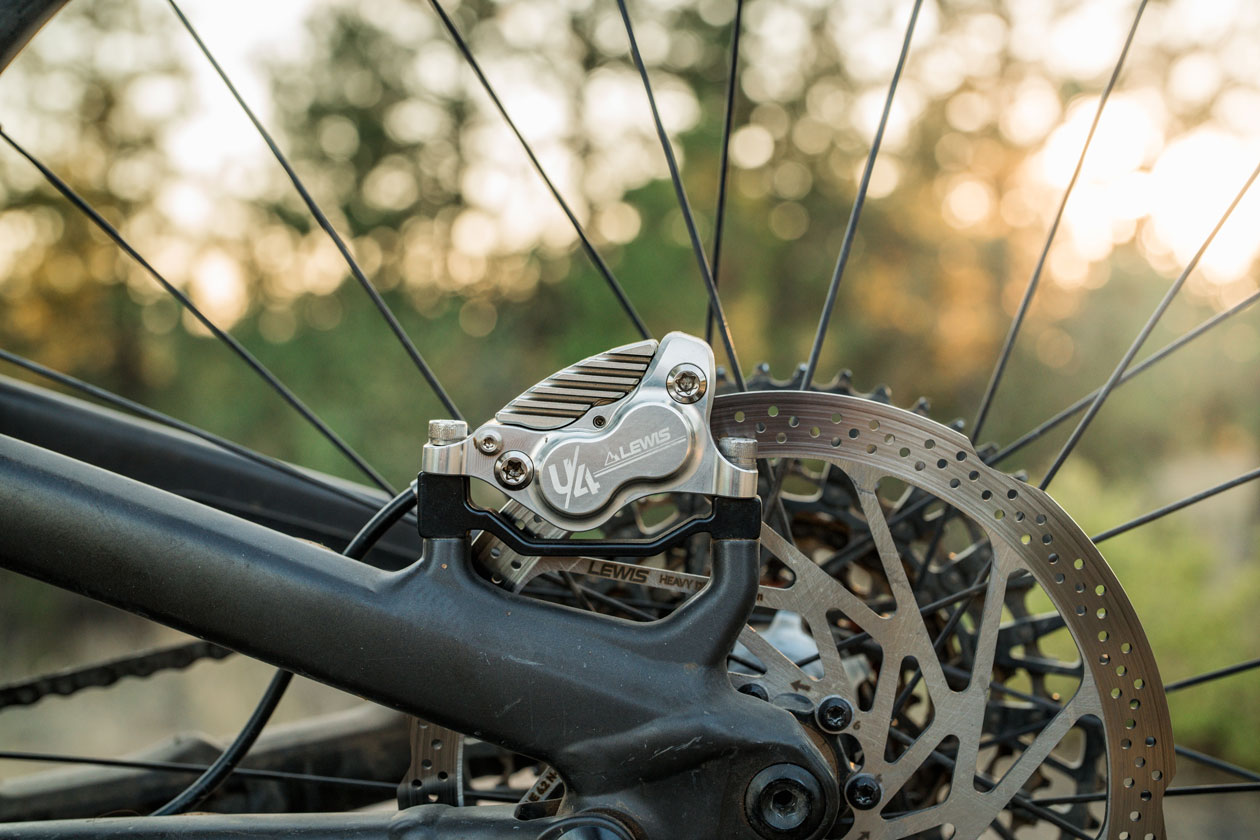
POWER/PERFORMANCE | I was apprehensive about the Lewis LHP+ U4 brakes when it came to overall power out on the trail. Thankfully, that quickly changed once they were fully bedded in and ripping. They have as much or slightly more overall power when compared to TRP DHR EVO’s. There’s slightly less power than the SRAM Maven brakes, but with significantly less force needed to pull in the lever initially. The lever pull is lighter than TRP, but a bit stiffer than the Hayes Dominions. In the linear setting I did feel that the overall stopping power was a bit underwhelming, liken to SRAM Codes. Moving to the progressive setting made what felt like a 20% increase in overall power.
Once dialed in, I really enjoyed how light the lever was and how fast the power came on. The pads did take some effort to fully bed in, like the TRP stock pads. Once I wore through the Lewis branded pads, I swapped them out for some organic Galfer pads. This upped the overall bite feel, making them a clear winner over the DHR brakes. I prefer the Lewis LHP+ U4 brake over SRAM Mavens, due to how light the lever feel is. With Galfer pads and my 170lb rider weight, there is no lack of overall power. I found there to be very minimal introduction of arm pump on long descents when compared to Mavens. At times I felt like I had more overall control due to the lighter lever pull, which was especially noticeable when swapping bikes back-to-back.
While I can’t say for certain how much of an effect on cooling the finned inserts had, I did not experience any notable brake fade, especially with the Galfer pads. I was surprised to find out those cooling fins literally made zero noise out on the trail. They are not captured by any screws, relying on the pad spring to hold them in place. The Lewis pad spring is the most robust and strong pad spring I have encountered. When I went to the Galfer pads I continued to use the Lewis spring, as there was no comparison in strength.
The polished Lewis levers look awesome but were a bit slippery in wet conditions. It would be great to see some additional CNC divots placed on the levers to aid in grip. This can be easily solved with a thin piece of grip tape but should have been addressed from the design phase. The Lewis brand brake rotors did their job, with no hiccups. They stayed straight and did not glaze over, it was not something that was on my mind at all during the course of the test.
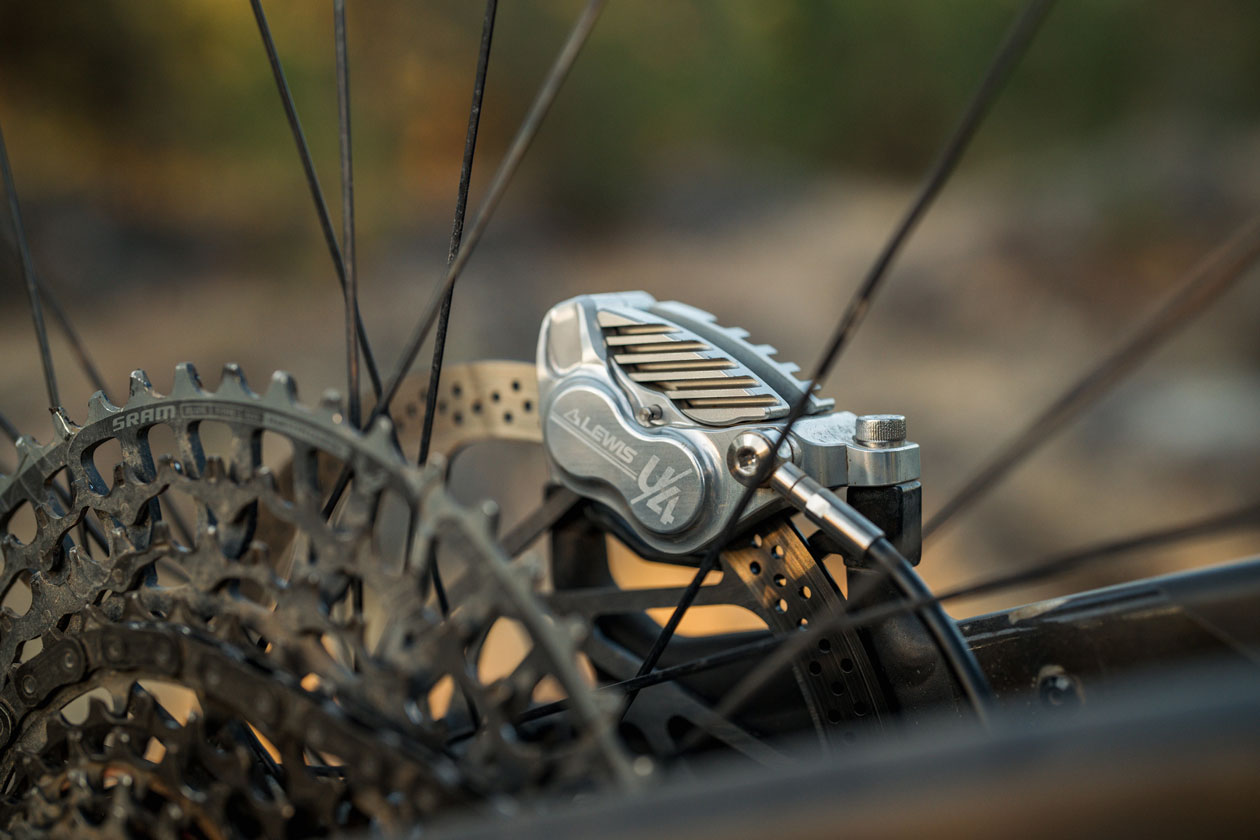
FINISH AND VALUE | Overall, the look and feel of the Lewis LHP+ U4 brakes is solid. The machining is some of the best looking, especially when compared to the major players in the market. The levers stayed free of play in the bearings, and there were no times during the test that oil leaked from the system. While you may not have access to service parts as easily as other brands when in a pinch, the price to power ratio is quite high. Lewis has delivered a premium brake that is cheaper than other brakes on the market, with arguably more power and more features.
HOW DOES IT COMPARE?
I spoke to this earlier, but I put these right between a TRP DHR EVO and a SRAM Maven in terms of power and feel. There’s more easily accessible power than the TRP brakes, and a lighter lever feel than the Mavens. While I do not have enough ride time on the Hayes Dominions I would say they are equal with the Hayes end of stroke feeling a bit firmer overall, and the lever feel just slightly lighter.
The Wolf’s Last Word
There is no mistaking their looks are similar to others, but the Lewis LHP+ U4 brakes have their own unique features that set them apart from the rest. With almost endless options for lever feel and set up at a price point that doesn’t sting, the Lewis LHP+ U4 brakes are a solid option for any enduro or downhill mountain bike or eMTB. 
Price: $459 (Pair/ No Rotors)
Website: Lewisbike.com
SHARE THIS REVIEW
ABOUT THE WOLF

Cole’s den is in Spokane WA, where he relocated a few years back. Growing up in the lush, loamy playgrounds of the PNW, his soul is forever tied to steep, rooty descents and that unmistakable squish of perfect dirt. After 19 years of shredding, Cole’s been on every kind of rig out there. Once a die-hard fan of big travel bikes, he’s now on a quest for the mythical short-travel do-it-all machine. And yes, skids may be for kids, but this middle-aged manchild is here to prove they’re also for anyone who loves having a damn good time.
Rank: Professional Amateur
Size: 6’1” / 185cm | 170lbs / 77kg
Social: @adventuresbycole
SUPPORT AND JOIN THE LOAM WOLF PACK
Did you find this review helpful? Would you like the chance to review (and keep) products? Are you interested in saving big bucks by getting exclusive Members Only discounts from industry brands all while helping support a small, rider-owned media crew? We have big plans for our members beyond big discounts and product giveaways! To learn more and help support small, independent media, visit our Member’s Page.