

WE DIG
WE DON’T
ABOUT THE FORBIDDEN DREADNOUGHT V2
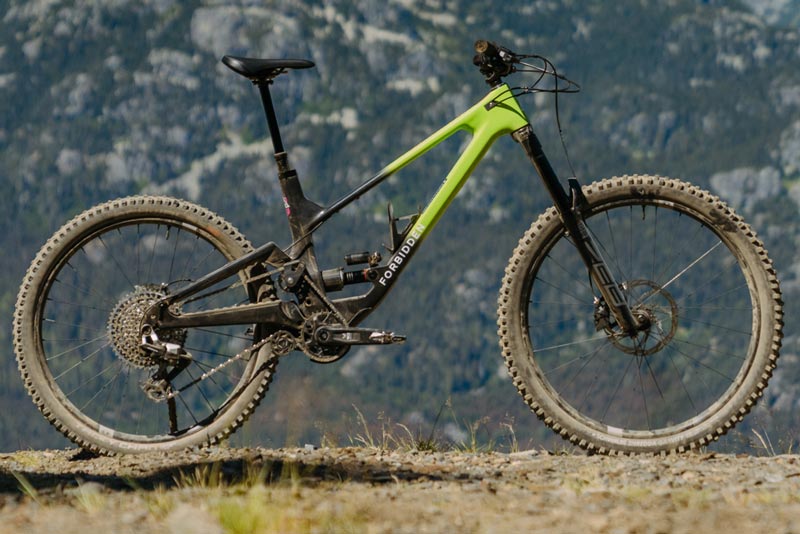
The Dreadnought is Forbidden’s Enduro and Bikepark machine, with 160mm of rear and 170mm fork travel, and the choice of 29” or MX wheel setup. Using “fear nothing” as its tag line, it’s clear that Forbidden intends for the Dreadnought to offer high levels of descending capability, and it certainly lived up to the promise.
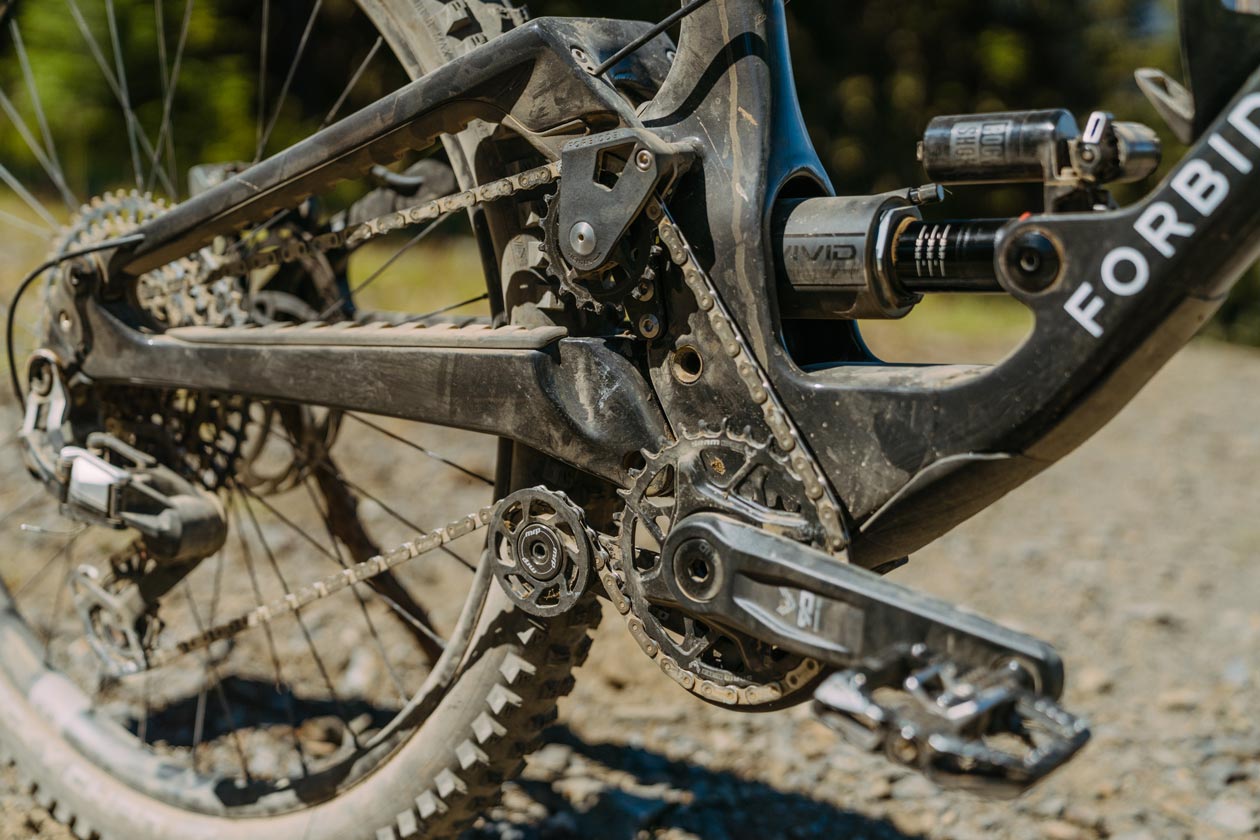
FRAME AND FEATURES | Forbidden’s Dreadnought V2 is offered exclusively in carbon fiber, with a forged linkage to drive the rear shock. With the inverted four-bar suspension design comes the need to run an idler pulley to tune the pedaling characteristics of the suspension. This is given an offset position, fixed on the mainframe to deliver the anti-squat values Forbidden desired. Surrounding the idler is a guide to keep the chain in place. A lower MRP MXg chain guide is fitted to control the chain movement at the bottom.
Forbidden stresses the details throughout the Dreadnought, ensuring it runs quietly and stands up to the abuse. As a result, the dialed ride feel provided on the trail is notable. The cable routing is internal, with clamped ports to minimize rattle. The rear uses internal tubing to facilitate easier maintenance. The large 6904 Max main suspension pivot bearings are contained within the forged linkage to improve serviceability and dependability. Locking collet hardware is used to keep the linkages tight for ride after ride. A threaded BB continues the service-friendly design.
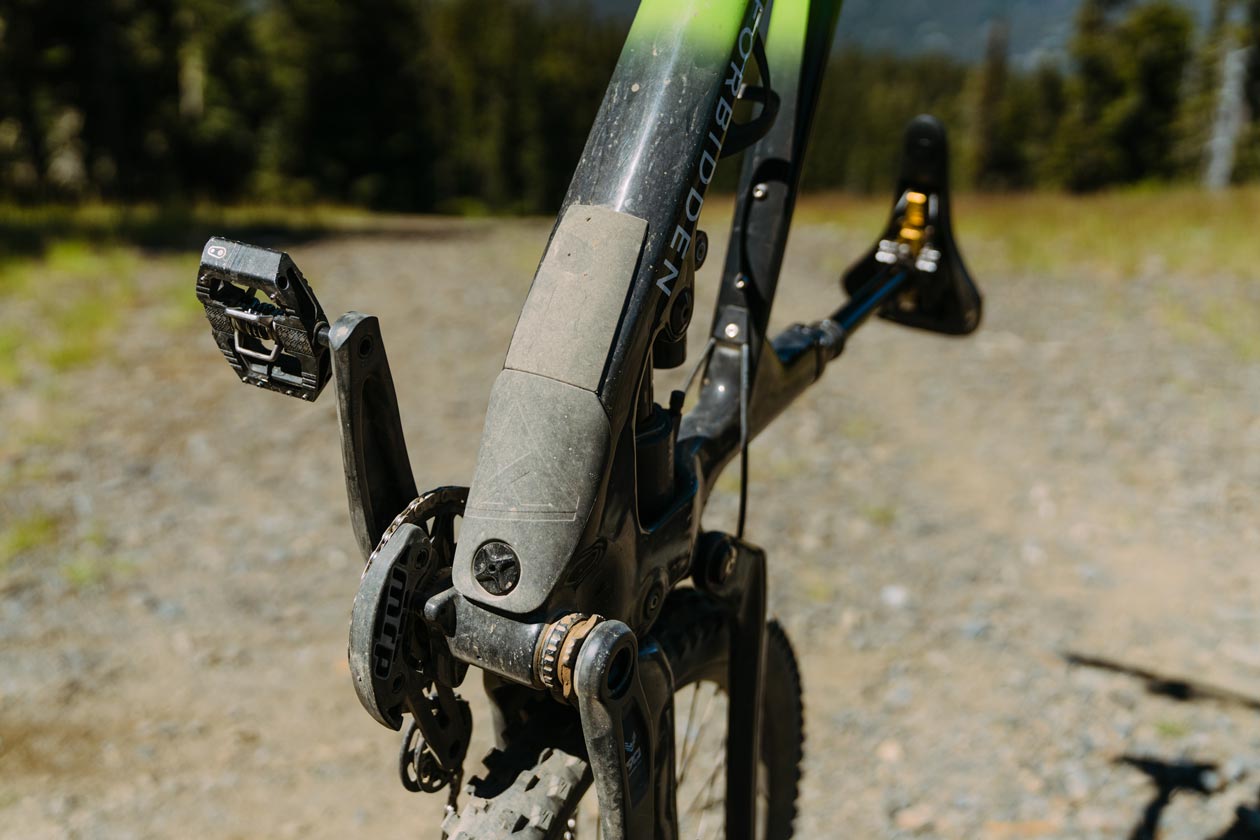
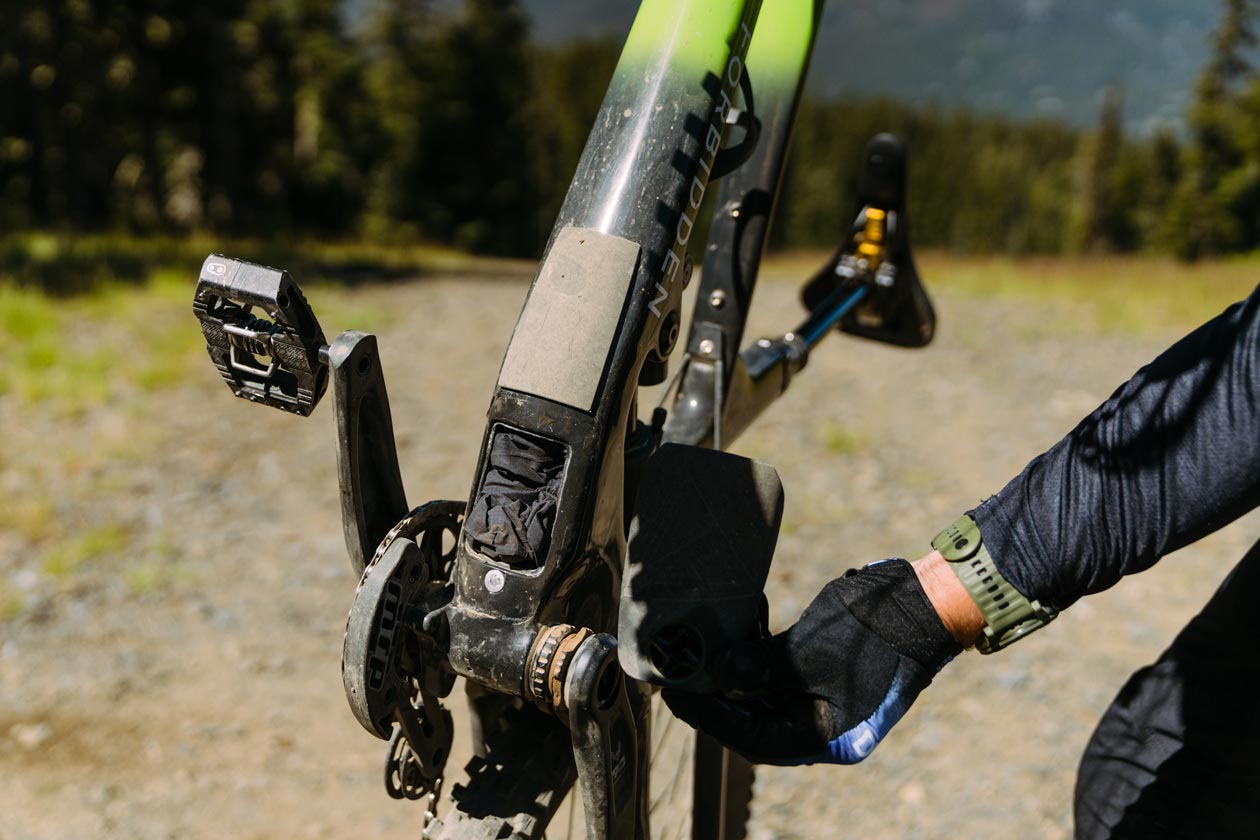
Inside the front triangle, Forbidden ensured there is ample room for a water bottle, with a secondary tool mount on the underside of the top tube. The downtube features a hatch, with space inside for snacks and an inner tube if desired. The drive side seat stay and chainstay are protected generously with rubber protection, as is the down tube.
On the rear, the Forbidden Dreadnought V2 features replaceable “Bias Adjust” modular dropouts. These UDH-equipped dropouts can be exchanged to switch between 27.5” and 29” wheel sizes. Additionally, there are -10mm (27.5” only) and +10mm length options offered to adjust the weight bias of the bike. The rear spacing is boost 148mm to ensure the best compatibility, and the rear post brake mount is 200mm.
Forbidden rates the Dreadnought for enduro and bike park riding, and allows dual crown forks up to 593.7mm axle-to-crown length to be fitted. That means you could throw on a Fox 40 or RockShox Boxxer at up to 190mm travel. Pretty rad.
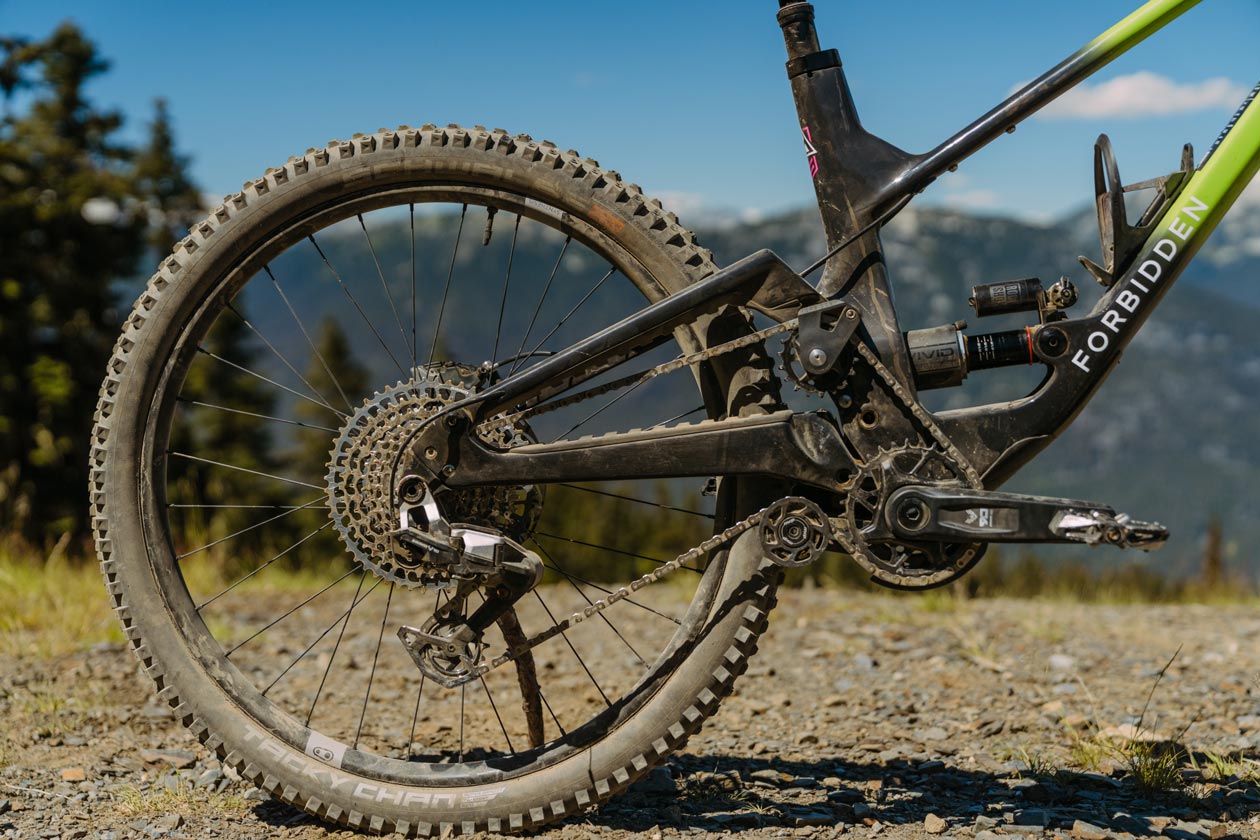
SUSPENSION | Forbidden’s Trifecta V2 system utilises an inverted four-bar suspension design to deliver 160mm of high pivot travel. Up front there’s a 170mm fork fitted as standard.
What Are The Claimed Benefits Of The High Pivot Design?
Using the inverted four-bar high pivot design, Forbidden obtained their ideal suspension characteristics. The high pivot design features a maximum of 25mm rearward suspension travel, with 15mm happening between 0mm and the 30% sag point. The theory is that this rearward movement helps the rear wheel to move “with” typical impacts, helping to maintain momentum in rough terrain.
The secondary benefit is increasing the stability of the bike under hard compressions, due to the lengthening of the rear end. This theoretically gives stability when most needed, but more agility when less load is on the bike.
What Are The Suspension Characteristics?
The pedaling characteristics – tuned by the idler pulley – were selected to give efficiency without compromising on traction when climbing. Anti Squat is high at sag in the climbing gears, at around 135% in the largest cog. It drops through the gear range down to 84% at sag in the sprinting gears. There is also a reduction as the bike sinks deeper into its travel. The result is a bike that stays impressively stable when climbing, with no need for the climb switch. Yet, due to relatively low pedal kickback combined with the rearward axle path, the rear end retains the ability to move slightly when pedaling through rough terrain. This yields reasonable pedaling comfort and traction.
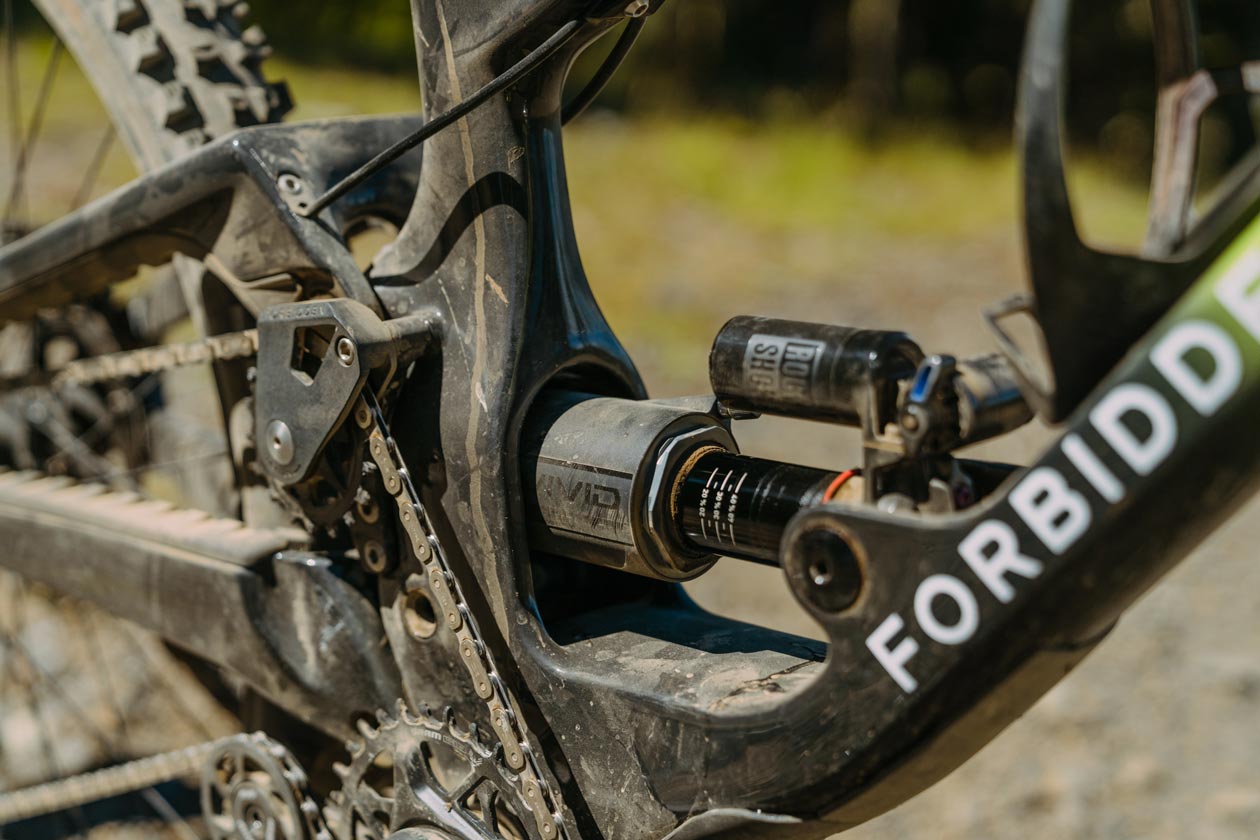
The leverage ratio is progressive, with around 26% progression over the full travel. The shape of the progression has a smooth and fairly straight line up until the last 40mm, where there’s a slight increase in progression which will aid in retaining bottom out support. All models are equipped with the RockShox Vivid air as standard, which should be a good match due to its high air volume. The progression levels ensure it’s compatible with a coil shock, too.
The Anti Rise, or Brake Squat, sits at around 115% at sag and drops to just 50% at bottom out. This should help to preserve geometry at equilibrium, but allow the rear end to recover when braking under heavy loads.
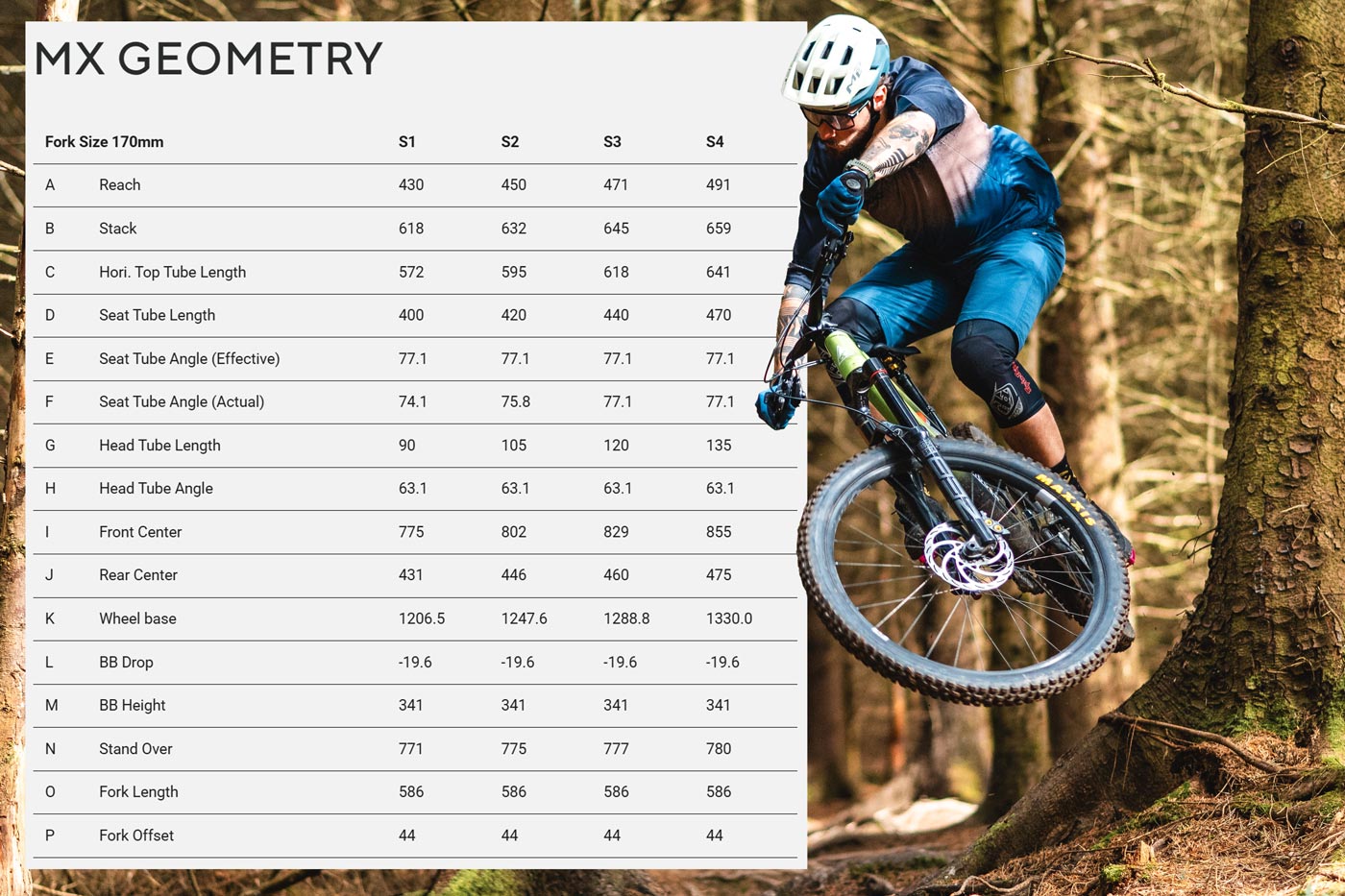
GEOMETRY | Forbidden’s approach to geometry aims to maintain a consistent, centralized rider weight bias across the size range. With their One Ride system, the chainstay length scales aggressively, increasing considerably as frame size increases. This maintains a consistent front center to rear center ratio. To accompany this, the actual seat tube angle steepens, and the head tube length increases progressively up the sizes to optimize the fit.
The standout number on our size S3 with MX wheel configuration was the 460mm static chainstay length with the neutral dropout. On trail, the effective length will be around 475mm at sag due to the rearward axle path. Reach figures are modest, at 471mm for S3 MX, but the resulting wheelbase is still a lengthy 1289mm.
BUILD SPECS | Forbidden Dreadnought build kits are available beginning at the USD $5,024 / £6,599 / €8,099 Dreadnought 3 and topping out at the $9,499 / £9,299 / €11,299 Dreadnought 1. Each of these is available in a choice of the KX500 or Arrakis frame colors, and as a dual-29” or MX wheeled setup.
The Forbidden Dreadnought Frame Only retails for $3,299 / £3,899 / €4,399. It comes with both 29” and 27.5” neutral dropouts; the RockShox Vivid Air Ultimate shock, and Forbidden upper and MRP lower guides.
I tested the Forbidden Dreadnought 3 build, which tipped the scales at 16.6kg / 36.6lbs for our size S3 out the box. It featured a sensibly selected build, with priority placed on good suspension adjustability with the Select+ RockShox Zeb and Vivid Air; powerful SRAM Maven Bronze brakes, and the dependable shifting of the SRAM Eagle 90 mechanical T-Type transmission.
A Crankbrothers Synthesis Enduro wheelset is wrapped in a Maxxis DHR II DD and Assegai EXO+ tire combination. There is a OneUp Dropper Post, spec’d in relatively short lengths due to the limited insertion depth allowed by the frame design – our S3 came with a 180mm. Rounding out the specs are a Fizik Terra Alpaca X5 saddle, and a Forbidden in-house alloy bar and stem combo.
THE DIRT
With a trip to Crankworx Whistler coming up, it felt like the perfect time to get on board my first Forbidden. I hoped that the Dreadnought would provide me with an enjoyable machine for trails both inside and out of the bike park and knew the trip would be a great foundation for the test. Following my trip to Whistler, I returned back to the Tweed Valley, Scotland, to finalize testing on my tight and technical home terrain.
CHOOSING THE RIGHT SIZE | At 6’2” (189cm) with long legs and a short torso, I opted to test the size S3 Dreadnought in the MX wheel configuration. My preferred reach range is typically 475-495mm, but I selected the slightly shorter 471mm reach of the S3 to achieve a wheelbase closer to what I’d typically ride. This turned out to be the correct call, obtaining a comfortable fit both seated and standing.
PARTS I CHANGED | For my time in the bike park, I added an Aenomaly Constructs Switchgrade saddle angle adjuster to boost climbing comfort and descending control, with the stock 180mm dropper post to ensure I could slam it all the way into the frame. When back on home turf, I swapped out the dropper post from the 180mm stock length to a 240mm OneUp V3, spaced down to 220mm to squeeze into the frame. Shorter-legged riders may be limited to the 180mm stock post, due to the limited insertion depth the Dreadnought frame allows. It’s a knock-on effect of the shock position and a difficult challenge to fix. Use the OneUp Dropper calculator combined with the insertion depth from the Forbidden Tech Specs to calculate the longest post that you can run on the bike.
The only other change I made to the bike aside from the dropper post – and adding burlier tires for my time in Whistler – was a brake swap. I don’t have an issue with the SRAM Maven Bronze brakes that were spec’d by Forbidden, but I had a set of Magura Gustav Pro brakes to test, and this machine felt like the right fit for them. There’s a full review to come on the Magura’s, but without giving too much away, I’m a big fan.
SETUP | Getting the Dreadnought setup dialed in took a little bit of work initially, which turned out to be a result of a poorly functioning fork. I wasn’t able to get to the bottom of exactly what the issue was – perhaps a poor damper bleed or faulty seal – but the result was a struggle in finding a fork setup that offered the desired blend of support and comfort. I swapped this out for a Fox Podium towards the end of the test, and the front end performance improved, removing the concern that the fork struggles were a result of the Forbidden frame.
Conversely, I was able to obtain a comfortable setup for the RockShox Vivid Air on the rear of the Forbidden Dreadnought with ease. Opting to run the plusher end of the 28-30% sag recommendation, there were no quirks I felt the need to remedy. There was solid small bump sensitivity; ample mid-stroke support, and stellar bottom out resistance that I only managed to overcome twice during testing (more on that later).
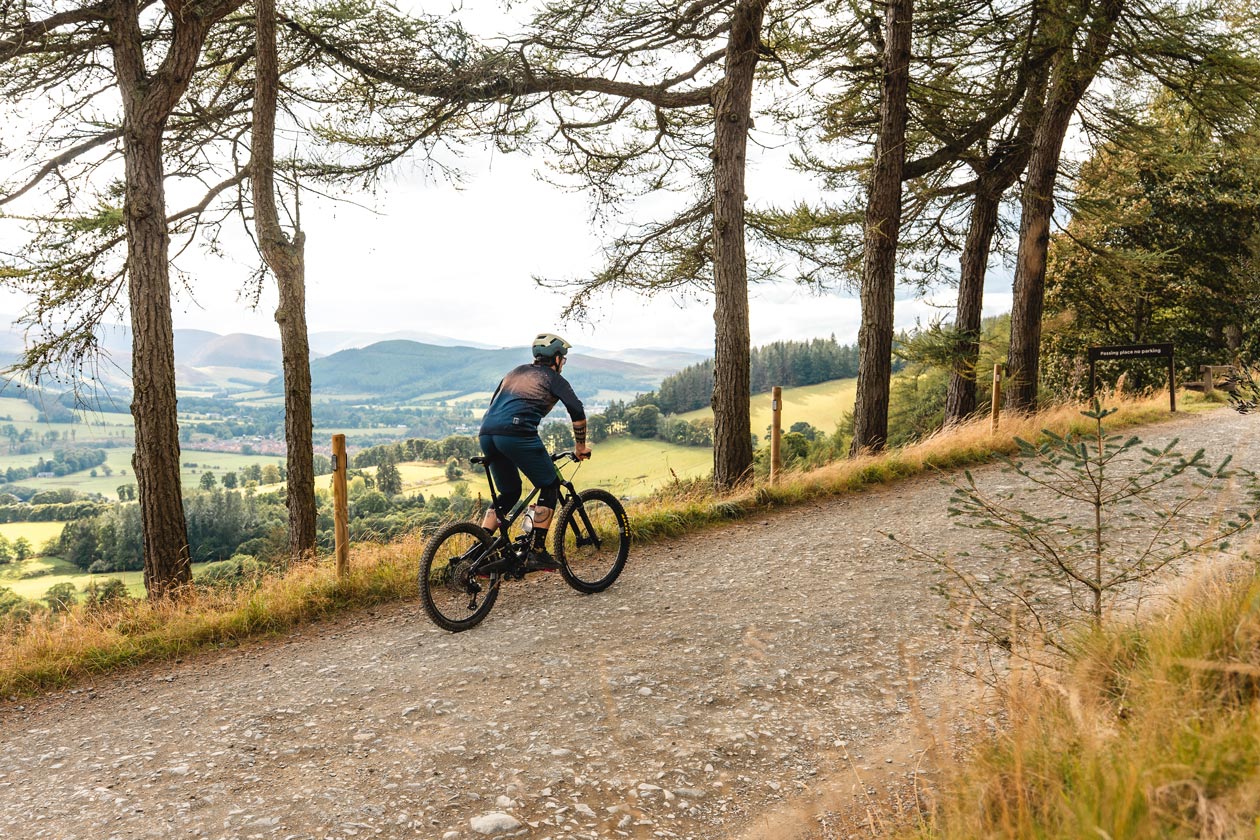
CLIMBING | Choosing Forbidden’s S3 size, I was provided a comfortable seating position that offered good bandwidth to make position adjustments fore and aft. I tackled some meaty climbs on board the Dreadnought during the test, which highlighted the increased noise that can result from a chain drying out by the end of a ride. I never dreaded climbing this dual-pulley equipped bike, but the psychological impact of the noise does make you assume less efficiency than a more conventional drivetrain.
Forbidden’s long rear end selection paid dividends on steeper climbs, naturally weighting the front wheel. When combined with the nose-down saddle angle of the Aenomaly Switchgrade, the reduced energy required to manage the front end of the bike considerably offset any perceived extra drag from the idler. Even with the Switchgrade removed, the Forbidden ranked up there as one of the best steep terrain climbing machines I’ve ridden.
The pedaling support kept the rear end in check and negated the use of the climb switch for trail climbs. On flatter road efforts towards the middle of the cassette a little bob could creep in, and the climb switch helped to calm the movement down, but you could happily run a shock without such a switch on this bike. Thanks to the idler setup and reduced pedal kickback, the rear end was still able to react to the terrain and provide a boost to comfort and traction when pedaling. Questionable idler drag aside, the Forbidden Dreadnought V2 was a stellar climbing enduro bike.
DESCENDING
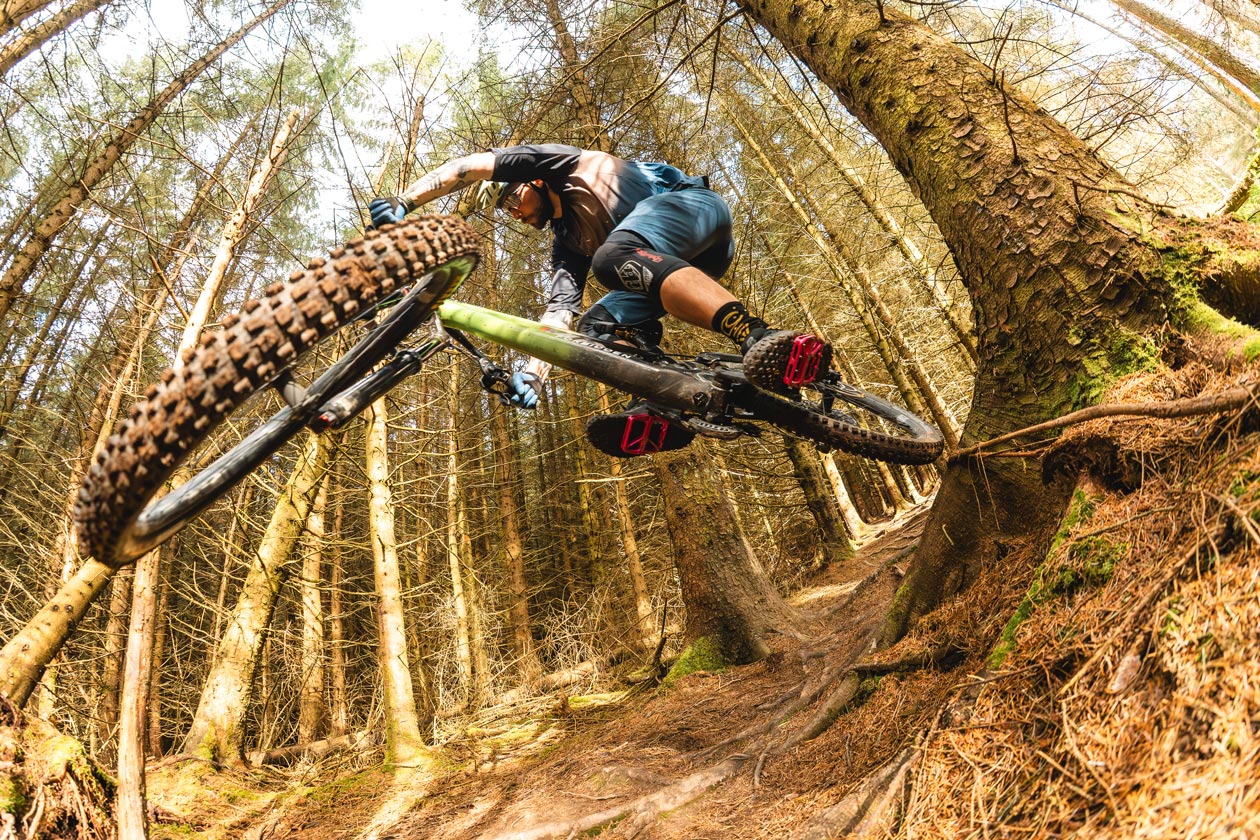
The Dreadnought Was Excellent In Many Instances | Descents were extremely interesting on the Forbidden Dreadnought V2. Exhibiting one of the most unique handling packages on the market, the Dreadnought forced a different technique and body position to unlock the best from it. The learning curve made for one of the most enjoyable tests I’ve ever conducted, but the characteristics of this bike won’t suit everyone.
Due to the weight bias of the Forbidden Dreadnought – which distributed a larger proportion of force onto the front tire – I was able to adopt a more relaxed, upright stance on the bike. Less effort was required to actively weight the front wheel, making flat turns an absolute riot. Standing in the middle of the bike and carving rather than having to input a lot to the bars was an addictive feeling. Once adjusted to this alternative approach, the Dreadnought ceased to feel like the long bike that the geometry table suggests. I was able to thread my way through even the tight and twisty descents of the Tweed Valley without issue.
Once speeds climbed, especially in chunky bikepark trails, the Dreadnought really came into its own. Though the rear end was not quite magic carpet-esque – still retaining some midstroke support and therefore feedback from the trail below – it carried speed very well and remained composed through compressions of all sizes and shapes. Working the terrain below gave reasonable reward, so Forbidden’s enduro machine avoided a place in the “plow-only” category. Maintaining a centered position on the bike, I was able to get my eyes up and spot lines and gaps with composure that rivalled the very best in the enduro category.
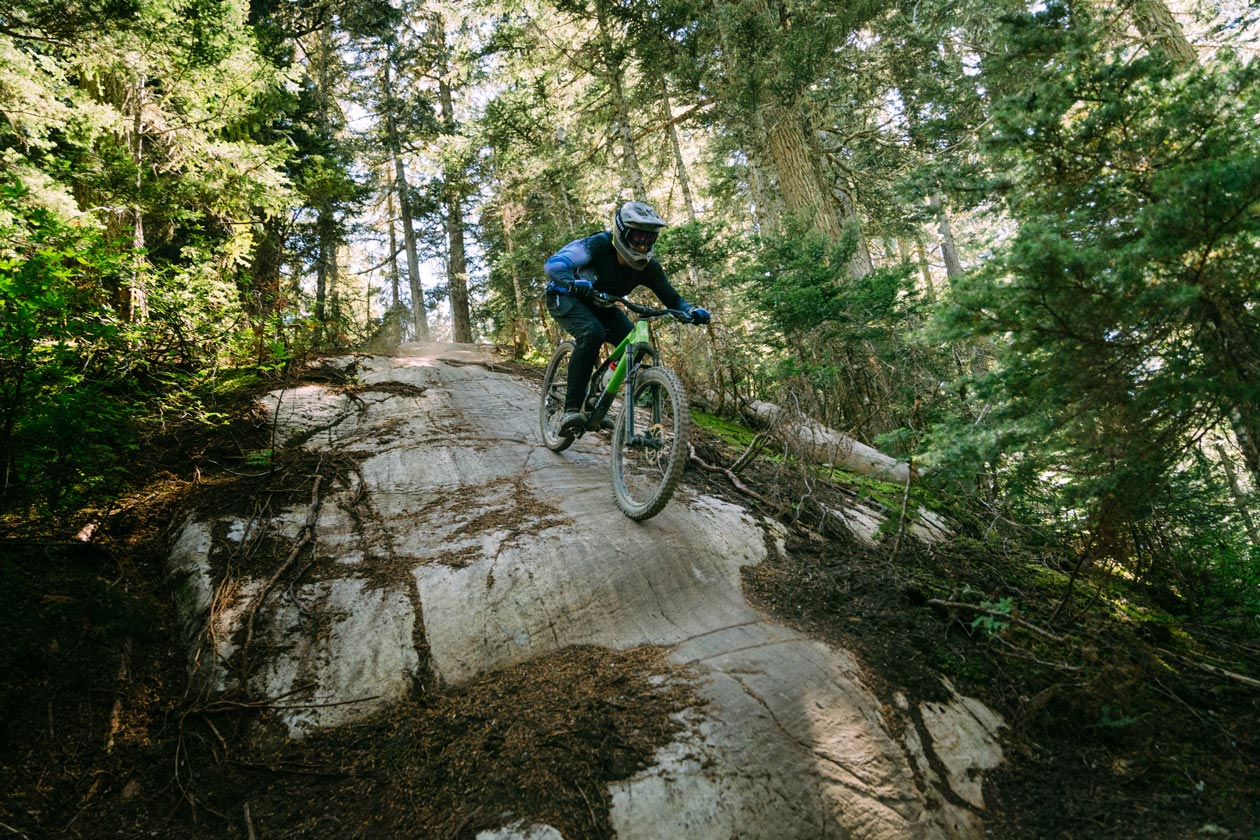
Handling Characteristics I Struggled With | Conversely, the increased weight on the front wheel also led to occasional struggles. On the steepest terrain I rode in Whistler, it was occasionally difficult to produce a rearward weight transfer that was aggressive enough to unweight the front wheel sufficiently. I never succumbed to an over-the-bars incident, but it forced a few solid push-ups and made good use of the fork travel.
That same aggressive rearward weight transfer was required for manuals and quick popping maneuvers. There was incredible lenience for exaggerated rearward movements without unsettling the bike. However, this meant that it took some adjusting to feel comfortable applying inputs sufficient to get the front wheel up into a manual without help from the trail. Given that I tested the MX wheel setup only, I foresee the 29” wheel configuration would only exaggerate this. It may also present clearance issues on shorter-legged riders when making these moves. Of course, it would also deliver further stability and poise for flat-out charging in mellower, rougher terrain.
Jumping the Dreadnought V2 was not problematic, though it much preferred shallower takeoffs at speed than shorter lips with more kick. Whistler bikepark trails like A-Line and Dirt Merchant were a blast as a result, but it was more of a handful for more technical lines like D1. Forbidden’s roster of excellent freeriders show that the Dreadnought can do incredible things on jumps, but it wouldn’t be my first choice for pure jump line lapping.
Bikepark turns were mostly dispatched with ease, however as my confidence reached its maximum, I managed to get the rear wheel to break traction at a bad moment and succumbed to a violent highside. The load transfer of a supportive bikepark turn applied considerable weight to the front wheel, however the back became light in this instance and spat me out. Counter to intuition, you benefit from a more rearward body position to hit bikepark turns best on the Dreadnought V2, else you risk suffering the same fate.
I F**cked Up, Bad | At The Loam Wolf we do our best to test bikes to their limit. Sometimes in doing so, we exceed our own limits, and things go wrong. We’ll always share when they do, to ensure we are as transparent as possible. Mountain Bikes can break when mistreated, and in this case, I took that to the extreme.
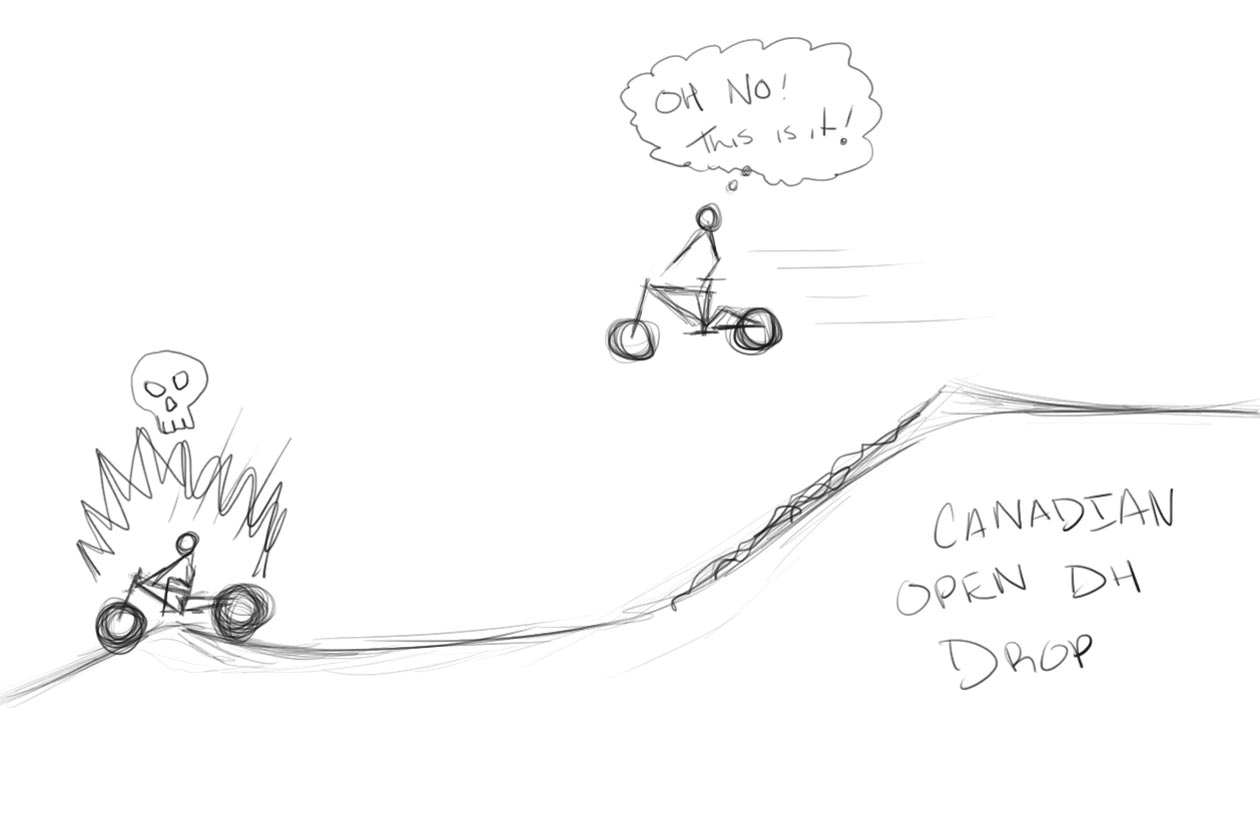
I looked at the drop on the Canadian Open Downhill from the chairlift, and it looked straightforward enough to leave me satisfied that I could do it without much consideration. Getting a little bit too excited by the playground that is Whistler Bike Park, I failed to consider that it might actually be quite large, and required a proper look. With Sourpatch (Sean) in tow, on a “chill run”, I dropped in and rolled off this sizable drop at slightly under trail speed. Not remotely close to the race speed that the drop was designed to work at…
Cue the hardest case of my life, perfectly onto the back of the slight knuckle of the landing. The drop is big enough – more long than tall, but still a reasonable way down – that I had enough time to think “oh god, this might be it”. All 100kg (220lbs) of my mass plowed the bike into this upslope, bottoming out the bike and my body insanely hard. I have absolutely no idea how I held on!
This was not the type of impact that any ISO test could foresee, or that a typical rider would encounter at any point in their mountain bike exploits. It was sheer brutality, and something had to give. The seatstays were the culprit in this instance, failing in a safe but irrefutable manner.
As for me? Somehow, thankfully, I walked away unscathed. Aside from the knees and wrists reminding me of the impact just suffered as I walked the bike down the hill, I’d avoided hitting the deck. I then managed to roll my ankle while walking down the hill, possibly a result of the Grim Reaper wanting to get some of his reward. But I was counting myself extremely lucky to walk away from that colossal screw-up with my body still intact.
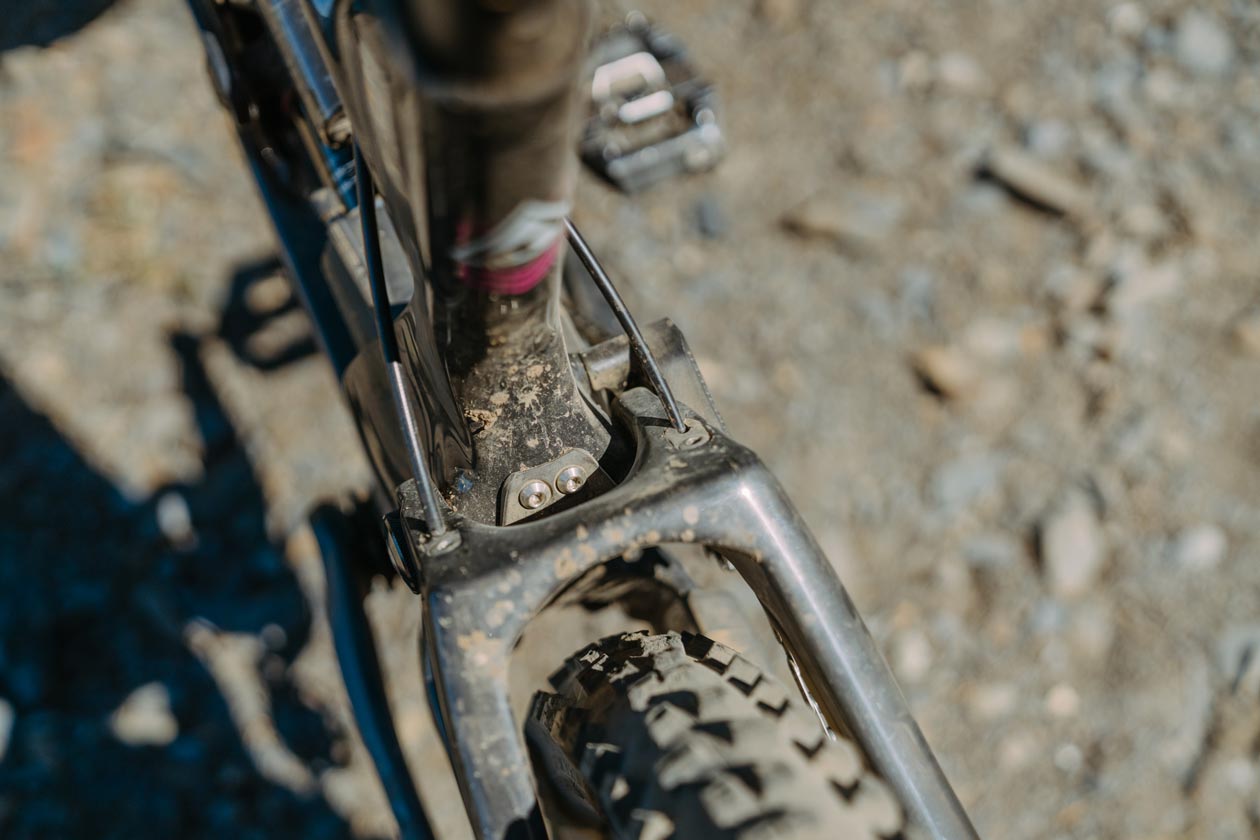
How Did They Resolve It? | I would imagine that anyone who confesses to such a travesty of bicycle piloting is unlikely to have a company replace their frame for free. It would be very poor business if customers were regularly rewarded for their own negligence. Forbidden would offer a crash replacement through their local dealer, at a considerably reduced price of $230 USD for the broken stay. This felt fair to me, and would get a rider back up and running in a few days.
Luckily, they managed to pull together a replacement for me to conclude my testing on. This let me get very intimate with the inner workings of the frame, which was unsurprisingly of a high quality. I had a burr in the internal routing of the seat stay, but otherwise the finish was flawless, and the bike went back together with absolute ease. Forbidden has done a great job with the user-friendliness of all elements of Dreadnought V2 frame, from its pivot hardware to cable routing.
FINISH AND VALUE | The majority of the Forbidden Dreadnought is very high in quality and well thought out. Cable routing was executed well, remaining rattle-free. Combined with the solid protection from chain slap, the bike ran very quietly on the descents, helping to add a sense of calm. With the shock removed, the rear end cycled smoothly, and the hardware offered reasonable sealing to help it resist the elements for a long while. Tire clearance with 27.5” x 2.5” tires was excellent, with no concerns for mud buildup.
Since Forbidden goes the extra mile in maintaining a consistent front center to rear center balance throughout the size range, every height of rider is going to receive the same weight distribution on the bike. This is not a cheap exercise, but it highlights Forbidden’s commitment to ensuring all rider sizes receive the same performance.
I would have loved the ability to fit a longer travel dropper post in the frame, to maximize clearance. This was especially important due to the Dreadnought V2’s demand for a more rearward body position to unweight the front end. Using the 180mm dropper post topped with a Aenomaly Switchgrade afforded the clearance I desired to attack on the steepest trails, but required an old school allen key-based post height adjustment at the top and bottom of the trails when pedaling. Though it was a shame to have to manually adjust the saddle, it was a concession I deemed worthwhile.
The value proposition of the Dreadnought varies depending on the market you’re buying in and the model you’re considering. Comparing the value of the $5,024 Dreadnought 3 build tested to the similar Santa Cruz Nomad 90 at $6,099, Forbidden has done a stellar job in North America. On the other end of the build spectrum, the Dreadnought 1 and Nomad X0 AXS RSV retail for $9,499 and $9,749, respectively. Forbidden is certainly a premium brand, but their pricing doesn’t make them an outlier compared with the competition.
COMPONENT REPORT
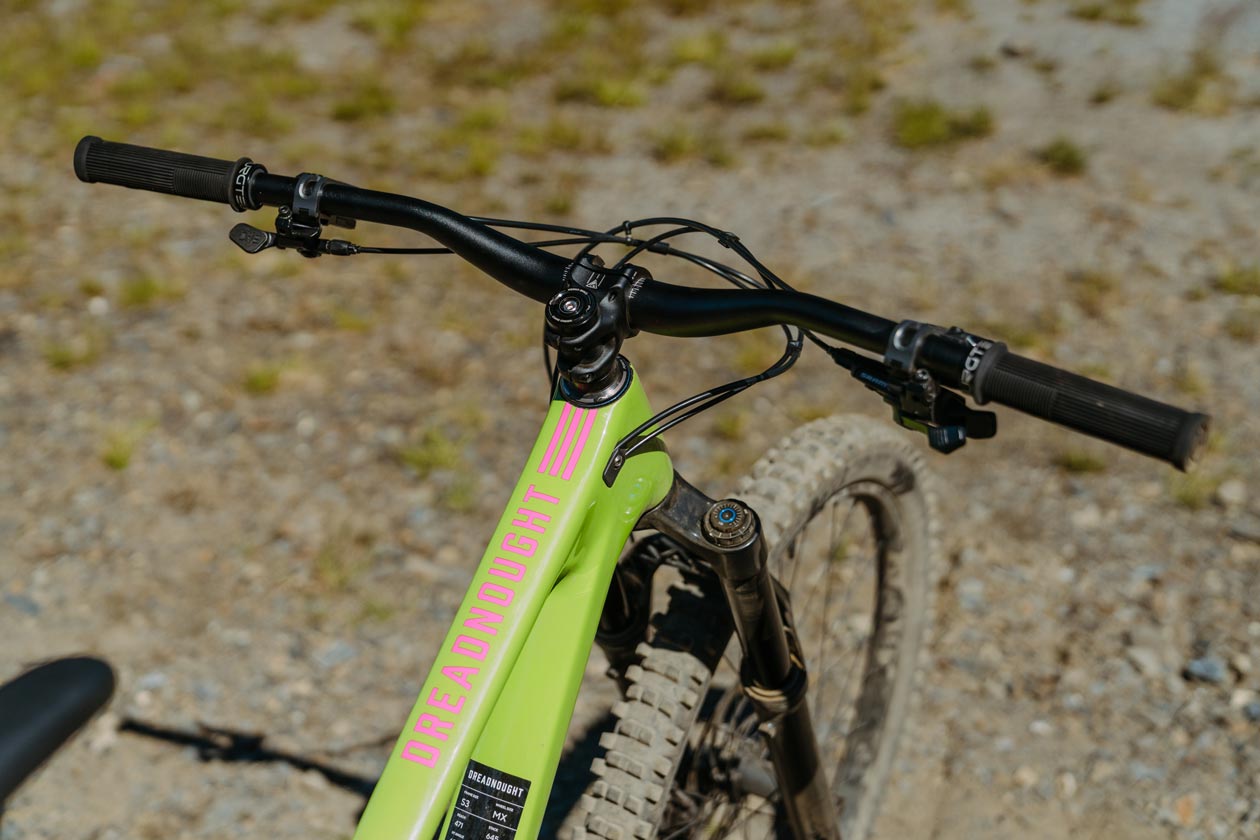
A slightly problematic fork aside, I could have hopped on the standard Dreadnought 3 build and enjoyed the trails without wishing for much else. The build specs Forbidden selected are sensibly composed, without any cause for concern.
SRAM Eagle 90 | SRAM’s mechanical T-Type performed flawlessly throughout testing, with crisp shifts under power and no need for adjustment. The mech shrugged off some impacts without losing its calibration, and in combination with the lower chainguide, it kept the chain under reasonable control.
Crankbrothers Synthesis Enduro Wheels | Crankbrothers revised the rim on their alloy enduro wheelset to increase durability, and the result was a very resilient wheelset that stood up to severe abuse without denting or losing true beyond an acceptable level. Don’t be afraid to run these wheels on your Dreadnought.
HOW DOES IT COMPARE?
Forbidden Dreadnought V2 VS Deviate Claymore
It’s been a while since I rode the Deviate Claymore, but my stand out from each test were notably different. Though they are both high-pivot machines with similar intentions, the handling characteristics were far separated.
I suffered with brake-induced stiffening of the rear end on the Deviate, necessitating deliberate braking efforts to ensure the rear end would offer the desired comfort in rough terrain. The Forbidden Dreadnought was comparably less affected by braking efforts – still avoiding an excessive forward pitch of the chassis when on the anchors, but doing so without preventing the rear from absorbing the trail below as much.
Both machines were impressive when charging hard through rough terrain. The Claymore delivered a ride experience more akin to “conventional” bike designs, with easier lifting of the front end at the expense of a less centered position between the wheels. The Dreadnought took the edge for confidence in flat turns, but demanded a longer adjustment period to understand its unique weight distribution.
Chain noise was present on both bikes when pedaling, especially when the chain dried towards the end of longer pedals. There wasn’t considerably more drag on the Forbidden anecdotally, but it’s safe to assume the lower guide is going to rob a little extra energy.
The Wolf’s Last Word
The Forbidden Dreadnought V2 will stand as one of the most interesting and enjoyable bikes I’ve tested. The unique handling delivered by its geometry and suspension combination made for a riot in the right terrain, with some challenges in the steepest terrain and when trying to ride playfully.
Give it some gnarly terrain, and the Forbidden Dreadnought V2 is a rocket ship on the way down. 
Price: $5,024 / £6,599 / €8,099
Weight: 16.6kg / 36.6lbs (Dreadnought 3, S3)
Website: Forbiddenbike.com
SHARE THIS REVIEW
ABOUT THE WOLF
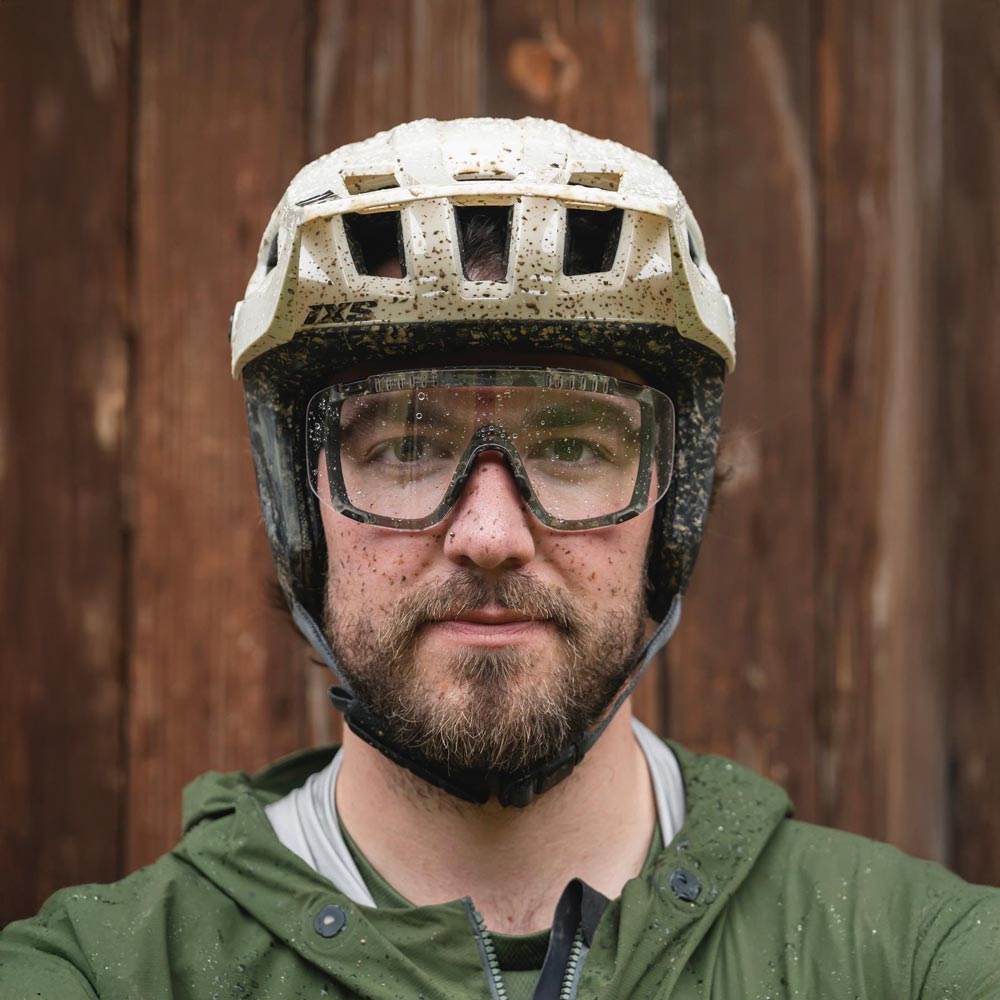
Robert’s habitat is the Tweed Valley, Scotland, which is renowned for its root-littered enduro mountain bike trails. Robert has been developing his bike handling skills for the last 16 years. Since he was a pup, he’s been riding everything from BMX through to enduro and downhill bikes. Combining a playful style with occasional speed-focused aggression, he favors supportive bikes, and does his best to push them hard.
Rank: European Tech Editor
Size: 6’2” / 189cm | 220lbs / 100kg
Social: @robert_johnston
SUPPORT AND JOIN THE LOAM WOLF PACK
Did you find this review helpful? Would you like the chance to review (and keep) products? Are you interested in saving big bucks by getting exclusive Members Only discounts from industry brands all while helping support a small, rider-owned media crew? We have big plans for our members beyond big discounts and product giveaways! To learn more and help support small, independent media, visit our Member’s Page.