


WHY DID IT HAPPEN?
What Canyon is acknowledging here is a gap. Not between good and bad engineering, but between controlled testing environments and the chaotic reality of how people actually ride eMTBs. Impacts, repeated stress, long-term fatigue—these are variables that don’t always show up cleanly in standardized testing, but they absolutely show up on the trail.
Canyon’s engineer explained that certain edge-case scenarios, particularly involving impacts and accumulated stress over time, revealed vulnerabilities in the battery system that weren’t apparent during development. Not because they weren’t testing, but because those exact conditions weren’t fully replicated. It’s a subtle distinction, but an important one.
From a rider’s perspective, though, that nuance doesn’t carry much weight. Bikes aren’t ridden in controlled environments. They’re ridden hard, often by people pushing limits, on terrain that doesn’t care about test protocols. And when the potential outcome involves battery damage and thermal risk, the response has to be decisive.
That’s why Canyon didn’t take a wait-and-see approach. The stop-use notice, while drastic, reflects the severity of the worst-case scenario. This wasn’t about inconvenience—it was about eliminating risk entirely while they worked toward a solution.
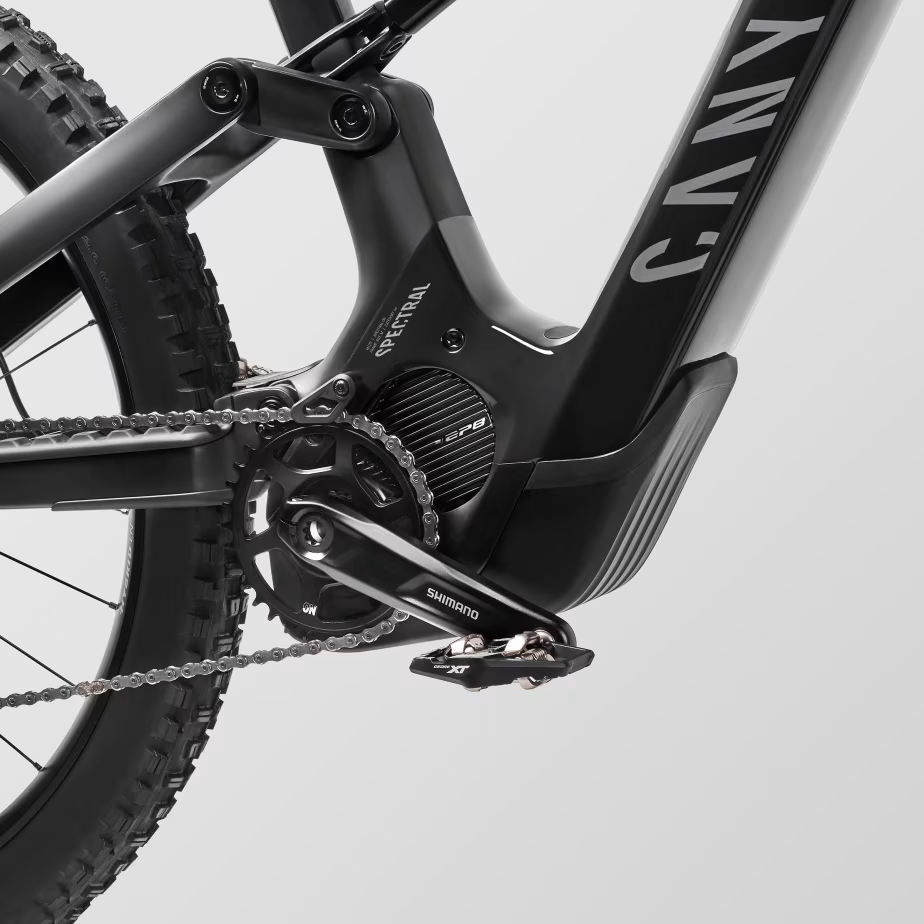
HOW WAS IT RESOLVED?
To their credit, Canyon took things seriously. Not only resolving the affected bikes, but also working to ensure something similar doesn’t recur. There’s a clear emphasis on expanding how products are validated—bringing testing closer to real riding conditions, increasing focus on impact scenarios, and reassessing how battery systems are protected within the frame.
In other words, the takeaway isn’t just “we fixed the problem,” but “we’re rethinking how we define the problem in the first place.”
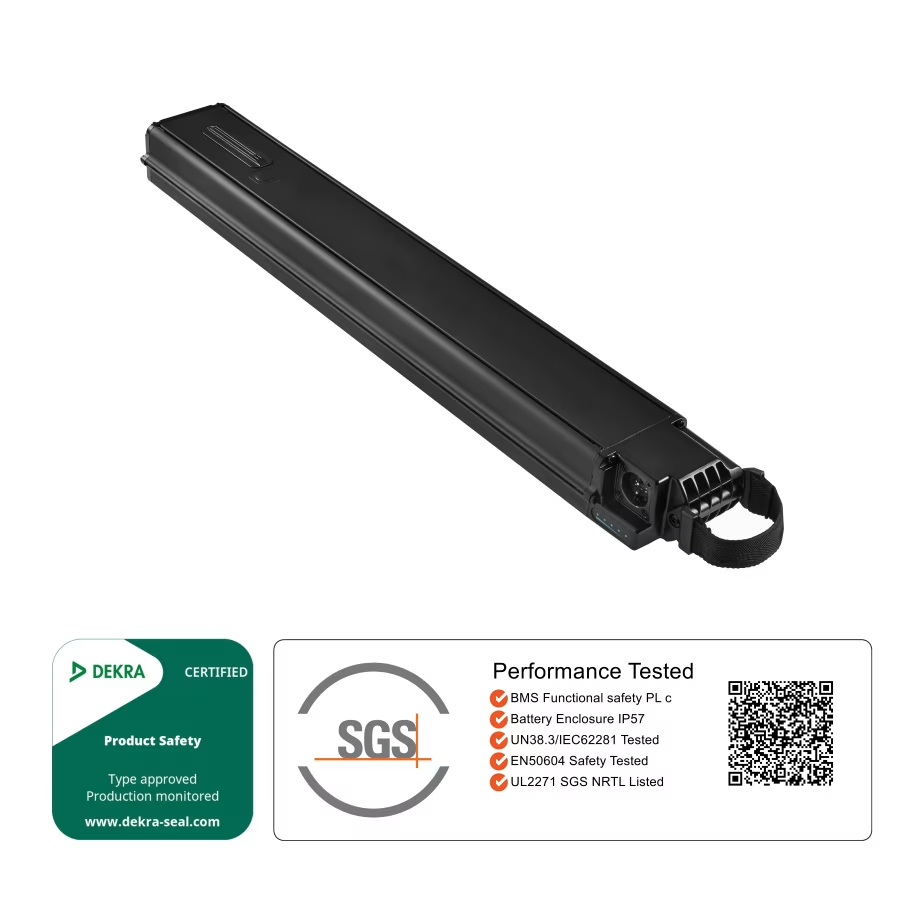
For the existing bikes in use, a replacement battery was eventually provided, with capacity matching the battery originally fitted and measures in place to remedy the safety concerns. Compensation was also offered to riders experiencing prolonged wait times.
Moving forward, Canyon Spectral:ON and Torque:ON bikes will be shipped with a more advanced 800Wh battery with an aluminum alloy casing. Not only will this deliver the improved safety desired, but upgraded battery management software allows for a 5.6A charger to be used. This fast charger delivers faster charge times of just 5 hours from empty, and the smart charge can rapidly charge to 80% and trickle charge the remainder for best battery health preservation.
WHAT DOES IT MEAN FOR THE FUTURE?
Whether brands want to admit it or not, eMTBs are being ridden in ways that continue to outpace traditional testing frameworks. More power, more weight, more aggressive riding—it all compounds. The margin for error gets smaller, while the consequences of failure get bigger.
The reality is, though, riders don’t care what passes in a lab. They care what holds up on the trail.
That mindset is what makes this conversation feel less like damage control, and more like a necessary checkpoint for the industry. Canyon may be the brand in the spotlight right now, but the underlying challenge—how to truly validate these bikes for real-world use—is shared across the board.
THE WOLF’S LAST WORD
It’s never good to see issues that lead to riders missing out on trail time, so we were extremely saddened to see the Stop Use Notice in place and the complaints of riders who were unable to ride their beloved Spectral:ON or Torque:ON eBikes. But now that Canyon has resolved the issues and riders are able to hit the trails on their eMTBs again, we appreciate that Canyon has done their best to remedy the situation.
Of course, none of this exists in a vacuum. Trust plays a huge role here, and once it’s shaken, it takes time to rebuild. Canyon’s willingness to address the issue directly and take decisive action is part of that process, but it’s only the beginning. What matters now is whether the changes they’re making show up in the next generation of bikes—and whether riders believe in them when they do.
Our upcoming eMTB Shootout will feature the Canyon Spectral:ON with its updated 800Wh battery, and we’re excited to put it to the test against the top performing eBikes on the market. Canyon’s full power trail eBike is still a ton of fun to ride, so we’re looking forward to more trail time onboard this machine.