

WE DIG
WE DON’T
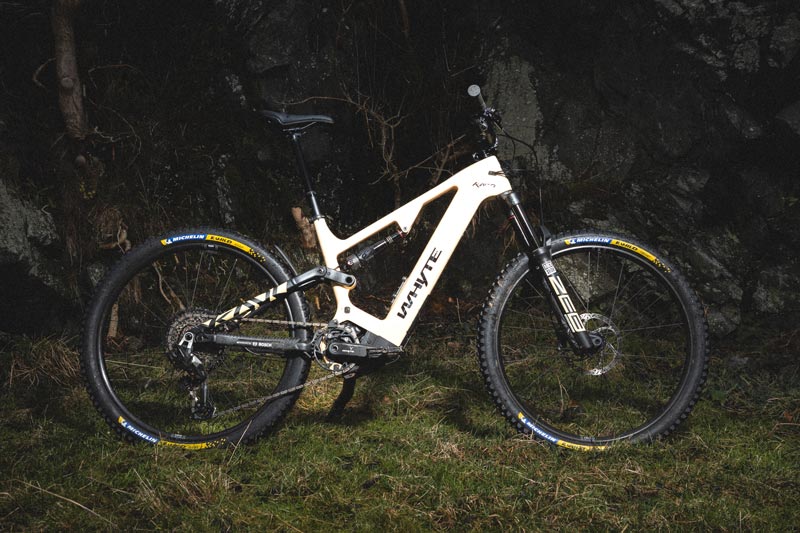
ABOUT THE WHYTE KADO RS EMTB
The Kado is Whyte’s full power, 29” wheeled all-mountain eBike. The UK brand designed the Kado with a low center-of-gravity priority, and gave it the Bosch Performance Line CX Gen 5 drive unit to provide assistance for the climbs.
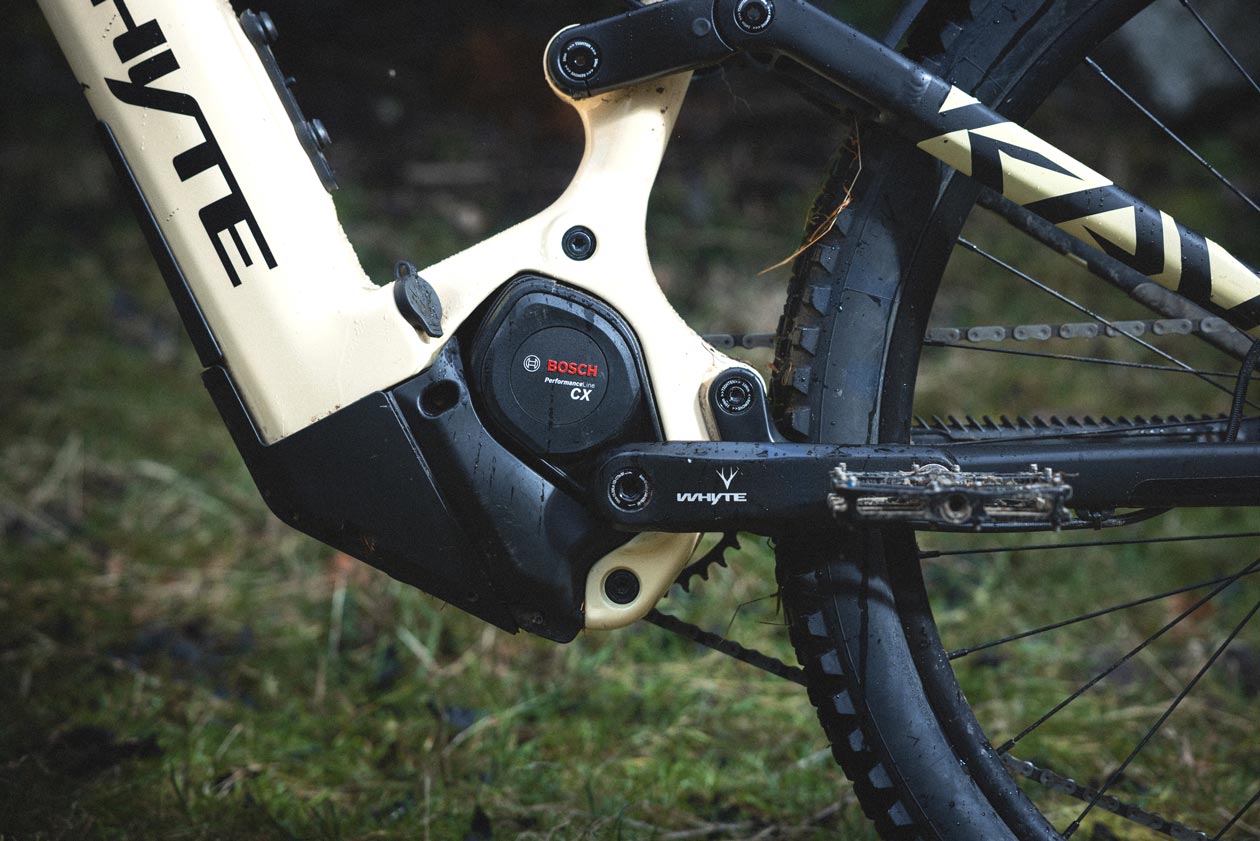
DRIVE UNIT AND ELECTRONICS | Whyte opted to fit the Kado with the latest Bosch Performance Line CX drive unit. This eBike motor produces 100Nm of maximum torque and up to 750W of Peak Power, weighing in around 2.8kg (6.2lbs). This is powered by the 800Wh Bosch PowerTube battery, which weighs 3.9kg (8.6lbs). The battery is stored within the downtube, and can be removed quickly thanks to the slide-out design. Further range can be achieved using the Bosch PowerMore 250Wh range extender, which mounts to the bottle cage bosses within the front triangle.
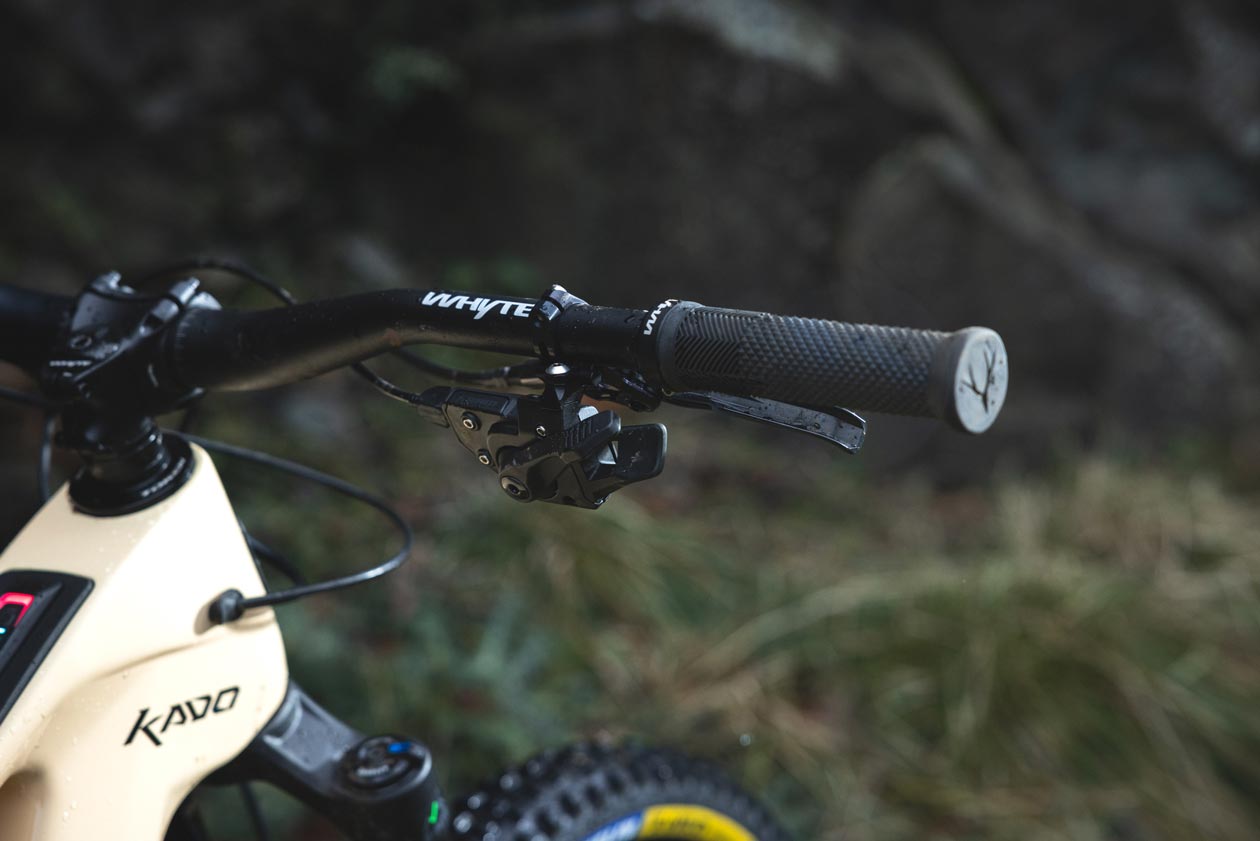
The Bosch Smart System is fitted with the LED System Controller on cheaper models, or the Kiox 400C display on the top-end build. The carbon front triangle of the RS and RSX builds features a blanking plate around the LED controller, meaning the Kiox 400C can be added easily by the customer if desired. On the handlebar, the Wireless Mini Remote allows for riding modes to be changed and for the walk function to be enabled.
The Bosch eBike Flow App allows the user to connect to the system and perform a variety of tasks. Each power mode can be tuned to deliver the rider’s preference of assistance and range, and security features and diagnostics can be accessed.
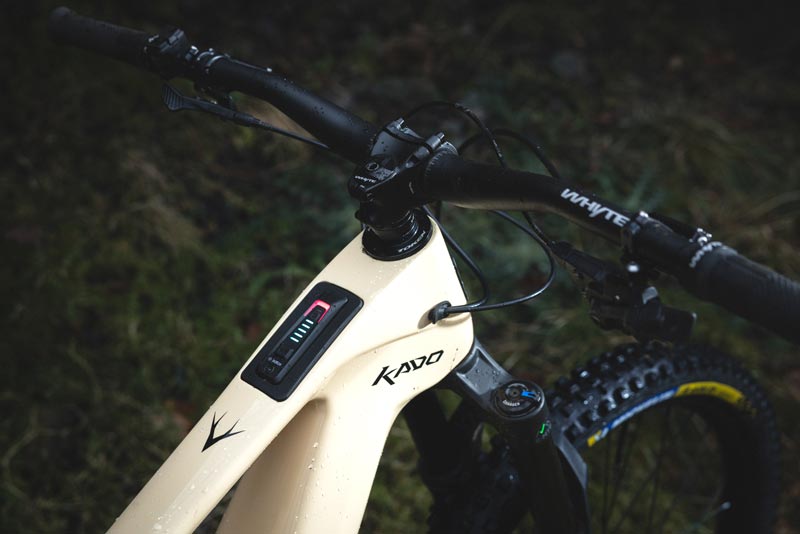
FRAME AND FEATURES | The Whyte Kado features a full carbon frame on the Works and RSX spec; carbon front and alloy rear on the RS build; or full alloy frame on the S build. These share the same features and functionality, with the alloy frame parts reducing cost while adding weight.
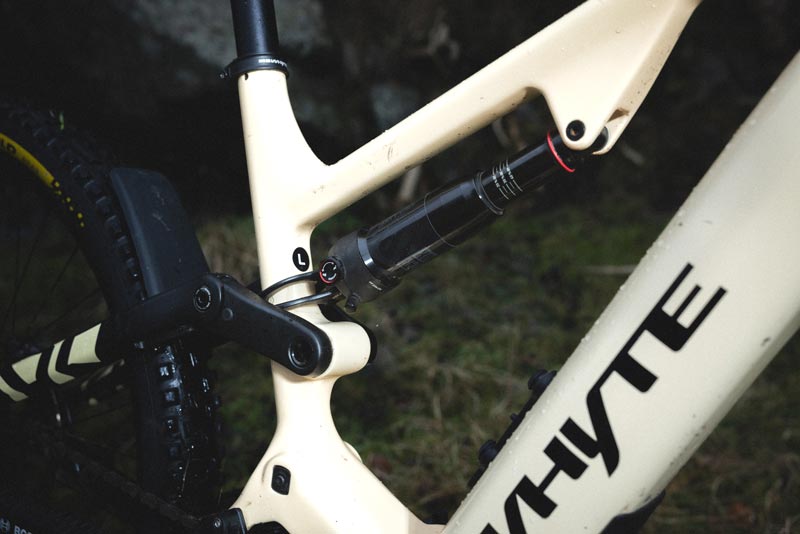
The Shape.it Link V2 offers up two geometry positions via a clever eccentric shock bushing that interfaces with the link to prevent rotation. The link is replaceable with a separate model for a modest cost to maintain the geometry with a 27.5” rear wheel.
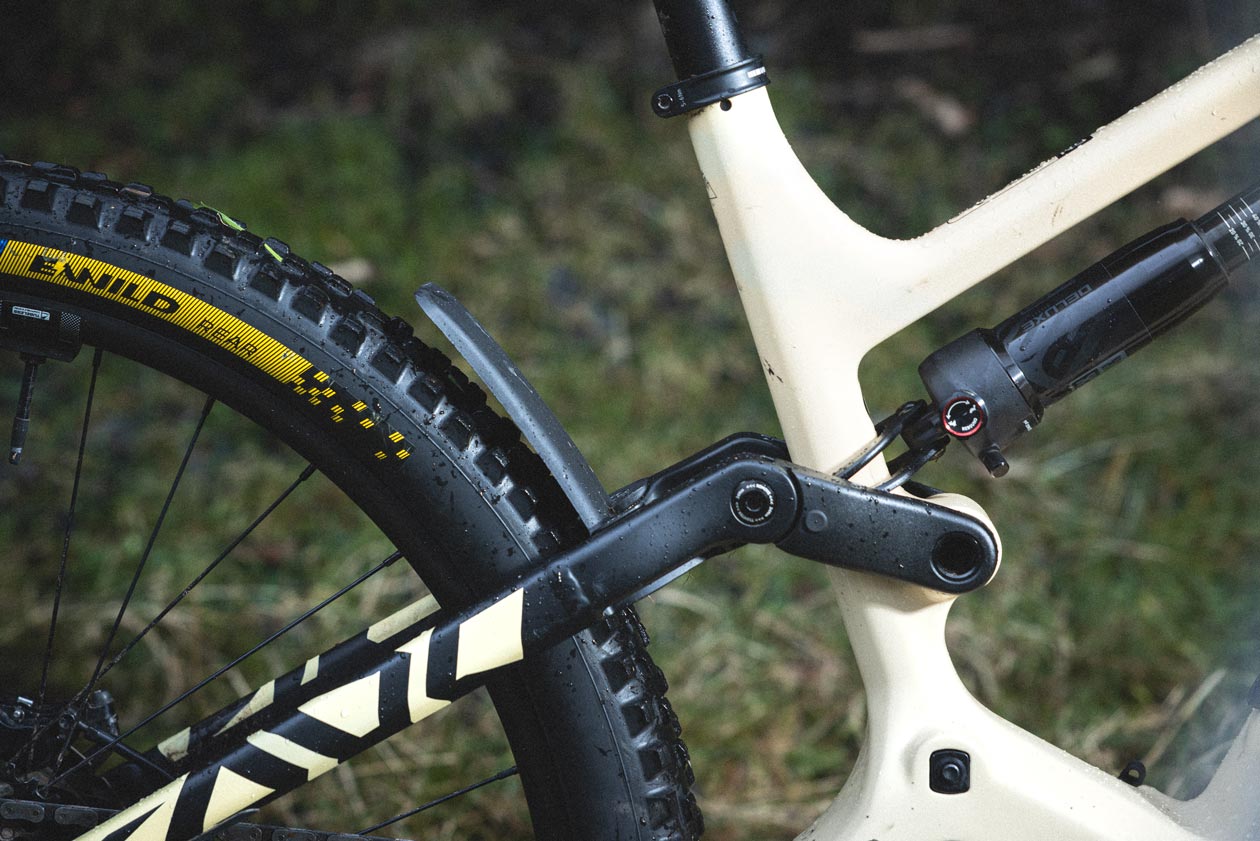
Whyte focused on making the Kado a durable bike that requires minimal maintenance in the wet climate of their native UK. They gave it weather-sealed suspension pivots, seat clamp, and cable ports, to prevent the ingress of water and dirt. Backing this up, they offer a lifetime frame pivot bearing warranty. Offering further protection are a rear mudguard to shield the linkage, and a durable metal-reinforced motor skid plate.
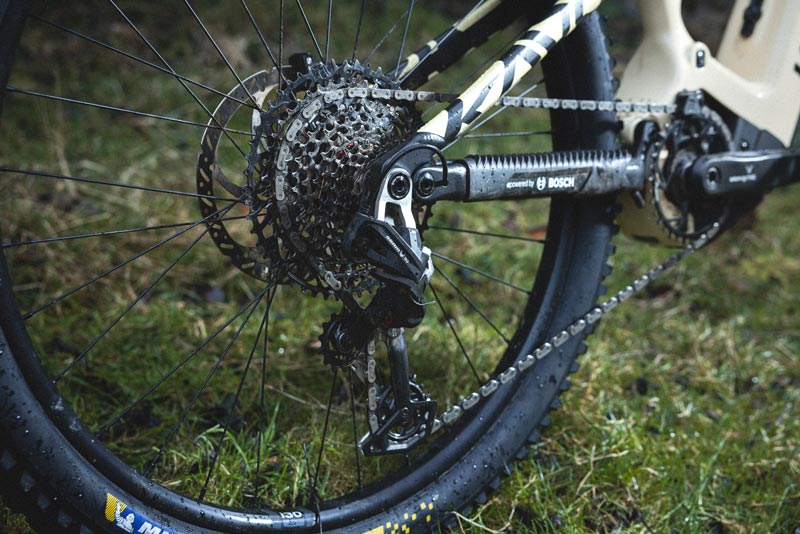
There’s no headset cable routing here. Instead, Whyte routes the cables through rubber ports in the side of the head tube, before passing through guided tubes in the downtube. The brake hose runs externally on the rear end, while the gear cable is hidden within the chainstay.
Disappointingly, Whyte omitted a dedicated mounting option for a tool, though there is useful space towards the headtube, which could be utilized with a strap-on system. There’s a bottle cage mount, with room for a large water bottle or the range extender inside the front triangle.
The Whyte Kado frame is given a lifetime warranty, covering the initial customer against fatigue-related issues.
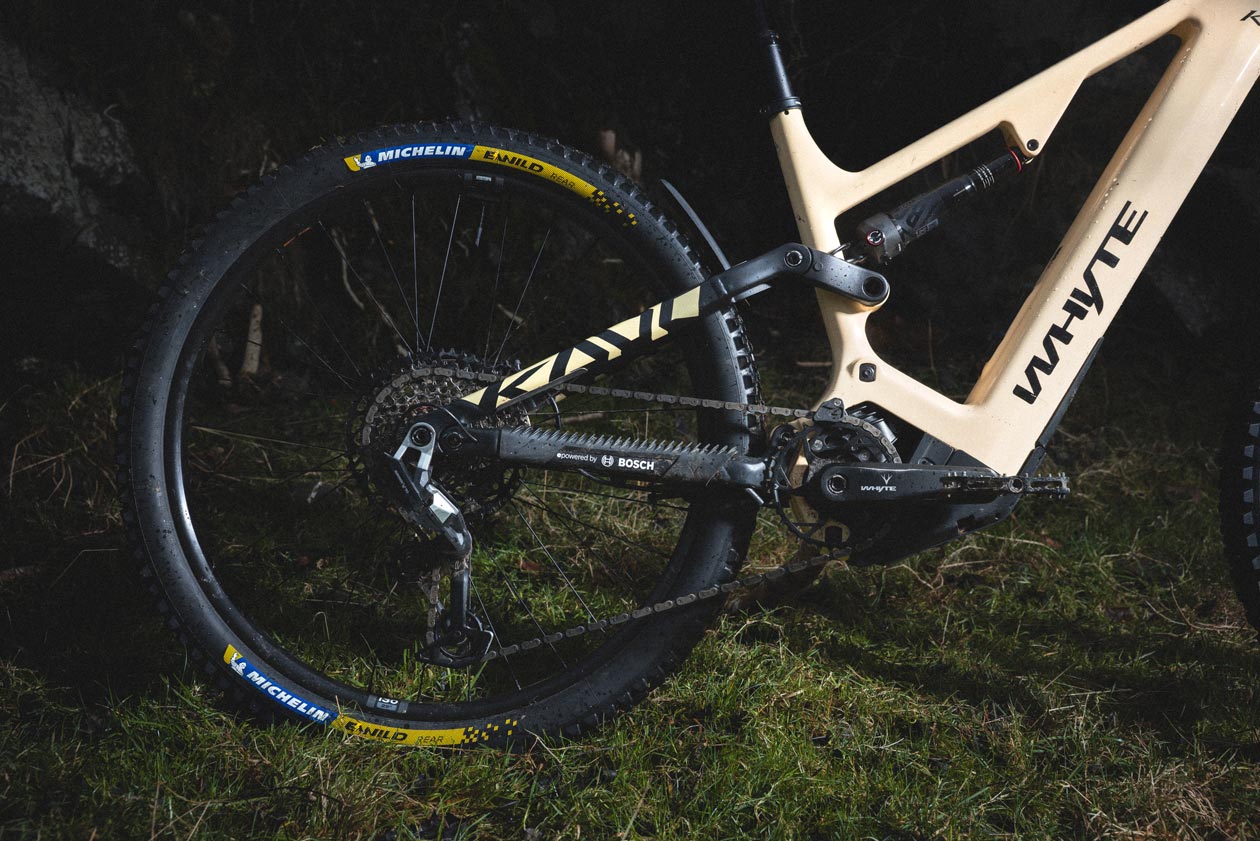
SUSPENSION | Whyte uses a four-bar suspension design for the 150mm rear end on their Kado. Though they keep the suspension characteristics close to their chest, it is clear that the design produces low to moderate Anti Squat and Anti Rise, with reasonable progression that pairs nicely with the custom-tuned air shocks fitted from stock.
GEOMETRY | Whyte selected a nicely balanced geometry package for the Kado, with no stand-out numbers for a bike in its class. The Small to XL size range covers riders from 5’3” / 160cm to 6’6” / 198cm. Our 6’2” / 189cm tester selected the size Large, which was a good fit for his relatively short body and long legs.
The size Whyte Kado features a 65° head tube angle, 350mm bottom bracket height, and 450mm chainstay length across the size range. The effective seat tube angle slackens slightly as you move through the size range, from 77.9° on small to 77.5° on XL.
On the size large tested, the reach was 485mm, the stack was 646mm, and the overall wheelbase came in at 1273mm.
It is slightly disappointing not to see size-specific chainstays for the Kado. As a result, shorter riders are provided with a relatively long rear end. Otherwise, the geometry was well selected, producing a nicely balanced characteristic on the size large.

BUILD SPECS | Whyte Bikes are available in the UK, Europe, Australia and New Zealand, and select other markets. Sadly for riders in the United States or Canada, Whyte Bikes are not easily available to purchase.
In the UK, the Whyte Kado build range spans price points from the £3,999 Kado S to the £9,999 works build. We were sent the Kado RS build to test, which retails for £5,999, and featured a modest yet purposeful spec.
Select level Rockshox suspension offers the comfort and compliance, with a custom-tuned RockShox Deluxe rear shock and 160mm Zeb fork. The drivetrain is a mixture of SRAM Eagle 70 and 90, and the motor is driven by 155mm Whyte alloy cranks. SRAM also provides their DB8 brakes, with a 220mm front rotor and 200mm rear. These were replaced by Trickstuff Maxima brakes to increase stopping power and conclude their review.
WTB ST Tough (f) and HTZ Trail (r) rims are laced to non-brand sealed hubs, then wrapped in Maxxis Assegai and DHR II tires with EXO+ and DD casings, respectively. A TranzX Rad+ dropper is fitted in generous lengths, and topped with a Whyte Custom saddle. Rounding out the build is a Whyte brand alloy cockpit.
Total build weight as stock on the size large Whyte Kado RS came in at 25.6kg / 56.4lbs.

THE DIRT
My testing period on the Whyte Kado RS began in the middle of British Autumn (Fall), and extended into the depths of Scottish Winter. During this time, trail conditions transitioned from all-time-Fall-time hero dirt, through to the sloppiest Scotland could muster. Meanwhile, the Whyte Kado RS remained consistent and dependable, making for a solid eBike regardless of the trail and conditions.
SETUP | The Whyte Kado RS was a simple eBike to set up, with the rear end sitting happily at 30% sag with the stock volume reducer configuration. The fork required more ramp-up from the air spring than stock, so I added two volume reducers to the zero that came stock, to increase the progression and keep me off the bottom-out bumper. The limited damper adjustability came without a huge detriment to performance, with both ends balancing comfort and support well. There’s no need to be deterred from buying the Kado RS due to the suspension setup.
The SRAM DB8 brakes didn’t cut it for me, on the other hand. I struggle to obtain the power I desired without having to squeeze the brakes hard, leading to fatigue on extended steep descents. We’ve had many reports of riders being satisfied by SRAM’s DB8 brakes, though, so there is a chance they may still work for you. Even so, after I switched them out for a set of Trickstuff Maxima brakes, I was happier with the performance. I’d love to see SRAM’s Maven Base brakes spec’d instead of DB8s, even if there’s a slight price increase.
I replaced the stock tire spec with a set of Michelin E-Wild tires. These had a burlier casing and stickier rubber, giving improved traction and durability. This was not an essential swap, though, and I commend Whyte on fitting a suitable tire combination to match the Kado’s intentions.
At the start of test, I had a pronounced battery rattle. Whyte shipped me an updated forward battery mount – which should be fitted to any Kado eBikes purchased – and this remedied the issue. The bike ran quietly once this was addressed, with rattle-free cable routing and well-damped chain noise to give a high quality impression overall.
I ran the Kado in the high geometry setting for the majority of testing, enjoying the increased agility and climbing clearance that it offered. Moving to the low position, the extra stability increased confidence on faster descents, but the Whyte Kado didn’t demand the low setting to feel comfortable.

ELECTRONICS & INTEGRATION | The Bosch Performance Line CX Gen 5 system offered excellent control, and ranked as one of the best eBike drive units on the market in 2026. With the power update to 750W and 100Nm torque, there was ample power for full turbo blasting, yet respectable range when careful to manage battery consumption. For riders on the lighter end of the spectrum, the 800Wh battery capacity is likely to offer plentiful range to keep most happy for long rides. When nearing my 100kg / 220lbs rider weight, battery consumption is considerably increased, and the option to fit a PowerMore range extender may be worthwhile exploring.
The Bosch drive unit ran quietly and smoothly, with no issues or quirks presenting throughout the test. It would be great to see the Kiox 400C display fitted to all models, as it offers good functionality and a welcome battery percentage indication. But, it doesn’t change the actual riding experience, so I understand the call to save some money here.
Integration of the Bosch eBike system was solid on the Whyte Kado, with the drive unit integrated cleanly, especially when considering its pronounced rotation. The ability to slide the battery out of the downtube for off-bike charging or hot-swapping (if a second battery is purchased) was a welcome sight. With the updated forward mount, the battery was fixed in a suitably solid manner that left no concerns of possible ejection. And the drive unit protection was stellar, with the inclusion of the metal plate offering confidence to do your best Chris Akrigg impression.

CLIMBING | The Whyte Kado RS was an exceptional climber. It ranks amongst the very best eMTBs when going uphill, thanks to its blend of geometry, suspension performance, and the Bosch CX drive unit.
The central seating position was accompanied by a fairly long rear end, biasing plentiful weight on the front end to retain control on all but the steepest of climbs. This came without great penalty to the agility of the Kado, which retained the ability to thread the needle through tighter sections of climb effectively. The 155mm crank spec offered suitable clearance to navigate through chunky and technical terrain, keeping cadence consistent.
The suspension struck a good blend of traction and efficiency, retaining ample comfort for seated climbing through mildly rough terrain and pedaling stability that eased the timing of pedal strokes. The lack of climb switch on the RockShox Deluxe Select R rear shock never came into question, and it was only on the roughest terrain where the Kado could be unsettled when climbing.
Overall, the Whyte Kado was a pleasure to climb on technical terrain and fireroads alike.
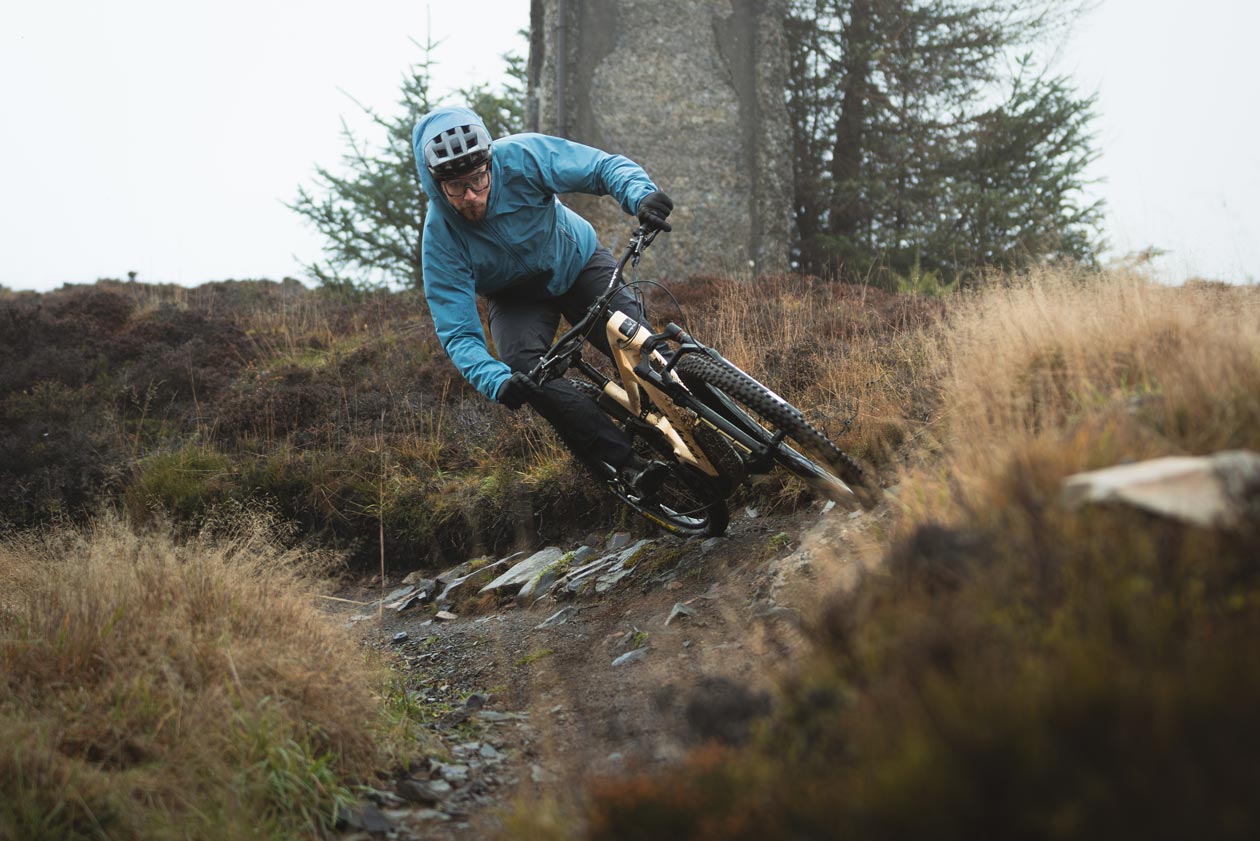
DESCENDING | The Whyte Kado RS was a well-rounded descender, balancing stability and agility well. Though its 25.6kg/56.2lbs weight had me concerned about its playfulness, it disguised its weight effectively.
The overarching theme was of an eBike that was perfect to hop onto and ride just about anything the UK had to offer. The Kado was not the first choice for the gnarliest bikeparks and downhills, but the capabilities of this 150mm travel eMTB were impressive.
The balanced and planted nature in the corners was a delight. The rider and bike weight was located centrally between the wheels, making for a confident bike, regardless of the corner in question. The ease of transition between corners was notable, giving a much lighter feeling than the number on the scale would suggest.
The suspension characteristic on the Kado was fairly middle-of-the-road. It was not the plushest machine out there and didn’t completely erase the trail below, but it was far from uncomfortable. The custom-tuned shock worked harmoniously with the 150mm four-bar rear end, and offered good sensitivity without any wallowing sensations. It is this wallowing that can often make a heavy eBike feel even heavier, but Whyte managed to avoid the Kado from suffering from this fate.
In the end, there were no major standouts in the performance of the Kado RS. It was easy to hop on and ride, with no quirks or considerations required, regardless of the trail and conditions. A true generalist and a pleasure to ride, Whyte nailed the handling of their all-mountain eMTB.
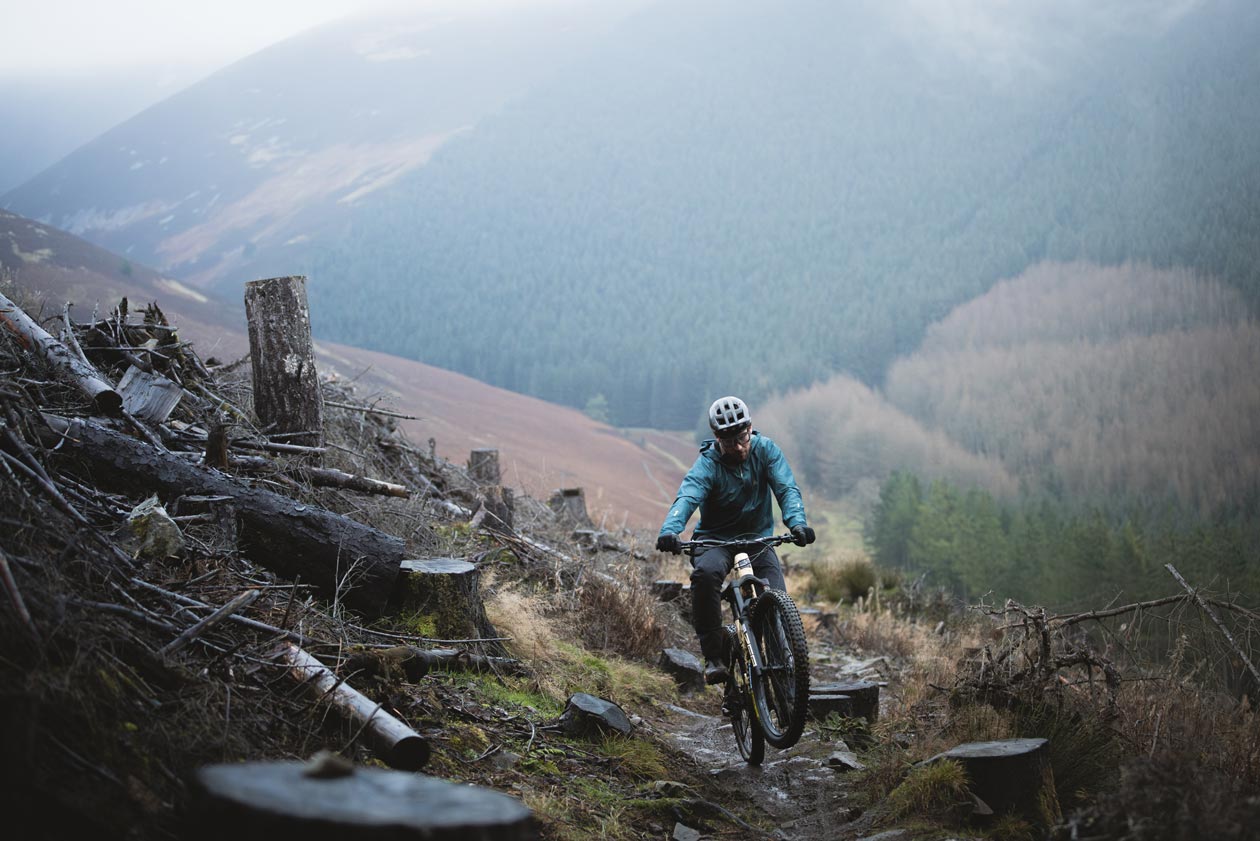
FINISH AND VALUE | Overall, the Whyte Kado was a tidy bike, with the Carbon front and alloy rear looking fairly clean and all the details well covered. Its cable routing and chain protection kept things quiet, making for a premium feeling on the descents.
Everything held up well and stayed tight throughout testing, once I replaced the battery bracket. The battery mounting system itself was robust and reassuring, and removing the battery was intuitive and fast. I appreciated the robust drive unit protection, which held up to the abuse without concern.
The Shape.it V2 link was neat, providing a simple and effective solution for geometry adjustment that caused no issues. It was welcome to have the choice of the two geometry settings, especially since they were both useful. Where the high position feels obsolete on many bikes, the Kado worked well in either setting.
I would love to see some size-specificity on the rear end of the Whyte Kado, to provide shorter riders with a more compact rear end. But otherwise, I think the value proposition is reasonable, if not exceptional. The excellent dealer support (from retailers like my local bike shop, Ride Innerleithen) and the lifetime frame and bearing warranties provided increase its value, undoubtedly.
COMPONENT REPORT
SRAM DB8 Brakes | Although they didn’t present any problems, as a heavier rider, I would prefer to see a more powerful brake fitted to slow the Whyte Kado down.
SRAM Eagle 70/90 Drivetrain | SRAM’s mechanical T-Type drivetrain worked flawlessly throughout testing, shrugging off impacts and sticks and shifting smoothly every time. Very impressive.
HOW DOES IT COMPARE?
VS Mondraker Crafty
As comparable bikes in travel and wheelsize, the Whyte Kado and Mondraker Crafty eMTBs are easily comparable. Though the Whyte was the heavier eBike on paper, it took the edge in agility, with a slightly sharper overall feeling. The Crafty leant more towards the enduro end of the spectrum, offering slightly better bump absorption and confidence when pushing hard in the roughest terrain.
The Wolf’s Last Word
The Whyte Kado is an eBike that’s clearly been aimed to excel in the UK, and that’s exactly what it does. A true generalist eMTB that runs dialed, climbs extremely well, and feels capable of taking on all but the rowdiest of trails, the Kado is a solid option for a wide range of riders. 
Price: £3,999 (Kado S 600Wh) – £9,999 (Kado Works)
Website: Whytebikes.com
SHARE THIS REVIEW
ABOUT THE WOLF

Robert’s habitat is the Tweed Valley, Scotland, which is renowned for its root-littered enduro mountain bike trails. Robert has been developing his bike handling skills for the last 16 years. Since he was a pup, he’s been riding everything from BMX through to enduro and downhill bikes. Combining a playful style with occasional speed-focused aggression, he favors supportive bikes, and does his best to push them hard.
Rank: European Tech Editor
Size: 6’2” / 189cm | 220lbs / 100kg
Social: @robert_johnston
SUPPORT AND JOIN THE LOAM WOLF PACK
Did you find this review helpful? Would you like the chance to review (and keep) products? Are you interested in saving big bucks by getting exclusive Members Only discounts from industry brands all while helping support a small, rider-owned media crew? We have big plans for our members beyond big discounts and product giveaways! To learn more and help support small, independent media, visit our Member’s Page.