


IT’S ALL NEW
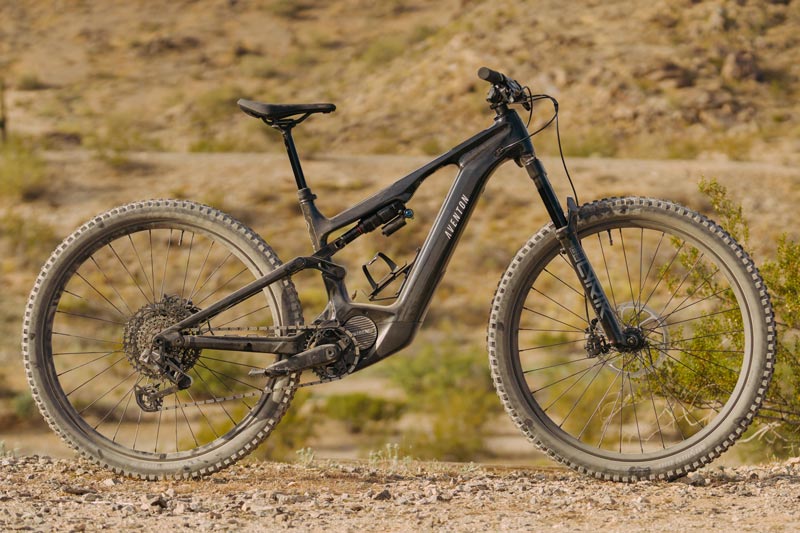
Aventon approached the Current with a very specific rider in mind: someone who wants a go‑to weekend bike that is easy to own, ride, and live with, rather than a niche weapon for one tiny slice of the riding spectrum. The goal was an all‑purpose trail eMTB that feels approachable for new riders, but has enough capability to perform on bigger days and rougher trails for more advanced riders.
DRIVE UNIT & BATTERY
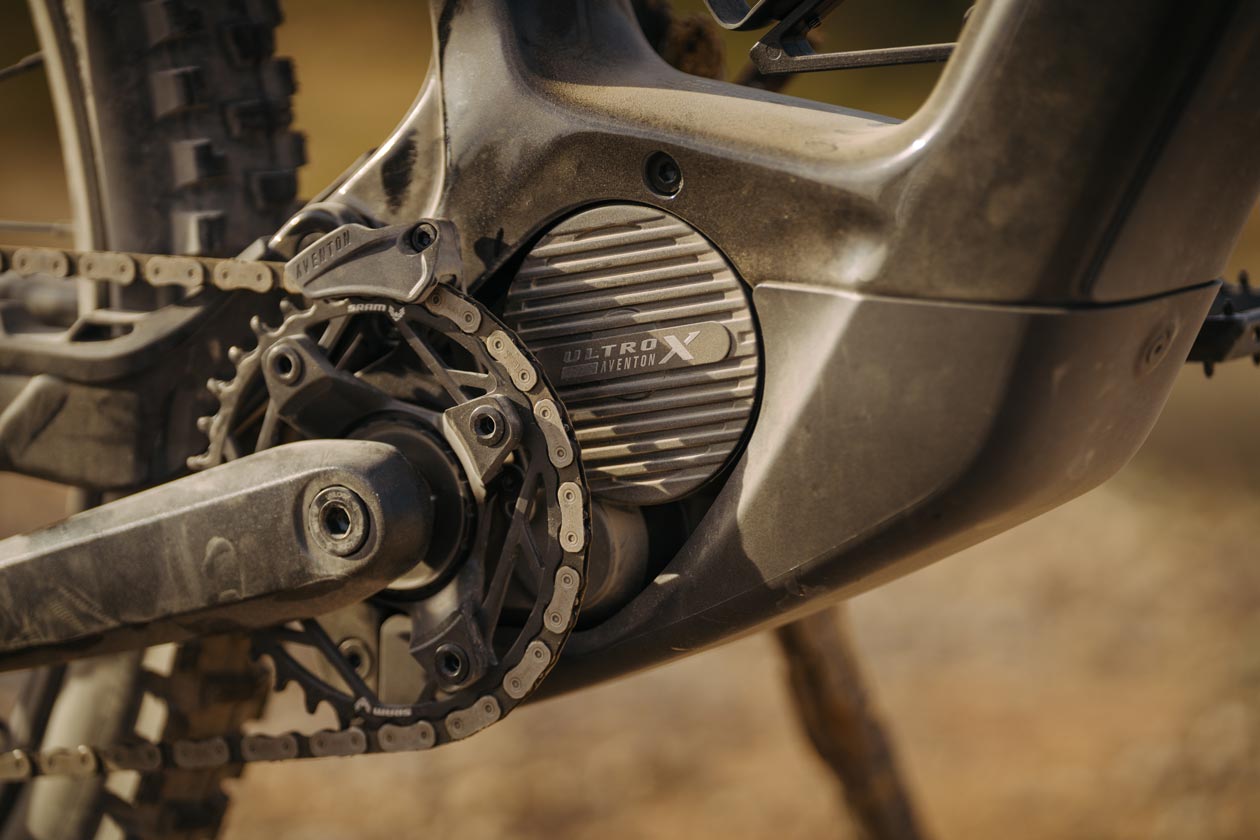
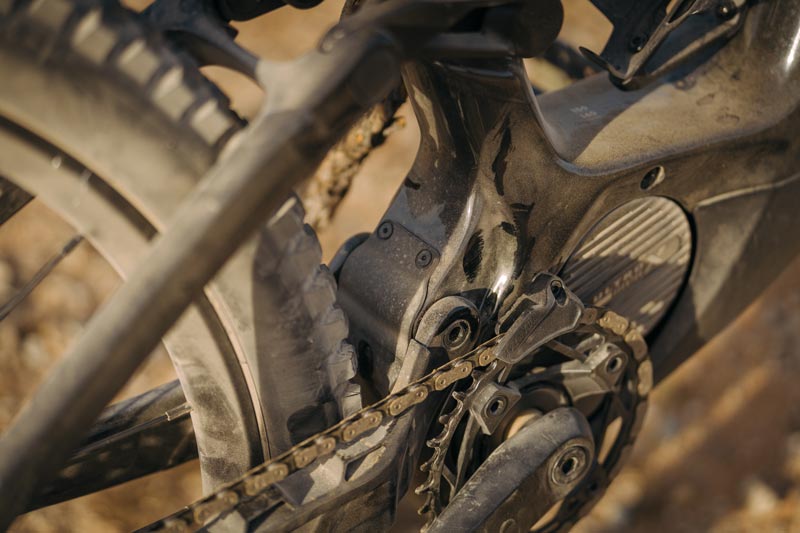
Powering the Current is Aventon’s Ultro X drive unit, their second‑generation mid-drive platform. In the Current’s standard Turbo mode, the Ultro X delivers 110Nm of torque and 720 Watts of peak power, with the option to bump that to 120Nm and 850 Watts of peak power for 30 seconds via Boost mode. There are five assist modes total: Auto, Eco, Trail, Turbo, and that 30‑second Boost. The support characteristics can be tuned in Aventon’s app for each mode, to tailor to each rider’s needs. There is no time‑locked cooldown cycle between Boost efforts, so if you’re grinding up a long fire road and want maximum power, you can keep re‑engaging Boost mode to maintain the higher torque and power ceiling.
Crucially, Aventon controls the entire algorithm behind the drive unit. This lets Aventon tune the power delivery and the eBike’s ride feel, down to every last data point. Their stated goal is modulated, controllable support, especially for riders who may be newer to eMTBs and don’t want to be overwhelmed by a sudden surge. On trail, the bike delivered that kind of controlled, low‑cadence torque that makes technical moves easier without feeling like the bike is running away from you.

The Ultro X weighs 6.28lbs (2.85kg) and carries an IP67 waterproof rating, putting it in the mix of modern, compact eMTB drive units. Aventon pairs it with an 800Wh removable battery, which slides out easily for parking lot hot swaps, or long road trips where the bike lives on a rack for hours at a time. Currently, there is only an 800Wh battery available. The system can also be configured in a Class 3 mode, for riders in regions and with use cases where a higher speed cutoff makes sense. It is worth noting that the Class 3 mode does not limit power output in Turbo, but revokes access to the full 120Nm boost mode.
Noise from the motor is impressively subdued. In the rough, rocky Phoenix terrain, the dirt and tire noise drowned the motor out most of the time, though you can pick up a mild whine on steep, smooth sections if you listen for it. It is not the absolute quietest system on the market, but it is notably quieter than the latest Bosch units, with a bit of internal rattle you’ll notice more in parking lot bounce tests rather than out on the trail.
ELECTRONICS & INTEGRATION
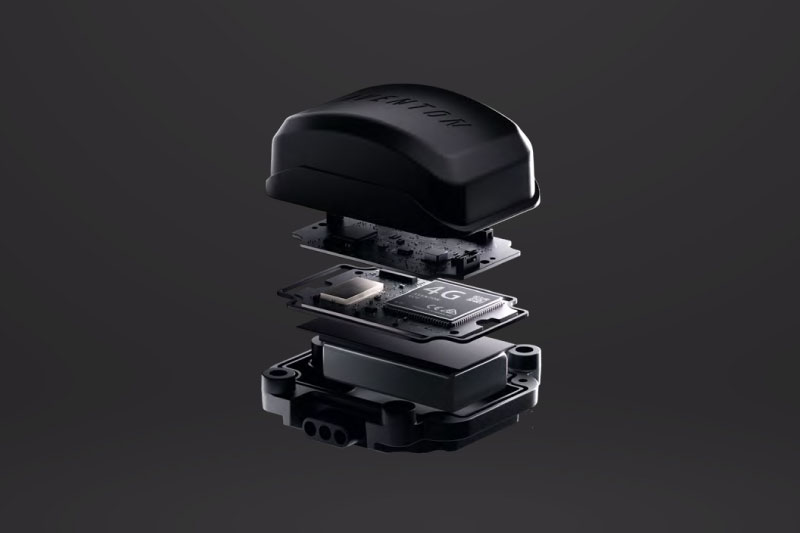
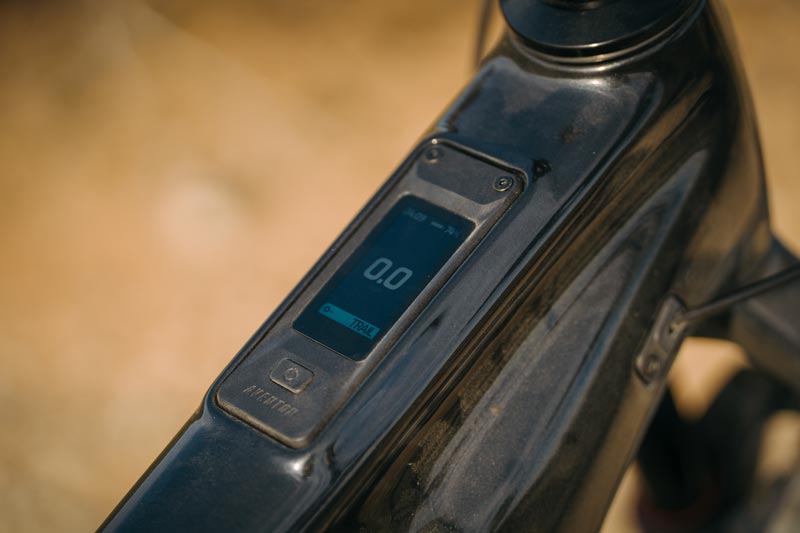
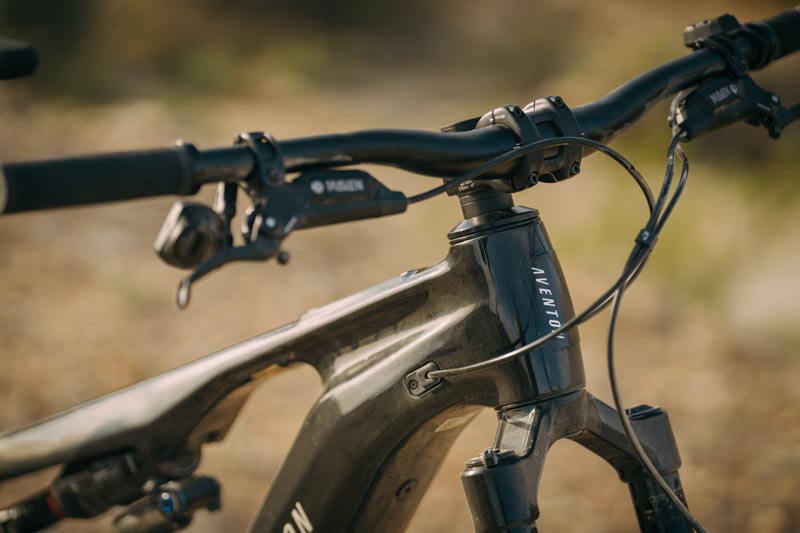
The heart of the Current’s tech story is the Aventon Control Unit, or “ACU”. This is a top-tube-mounted touchscreen that runs the entire system. The ACU serves as the brain, interface, and sensor hub, consolidating everything into one unit and requiring only a single cable to unplug for service. From that screen, you can view and control 23 different data points at up to 800 nits of brightness, which keeps things easy to see on bright, exposed days.
Over‑the‑air updates come standard, and Aventon has leaned hard into software and user experience with this bike. The ACU pulls in ride metrics like jump analysis so you and your buddies can finally settle those “who went bigger” arguments with data instead of trash talk. You also get ANT+ connectivity for heart rate monitors and other devices, as well as direct links to Strava and Trailforks. GPS and ride logging can happen straight from the bike without juggling extra head units. The ACU will even tie into Apple’s Find My network, offering some peace of mind when the bike is locked in the back of a truck while you’re at dinner.
Aventon has published full wiring diagrams and schematics for the Current, clearly aiming to make ownership and service as transparent and user‑friendly as possible. On the bar, a three‑button wireless remote went through more than 20 iterations before landing on the final design, and Aventon is developing a range of mounts to let riders position it exactly how they like.
The ACU also unlocks some eMTB‑specific control features: anti‑wheelie control to keep the front end from wandering on steep tech climbs, hill-hold so you can let go of the bike on a steep pitch and have it stay put, and hill-start assist to help you get rolling again without a panic‑inducing backwards roll. Within the app and ACU interface, you can tune how much hill‑start assist and wheelie control you want, from no help at all to maximum intervention, plus tweak all the power delivery characteristics. The system also includes a walk mode that can be activated from any assist mode by holding the down arrow on the bar remote. When walk mode is released, the hill-hold automatically kicks in, which we find darn cool.
FRAME & FEATURES
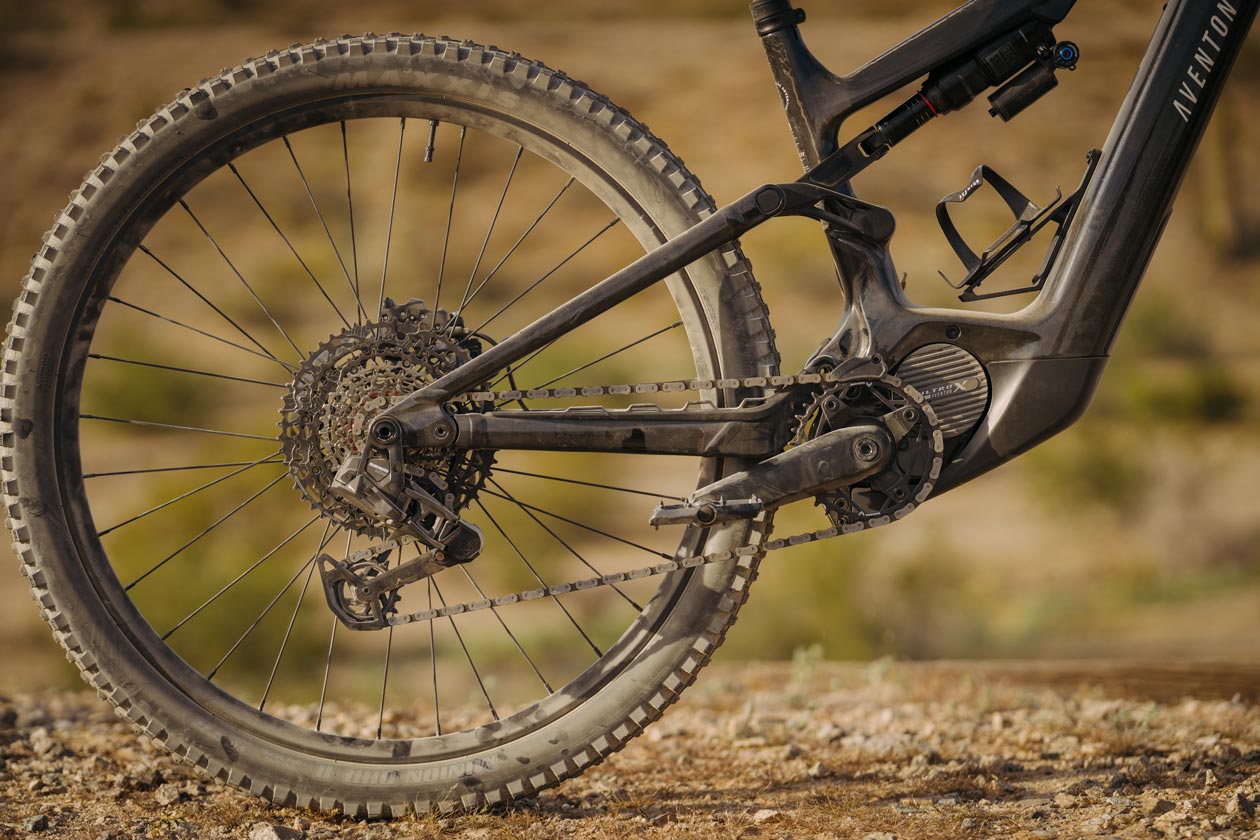
The Aventon Current uses a carbon front triangle paired with an all-aluminium rear end on the EXP model we tested. The cheaper ADV model gets a fully aluminum frame. The frame design centers around clean integration with the ACU and its easily removable battery, as well as straightforward serviceability. Aventon’s decision to stick with a single cable going to the ACU – and to release full wiring documentation – is clearly meant to make the bike less intimidating for home mechanics and dealers alike.
The frame is built around a four‑bar linkage, using a common 210 x 55 mm shock size to deliver its 140mm travel. This shock size was deliberately chosen so riders have a wide range of aftermarket shock options if they want to upgrade or experiment down the line. The Current is only offered in a full 29” wheel platform, with no geometry adjustability.
From an ownership standpoint, Aventon is backing the product with its sizable dealer network. There are around 2,000 active dealers across the U.S. This gives riders support for what is a significant, tech‑heavy purchase. Aventon’s internal positioning for the Current is “product‑forward and feature‑rich”, but still anchored in what they consider good value for the amount of hardware and software packed into the bike.
SUSPENSION
Aventon partnered with Karin Bike Design Studio to develop the suspension kinematics, leaning on external expertise to dial their first full‑suspension eMTB. Out back, the Current offers 140mm of rear travel driven by that four‑bar linkage, which is paired with a 150 mm fork up front. The linkage delivers around 22% progression, putting it in a happy medium when it comes to end-of-stroke ramp-up.
Aventon chose the 140mm travel configuration very intentionally. Their target was the sweet‑spot “do‑everything” category: capable enough for gnarlier days and rougher trails, but not so over‑gunned that it becomes a chore on mellower terrain or long days in the saddle. They wanted a bike that reflects their broader adventure ethos: something that can handle everything from easy trails to more serious descents without pigeon-holing the rider into one style of ride.
On the trails in Phoenix, the rear suspension was one of the standout features of the bike. The terrain there is square‑edged, chattery, and loose, and even at 29 psi in EXO‑cased tires, there was plenty of traction and compliance on offer. The rear end felt very active, with the shock doing a lot of work and moving freely without delivering noticeable harshness.

GEOMETRY
The Current is offered in sizes Small (S) through Extra Large (XL), with reaches ranging from 425mm up to 500mm. Our size Large test bike sports a 475 mm reach with a 634mm stack height, 64.6º head tube angle, 76.6‑degree seat tube angle, and a 445mm chainstay that is shared across all sizes.
Aventon intentionally skipped flip chips, adjustable headset cups, and other geometry modifications. Their goal was to design a bike that simply works straight out of the box, and poured their effort into the tech integrations, software features, connectivity, and overall ride experience instead of splitting the platform into multiple setups. On trail, that decision translated into a very connected front‑end feel, especially in the slippery, off‑camber corners and rock‑strewn turns common in Phoenix.
BUILD SPEC
At launch, the Current comes in three build levels globally, though North America only gets two of them: the ADV as the entry‑level alloy model for $4.599, and the EXP with a carbon front triangle and alloy rear for $5.999. The third build, the REC, retails for €3,499, but is not currently available in North America. Each model offers two unique color options.
Our EXP test bike came equipped with a SRAM S1000 Transmission drivetrain, which is hard‑wired into the eBike system’s battery. Suspension duties are handled by a RockShox, with a Super Deluxe Select+ shock out back and a Lyrik Select+ fork up front. Wheels, bar, and stem come from Aventon’s in‑house component brand. Both models launch with Maxxis tires, a DHF up front and DHR out back with EXO casings.

THE WOLF’S FIRST IMPRESSION
FIT, FINISH, AND FRAME DETAILS | Aventon is candid that the Current is more expensive than many of their existing bikes, but they see that as a direct reflection of the engineering time, software development, and attention to component choice that went into it.
During our first ride, the Current proved to be well thought out and executed, with no cable rattle or bolts wandering loose, and an overall tight feel. Should you need to tighten any linkage bolts on the trail, access is very easy and well planned out. The paint has a slight speckled glimmer to it, which helps make the bike feel more premium. The ACU touch screen controller blends seamlessly into the top tube and was plenty bright enough to use in the harsh Arizona sun.
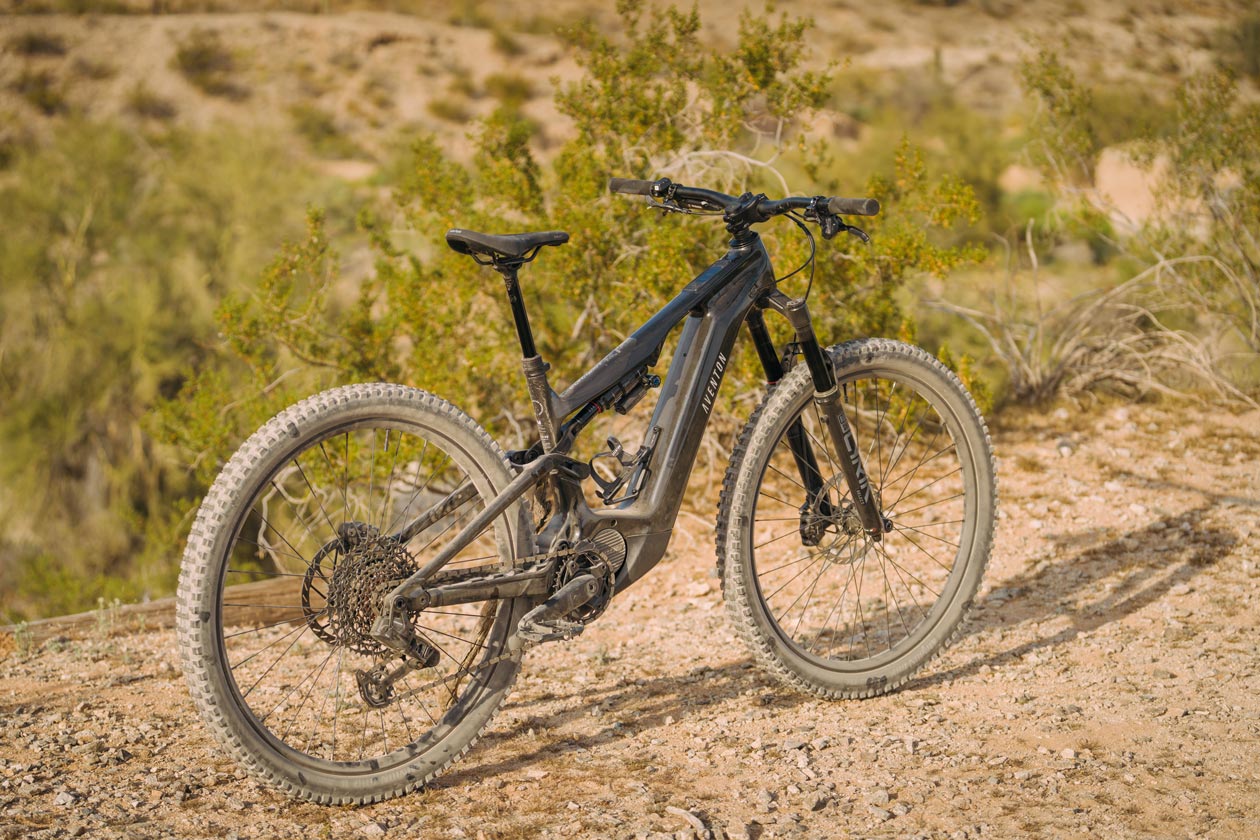
ULTRO X DRIVE UNIT: POWER, FEEL, AND TUNING | The Ultro X drive unit delivers a smooth and predictable assistance feel, even when in the max power boost mode. The bike never felt like it was walking away from me, but it did not lack the power to make it up aggressively steep climbs. While I did not fine-tune the power modes, I did experiment with the sensitivity and overdrive settings. I found that the 60% mark for sensitivity was my happy medium for the techy Phoenix trails. At home, where traction is more abundant, I would likely bump this to 80%.
I preferred the maximum amount of overrun, to help give me a bit more confidence when lifting up and over the stair step-riddled climbs that zone had to offer. At home, I would likely opt for the same setting, as I enjoy the feeling longer overruns provide. Due to how loud the loose rocks are in Phoenix, I did not get a perfect sense for how much noise the drive unit delivers under load, but with that said, when I did cross into some sand or climb slabs, the decibel level was very low, sitting between the Bosch Gen 5 and TQ HPR60.

CLIMBING | Aventon’s design brief for the Current was as much about the climb as it was about the descent. With 110 Nm of torque on tap in Turbo mode, and the ability to bump to 120 Nm in Boost, there is no shortage of power on tap for the steepest climbs you can find. The rear suspension, even at 24% sag, developed a solid amount of traction. There is a bit more pedal bob than I was expecting to find, but I would much rather have this than a firmer off-the-top feel. There was plentiful comfort generated, ensuring my butt was still happy at the end of the day. The platform gravitates to comfort and traction over outright efficiency.
The anti‑wheelie control and hill‑start assist add another layer of climbing confidence, especially on loose, steep pitches where front‑end wander and stalls are common. Personally, I opted to run Wheelie Control off, but I think this is a valuable tool for riders just starting their eMTB journey. Hill Start assist, however, is rad – I’m a big fan of that! This feature makes pushing my limits on climbs much less intimidating. I also enjoy how easy it is to access walk mode, and the fact that Hill-Hold automatically engages when releasing the walk mode toggle on the bar controller.

DESCENDING | Pointed downhill, the Aventon Current rides lighter than its 52‑pound claimed weight would suggest, particularly when loading and unweighting the rear end. It was easy to pump, pop, and bunny hop over rocks. The bike responded naturally when I wanted to lift the rear wheel and negotiate chunky sections. Phoenix is not exactly overflowing with perfect tabletops, but on natural side‑hits and rock lips, the bike felt comfortable in the air and intuitive to preload.
Despite the firmer setup (roughly 24% sag versus my normal 30–32%), the bike still delivered impressive small‑bump sensitivity. I did not experiment with volume spacers, which will be part of our long‑term test, but the first impression is of a lively, traction‑rich rear end that delivers very little feedback into your feet.
Cornering is a key litmus test for me. On slick, off‑camber corners with kitty‑litter over hardpack and plenty of cactus to keep you honest, the front end stayed planted and predictable, allowing me to push harder than expected for an unfamiliar bike on unfamiliar terrain. The overall handling package struck a nice balance between stability and agility; it never felt like it needed ultra‑steep fall‑line trails to come alive, but also did not shy away when speeds picked up, and the trail got rough.

The Aventon Current is not a specialist bike. Instead, it is aimed at catering to a spectrum of capabilities rather than chasing one narrow discipline. It delivers a blend of fun and performance that should suit a wide range of riders and terrain.
The Ultro X motor brings plenty of tunable power with a surprisingly calm trail demeanor, and the ACU interface is one of the more cohesive, feature‑rich control units we’ve seen in this category. The rear suspension punches above expectations in harsh, square‑edged terrain, and the geometry backed it up with a connected, confidence‑inspiring front-end feel. We still need more time on home turf for long‑term durability testing, but as a first foray into full‑suspension eMTBs, the Aventon Current lands a lot of important punches.