

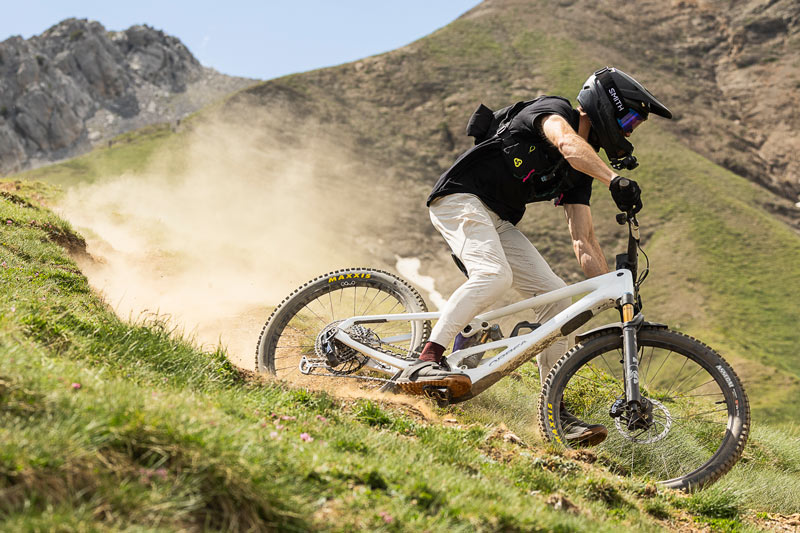

ABOUT THE NEW 2027 ORBEA WILD LT
WHAT IS THE 2027 ORBEA WILD LT?
The 2027 Orbea Wild LT is a long-travel full-power eMTB built around 170mm of rear suspension and Orbea’s custom-tuned Avinox M2S RS drive unit. The new Orbea Wild has been updated in all the right places, dropping weight, adding power (sort of!), and taking major cues from the brand’s recent releases of the Rallon and Rallon RS.
The Wild LT is offered in both carbon and aluminum, with its price starting at just $6,173 for the aluminum and $7,717 for the carbon full build. Builds can be as light as 46.3lbs (21kg) when equipped with a 600Wh battery, without skimping on key components. With the small packaging of the Avinox M2S RS motor, they have been able to create a kinematic package that cuts no corners and maximizes downhill performance.
ORBEA WILD LT’S AVINOX M2S RS MOTOR
The new Wild LT features the Avinox M2S drive unit, but it is not just that simple. Orbea is the first brand to have been granted access behind the scenes at Avinox, developing their own custom tune to align with their Rider Synergy philosophy. This motor is called the Avinox M2S RS, a signifying factor that there is some magic going on with power delivery.
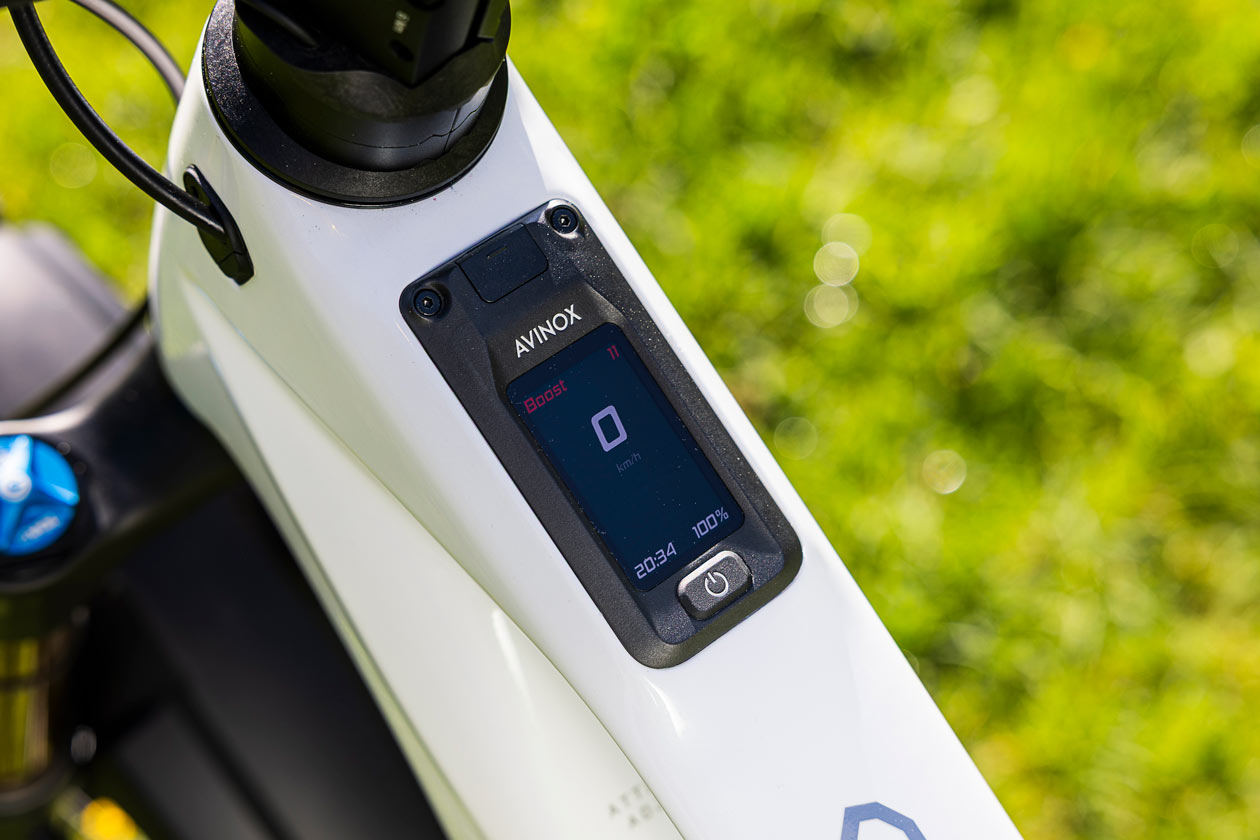
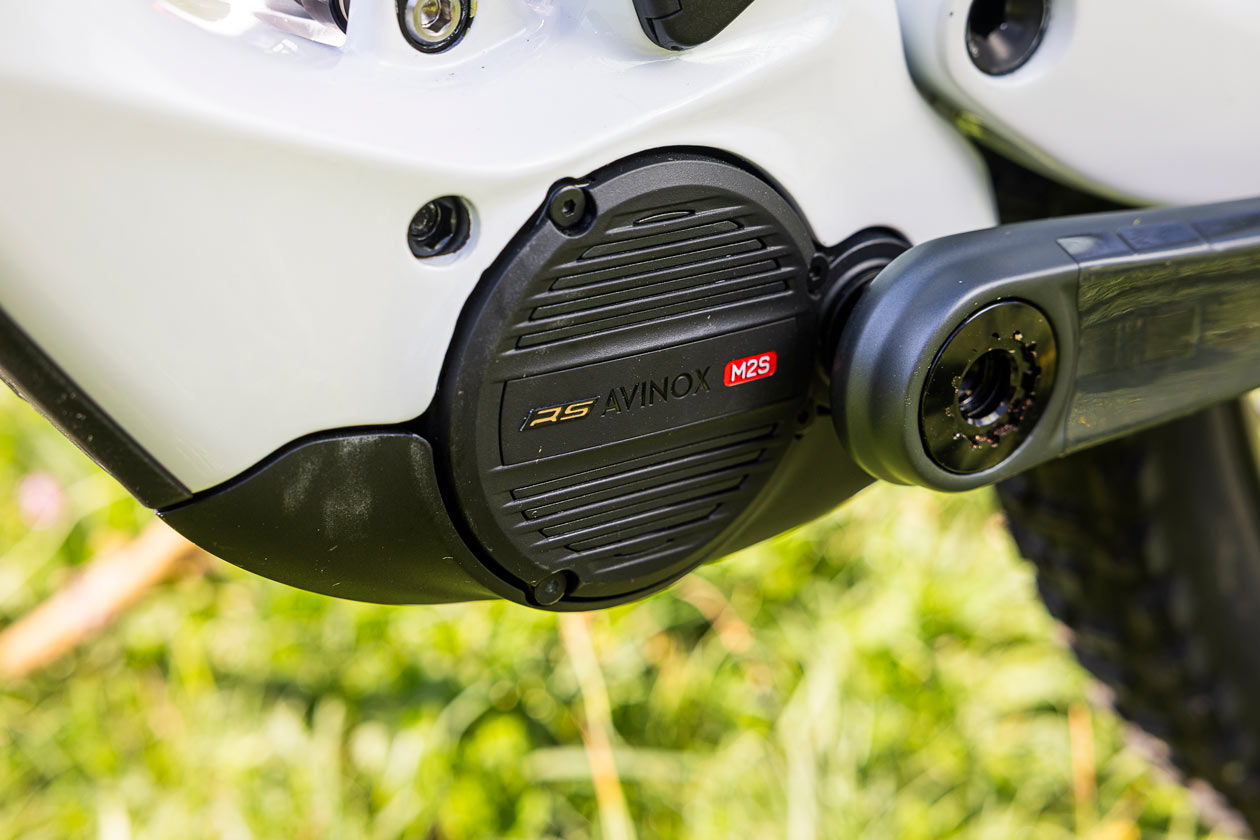
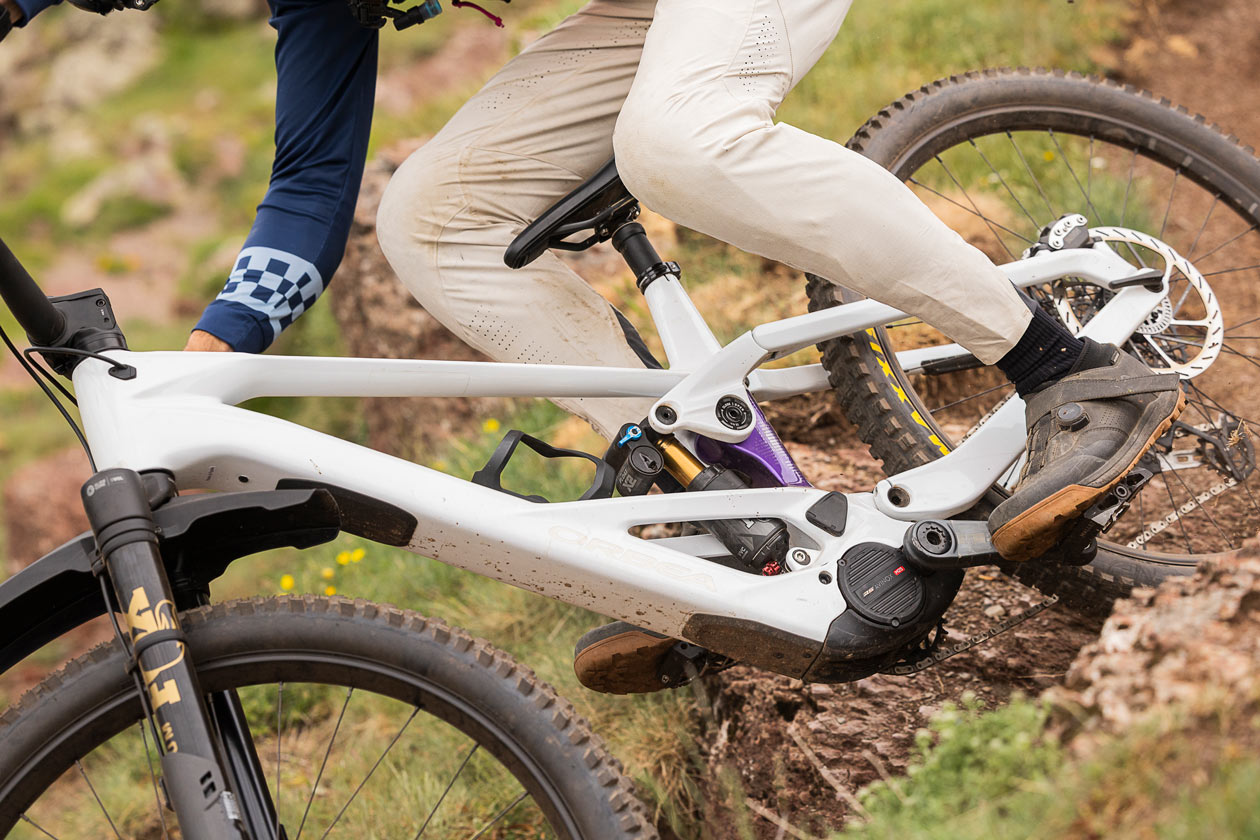
Stock Avinox motors produce 1300 Watts of peak power and 130Nm of torque, with the Boost profile maxing out at 1300 Watts of peak power and 150Nm of torque. The RS Tune on the M2S RS drops the peak power to 750 Watts, as Orbea considers this to be the most suitable number. Dramatic improvements in the motor’s sensitivity – made possible by the advanced sensors on the Avinox motor – give incredible control of this power. Reactivity is increased by over 300% or 3X from the standard tune. To do this, the tuning considers pedal angle, pedal torque, and pedal speed.
This tuning creates a ride feel that is more natural through technical terrain, allowing riders to have more control over how and when the power hits. The lower peak power output keeps riders from having those unpredictable moments – and boosts range – while still having access to the 130Nm of torque for the gnarliest of climbs. Orbea claims that thanks to the RS tune, they have been able to increase range by 20% – 25% over the stock Avinox tune.
Full torque is unleashed at lower cadences than the stock Avinox tune as well; from 0 to 59rpm you get all the torque delivery, while the peak power of 750 watts only comes in at cadences above 60 rpm. A great example of how this can be beneficial on the trail is when encountering an obstacle that requires you to lift the front wheel. The extra reactivity from the motor allows you more control when applying power to get up and over, while the “lower” 750 watts of peak power makes sure the bike does not get away from you. Yet, still having access to the full 130Nm of torque makes completing the move possible.
While the bike comes stock with 4 preset RS tune modes: Auto, Eco, Trail, and Turbo, users can still create their own tunes within the Avinox app, increasing peak power to their desired level. Orbea feels that 750 watts is more than enough for proper trail riding, and we at The Loam Wolf are inclined to agree.
The aluminum-framed H20 build does not come with the M2S variant of the Avinox motor; this is the only model to feature the M2 motor. This motor still receives Orbea’s RS tune, but with a lower maximum torque output and lower-powered boost mode.
WHAT IS ORBEA RS TECHNOLOGY?
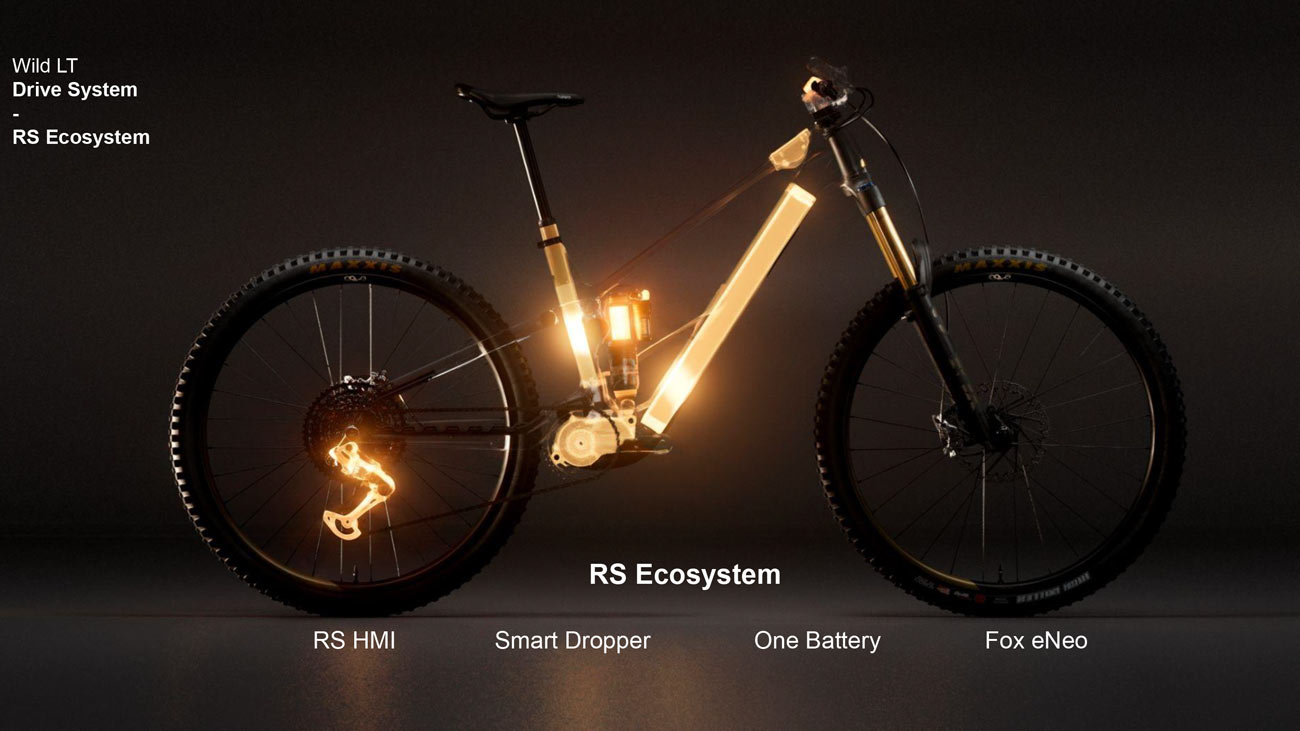
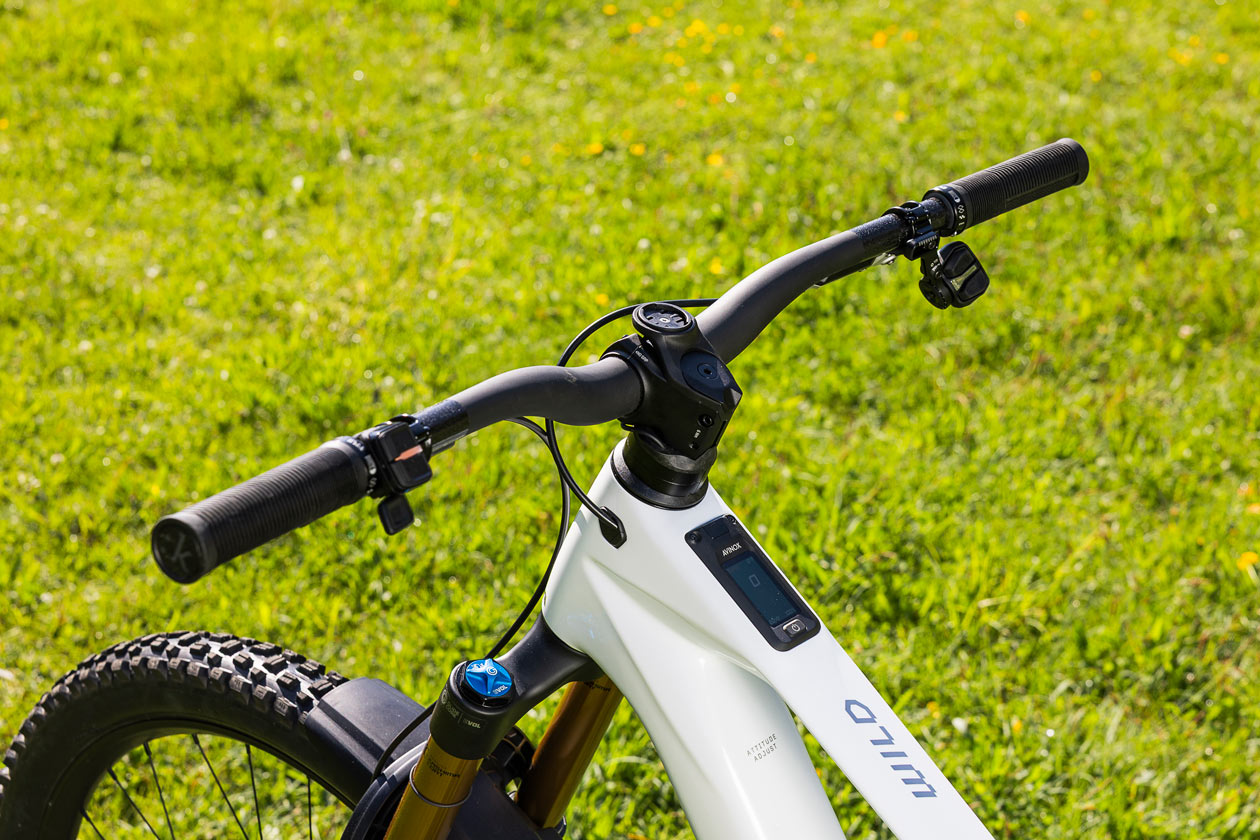
Orbea RS, or Rider Synergy, is a full ecosystem that considers how the rider interacts with the bike. It’s not just the tune of the M2S RS motor, but the integration of the smart dropper and Fox Live Valve Neo, all controlled through the HMI (Human Machine Interface), Orbea’s bar remote. Orbea’s goal with RS is to have the entire bike work with you seamlessly, living and working in the background so you can focus on the ride, not the tech. With this system, the bike’s main battery powers not only the derailleur but also the optional Fox Neo Live valve suspension, and even a headlight.
The HMI allows you to take full control of the Fox Live Valve Neo rear shock by programming one of the buttons on the interface to control the compression mode. The optional headlight can also be controlled from here. Lastly, of course, is the dropper. The remote acts as a normal dropper remote, but with the option to use the smart features, such as pre-programmed height settings and a one-click drop.
CHARGING AND BATTERY
Charging times on the Avinox system depend on battery size, which charger is used, battery temperature, and the state of the battery. According to Avinox, the 12-amp fast charger can charge 0-75% in about 90 minutes and produces a full charge in less than 3 hours. The standard 4-amp charger does the same work in about 4 hours and less than 6 hours, respectively.
The Orbea Wild LT can be configured with either the 800Wh or 600Wh battery, depending on your preferences. The 800Wh battery weighs in at 8.24lbs (3.74kg), while the 600Wh lands at 6.33lbs (2.87kg). Utilizing the 600Wh battery, the Wild LT can be built up as light as just 21kg (under 47lbs) without the use of components that are unsuitable for the aggressive riding the Wild LT is capable of.
ORBEA WILD FRAME & FEATURES
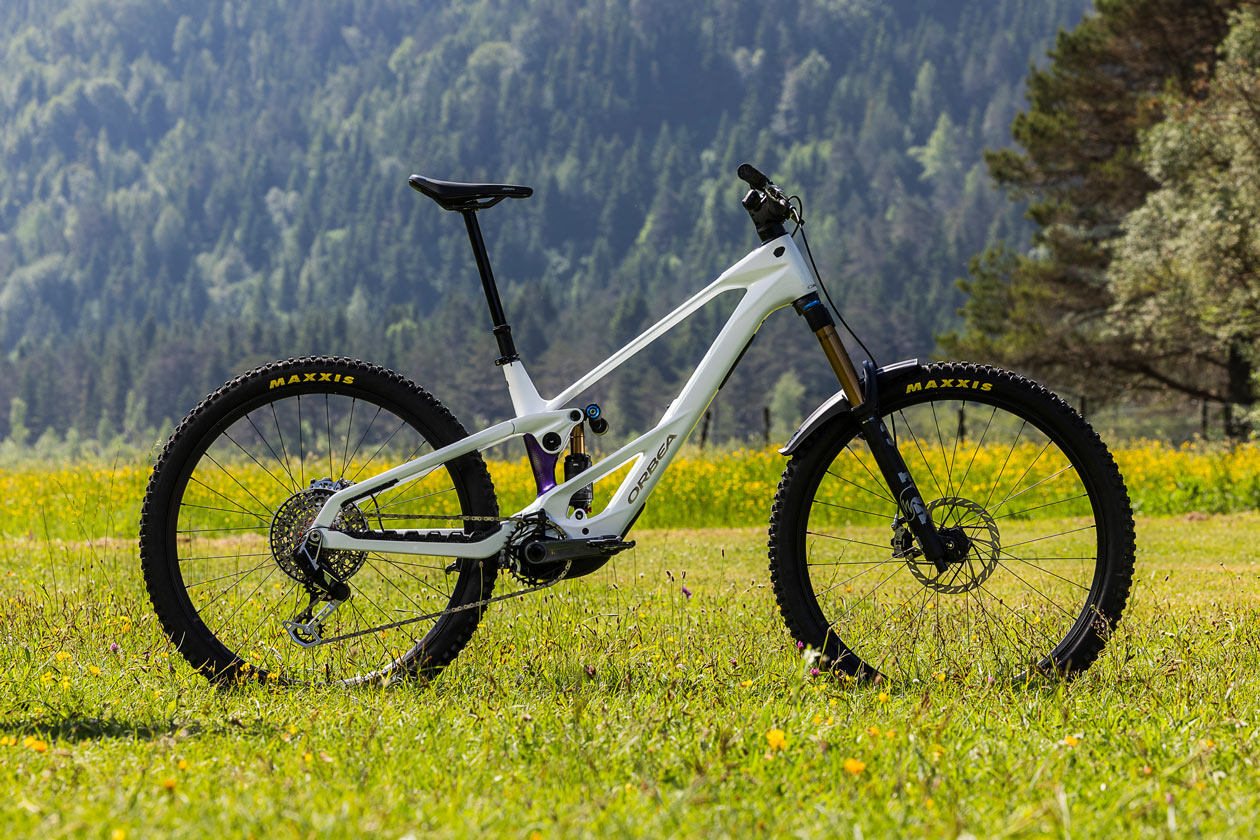
The Wild LT frame was directly modelled from what the team at Orbea learned from Rallon and Rallon RS. While the three bikes look remarkably similar, there are some key differences that better suit a full-power eMTB. Most notably, the bottom bracket height has been increased by 7mm to help with ground clearance on technical climbs.
The 2027 Wild LT frame is made from a choice of Orbea’s OMR carbon or high-polish alloy. The aluminium frame is almost indistinguishable from the carbon, save for the total frame weight. Frame protection is at the top and bottom of the down tube to keep both frame options safe. The rest of the bike is fitted with Orbea’s second skin, a clear frame protection wrap that is hardly noticeable. We think this small addition is a huge win for riders looking to ride this bike hard for many seasons.
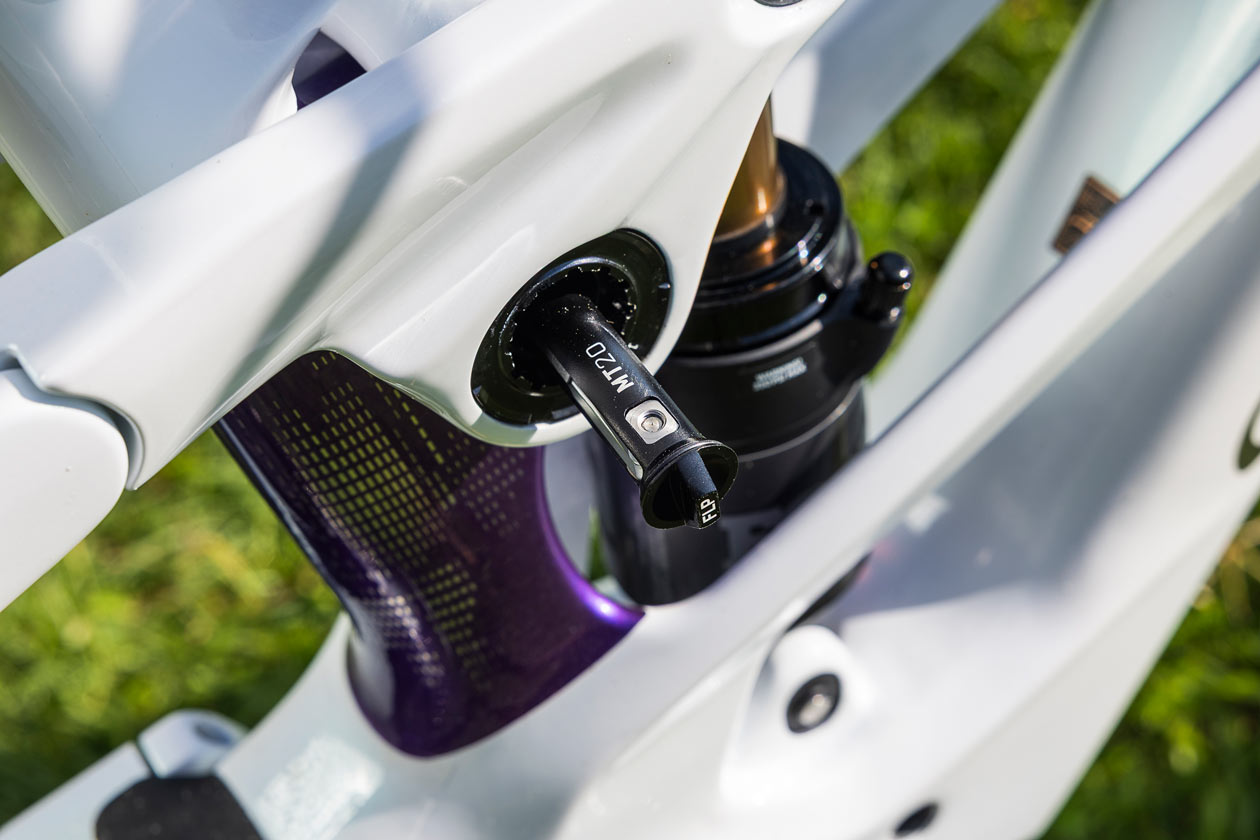
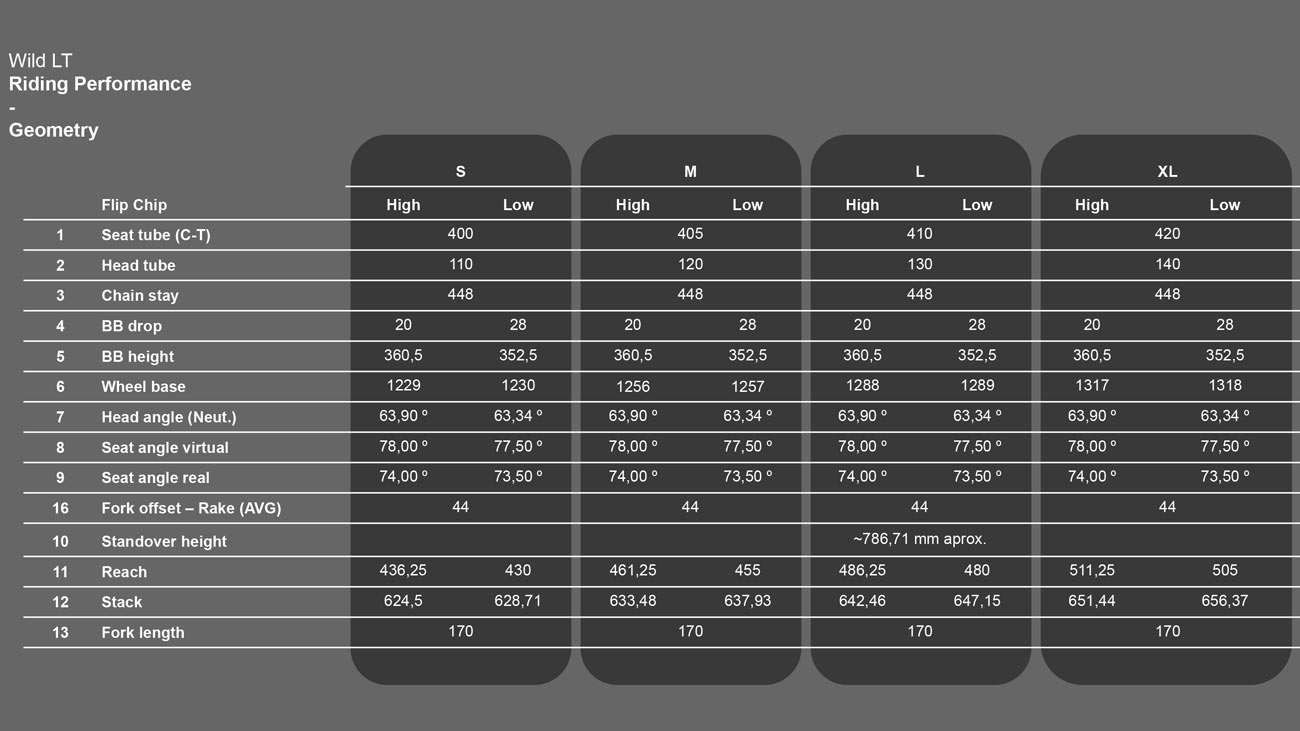
The frame now features a Hi & Low flip chip option located at the lower shock mount, which delivers an 8mm bottom bracket height change and a 0.64° headtube angle change. While these numbers may seem small on paper, there is a noticeable change in character on trail. The Wild LT is offered in either full 29” wheels or an MX setup, with a different rocker link required to run each rear wheel size and retain the geometry and kinematics. If choosing to build a bike using the MYO program, riders can opt for either wheel size, with the option to purchase an additional link to convert down the line.
New for this frame is the ZS56 upper and lower headset cups, which allows riders to make use of aftermarket geometry adjustments to further tailor the fit and feel of the Wild LT to their liking. Orbea has also moved away from the headset routed cables and now has clean ports on either side of the headtube, something we are stoked to see. All of the frame bearings are fully sealed, while still retaining the fully loaded pivot featuring easy access to a multi-tool.
Finally, dropper post insertion! With the compact Avinox M2S RS motor, Orbea was able to design sizes small and medium to fully slam their 210mm wireless smart dropper, while the large and extra-large can fully slam the 240mm. Long leg riders rejoice!
SUSPENSION
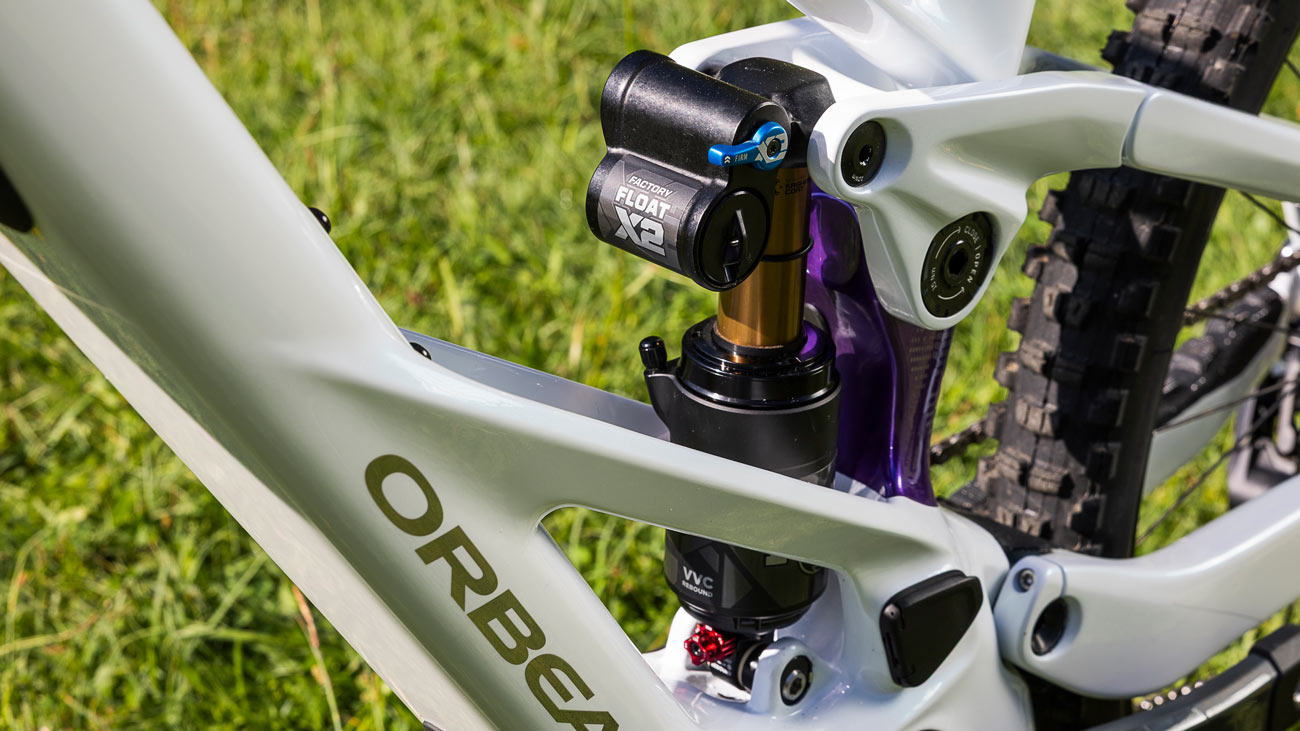
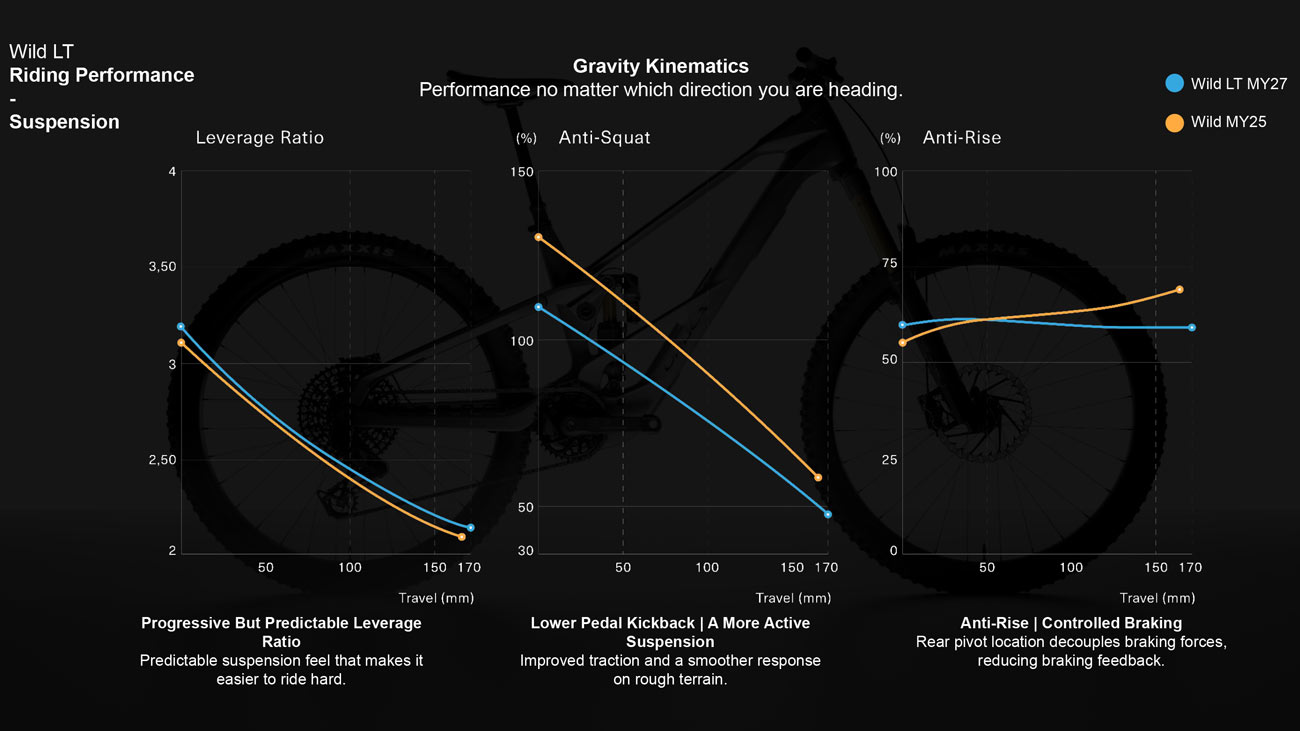
The Orbea Wild LT’s rear suspension remains at 170mm, delivered via a linkage-driven single pivot with concentric rear axle pivot. The smaller Avinox motor package allowed Orbea to lower the shock within the frame and fine-tune the kinematics, with fewer sacrifices. The frame was developed to closely replicate what they have done with the Rallon and Rallon RS, focusing on uncompromised downhill performance.
Anti-Squat has been reduced nearly 20% compared to the outgoing model. An increased starting leverage rate delivers a softer off-the-top feel, with progression sitting near 30%. Lastly, the Anti-Rise curve has been flattened out, delivering a more predictable ride feel with a figure sitting at 60%.
During our entire 3 days of riding with nearly 40k feet of descent (the most I have ever done at a press camp), I did not feel the need to change a single thing on the rear shock, which for me is very unusual. Orbea worked very closely with Fox to develop a shock tune for the Wild LT, and the results are clearly positive. While all builds are spec’d with a 170mm fork, Orbea approves the Wild LT to be run with a 180mm single Crown or a 200mm dual crown if you are purely into the winch and blast style of riding
GEOMETRY
The new Wild LT sees some small changes when it comes to geo. We opted to test the size Large, as we have with previous generations of the Wild. In the High flip chip position (our preferred setting), reach lands at a slightly longer 486.25mm, with stack at 642.46mm. The seat angle steepens to 78°, and the head angle sits at 63.9°. Chainstays are 448mm across all sizes, and there is a 360.5mm bottom bracket height. The total wheelbase measured out to be 1288mm. Thanks to the ZS56 headset cups, you can fine-tune your reach and head angle with aftermarket kits.
BUILDS AND OPTIONS
Outside of the near-endless build options through Orbea’s MYO program, there are dedicated builds that will be available through Orbea’s dealer network. For the Carbon frames, there are four different build kits, starting at $7,717 for the M20 and topping out at $14,883 for the Live Valve-equipped M-LTD RS. Our pick would be the M20 for $9,371. This build balances performance and quality parts for long-term use, with nothing needing to be upgraded down the line.
The aluminium-framed builds start at $6,173 for the H20 model, and top out at $8,819 for the H-Team. My pick here would still be the middle model, the H10. For $7,717, this gets you a solid build with some room to upgrade over your first few seasons of abuse.
2027 ORBEA WILD LT FIRST RIDE IMPRESSIONS
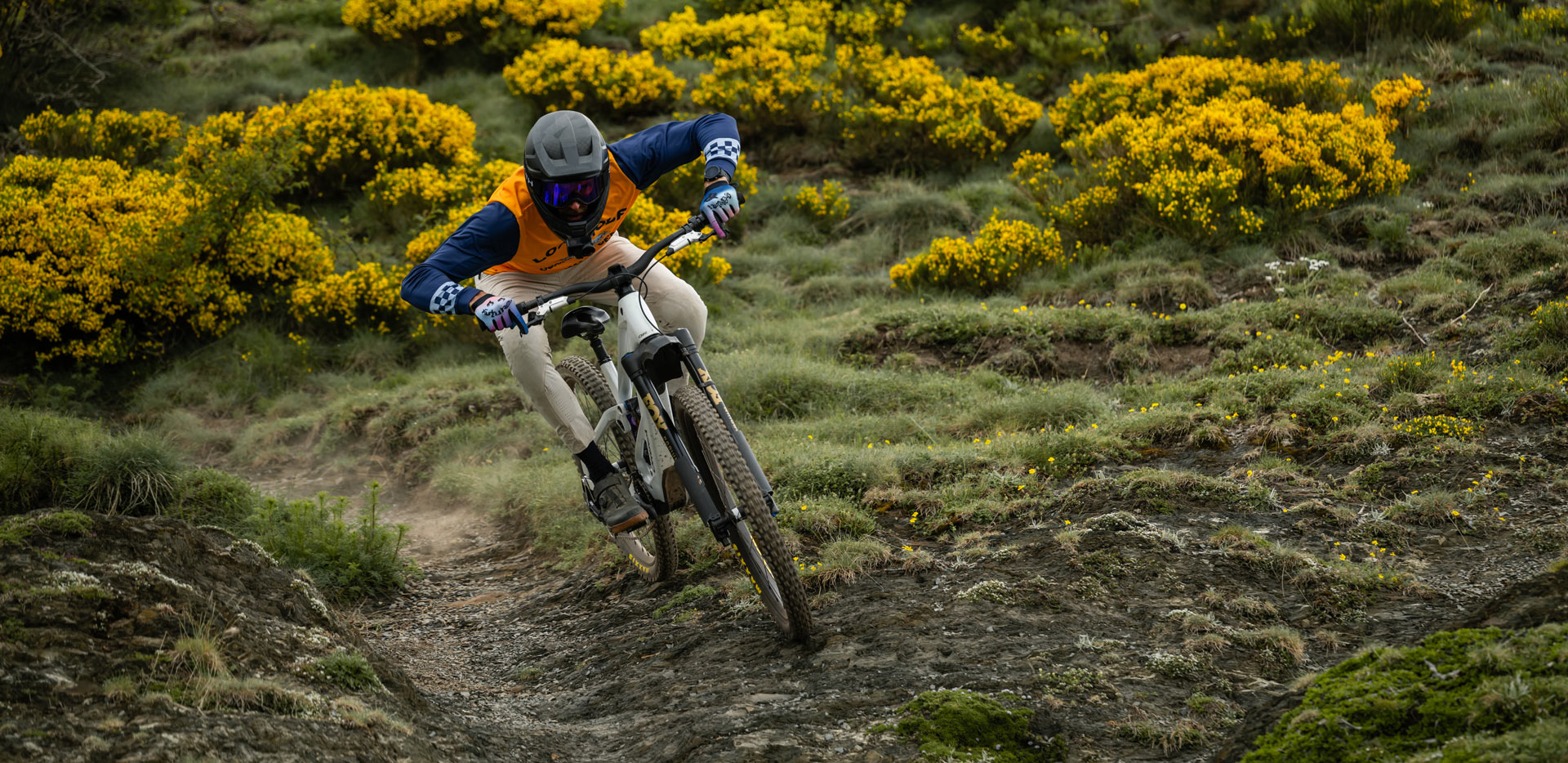
For the creation of this Dissected feature, I made the trip over to Orbea’s home testing grounds of the Basque Country. Over a few days, I was able to tackle some big miles and elevation, which provided plenty of big smiles on the new Wild LT. It was an absolute riot getting to grips with its character, both up and down the hill.
CLIMBING
Our first day aboard the Wild LT brought some big climbs. I knew no details about the bike, other than what I could see. The bike was set up with a 29” wheel front and rear in the low flip chip position. We quickly got into some quite technical climbing; this was steep and littered with roots. I immediately found there to be loads of traction from the bike, and never wished I had more power in the steepest sections.
I spent nearly the entire time aboard this bike with it in the Trail power mode, with the tuning set in the middle for motor assistance. I honestly would not have guessed the motor was limited to 750 watts without riding a standard tune back-to-back. What I did feel was more control over how the power came on when I needed it most – more control than I have felt on any other eBike platform
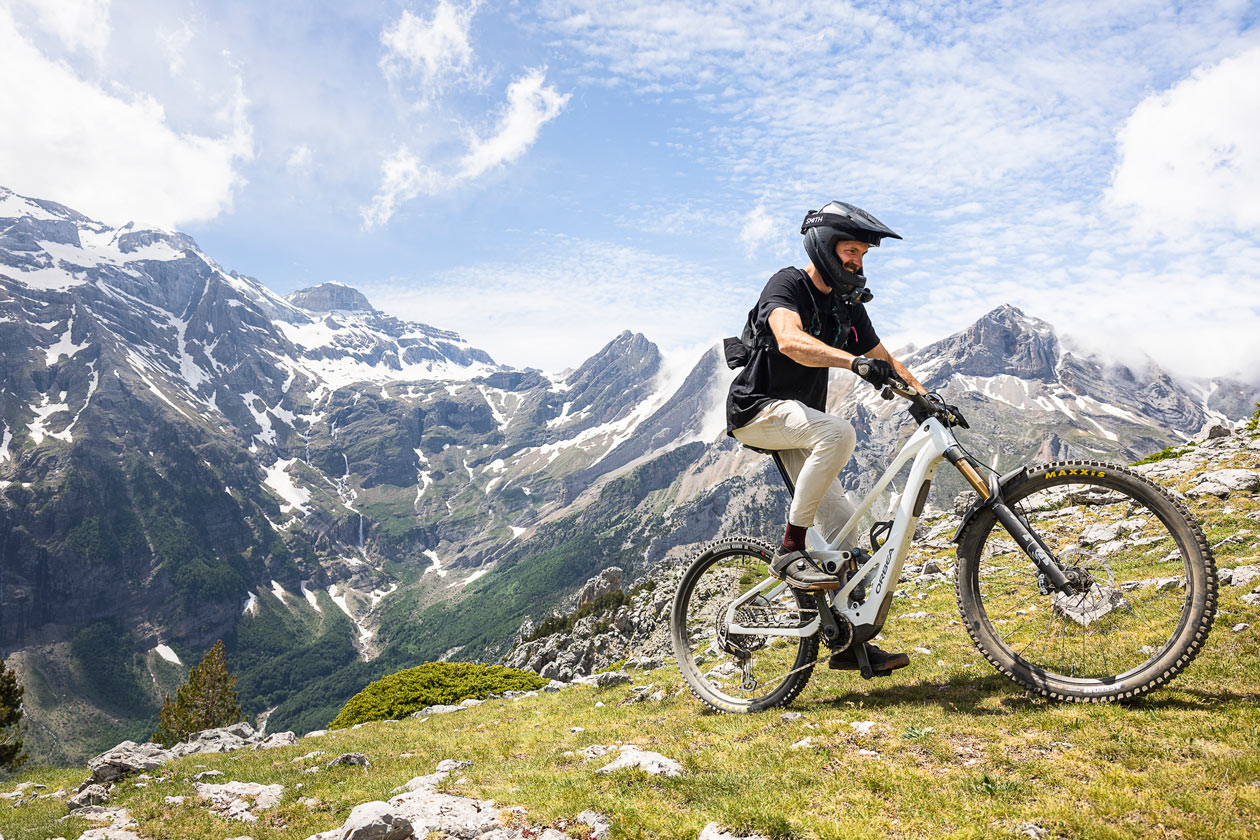
After learning about the RS tune over dinner, I went into the next day paying more attention to the small details on the climbs. There was a noticeable lack of unwanted wheel lift on pitches north of 20 degrees, no awkward spin-outs on loose terrain, and starting on crazy steep pitches of the trail happened with far less difficulty than I would have expected. If you are a rider who is looking to just blast fire roads, the RS tune is not going to be for you, but you can always create a custom profile in the app to bypass the 750-watt RS tune limit. The biggest benefit of the added reactivity of the motor comes when you need to use the power as a tool, such as when popping the front wheel up a step. There was no noticeable lag when the power came on. The immediacy of how the system’s power curve hit full output meant I had more control over the line choice, with no lack of grit to get up and over.
There was a small but noticeable amount more effort needed to squeeze out full power from the motor, but by no means was it “not powerful”. We did over 10K of climbing for three days in a row, and I felt reasonably fresh each morning, other than sore forearms from the steep descents. The 78-degree seat tube angle in the high flip chip setting was perfect for me, giving no complaints from my long legs in this department.
Partway through testing, I switched to a 27.5” wheel out back. The smaller wheel had noticeably less traction than the 29” when the climbing got technical, but for me, this was outweighed by the performance going down. Even with the smaller rear wheel, I did not get many pedal strikes, in part thanks to the 155mm cranks and geometry preservation with the dedicated link. Overall, if it were my bike, I would opt for the MX wheel setup out of the box and leave it untouched.
DECENDING
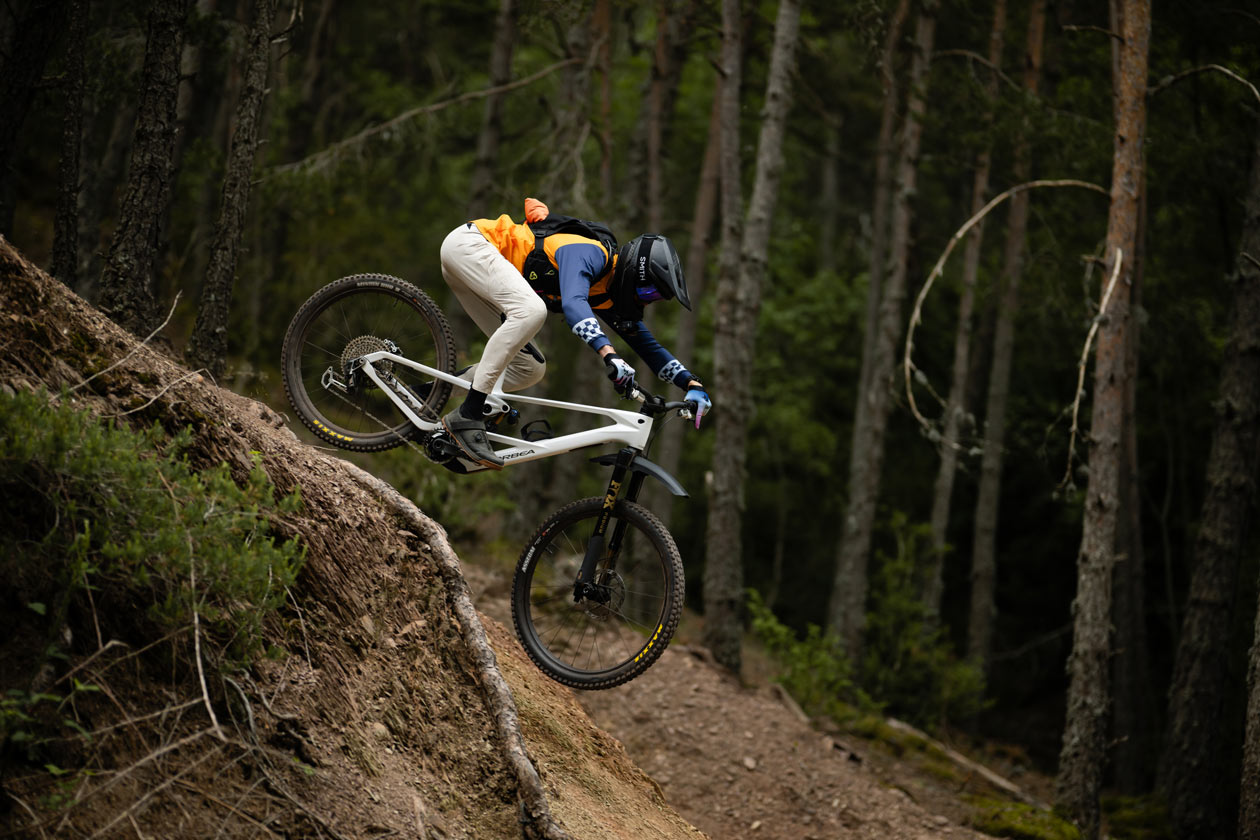
While this may be one of the most predictable and capable climbing eBikes I have ridden, the true calling for the Wild LT is going downhill. DH racing is in its design philosophy and DNA, and that shone through on the trail. For me, Orbea’s bikes have not previously felt immediately comfortable; there has always been a break-in period for me, and that remained true with the new Wild LT. I do not fault the bike for this at all; it is just something I have noticed over the past few years.
First impressions: just looking at the bike in the stand on our first day, it was built for speed. The sharp lines and Rallon-inspired design aesthetics just look fast when it is sitting still. Once I got acquainted with the geometry and handling, opening the tap on speed came with a warm, welcoming feel, with a little birdie on my shoulder telling me, “Let off the brakes, I’ve got your back”. There is no way I can reach the Wild LT’s limit, but it did not need to be ridden hard to really enjoy my time behind the bars.
Knowing we had 3 epically huge days of testing to enjoy, I wanted to make sure I kept it rubber side down, so I set my pace at about 80% effort at the top of each trail, and by the mid-point, that 80% speed kept creeping up and up with every passing rock garden. The bike remained calm with no weird surprises in suspension feel or traction; it delivered a calm confidence that I thoroughly enjoyed.
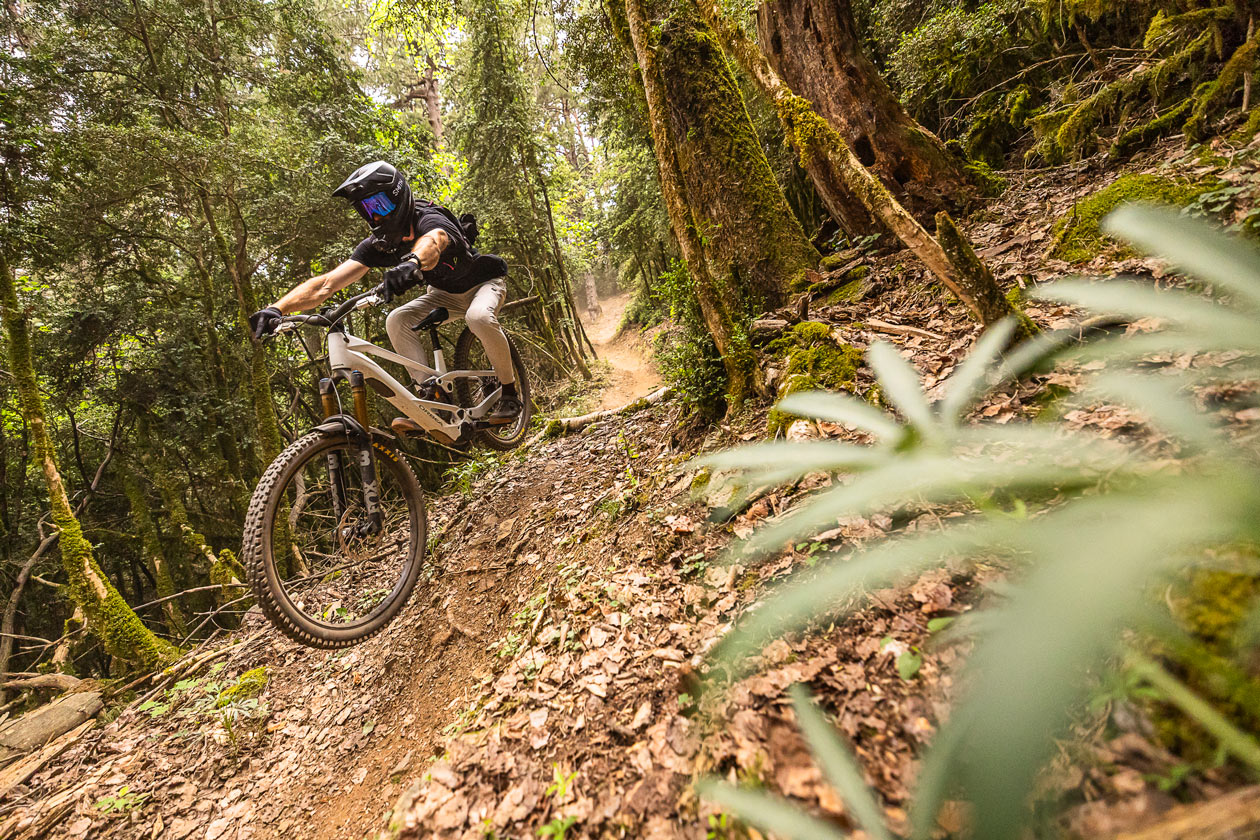
The trails we were riding did not have the highest average speed, but were quite steep in many sections with classic tight Euro corners scattered throughout. I found that the Low flip chip position gave me some vague handling, especially when the trail tightened up. Moving to High brought back a great connection to the front end, mitigating this wandering feeling. The full 29” wheel setup ate every hole and square edge you could throw at it, but lacked a little flickability I was seeking. Moving to the 27.5” brought back some playfulness, but did not sacrifice much when it came to smoothing out the rough terrain. More compromise was had on the climbing side when it came to the smaller wheel out back, but it was still a very competent machine on the way up.
I had zero complaints when it came to suspension feel on the Wild LT, with no adjustments required after the initial setup at 30% sag with two bands of volume reduction in the X2. I spent the first two days with the DT Swiss DF hub set to 0 degrees, and opted to try out the 10-degree setting on our final day. Moving to the 10-degree position gave the bike a slightly more sensitive suspension feel, but I felt it introduced a bit more chain noise. This is something I will play with for the long-term review.
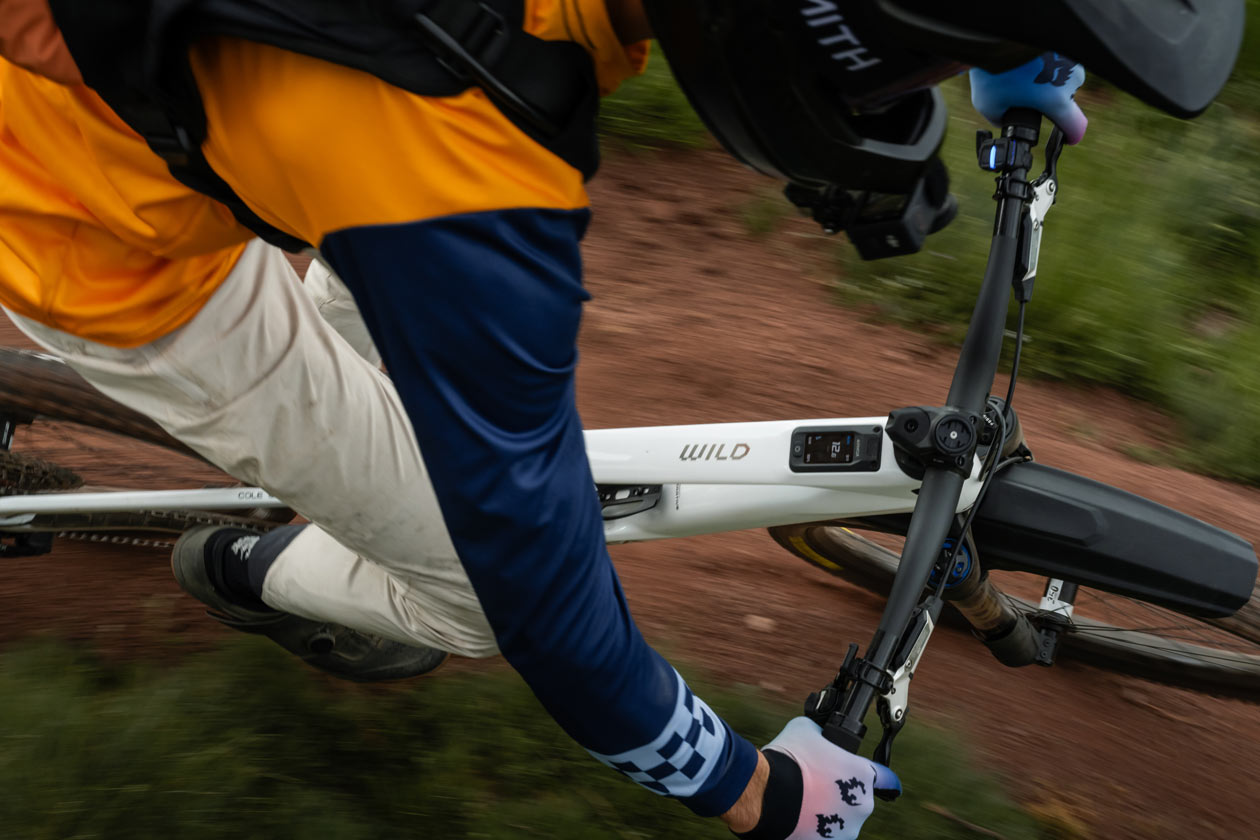
THE WOLF’S FIRST IMPRESSION
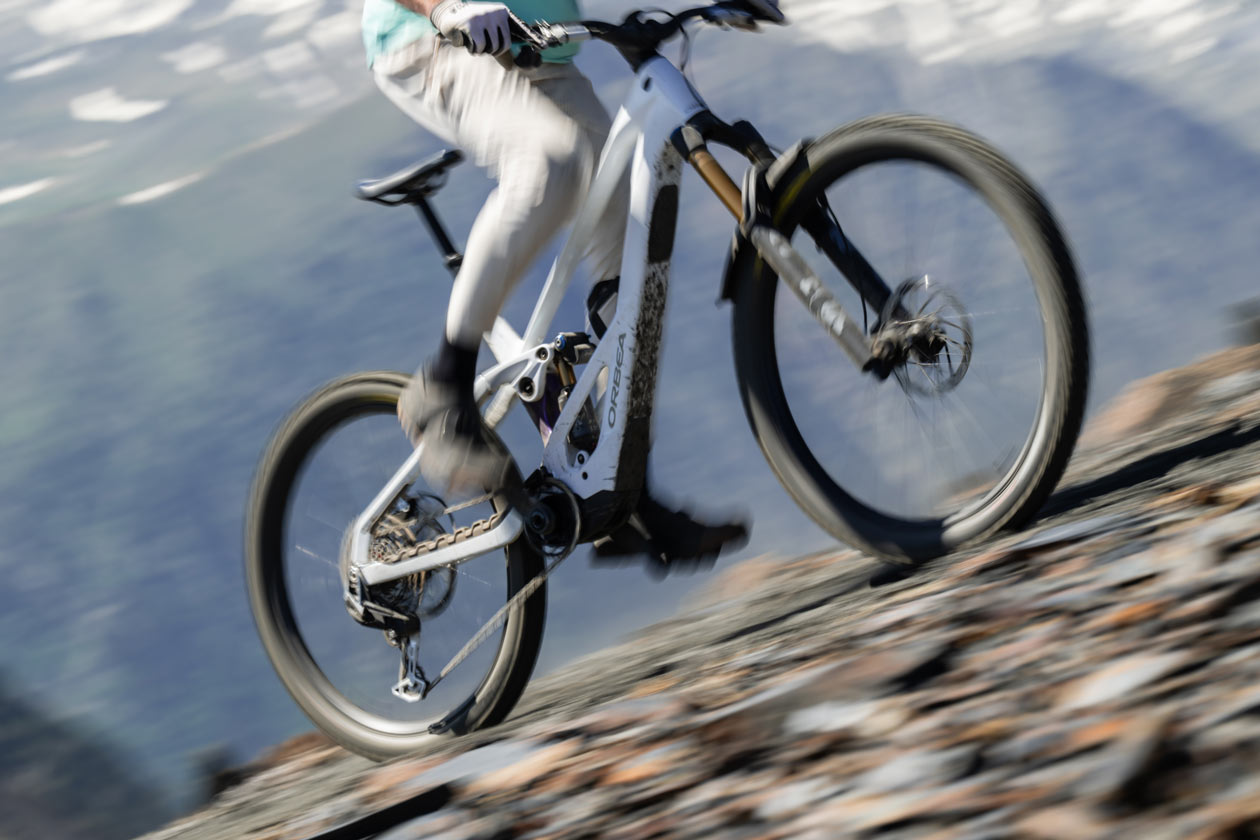
The biggest takeaway from my first three large rides—be it very big rides—is that the 2027 Orbea Wild LT remains calm when it gets gnarly, but does not force you to put in max effort to get a lot from its chassis. The RS tune is something that I came to really enjoy, and I never wished for more power. Its reactivity more than made up for having a lower total watt output, and this is the direction we hope the drive unit industry will continue to go.
Stay tuned as we keep this bike in our rounds for a long-term review, and while we just launched the 2026 eMTB Shootout, expect to see the Wild LT make an appearance for our next edition in 2027.
SHARE THIS DISSECTED FEATURE
SUPPORT AND JOIN THE LOAM WOLF PACK
Did you find this review helpful? Would you like the chance to review (and keep) products? Are you interested in saving big bucks by getting exclusive Members Only discounts from industry brands all while helping support a small, rider-owned media crew? We have big plans for our members beyond big discounts and product giveaways! To learn more and help support small, independent media, visit our Member’s Page.