

ABOUT THE 2027 CANYON LUX TRAIL
FRAME DESIGN
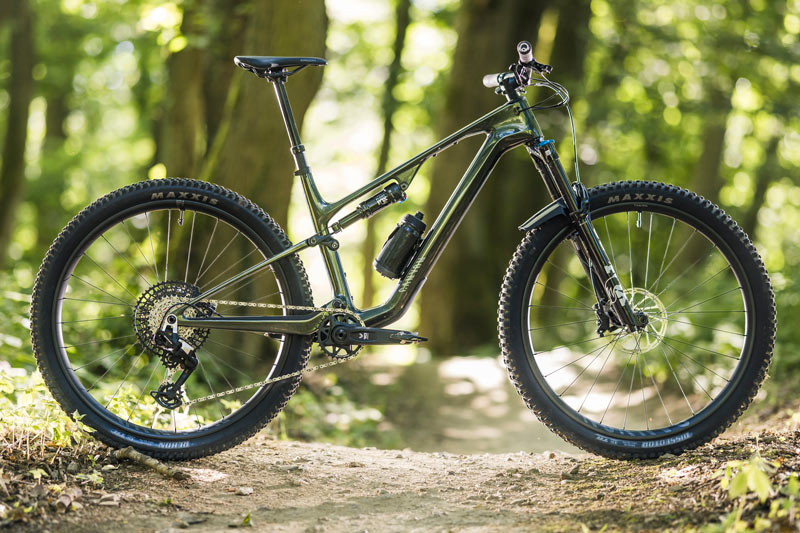
Whether you are a die-hard downcountry rider or in the short-travel trail camp, Canyon’s latest Lux Trail will tick a lot of boxes for riders looking for a bike to hunt down singletrack trails. Rather than try to make a bike something it’s not, the 2027 Lux Trail melds capable Spectral-inspired geometry with a lightweight chassis, resulting in a completely reworked bike. With a longer-travel Lux World Cup now in Canyon’s roster, the Lux Trail’s travel has been extended to 140/125, which positions it more centrally between Lux World Cup and the Spectral. Canyon has used it as an opportunity to simplify the range too; the Lux Trail has pushed the carbon Neuron and Spectral 125 out of the lineup, although the alloy Neuron will continue to be available to cater towards entry-level and more budget-focused riders.
The Lux Trail CFR option has also been dropped, with Canyon only offering the Lux Trail in a single carbon CF frame option, which weighs in at a claimed 1850g (4.07lbs). Canyon claims it’s the lightest bike in its class, only adding roughly 400g of heft over the Lux World Cup frameset – impressive for a bike with internal storage in the downtube. Tubes and suspension components have been refined to save weight, and additional carbon material has been added to the bottom bracket and chain stays, increasing the strength to cope with the frame’s trail ambitions.
Despite the svelte frame weight, Canyon has still equipped the 2027 Lux Trail with a heap of extra features which make the bike a lot easier to live with. Internal cable routing that enters behind the head tube and a threaded BSA bottom bracket will keep the home mechanic commenters happy, as will the improved frame bearing access. Not being an uncompromising race bike affords a certain level of additional comforts: two water bottle cages and internal frame storage (tool and sleeve included) have been carried over from the previous bike; and there are now bolt-on accessory bosses positioned under the top tube.
SUSPENSION
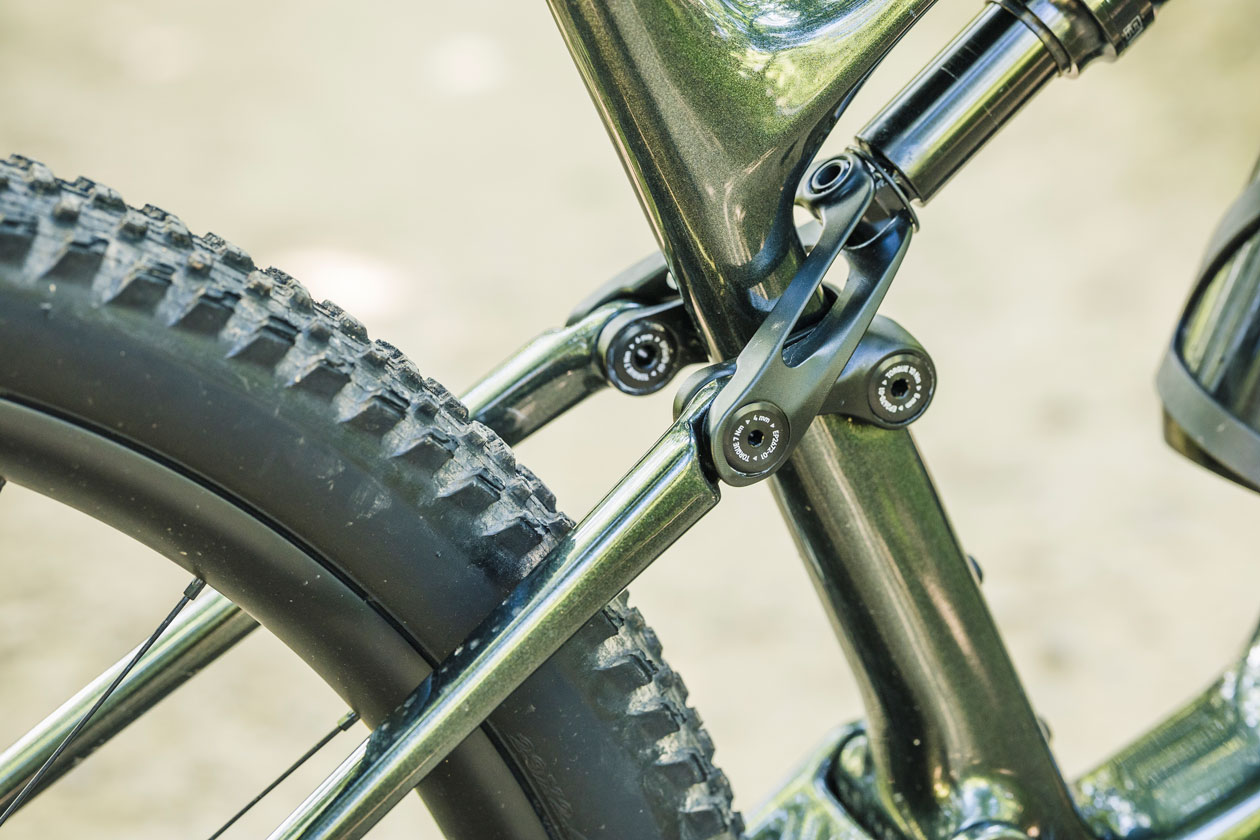
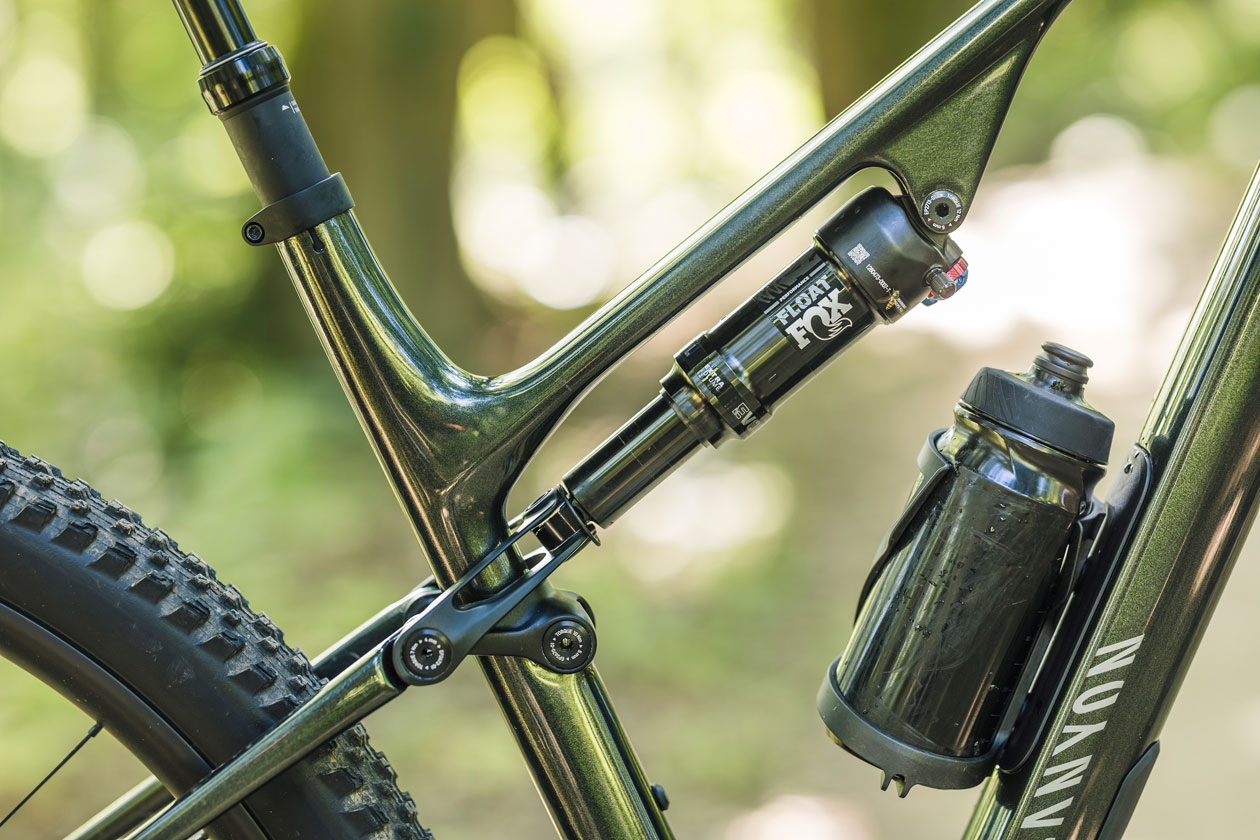
The frame uses a flex-stay suspension system, with a 3D-forged rocker link to compress the shock that’s mounted under the top tube. This is a layout that the latest XC bikes and many lightweight trail bikes are converging on. Up front, Canyon has leveraged Fox’s lightweight yet stout 36 SL fork to give the front end a travel bump to 140mm. The rear travel has also been extended, now offering 125mm, up from the 115mm of the old Lux Trail.
These flex stays move +/-17° to deliver a consistent and progressive kinematic curve that Canyon says has been designed to give a neutral ride feel. They aimed to balance traction and pedaling efficiency, while leveraging the springiness of the carbon to give a playful, responsive ride feel. Canyon also says that because they haven’t tried to give the suspension a specific personality, it allows riders to have more control to tune in their preferred handling characteristic.
One interesting omission is the lack of a geometry-adjusting flip chip, or the anti-squat-adjusting ‘Quick Chip’ from the Lux World Cup. Whether this is a dealbreaker for you depends on how much of a fettler you are, although on a shorter travel bike like this it’s not something I would personally miss.
Another sign that the Lux Trail is shaking off its XC roots is that it forgoes a handlebar-mounted lockout, although one can be added to the shock if you really miss it.
GEOMETRY
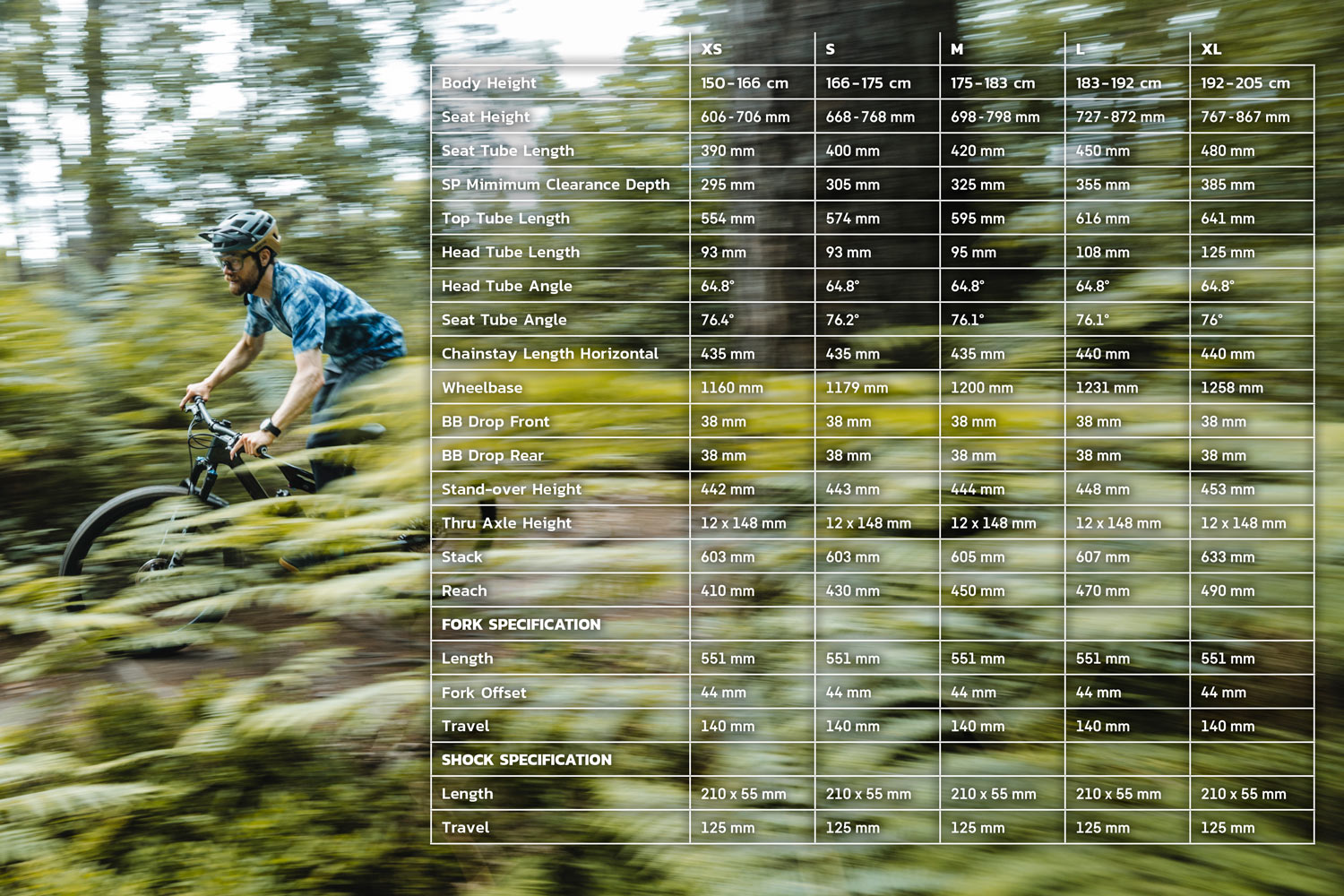
To complement the extra suspension travel, Canyon has reworked the Lux Trail’s geometry. Up front is where we see the majority of changes, now coming in much closer to the Spectral. Canyon slackened the head angle by two degrees to 64.8°, which in turn gives the new Lux Trail a 20mm longer wheelbase. Although 10mm has been shaved from the head tube, the longer fork bumps the stack up by 7mm, too.
Interestingly, Canyon has reduced the reach across all sizes, opting for 450mm on a size medium. This allows the XS to cater to riders down to 150cm tall (with a reach of 410mm), and the XL stretches to a modest 490mm. If you are used to more aggressive trail bike numbers, this will appear short; however, there is plenty of overlap between sizes if you want more room to move. I was comfortable riding both a Medium and the Large (470mm reach), at 177cm (5’10”) tall.
The 76-degree seat tube angle and 38mm bottom bracket drop are carried over from the previous Lux Trail. At the rear, Canyon has two size-specific rear triangles; the XS to Medium frames feature a 435mm chainstay, while the Large and XL sizes are lengthened by 5mm.
CANYON LUX TRAIL 2027 BUILD OPTIONS
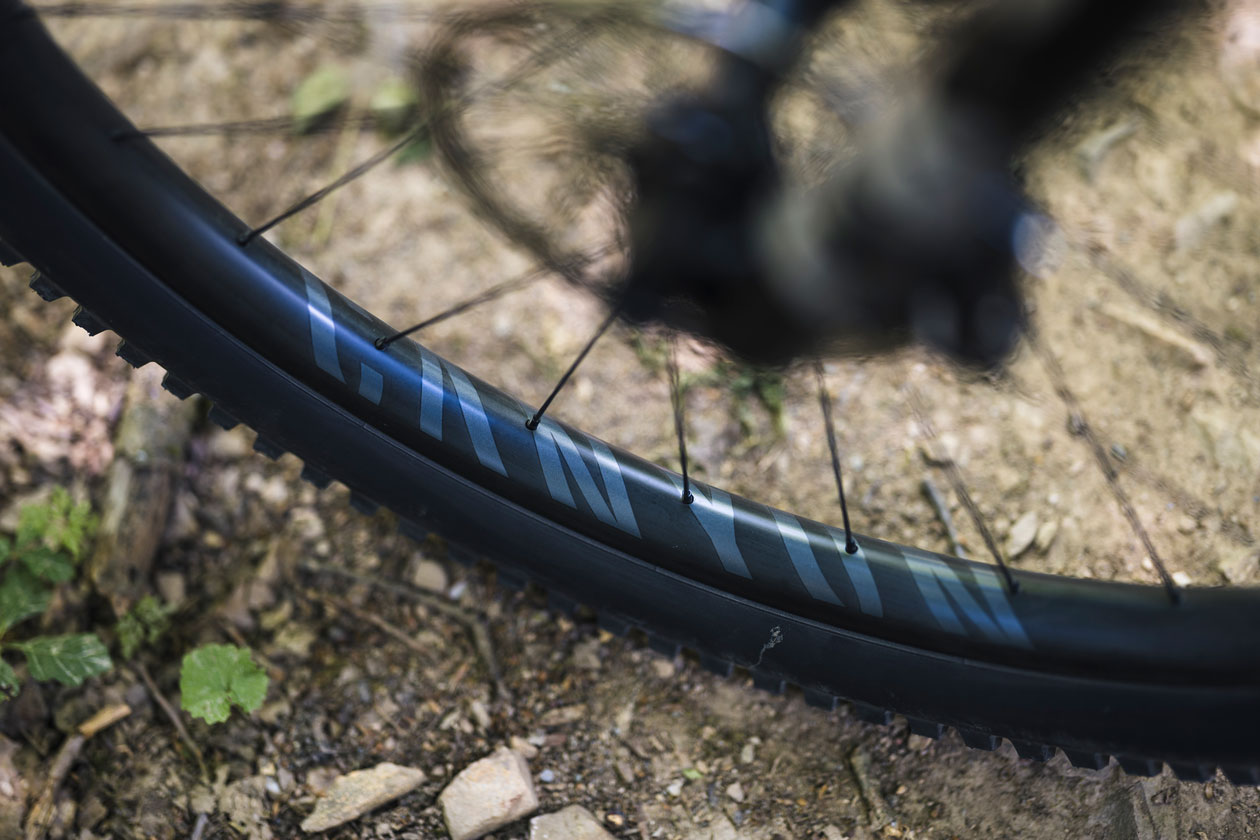
Canyon is launching with four build options, starting at $3,999 | €2,999 | £2,849 for the Lux Trail CF6, and topping out with the Lux Trail CF 9 at $6,999 | €5,999 | £5,699. All models feature suspension from Fox, and SRAM takes care of the drivetrains, except for the CF6, which is spec’d with the new Shimano Deore XT. The finishing kit is a mix of Canyon-branded components, which is upgraded to RaceFace on the more premium models. Canyon recently started offering its own wheelsets, and these are featured across the range, with all but the CF6 rolling on carbon rims.
What you get for your money is hard to argue with across all the price points, although there are a couple of component specs worth noting. All the bikes feature a Maxxis Dissector/Rekon combo which suits the bike, but you’re only getting a dual-compound version of the tire. It’s not necessarily a bad thing – the hard compound will roll faster and offer more mileage – however, I would have preferred to see a grippier tire, especially on the top-spec CF9, which also comes fitted with a power meter. The longest dropper equipped on the Lux Trail is 170mm, and while I didn’t have any issues with this when riding; it seems like a missed opportunity to spec more travel considering that the uninterrupted seat tube could swallow up something much longer. Finally, while there isn’t anything wrong with the Fox 34 Rhythm Grip fork on the Lux Trail CF6, all the other bikes in the range come with the Fox 36 SL, which pairs better with the trail focus.
I rode both the CF7 and CF9 spec bikes during the launch camp, and honestly, I would be hard-pushed to look past the package that the CF7 offers. Sure, the Grip X dampers, Motive Ultimates, and electronic shifting of the CF9 offer a refined experience, but the no-nonsense “jump on and shred” quality of the CF7 really stood out to me.

THE DIRT
WHERE I RODE
Canyon invited me out to Koblenz, Germany – the area surrounding their headquarters – for a couple of days riding to get a feel for what the Lux Trail is all about. On day one, we rode on the trails where much of the testing of the bike was performed. The area was a mix of rough singletrack intertwined with some hand-built features. Day two saw us post up at a small trail spot in Kiedrich, where the trails were more machine-sculpted and flowy – not dissimilar to the terrain typically found at UK trail centres. Germany was in the throes of a heatwave, so the trails were bone-dry and running very fast. Fox took care of the CF7 suspension setup, and the default pressures for my weight felt pretty spot on over the couple of days riding.
DESCENDING
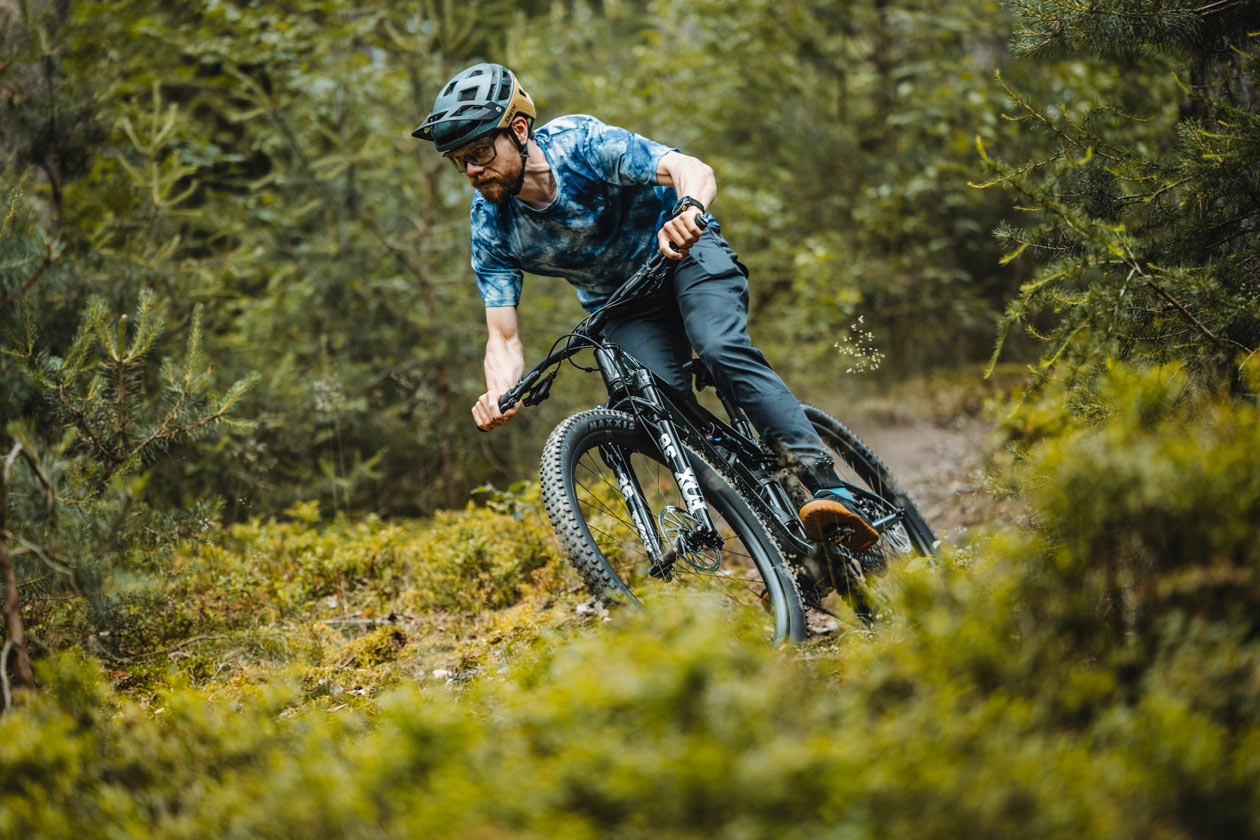
Much of the 2027 Canyon Lux Trail’s redesign has been carried out to improve descending performance, so it only makes sense to start there. Spec’ing Fox’s 36 SL fork is a real statement to the bike’s intentions, and it’s all the better for it. Previously, a bike of this ilk would have relied on a 34mm-stanchioned fork – or a 35mm if opting for RockShox – and these forks usually sacrificed either weight or stiffness. This forced brands down a specific path, either a lightweight XC-leaning bike, or a robust short-travel trail bruiser. Now riders can have their cake and eat it in the 140mm bracket. This was my first time riding the Fox 36 SL, and it really impressed me. The lightweight yet stiff 36mm chassis gave me a lot of confidence to push hard through rough sections of trail with pinpoint accuracy. The Lux Trail is more than a frame bolted onto a really great fork, but the fork definitely opens up the opportunity for Canyon to achieve its lightweight trail bike goals as an overall package.
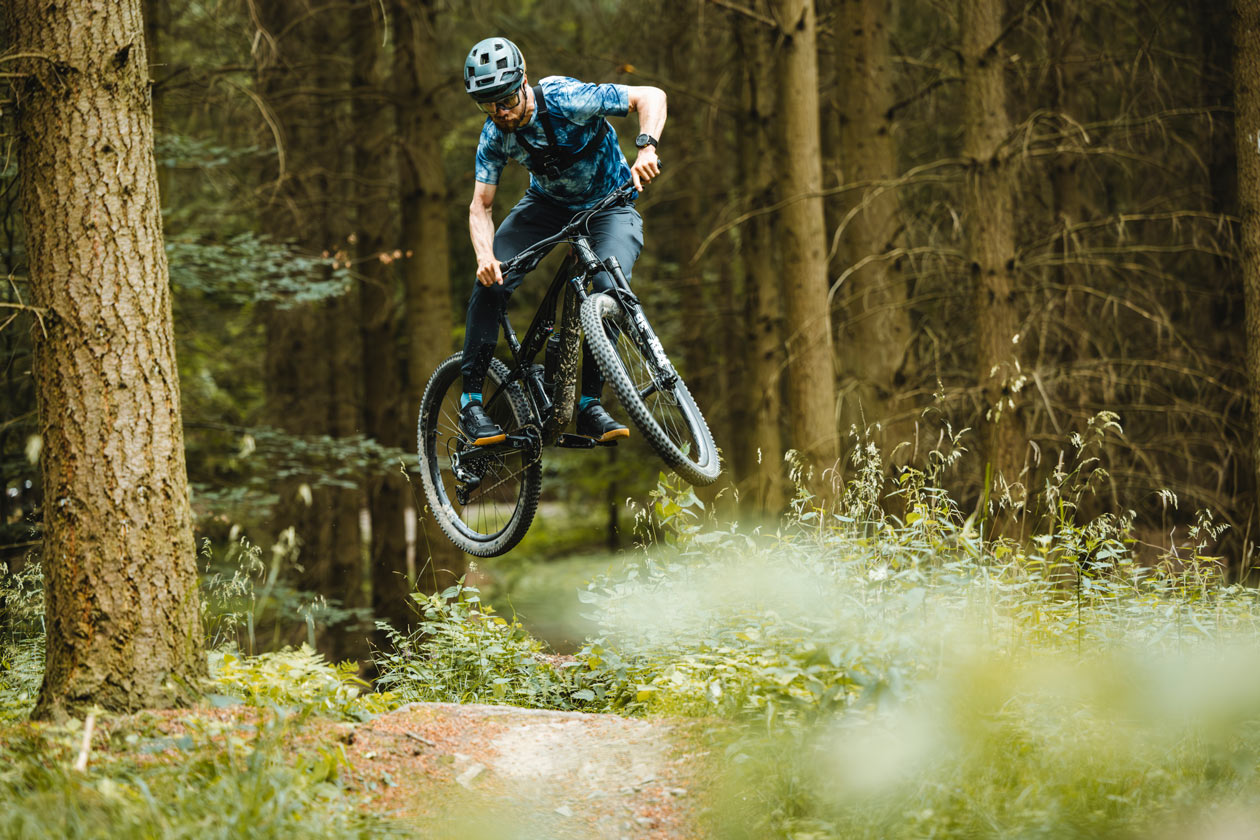
Combining the support from the rear suspension with the low bottom bracket allowed me to push the bike hard into berms. It felt really planted, and I could drive hard through the legs to generate speed. This also came into play on rollers and side hits, encouraging a playful pop or gap when the opportunity arose. Paired with the low overall weight and fast-rolling tires, I found myself instinctively pulling for trail gaps that would otherwise have me second-guessing.
Speed was easy to come by; it still had that wonderful XC acceleration, which is now combined with the sure-footed geometry. While it’s closed the door on its XC past, this is not a short-travel bike masquerading as a long-travel bike like the Spectral 125. As trail intensity ramped up, I could see the possibility for getting carried away and reaching beyond either rider skill levels or the bike’s capabilities. Keep it within the parameters though, and it’s an incredibly easy bike to ride at warp speed; the Strava cups and KOMs I harvested speak for how quickly I was able to get comfortable on the Canyon Lux Trail. If this was my own bike, my first upgrade would be to replace the dual-compound front tire with a grippier option, to boost traction and instill further confidence when pushing hard.

CLIMBING
While a lot of attention has been focused on descending, there was still enough XC DNA left in the Lux Trail to ensure it was an efficient climber. Cranking hard drove the lightweight chassis forward efficiently, and while there was a little bit of suspension movement under power, I never felt like it robbed enough energy for me to reach down and flick the shock lockout lever. Traction was also decent when gradients steepened, and it was sprightly enough to lunge forwards when tackling technical sections.
With its trail redesign leading to a 2-degree slacker head angle, it would have been tempting for Canyon to match the front end with a progressive seat tube angle. Instead, the 76-degree angle maintained a neutral pedaling position, which I found conducive to efficient and comfortable mile munching.
Although the goal of the Lux Trail overhaul was to move the lineage further away from its cross-country race bike roots, I would still be happy to dabble between the tape in the occasional XC race, especially if I was riding the spec levels with the weight closer to 12kg. I would have to work a little harder than if I was on an XC bike, of course, but it would be a lot of fun on a modern technical course. Well, as fun as an XC race can be…
The Wolf’s First Impression
The Canyon Lux Trail 2027 is a really versatile, well-mannered ride that easily slots into the lightweight trail category. It’s closed the door on its XC past, and has been confident and capable enough to handle all the trails I have pointed it at, whilst still maintaining enough efficiency to keep things moving swiftly. If you’re seeking epic singletrack and backcountry adventures, the latest Canyon Lux Trail has the capability to rack up miles of big grin descending. 
Price: Starting at $3,999 | €2,999 | £2,849
Website: Canyon.com
SHARE THIS REVIEW
SUPPORT AND JOIN THE LOAM WOLF PACK
Want to test products for The Loam Wolf or be a Guest Tester at one of our Shootouts? Join here and be entered into monthly giveaways, have access to industry discount codes, sneak peaks of new products and more!
This is a new and positive MTB community that directly impacts future of MTB product development, shares helpful tips, setup suggestions and more.
Check out our NEW community here.