


ABOUT THE FORBIDDEN REYA
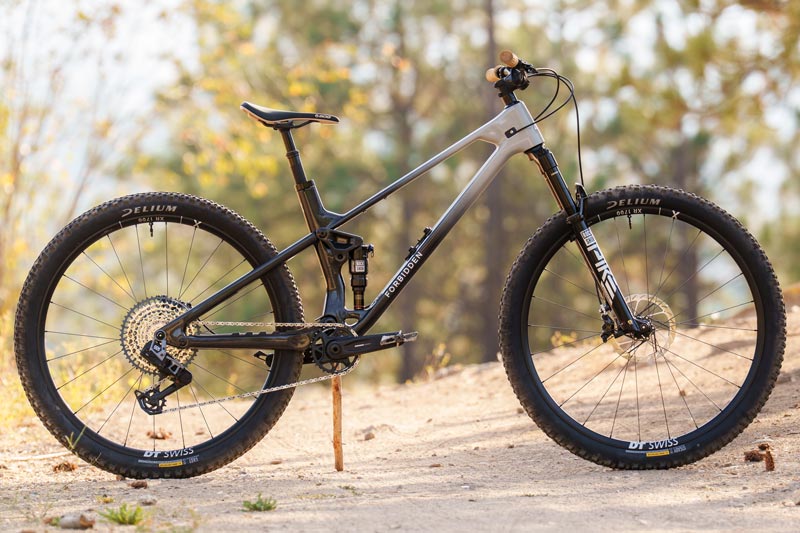
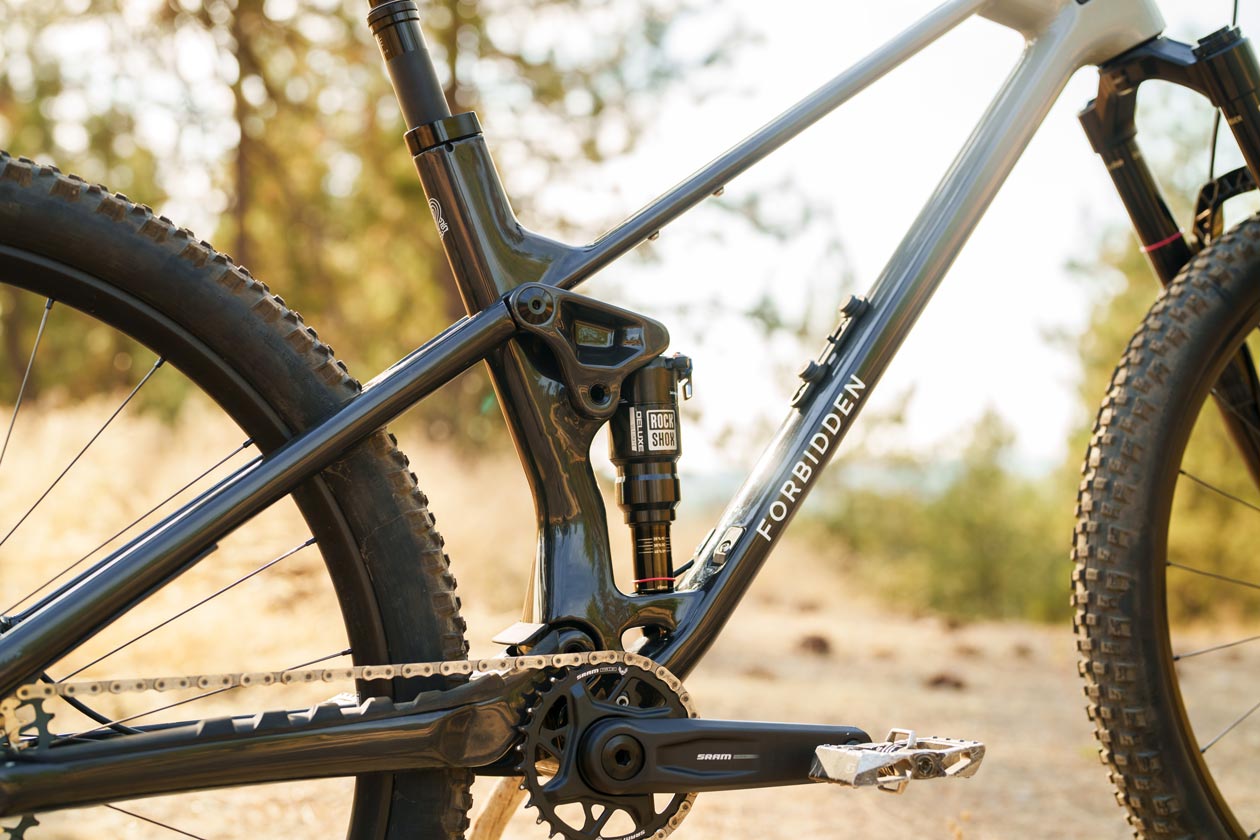
The Forbidden Reya comes in with 120mm of suspension travel out back and 130mm up front. The frame uses a four-bar suspension system, which Forbidden named Trifecta V3. This new platform worries less about a rearward axle path, achieving kinematics Forbidden considered best suited for this style of bike. Even with a different suspension platform employed, you will find Forbidden have retained one of their trademark design cues, as the Reya has the longest chainstays on test. On the trail, this gave the Reya a distinct handling characteristic, notably stable and fast.
The frame is quite simple when compared to some other bikes in our Trail Bike Group Review. For example, there are no geometry adjustments or in-frame storage, neither of which were huge talking points or criticisms for our test crew.
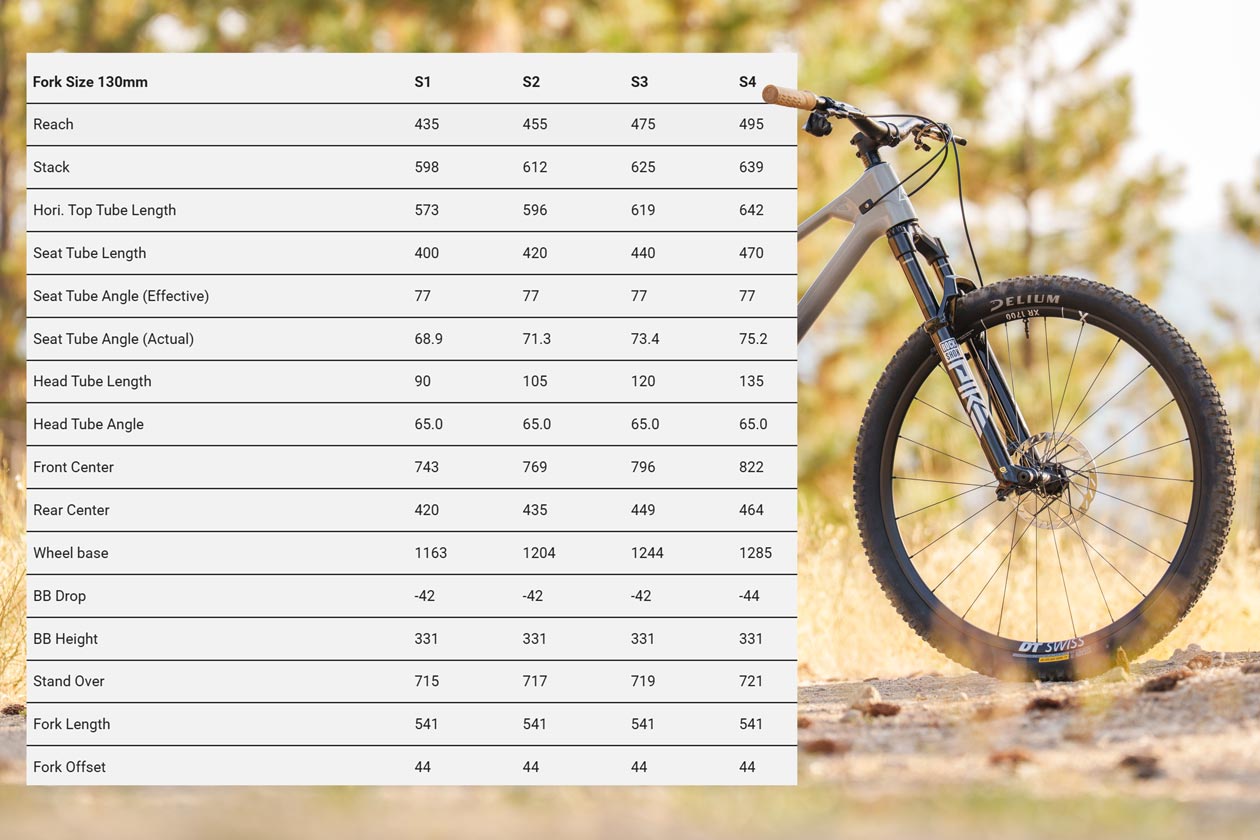
Forbidden offers the Reya in sizes S1 – S4 (S-XL). One unique feature of the Reya is the size-specific chainstays, which grow around 20mm per size, starting at 420mm and ending at a whopping 464mm.
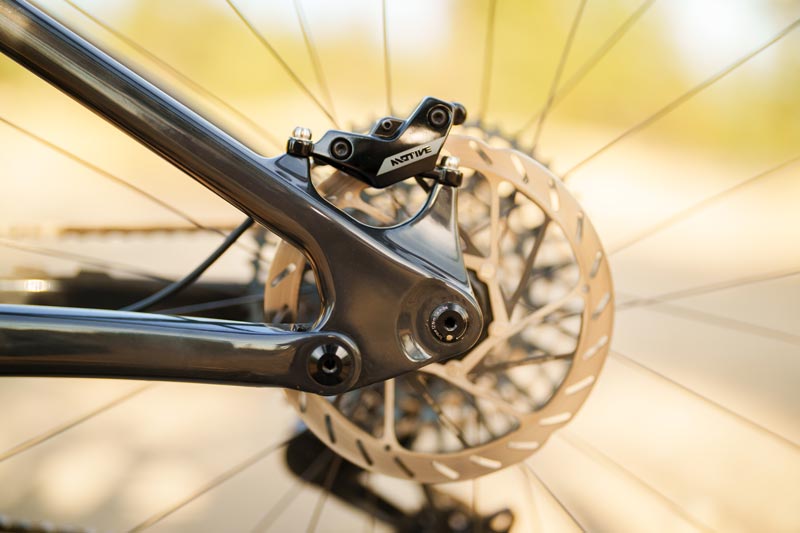
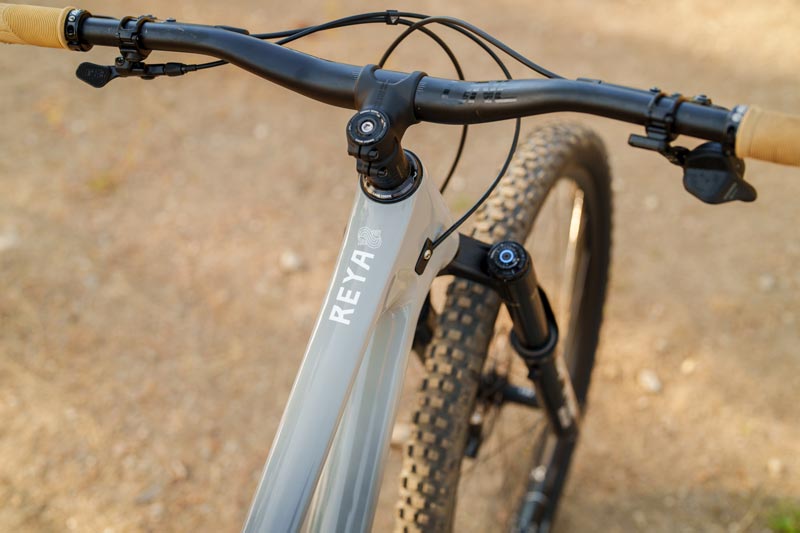
The frame is fully carbon fiber, including the suspension linkage. The brake cable routing on the Reya can be set on either side of the headtube, and there is also an option for a cable-actuated shock lockout, if you are into that sort of thing. One thing we really appreciate is that all bolts on the frame can be tightened with a single 5mm Allen key, including the cable guides.
FORBIDDEN REYA GEOMETRY
Compared to other short-travel trail bikes, the Forbidden Reya’s geometry can be a bit polarizing. Our size large featured 449mm chainstays, 8mm longer than the next longest on-test. This is a figure usually reserved for longer-travel trail and enduro bikes, and is longer than many bikes on the market today. The 77º seat tube angle paired to the 475mm reach struck a nice balance when it came to the climbing position. Some riders noted that the 625mm stack felt a bit low, however it was easily remedied by running all steerer tube spacers under the stem to get the bar height up to a comfortable spot.
FORBIDDEN REYA BUILD OPTIONS
The Forbidden Reya is offered in three different build options: the Tier 3 at $6,299 to the Tier 1 at $10,499.
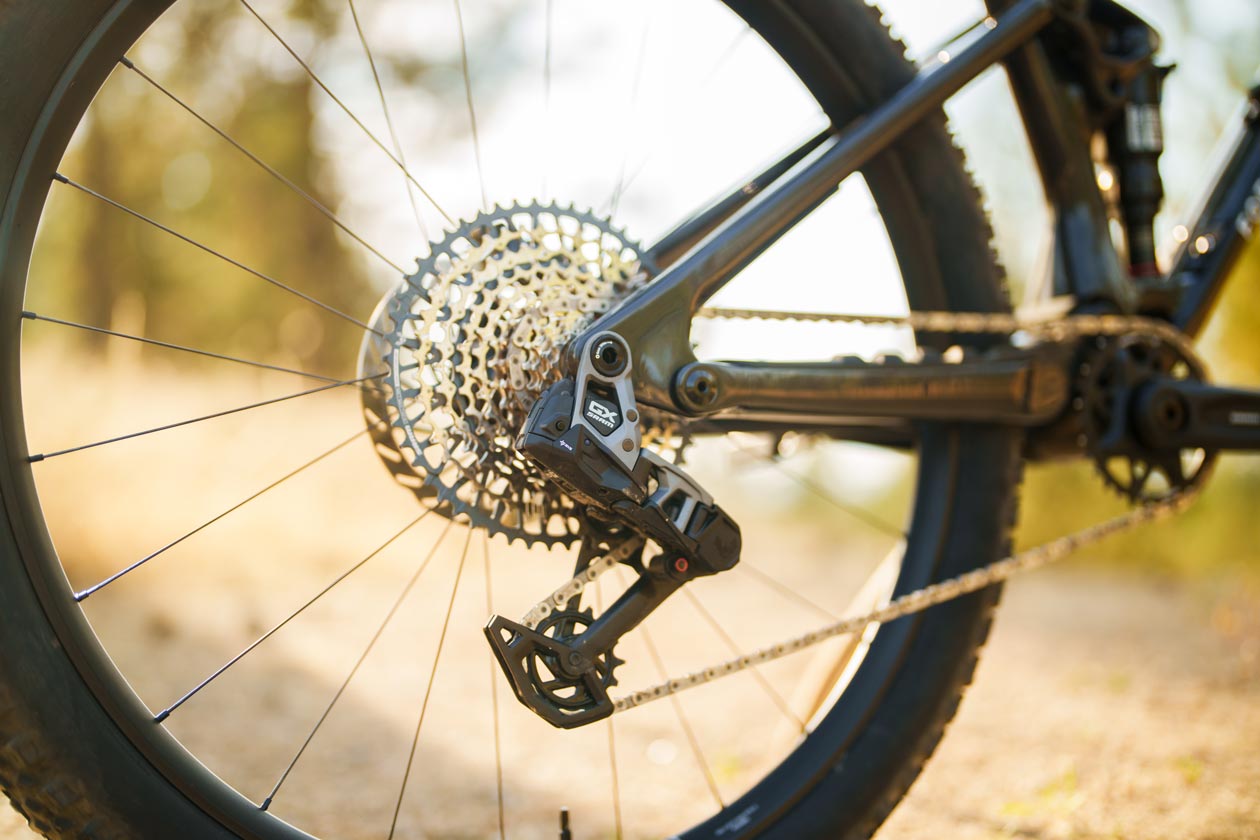
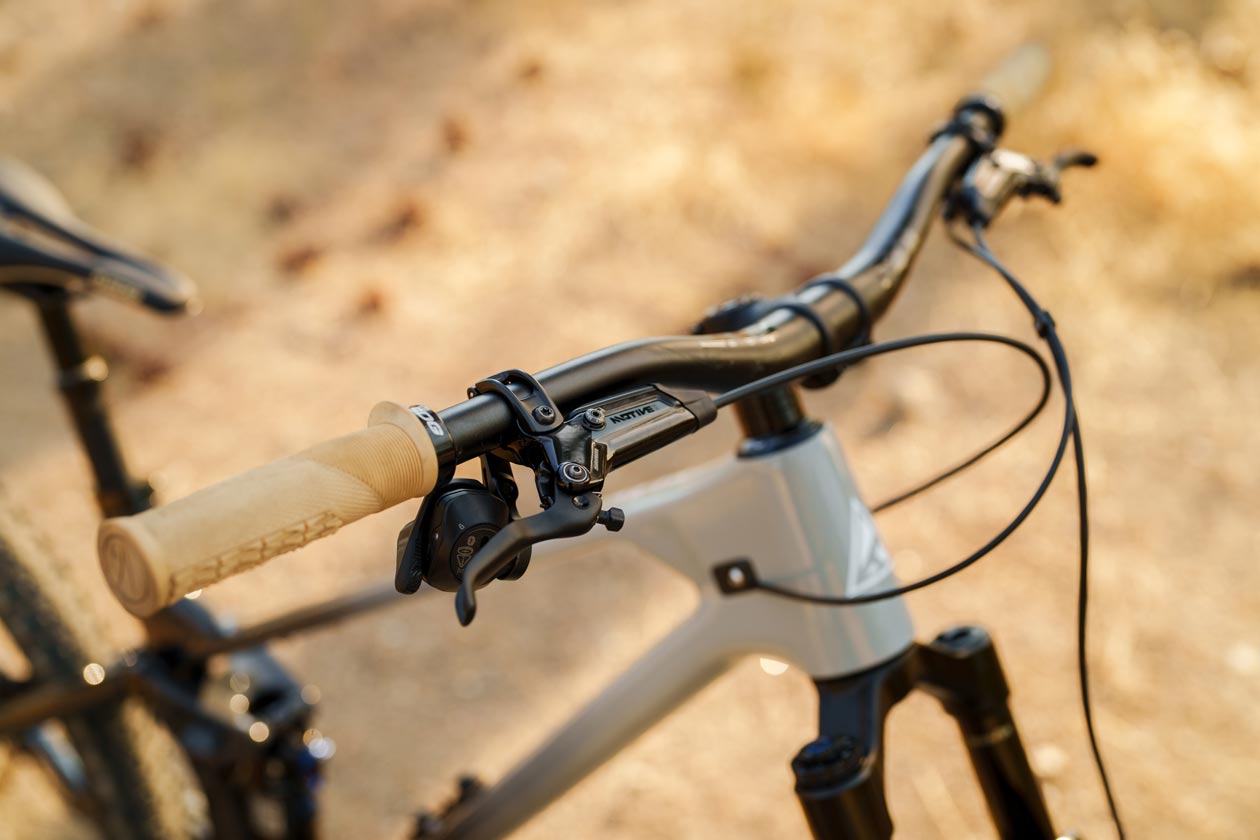
Our test bike was the Tier 2 build, retailing for $7,699. This build struck a good balance of top-level suspension and quality components without a five-figure price tag. We loved to see the money spent on the RockShox Ultimate level suspension rather than a lighter wheelset. With that said the DT 1700’s are a perfect match for this bike, and our testers were happy with the SRAM GX Transmission.If I was building a frame-up option, the only other thing I would change is moving to a more powerful brake, the SRAM Motives do a fine job at slowing the Reya down in most scenarios, but with how capable the bike is, I wanted more power at times.
RIDING THE FORBIDDEN REYA
CLIMBING PERFORMANCE |
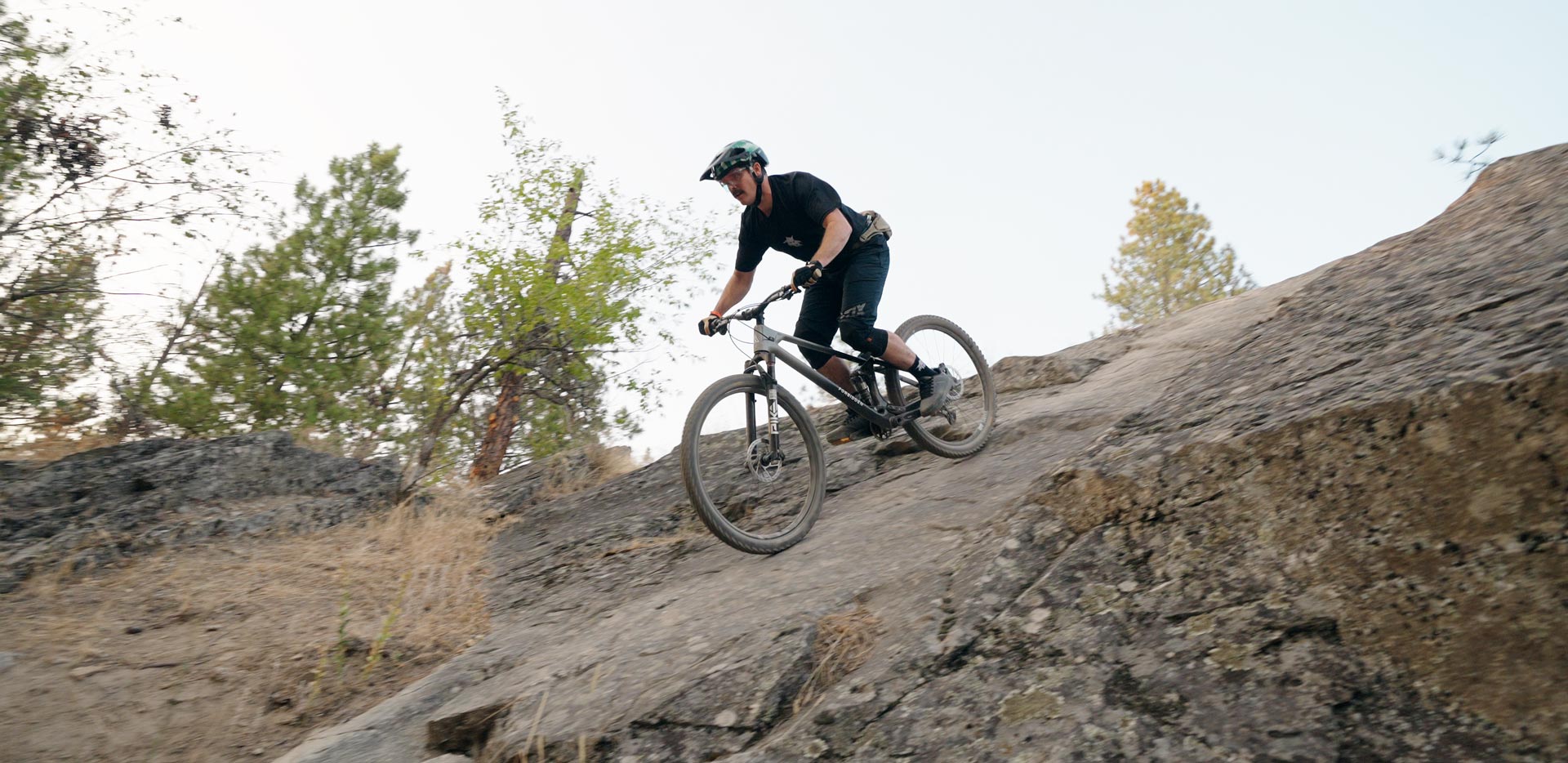
The Reya provided a very efficient ride feel. The Trifecta V3 Suspension platform started out firm, then smoothed out just after the sag point. This is great for getting out of the saddle and putting the power down, but delivered more feedback on small frequency bumps than some competitors. The climbing position lended itself towards a more forward power position, as we found on most bike in the group test, but by no means was it too heavy on the hands. We really enjoyed the steep seat tube angle, with bonus points for tons of dropper post insertion.
With the Reya having the longest wheelbase and longest chainstays on test, navigating tight switchbacks took a bit more planning. On the other hand, the Reya puts your weight very much in the middle of the bike, producing impressive traction and stability on steeper uphills – it had the least amount of front wheel lift in steep terrain by far. At times you would need to focus on getting your weight over the back wheel to ensure traction on flatter, looser pedaling sections.
Overall, the Reya provided a comfortable climbing position for all-day efforts, with a supportive suspension feel, erring on the side of efficiency over suppleness.
DESCENDING PERFORMANCE |
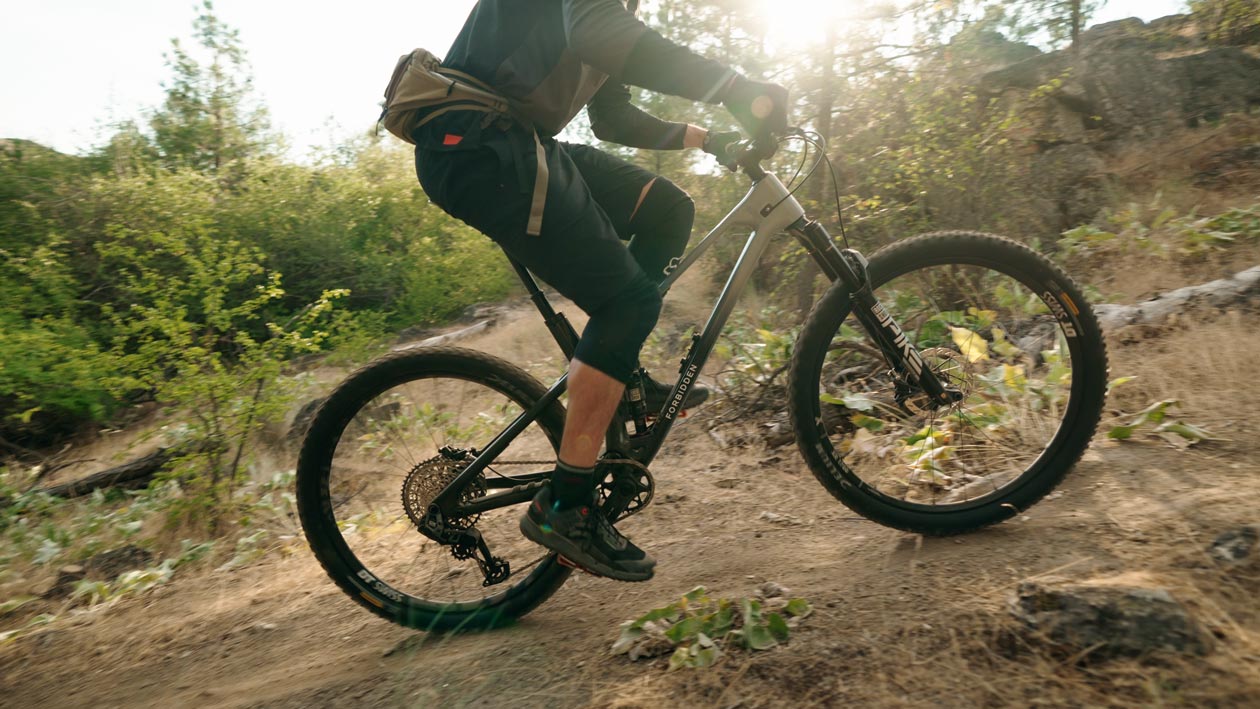
The Forbidden Reya delivered incredible stability on the descents. It offered a very different ride feel compared to the other bikes in our group review. If you are riding primarily high-speed trails, it is a hard bike to top. Even with the Reya’s stability, the bike was still playful enough to choose your own adventure, but it took some more line choice planning to make the most of what it has to offer.
The supportive suspension feel found on the climb remained on the descents, but really smoothed out the further you pushed into the stroke. This made for a bike that was easy to generate speed on low-gradient terrain, but stayed composed through the rough stuff. I ran the bike at 30% sag with the compression dial on the shock in the most open of three positions, which balanced small-bump compliance and big hit support. I generally favor a softer off-the-top feel, but finding a happy balance with the Reya was not difficult.
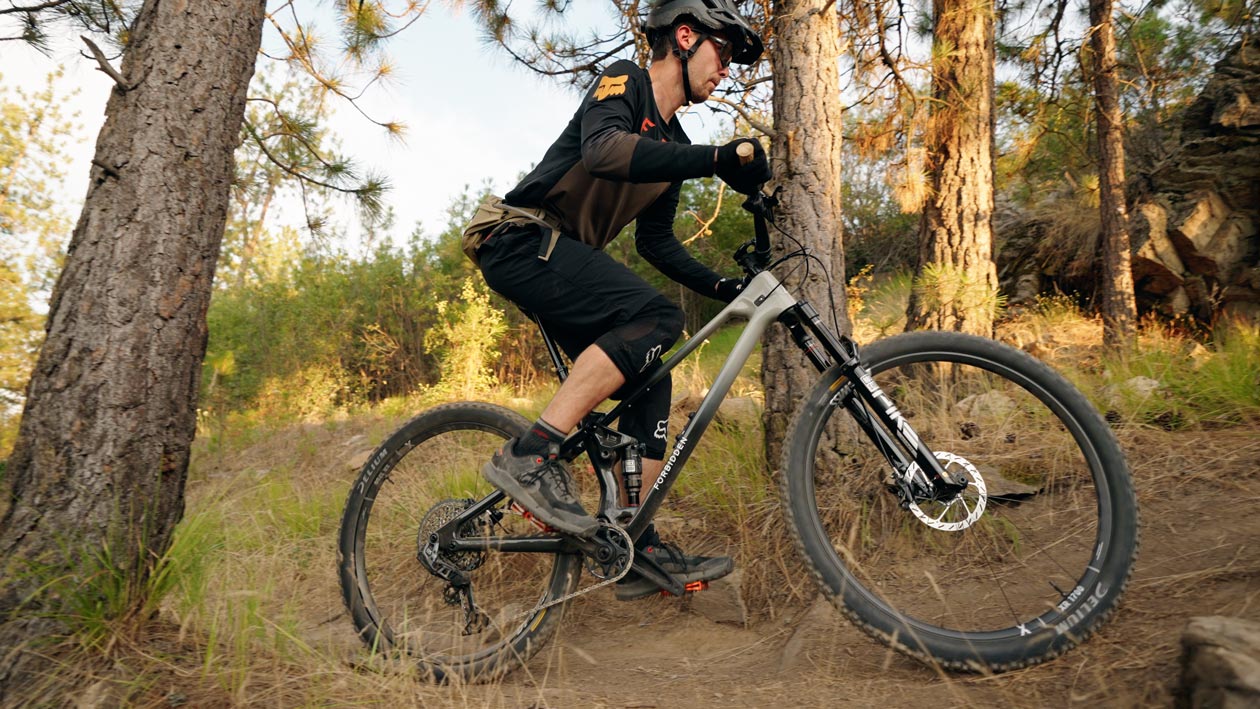
The Reya’s frame was one of the stiffest on test, feeling firm and enticing aggression when loading into corners and through big compressions. On the smaller, high-frequency chatter, there was some feedback into the hands, but it was not terrible. It was something to note if you gravitate to a more compliant frame, but many are likely to be satisfied with its ride feel.
Forbidden is not shy about building bikes for the way they want to ride, and we love when brands do that. It offers riders a true variety and distinction from the plethora of bikes to choose from. Overall, our test crew really enjoyed the Reya in most scenarios. While some numbers could be less-than-ideal for your local terrain or style, it was hard to find significant faults or issues with the Reya as an overall package.
HOW DID IT COMPARE?
The Forbidden Reya stood out as the most stable bike on test. The Santa Cruz Tallboy had an overall smoother suspension feel, with geometry that pushes nearly into the Enduro category, but it lacked the peppy nature the Reya offered. The steep seat tube angle on the Reya is noticeably more enjoyable to pedal than the likes of the Pivot Trailcat SL and Trek Top Fuel, especially for longer-legged riders.
The Wolf’s Last Word
A real standout in this shootout, the Forbidden Reya has made its mark on the short-travel trail bike market. We are thoroughly impressed with what Forbidden has created. While our testers really got along with many aspects of the Reya, from the geo to the downhill confidence, we do not think this bike is for everyone. If you buy the Reya thinking it is going to be a compact, playful “jib” machine, you might be let down. Sure, you can have fun on side hits and jump lines, but this bike shines at speed. For example, I set a PR on a Black Diamond tech trail that I ride weekly; this was a big surprise as I felt the bike still had more to give. The supportive pedaling nature pushes you to crank in those flat sections, while the geometry has your back when things get rowdy.
Depending on your region and riding style, this bike could be both easy or hard to recommend. While not always the case on-trail, this is one of those bikes where reading a geo chart does help tell the story of how it will behave in the tighter, slower bits of trail.
WHO SHOULD BUY THE FORBIDDEN REYA?
If you seek stability at higher speeds, and like a stiffer frame feel with a steep seat tube angle, the Reya is a great bike. This bike is a great fit for riders that have tall seat heights like myself due to the long chainstays preventing an over the rear axle feel on the climbs. If you’re not regularly threading the needle between ruts, rocks and roots like some riders back East and instead have a bit more real estate to let this beast eat, the Forbidden Reya could be your dream machine. 
Price: $7,699
Weight: 30.27lbs (As Tested with Crankbrother Mallet DH Pedals and Delium Tires )
Website: Forbiddenbike.com
SHARE THIS REVIEW
2026 SHORT TRAVEL TRAIL BIKE SHOOTOUT SPONSORS

SUPPORT AND JOIN THE LOAM WOLF PACK
Want to test products for The Loam Wolf or be a Guest Tester at one of our Shootouts? Join here and be entered into monthly giveaways, have access to industry discount codes, sneak peaks of new products and more!
This is a new and positive MTB community that directly impacts future of MTB product development, shares helpful tips, setup suggestions and more.
Check out our NEW community here.