

WE DIG
WE DON’T
ABOUT THE FORESTAL SIRYON ENDURO MTB
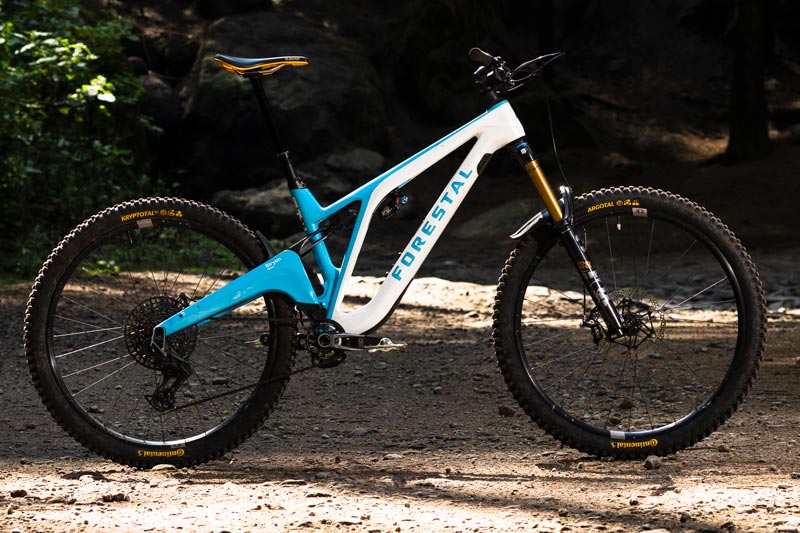
The Siryon is Forestal’s enduro mountain bike, designed to offer excellent capability for enduro riding and racing. With a pair of 29” wheels and 170mm travel on both ends, this may seem like a long-travel bruiser, but thanks to Forestal’s lightweight carbon fiber frame and well-selected geometry, it’s a surprisingly well-rounded mountain bike.
FORESTAL SIRYON FRAME DETAILS
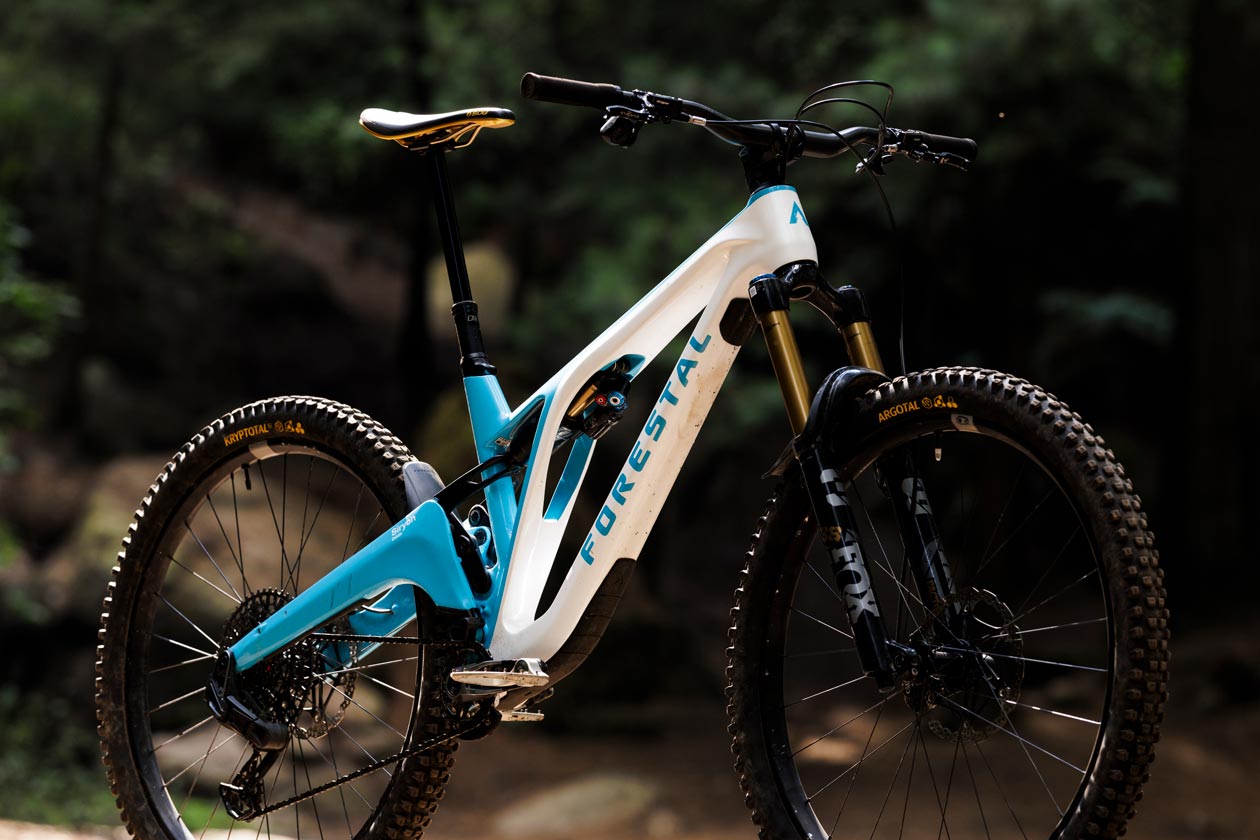
The Forestal Siryon frame is manufactured with their Alpha Box carbon fiber monocoque construction for the front triangle, which is connected to a carbon fiber rear end by a linkage-driven single pivot suspension design. The unique shape of the Siryon frame is striking, with most agreeing that it looks good in the flesh .
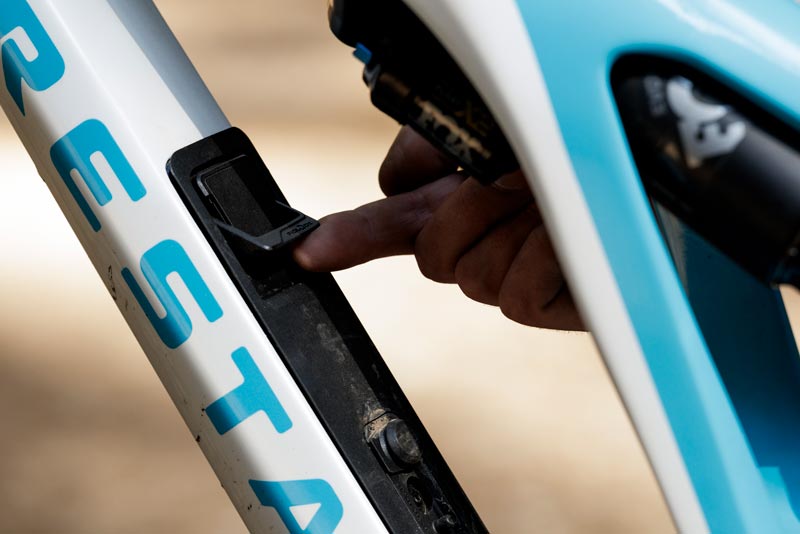
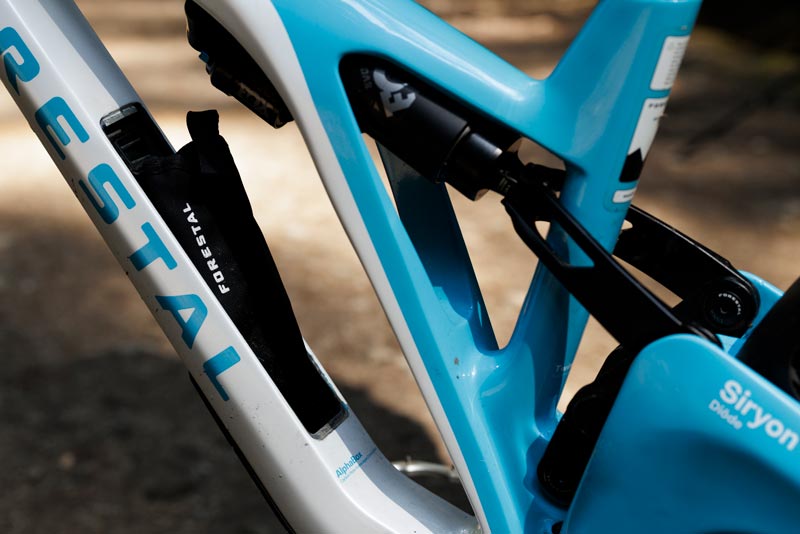
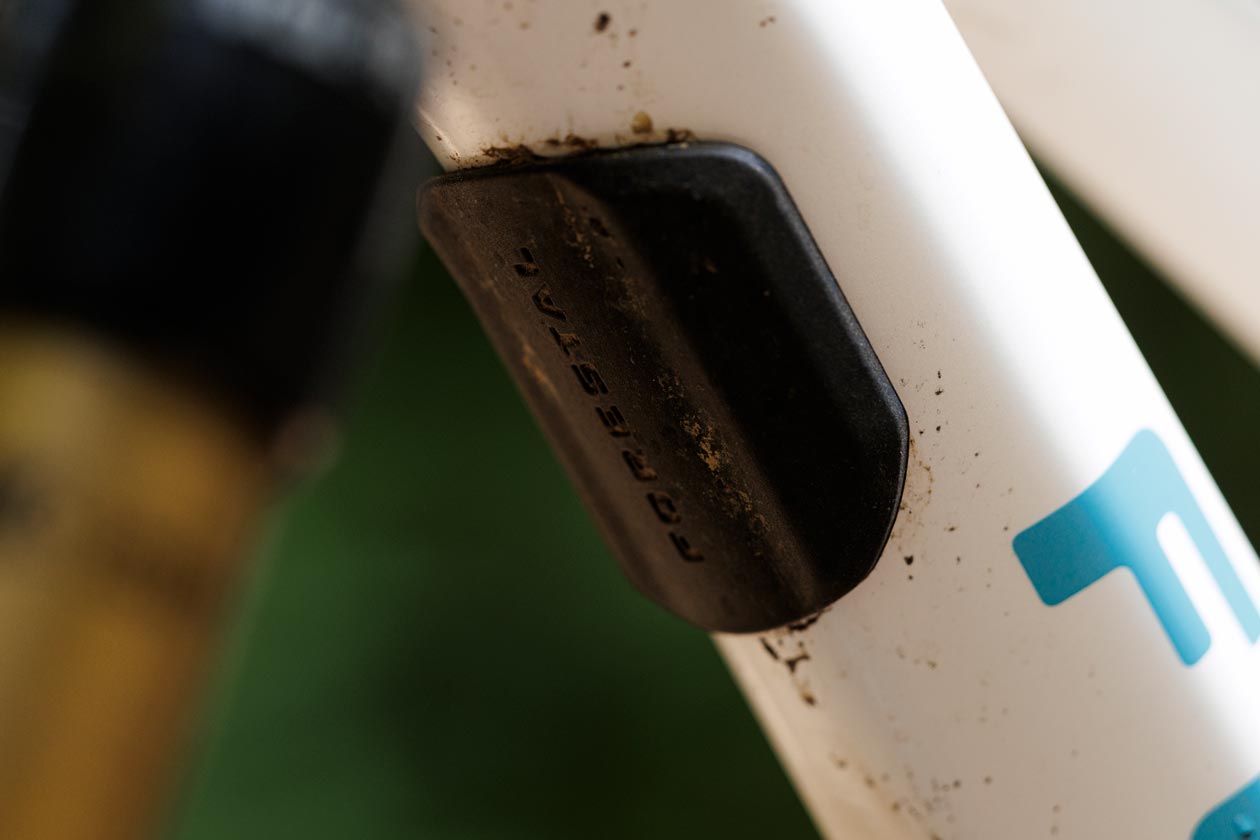
Forestal gave the Siryon the modern niceties and nasties alike: a Fidlock-equipped storage hatch in the downtube topped with a Fidlock bottle mount; an integrated rear mudguard; a downtube guard with extra shuttle guard, and the dreaded headset cable routing. While this cable routing provides a sleek integrated look when combined with Forestal’s cockpit and spacers, it makes maintenance a little more fiddly, and allows for water and mud intrusion. The plastic Acros headset components held up during the test, but required periodic disassembly for cleaning to prevent creaking.
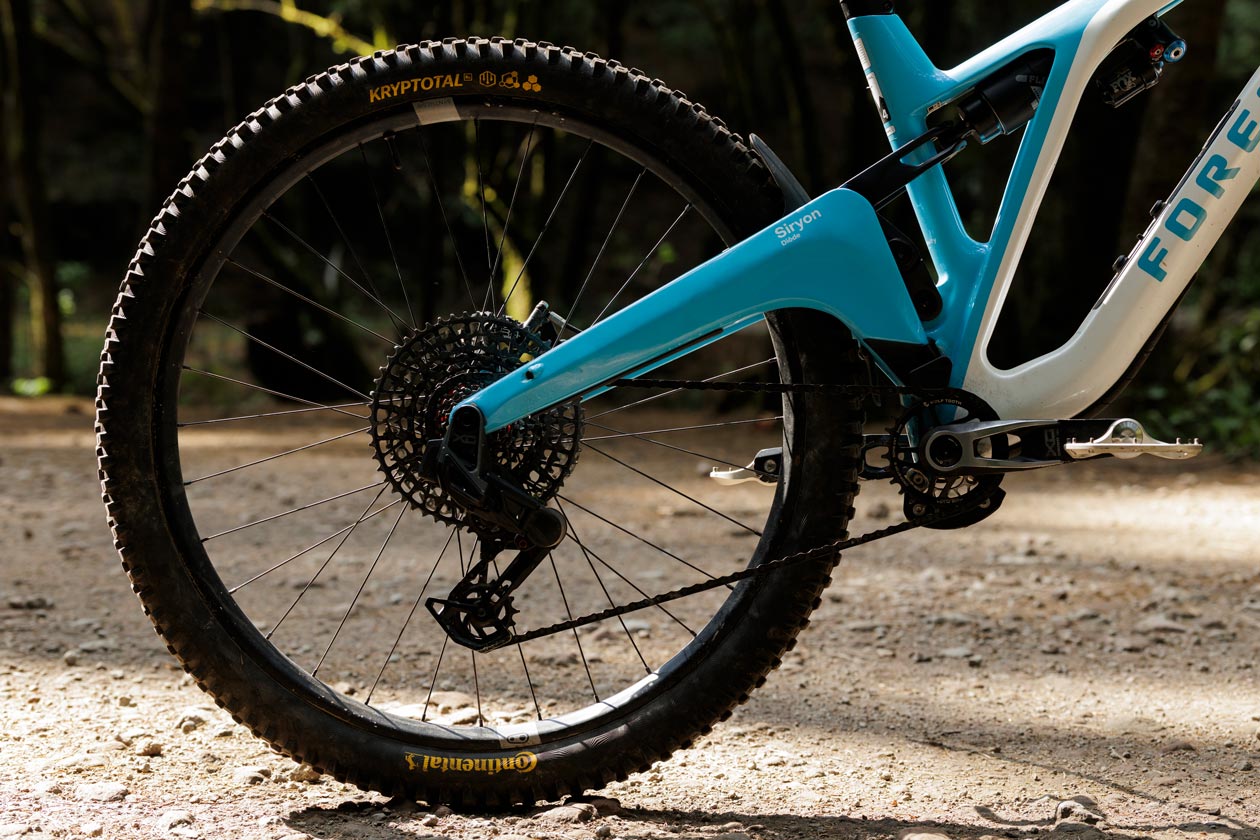
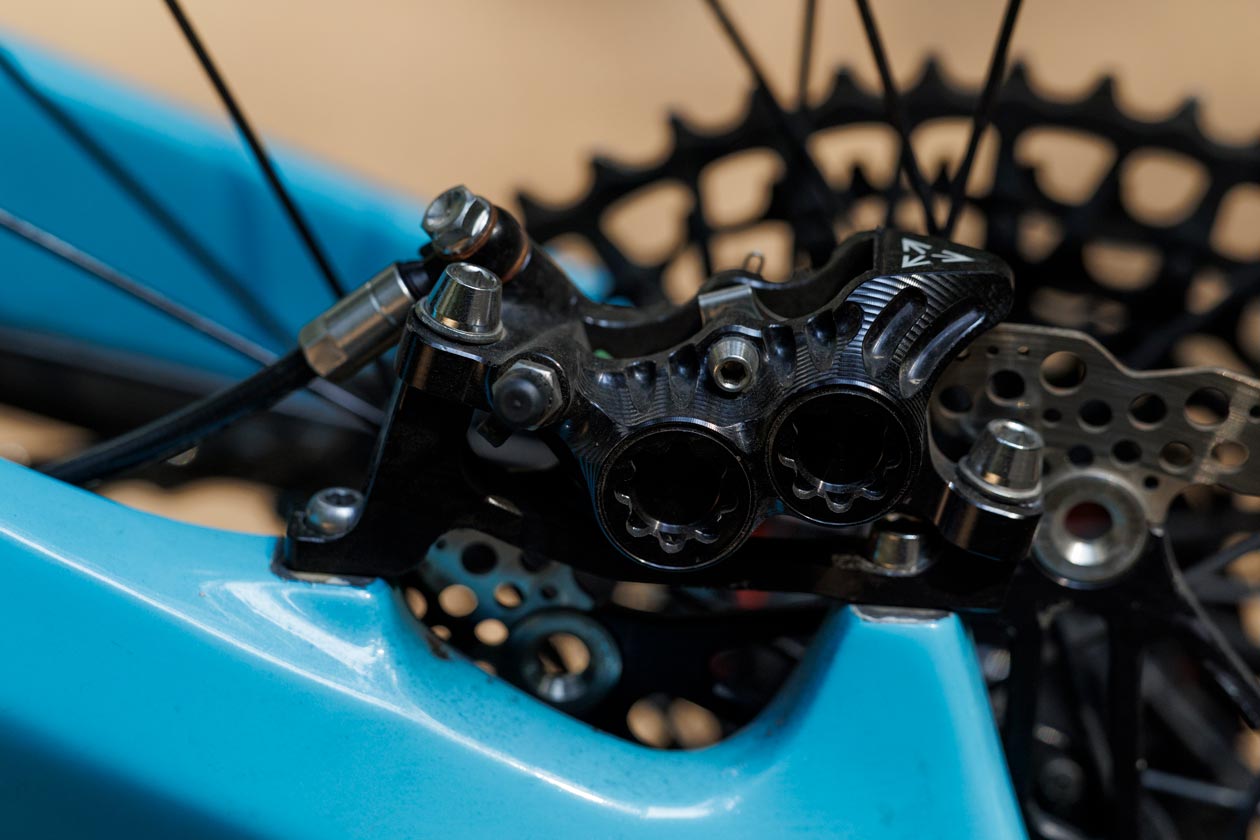
At the rear, there’s a SRAM UDH standard for the T-Type drivetrains on the full builds, with boost axle spacing and a 180mm post brake mount. In the middle, a 73mm threaded bottom bracket is surrounded by ISCG-05 tabs to mount a bash guard, and there’s an integrated chain guide.
SUSPENSION DESIGN
The Forestal Siryon uses the Twin Levity suspension system to deliver its 170mm rear travel, which is paired with a 170mm fork as standard. Twin Levity is Forestal’s unique linkage-driven single pivot suspension system, which uses a series of links to drive the shock and deliver the leverage ratio characteristics they desire.
The main pivot is placed in a spot that delivers roughly 100% anti squat at sag in the climbing gears, which increases slightly as you move down the cassette to 118% in the smallest cog. This falls off through the suspension travel to reduce chain interaction deeper in the stroke. As a result, there is reasonable pedaling support whether sat and spinning or hammering on the pedals in harder gears.
The anti rise sits at just under 100% at sag, dropping to roughly 80% at bottom out. This delivered a balanced braking character, with reasonable geometry preservation in steeper terrain without firming up the suspension excessively in flatter braking zones.
The leverage ratio is highly progressive overall, but much of this progression happens before sag to deliver a sensitive touch-down feeling. As a result, there is a total of roughly 37% progression, of which only 14.5% occurs from sag to bottom out. This provides a balanced handling characteristic that offers suitable mid-stroke support and ample ramp-up with an air shock.
GEOMETRY
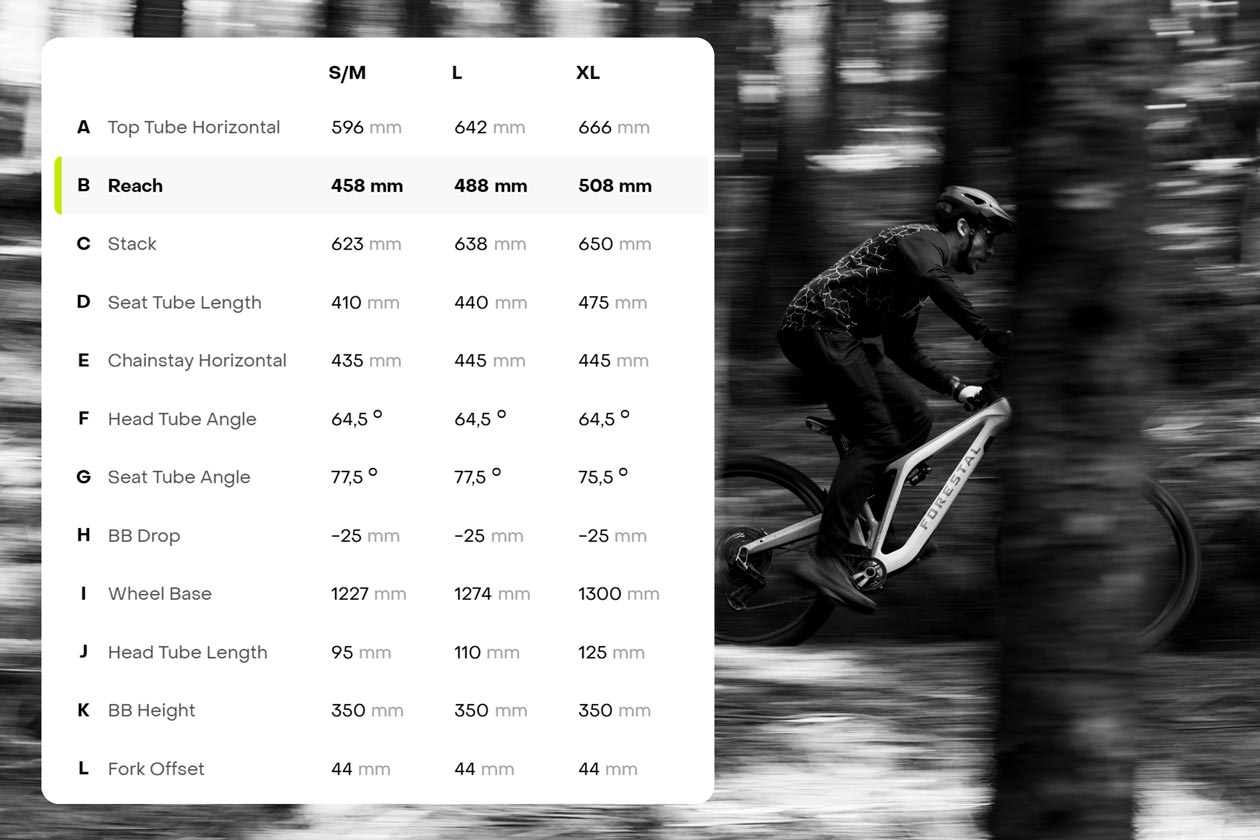
The Forestal Siryon is given notably well-rounded geometry for an enduro mountain bike, absent of particularly long and slack numbers that are commonly found in this space. While this doesn’t deliver quite the levels of out-and-out stability at speed as some of its competitors, it makes the Siryon a more agile and fun bike in less rowdy terrain. Combined with the support of the suspension platform and the reasonable build weight, it doesn’t take the rowdiest terrain to come alive.
BUILD KITS
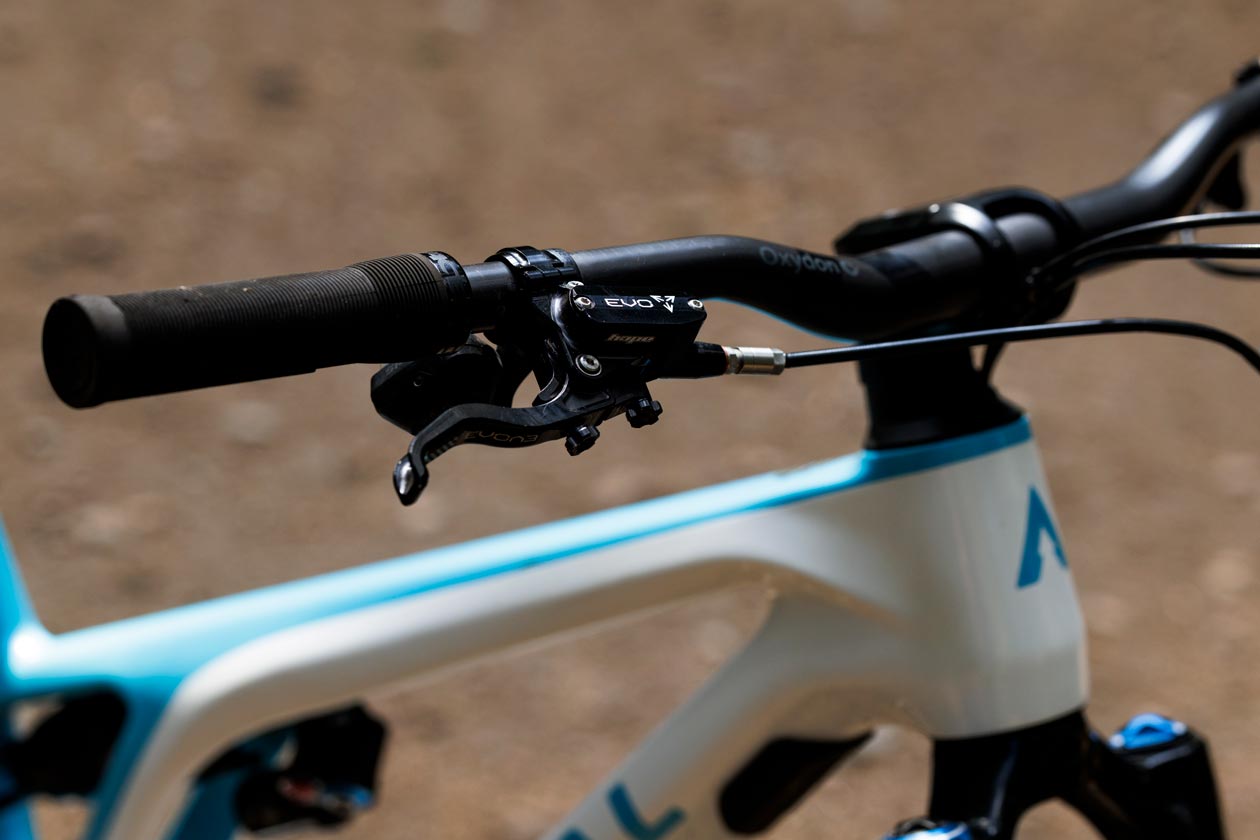
Forestal offers the Siryon in a choice of two builds: the Halo at €5,949 / $6,999, or the €7,750 / $8,899 Diode we tested. There’s also a frame-only option with Fox Float X2 shock for just over 3000 euros. The build photographed is mostly the stock Diode offering, aside from the Hope GR4 brakes, Continental tires, and little 28T chainring to help me get up the steepest and nastiest of New Zealand’s climbs. This build came in at 15.6kg or 34.3lbs for the size large.
The full builds share the same Alpha Box carbon fiber frame, Formula Cura 4 brakes, OneUp dropper post (with relatively short lengths of 150mm on S/M and 180mm on L and XL), and Schwalbe Albert Radial Gravity tires. Forestal also provides the cockpit with a carbon bar and their unique alloy stem.
The Forestal Siryon Diode is equipped with a Fox Factory 38 and Float X2 suspension combination; SRAM X0 T-type drivetrain, and Crankbrothers Synthesis enduro alloy rim with Industry Nine hubs.
THE DIRT
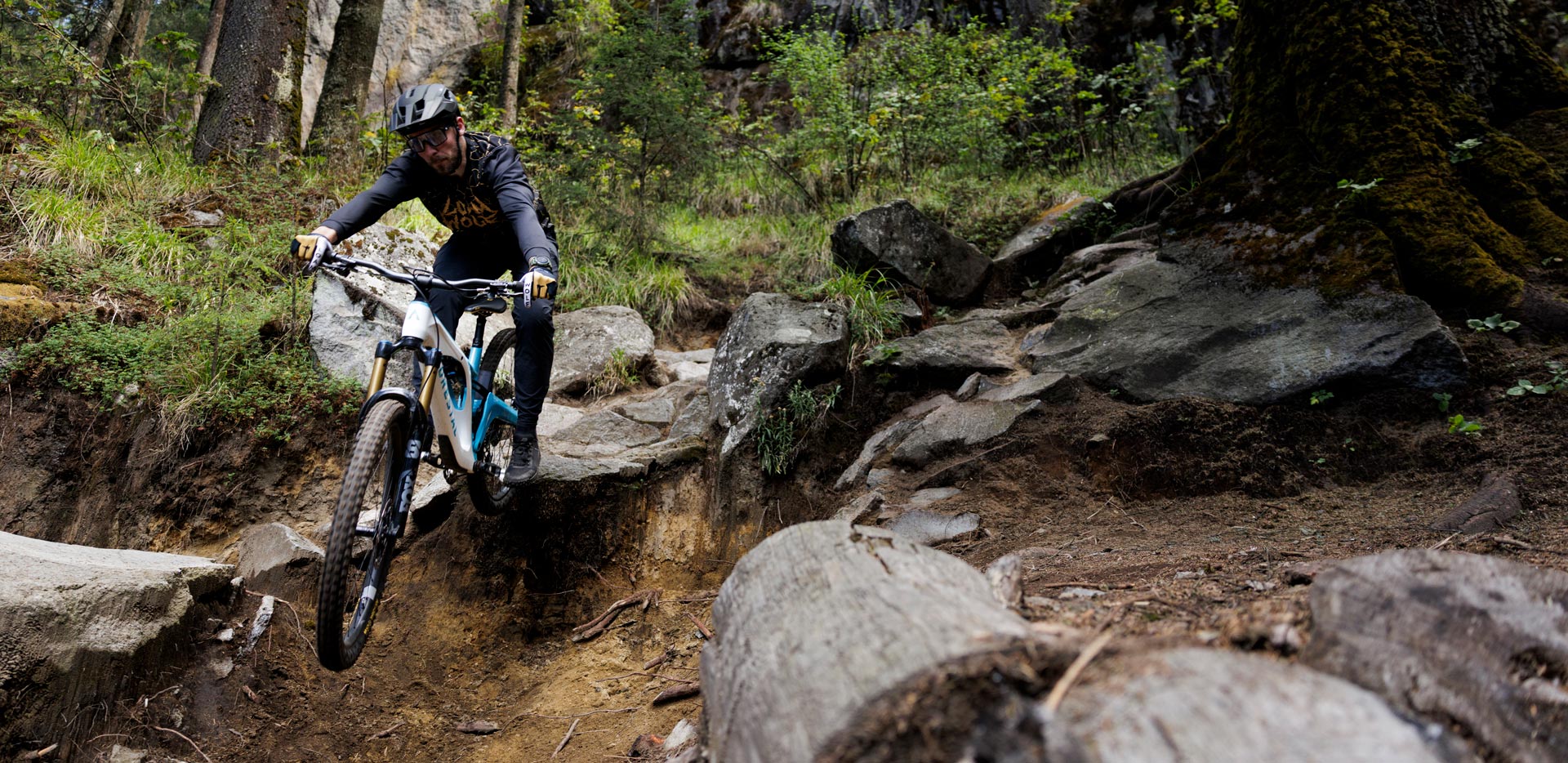
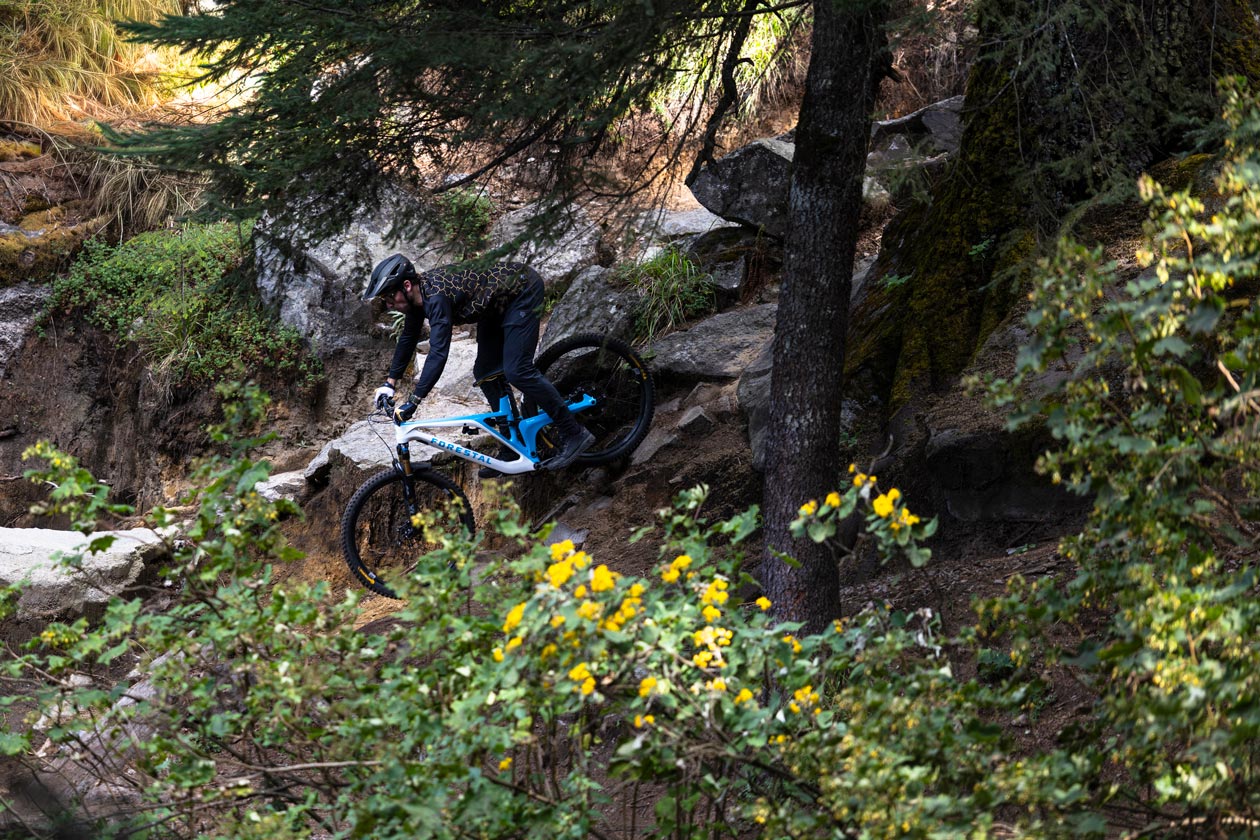
My testing period on the Siryon kicked off when Forestal helped to support my trip to New Zealand. With some incredible trails to explore, I was able to hone in on a well-rounded setup and rack up some proper testing miles on board. Once back at home, there was a hiatus where I was unable to ride the Siryon (more on that later), and I concluded testing with plentiful home laps, a Downhill race, and lastly a trip to Mexico City, where these photos were taken.
SETUP | The Forestal Siryon was surprisingly easy to set up, contrary to what the unique suspension design may have you assume. The suspension carries a recommended 25-27% sag for the shock shaft, since the progressive leverage ratio delivers around 30% sag at the wheel with this setting. My preference settled at 30% on the shock shaft, providing a nice “sunk-in” feeling on the bike, with ample progression retained to soak up the big hits. For days where a more agile and peppy bike was desired, the recommended 25-27% sag delivered pleasurable, more trail-friendly characteristics.
The size large was a comfortable fit for my 6’2” or 189cm stature, with long legs and a short torso. I began testing the Forestal Siryon Diode in its stock configuration, but over the course of testing, some changes were made. I was able to fit a 240mm OneUp dropper post deep enough in the frame to suit my 830mm saddle height, but it was tight. The clearance this afforded was much appreciated in the steeps.
The excellent Schwalbe Albert Radial Gravity stock tires wore, and were replaced by the equally excellent Continental Argotal Enduro Super Soft and Kryptotal RE Downhill Soft tire combination. The Formula Cura 4 brakes were solid performers, but I replaced them with the new Hope GR4 brakes, which slightly edged the performance of the Formulas.
I ran the SDG Bel Air saddle over the stock Fizik Aidon, which was equally comfortable, just more bling. And lastly, for the relentlessly steep New Zealand climbs, I swapped the stock chainring for a 28T. This gave a nice easy spinning gear, and though it changed the pedaling kinematics slightly, I was still in a happy spot.
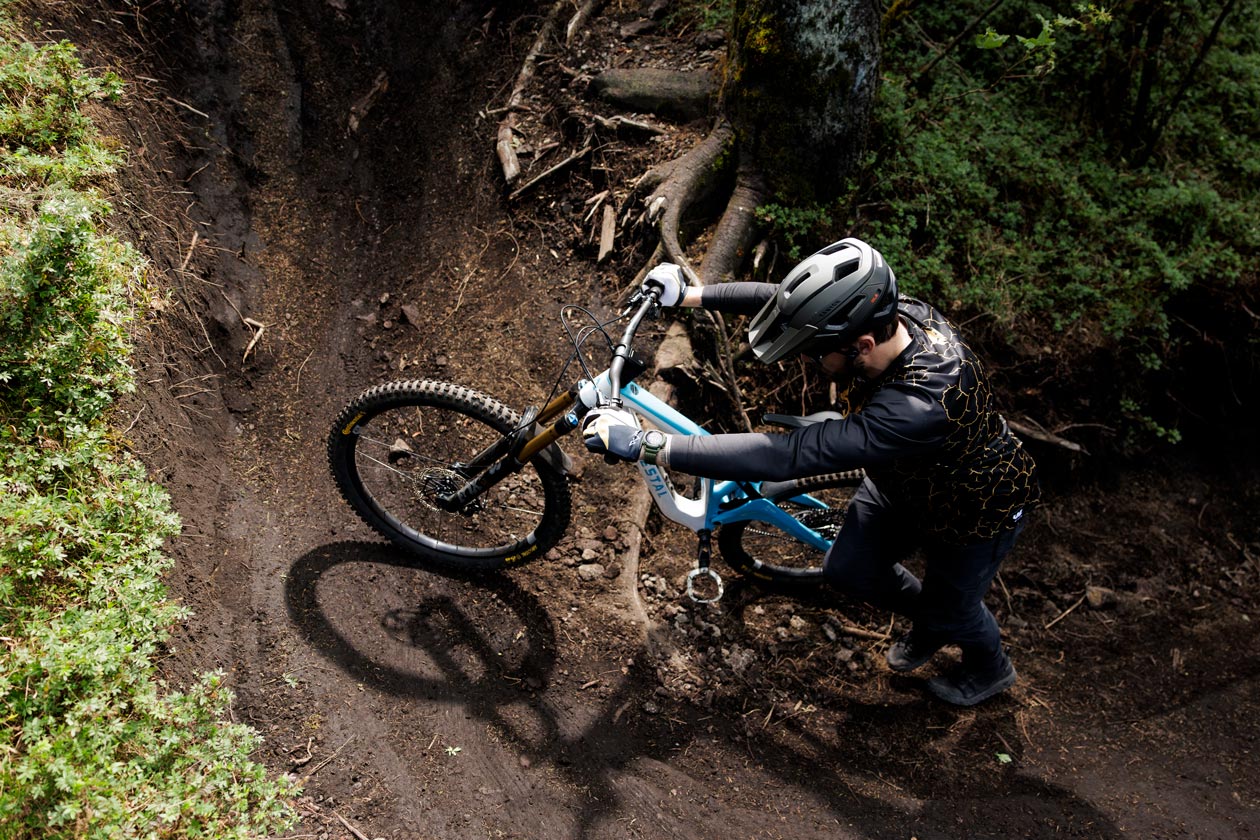
CLIMBING | The Forestal Siryon was a solid climber in the enduro space. The geometry placed me in a good position, especially with the saddle slammed forward in the rails. Forestal did not give the Siryon a considerably slacker actual seat tube angle than the effective angle, meaning riders at most saddle heights retain a comfortable seated position. At my tall saddle height there it was a little more rearward than on paper, but it’s less severe than many. The chainstay length and low to middling stack offered ample front-end weighting on all but the steepest of climbs, combining with the seating position to keep things in check on the way up the hill.
The Twin Levity suspension system offered solid pedaling support, negating the need for the shock lockout on trail and rough fireroad climbs. For smoother climb sections, it was reasonably easy to reach down for the Fox Float X2’s climb switch to add further pedaling support and boost efficiency, but there were instances where I forgot, highlighting the suitable support inbuilt to its kinematic.
The reasonable 15.6kg weight of the Siryon in its stock guise was fairly friendly to pedal. I had the biggest day on a bike in my life on board the Forestal Siryon, and was in no way mad about having to pedal it for this feat. The 28-tooth ring helped, too, of course. But all in all, the Siryon sits at the pedal-happy end of the enduro bike spectrum.
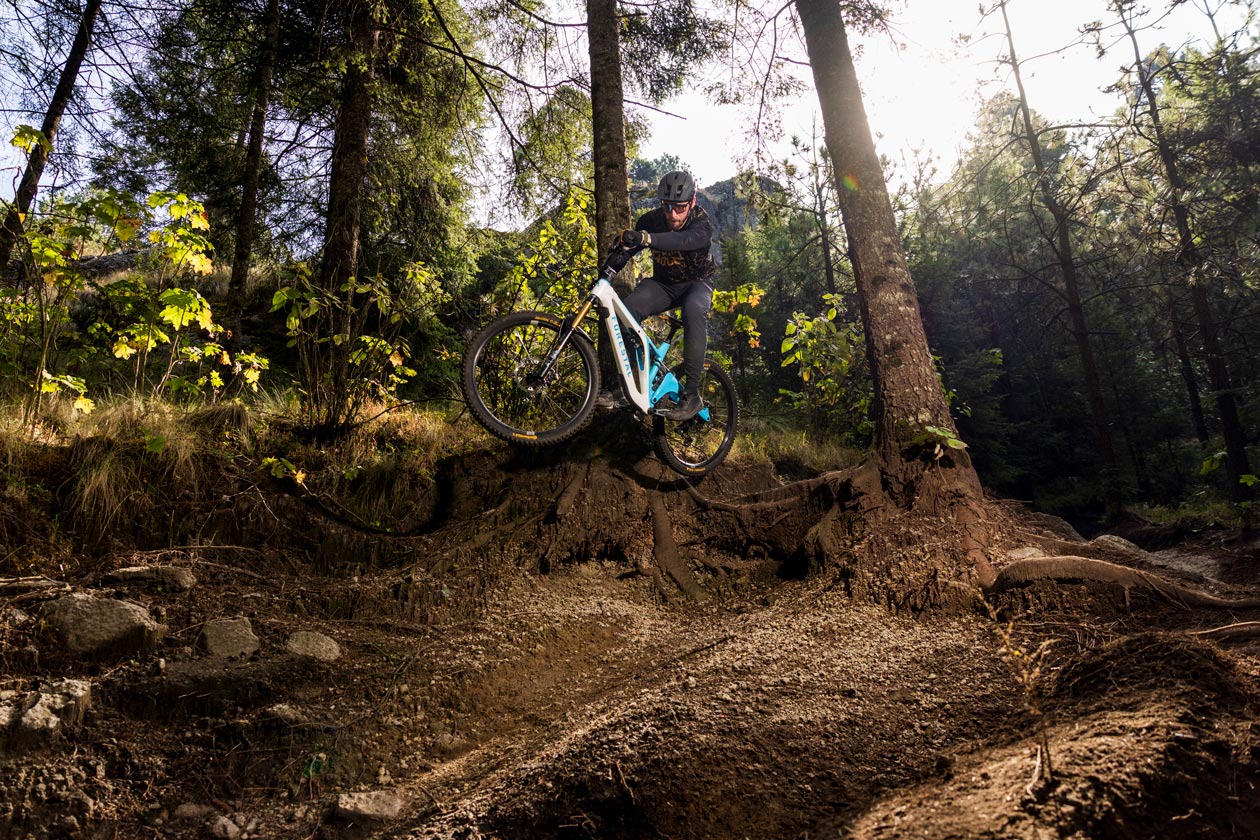
DESCENDING | The Forestal Siryon was an excellent descender all round. There was not one particular area it shone; instead, it was an extremely well-rounded enduro mountain bike that was equally happy on a downhill track or on a mellower trail ride. I selected the Siryon for a local downhill race – albeit on a track that favors enduro bikes – and was extremely happy with how it handled in the rough and nasty. The Twin Levity suspension ate up the rough amicably, while retaining enough support to generate speed through flatter sections of track.
The geometry of the Forestal Siryon was not the most extreme in the enduro space. This delivered a more rounded character, retaining plentiful agility for less gnarly trails. Even so, I rode some of the gnarliest terrain of my life on the Siryon, and came out the other side smiling. Static and dynamic geometry are two different things, and since the Siryon was happy to use its rear travel early on in the stroke, the dynamic geometry was slightly more aggressive, increasing stability compared to the geometry sheet when pushing hard.
The Siryon’s 445mm rear end was a happy spot for my handling preferences, balancing front end loading with snappiness and playfulness. Similarly, the flex characteristics of the frame struck a good blend of comfort, traction and responsiveness. Whether charging through rough terrain or slapping a turn, there was no harshness from the chassis, and only very rare occasions where any vagueness would present itself.
Many linkage-driven single pivot machines suffer from high degrees of brake-induced squat, but Forestal kept it under control. As a serial brake dragger, I can struggle with designs which have excessive anti rise. Thankfully, this this didn’t present any issues on the Siryon, and it remained comfortable when on the anchors.
FINISH AND VALUE | For the most part, the Forestal Siryon was a high-quality machine. There were a few of the finishing touches that let it down, but nothing that I’d consider a total deal breaker in isolation. The plastic Acros integrated cable routing headset developed creaking that was difficult to remedy. The Fidlock frame storage hatch rattled when a bottle was on top out of the box, but I fixed this in two minutes with some selective taping around the edges. Otherwise, the Siryon was a sleek and smooth operator.
The smooth operation of my initial frame ceased after around a month of daily abuse. As a pre-production frame, there was an issue with the bearing alignment. This loaded the main pivot of the frame incorrectly, which led to a crack developing. This crack took a long time to propagate, as I continued riding hard for 10 days after first noticing the paint cracking. Though a frame failure is never good to see, the mode of failure was reassuring, with no sudden collapse. After considerable testing on the replacement frame, there were signs of paint cracks.
Forestal had this to say regarding the issue:
“We have decided that at present these appear to be superficial paint fractures – likely due to lack of elastomer in the paint as we have seen in early batches of this frame – but under our extensive paint warranty the frame would be replaced FOC for the consumer.”
Dario [Forestal Engineer] and I also looked into the stress test calculationss on that frame, along with the computer analysis. It did show that around the BB and Main Pivot area would be the first point of failure, but none of the numbers were near excess stress or critical failure.
“Our physical tests are…carried out to a standard way above the industry requirements (in some cases 10x the required force or frequency).
Lastly, being totally transparent, yours is one of only three bikes that we have seen an issue with to date (one of which was your first one), so it seems Scottish riders are the best testing grounds for bikes.”
It was reassuring that the Forestal Siryon frame failed in a safe manner, rather than going with a bang. I believe Forestal’s warranty to be solid, and trust that they would support their customers should any issues arise, which is the most important element as a consumer.
Other minor details I would love to see improved on this enduro mountain bike are the integrated chain guide and clearance around the tire and linkage area. Accessing some of the frame pivots is difficult, requiring a ratcheting torque wrench, but it’s not a major issue with the right tools. Provided there was ample Loctite, the pivots stayed tight and ran smoothly. However, there is no denying that there are a lot of bearings to replace when it’s time to service. A lot of pivots in series also give a lot of tolerance stack up, increasing the likelihood of play developing. The rear mud guard did a reasonable job of protecting the pivots in the linkages, helping to increase bearing life. However some rocks still found their way in and scratched the paintwork.
The lack of geometry adjustability didn’t bother me. However, it would have been great to see a way to account for a mixed-wheel setup. You could certainly throw a 27.5” wheel in the rear without the geometry becoming unrideable, but I’d love to maintain the stock geometry to retain its peppiness and pedal clearance with a smaller rear wheel.
COMPONENT REPORT
Forestal did a killer job with the component spec on the Forestal Siryon Diode in my eyes. The solid Crankbrothers/Industry 9 wheelset wrapped in excellent Schwalbe Albert Radial tires; the underrated and well-performing Formula Cura 4 brakes; SRAM’s stellar XO T-Type drivetrain, and Fox Factory suspension, presented limited complaints. The 180mm dropper spec would be my only major qualm, and while the Forestal cockpit may not suit all preferences, it was comfortable once the bar roll was dialled in.
Hope GR4 Brakes | Touching on the Hope GR4 brakes that found their way onto the Siryon, you can consider me extremely impressed. They offer solid power, but with consistency and control that’s at the very top. I’m working on the full review, coming soon.
HOW DOES IT COMPARE?
Comparing to the Scott Ransom 900RC – a similarly priced and spec’d bike – both machines have their pros and cons. The Forestal keeps things a little simpler when riding, foregoing the remote shock lockout. As such, you can have a more autonomous ride experience, though you forego a small amount of pedaling efficiency unless you’re regularly reaching for the shock lockout. The two bikes are closely matched in capability, with the Ransom taking the edge on high-speed stability, but not offering quite as good small bump sensitivity.
The Wolf’s Last Word
Regardless of the quirks and issues, I’m a huge fan of the rounded nature of the Forestal Siryon. A capable enduro bike that offers excellent capability in gnarly terrain, yet provides a fun ride on mellower trails and climbs very well for its class, this is not a bike to be slept on. But make sure you have a good local dealer, in case the worst happens. 
Price: €5,949 / $6,999 (Halo) – €7,750 / $8,899 (Diode, tested)
Website: Forestal.com
SHARE THIS REVIEW
ABOUT THE WOLF

Robert’s habitat is the Tweed Valley, Scotland, which is renowned for its root-littered enduro mountain bike trails. Robert has been developing his bike handling skills for the last 16 years. Since he was a pup, he’s been riding everything from BMX through to enduro and downhill bikes. Combining a playful style with occasional speed-focused aggression, he favors supportive bikes, and does his best to push them hard.
Rank: European Tech Editor
Size: 6’2” / 189cm | 220lbs / 100kg
Social: @robert_johnston
SUPPORT AND JOIN THE LOAM WOLF PACK
Did you find this review helpful? Would you like the chance to review (and keep) products? Are you interested in saving big bucks by getting exclusive Members Only discounts from industry brands all while helping support a small, rider-owned media crew? We have big plans for our members beyond big discounts and product giveaways! To learn more and help support small, independent media, visit our Member’s Page.