

WE DIG
WE DON’T
ABOUT THE PRIORITY VANTH
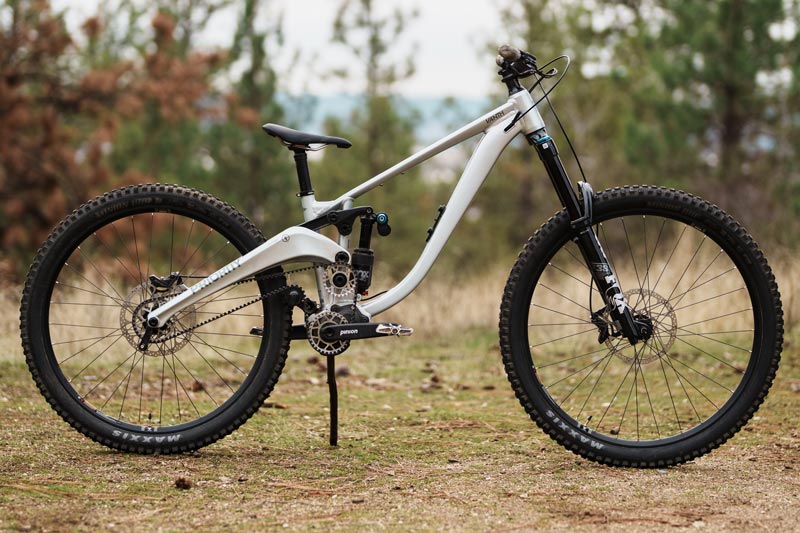
If there were ever a bike built straight from internet wish lists, this might be it: gearbox, belt drive, high‑pivot suspension, and an alloy frame (well, the front triangle at least!). Priority Bicycles is known for low‑maintenance commuter rigs but just jumped headfirst into the mountain bike world with the Vanth. They teamed up with Mike Schwartz of Morpheus Cycles to help bring the project to life, and the result is one of the most conversation‑starting bikes we’ve ridden this year.
We spent time putting the Vanth through its paces to see if Priority nailed that downhill‑first mission, or if this is just a tech experiment gone wild.
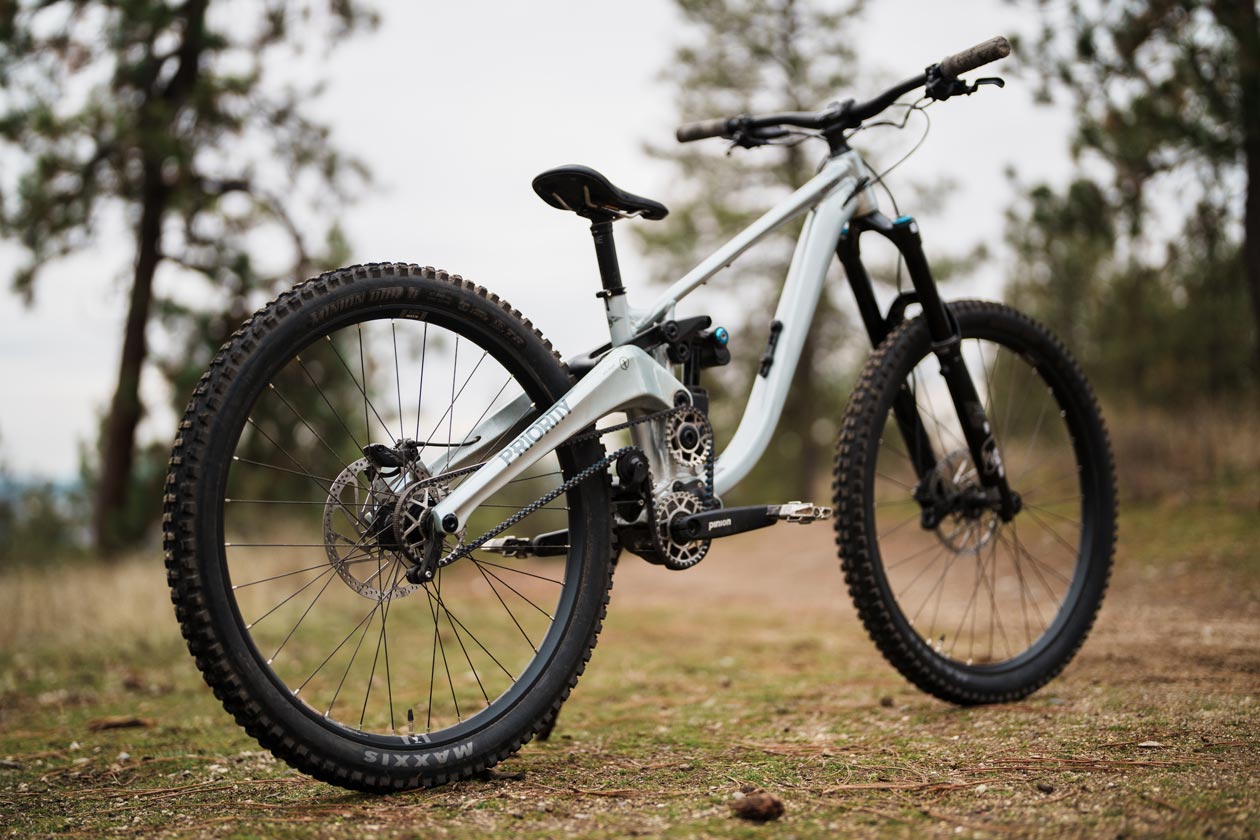
FRAME AND FEATURES | The Vanth packs 165mm of rear travel and rides on Priority’s proprietary Stillpoint suspension system. The front triangle is aluminum, while the rear is made from carbon fiber.
Buyers can choose from three frame sizes (S1 – S3) and three models, priced from $5,999 to $7,999 USD. It’s clear the goal here was affordability and downhill performance. So much of this bike’s identity reflects a rugged, utilitarian approach.
One standout feature we really appreciate was the uninterrupted seat tube made possible by that third‑member layout. It opens the door for long‑travel dropper posts. There are two sets of water bottle boss mounts located on the downtube and top tube.
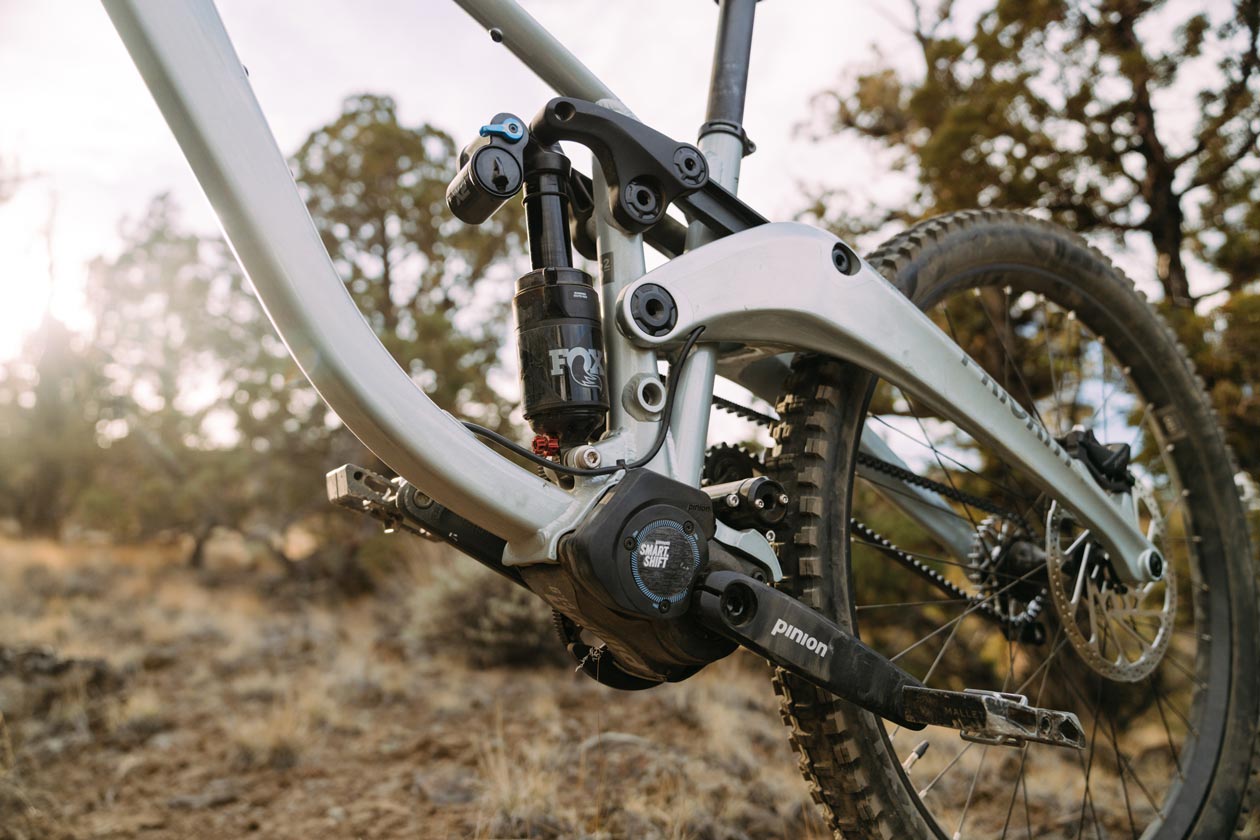
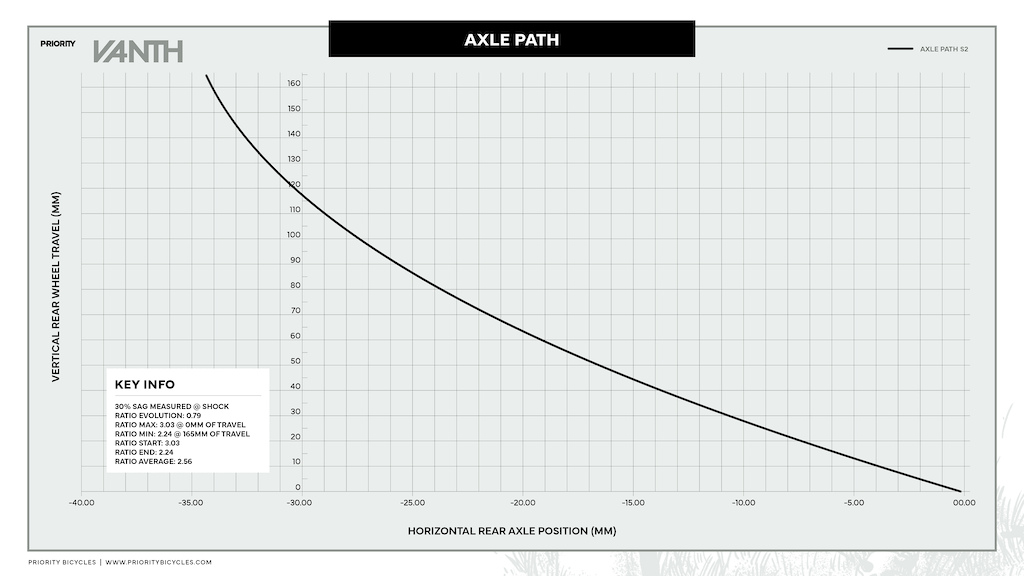
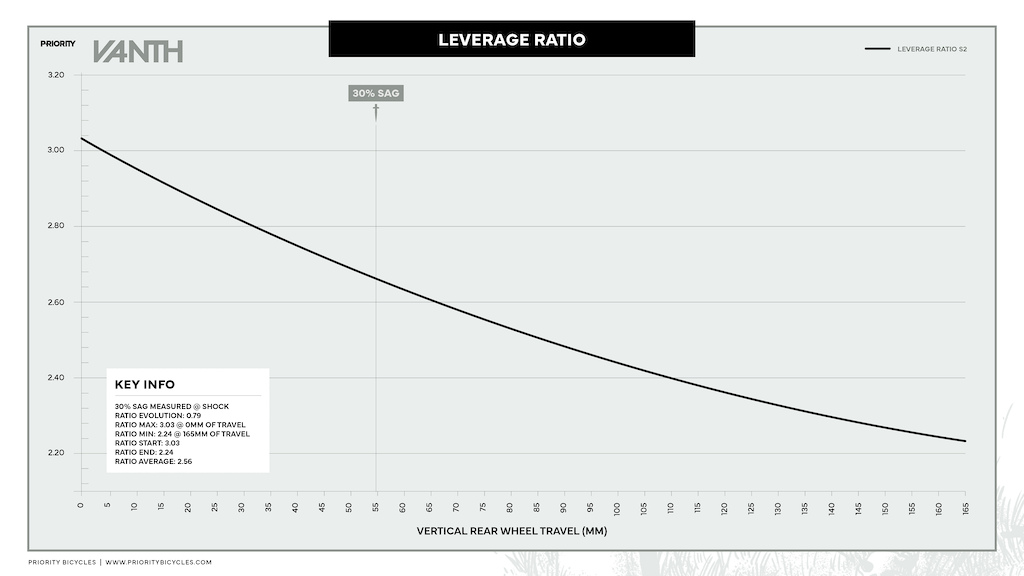
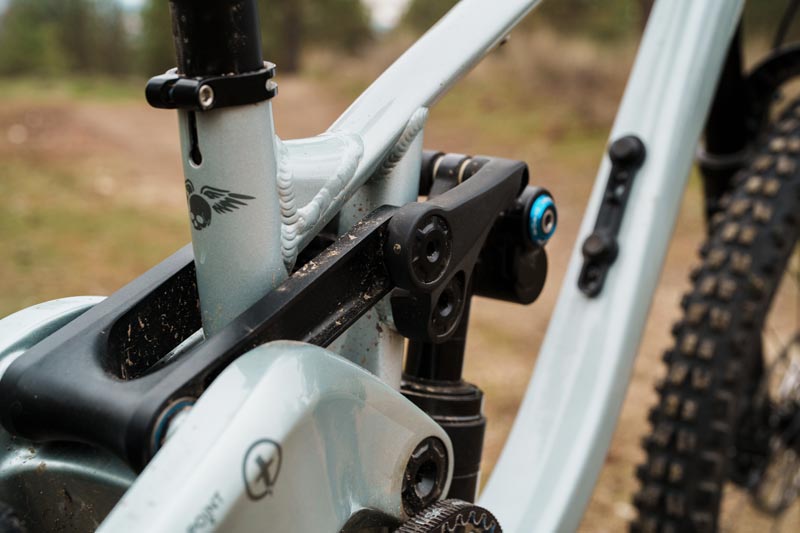
SUSPENSION | Priority’s Stillpoint linkage is the magic trick behind this bike’s personality. This is a dual‑link layout defined by a unique third member in front of the seat tube, which connects the downtube to the top tube. This design allows Priority to independently control anti‑rise values without sacrificing axle path, maintaining a fully rearward 35mm axle path while keeping anti‑rise above 100% through the full stroke of the shock.
The design has patent pending for its pivot and tensioner placement. By anchoring the suspension around the extra structural member on the downtube, Priority can alter anti‑rise behavior independently of axle path, something other high‑pivot systems struggle to balance. Pedal kickback comes in at 3.2°, with a leverage rate of 26%. The Vanth can be run with either a coil or air shock.
Out back there is a one-piece carbon swing arm in lieu of a dedicated chain stay and seat stay. Outside of looking wildly different, this reduces the sprung mass over the rear axle.
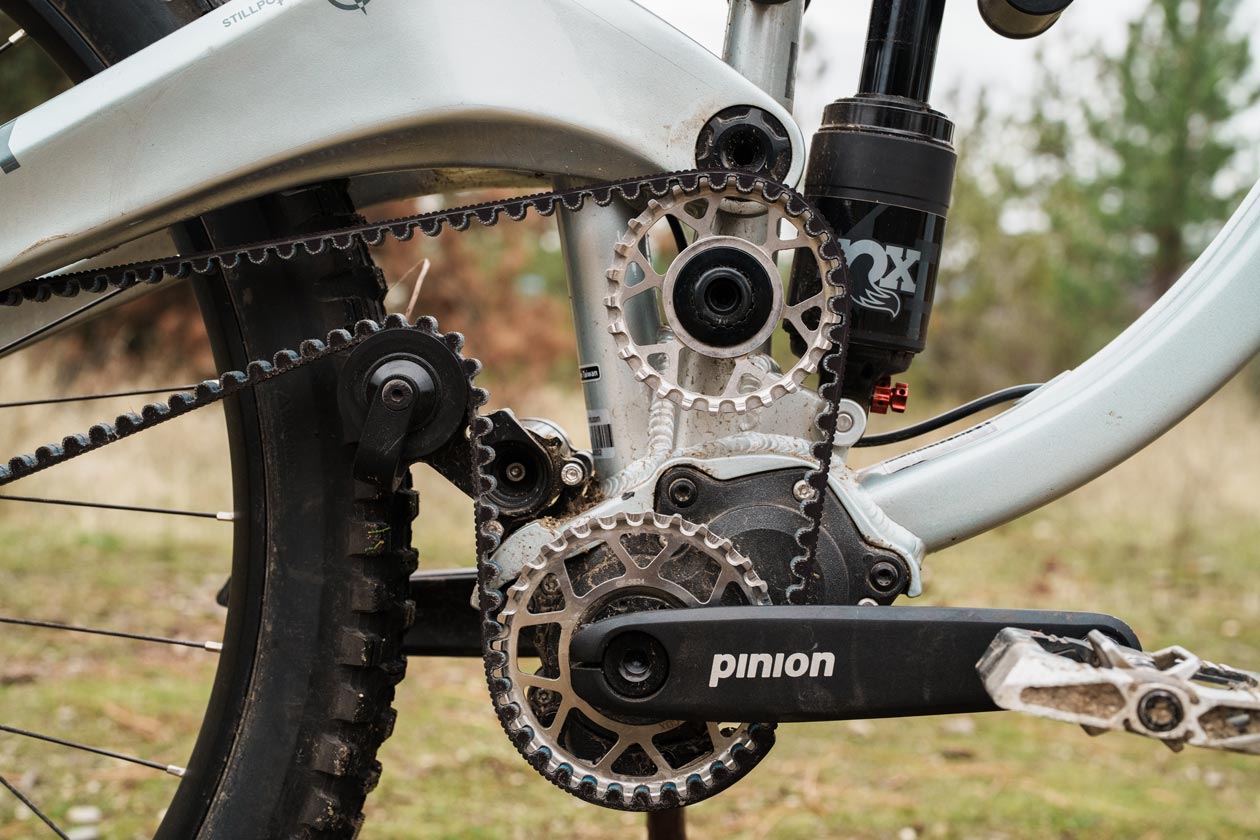
GEARBOX | Priority is using Pinions electronic shifting Smart.Shift C1.9i gearbox driven by a Gates belt drive system. The Smart.Shift gear box offers riders a 568% gear range that can be used while at a stop or coasting, no pedalling is required to change gears. While the system has a battery to actuate shifts the run life of that battery is quite long, only requiring a charge every 20,000 shifts. When it comes to maintaining the system there is really nothing to be done other than changing the gearbox oil every 6,000 miles which will take you quite a while to rack up.
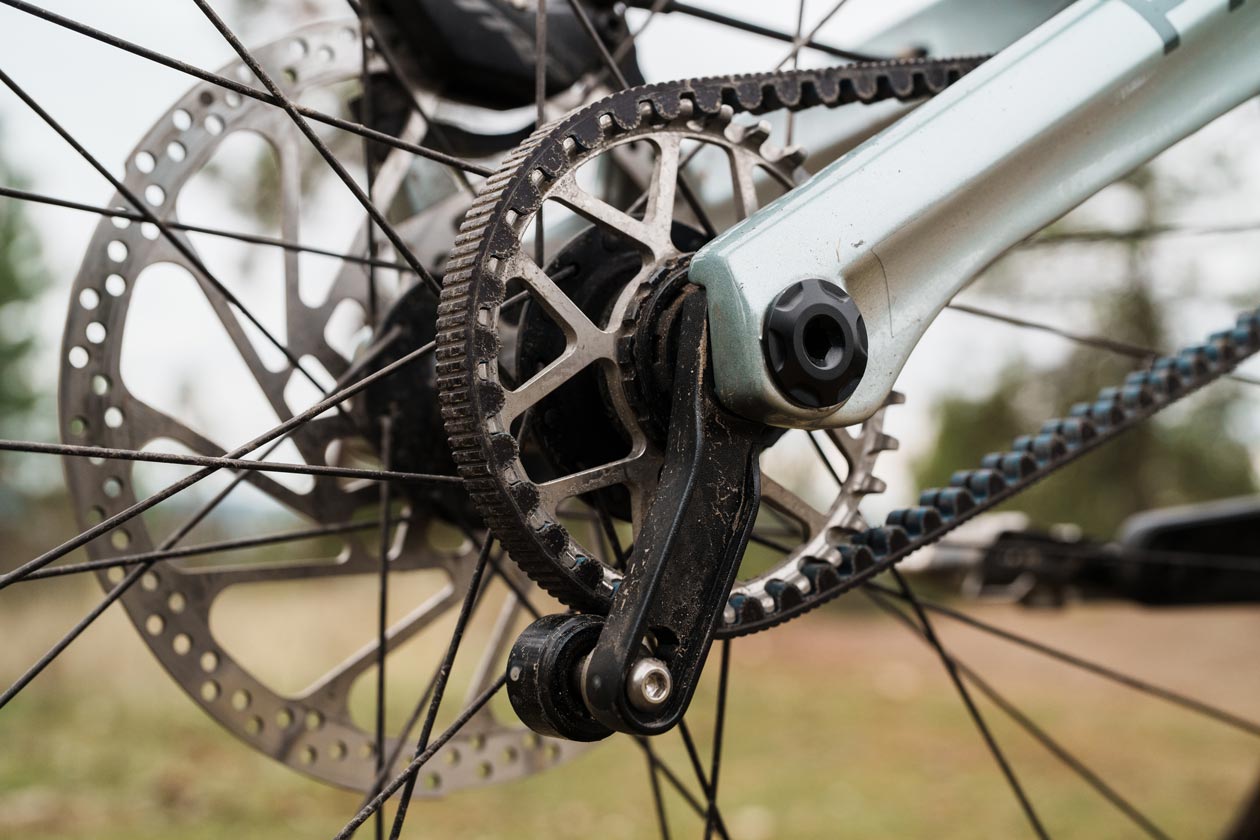
The carbon-fiber-corded Gates Belt requires very little maintenance and clears mud thanks to the long stainless steel sprockets found both front and back. It is claimed that the belt system lasts three times longer than a traditional chain -riven drivetrain.
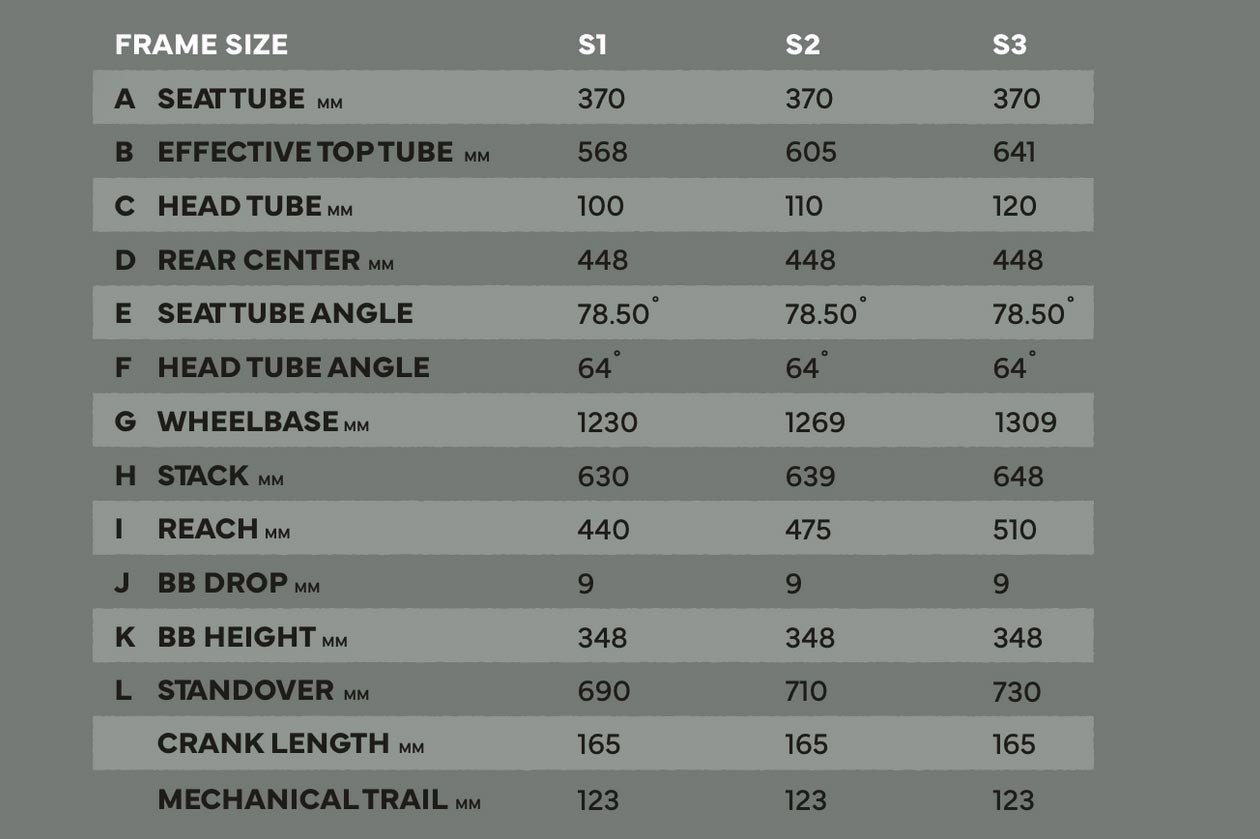
GEOMETRY | The Vanth is offered in three sizes, with reaches ranging from 440mm to 510mm. Our size S2 (Large) sports a 475mm reach, 639mm stack, 9mm of BB drop and a 448mm rear center. Rear center lengths on all sizes stay the same. The headtube angle comes in at 64º, with a steep 78.5º seat tube angle.
BUILD SPECS | There are three build kits on offer, from the $5,999 Performance Elite to $7,999 Podium. Even the lowest spec performance Elite build we have on test has all the things we would want, and for a fairly reasonable price for a boutique bike brand. The only thing we can really criticise is the EXO casing tires, as this bike deserves at least Double Down casing tires. The Podium build might just be the most affordable complete bike with that fork. Our elite build weighs in at just a hair over 41lbs.
THE DIRT
SETUP | Setting the Vanth up was about as straightforward as it gets. We found that there is a wide range of air pressure that the bike feels good with. I rode the bike initially with just 25% sag, with no harshness or loss of small bump traction, which was a big surprise. For my long legs, the 210mm dropper still fell short of my desires. With the post installed to the minimum insertion line, I was still not at my required saddle height. Thankfully there is plenty of room to fit and fully slam my 250mm RockShox Reverb AXS dropper post. Even with the 250mm dropper installed, I had a fair amount of post sticking out of the frame, however, it did not cause any issues while riding.
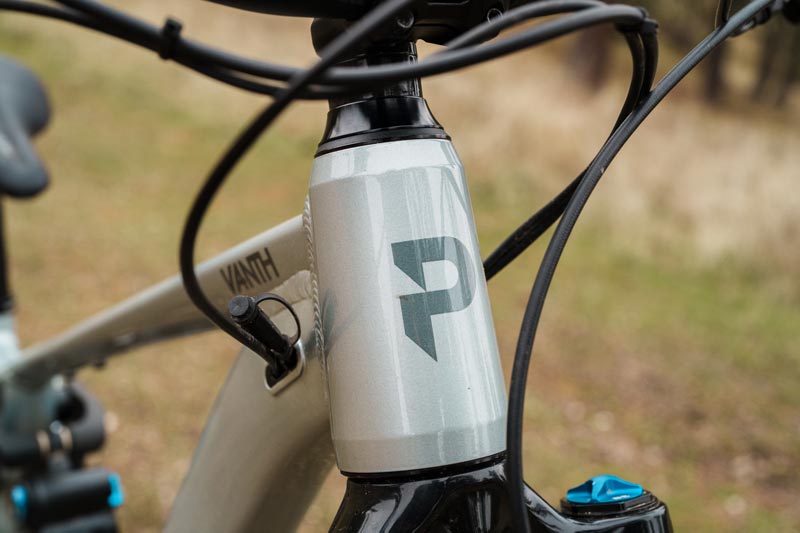
ELECTRONICS & INTEGRATION | The Pinion Gearbox fitted to the Priority Vanth is the only bit of electronic tech on this bike as standard, and pretty much lives in the background due to its exceptionally long battery life. The charge port sticks out of the drive side cable port next to the headset. This feels a bit unfinished, as it dangles freely. We did not notice any rattle or banging coming from this though, thankfully. With how infrequently you need to charge the system, I would be happy to have this placed behind a cover on the gearbox for a cleaner look.
CLIMBING | Let’s be real, the Priority Vanth isn’t built to shine on the climbs, but it isn’t a disaster either. Compared to similarly burly enduro bikes, the Vanth climbs reasonably well for its weight and drivetrain setup. You’ll feel some rubber‑band‑like stretch in the system due to the belt. This slight delay between pedal input and engagement is a similar feeling to towing someone on a bungee. Combine that with the rearward axle path lengthening under load, technical stop‑and‑go climbs become tricky.
On smoother fire roads or consistent grades, it spins along predictably. The gearbox shifts quickly, even under power, and we appreciate being able to double‑click gears mid‑climb before punchy ups. The larger jumps between gears make it harder to find a perfect cadence, and the lack of a gear indicator meant we were often guessing by feel. Head‑unit integration with Garmin (like Pinion’s other systems) would help here.
For steep, rocky, or stair‑step terrain, the combination of delayed response and ground‑clearance concerns makes it less fun, if that type of riding is your jam. We chipped a belt on a technical stair-step section of trail. This happened when the front sprocket made contact with some lava rock. Our early production bike did not come with a chainring protector, whereas production bikes will have this fitted. We believe having this would have mitigated this issue.
Expect a bit of gearbox drag (especially during break‑in), and a healthy workout if you’re tackling steep gradients, but for most, the payoff downhill overshadows these drawbacks for our typical burly enduro riding.
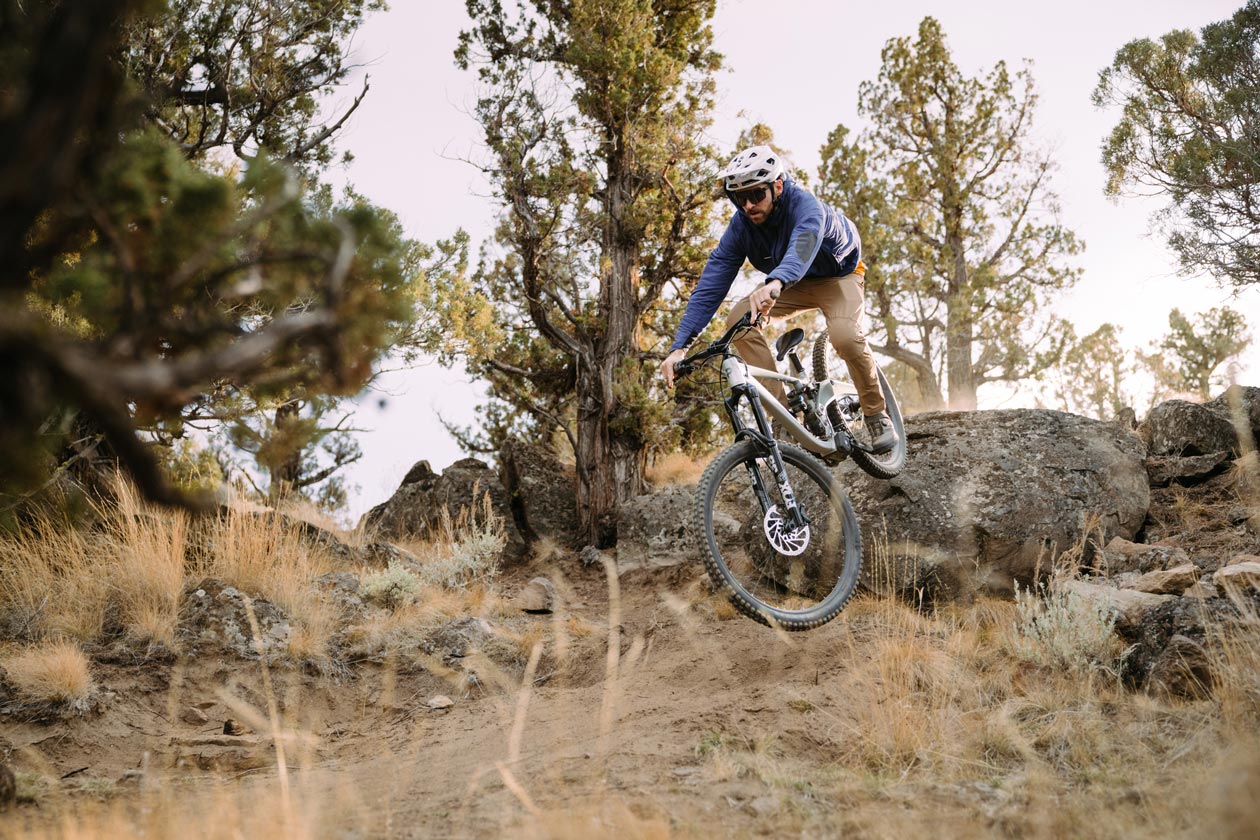
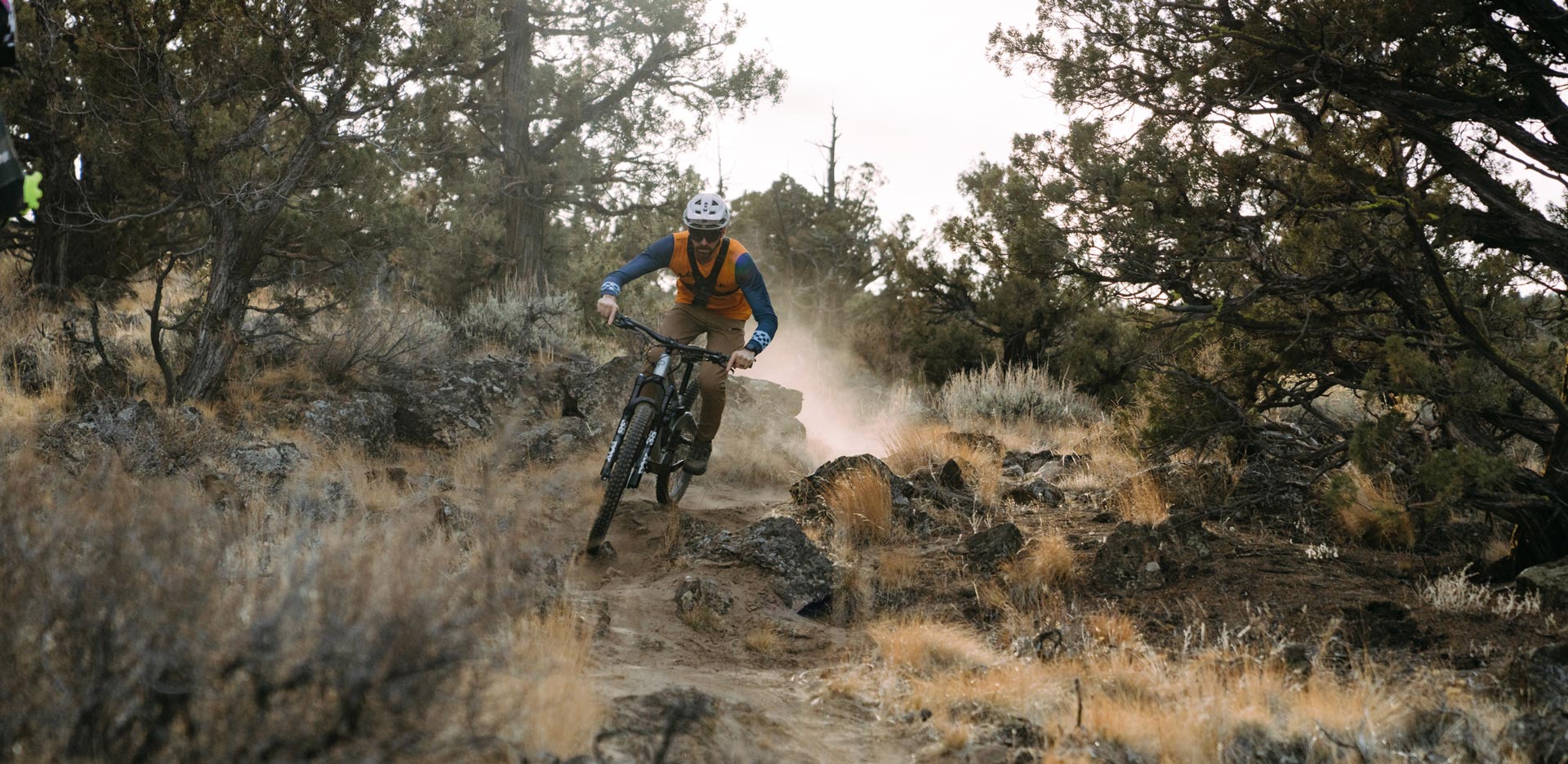
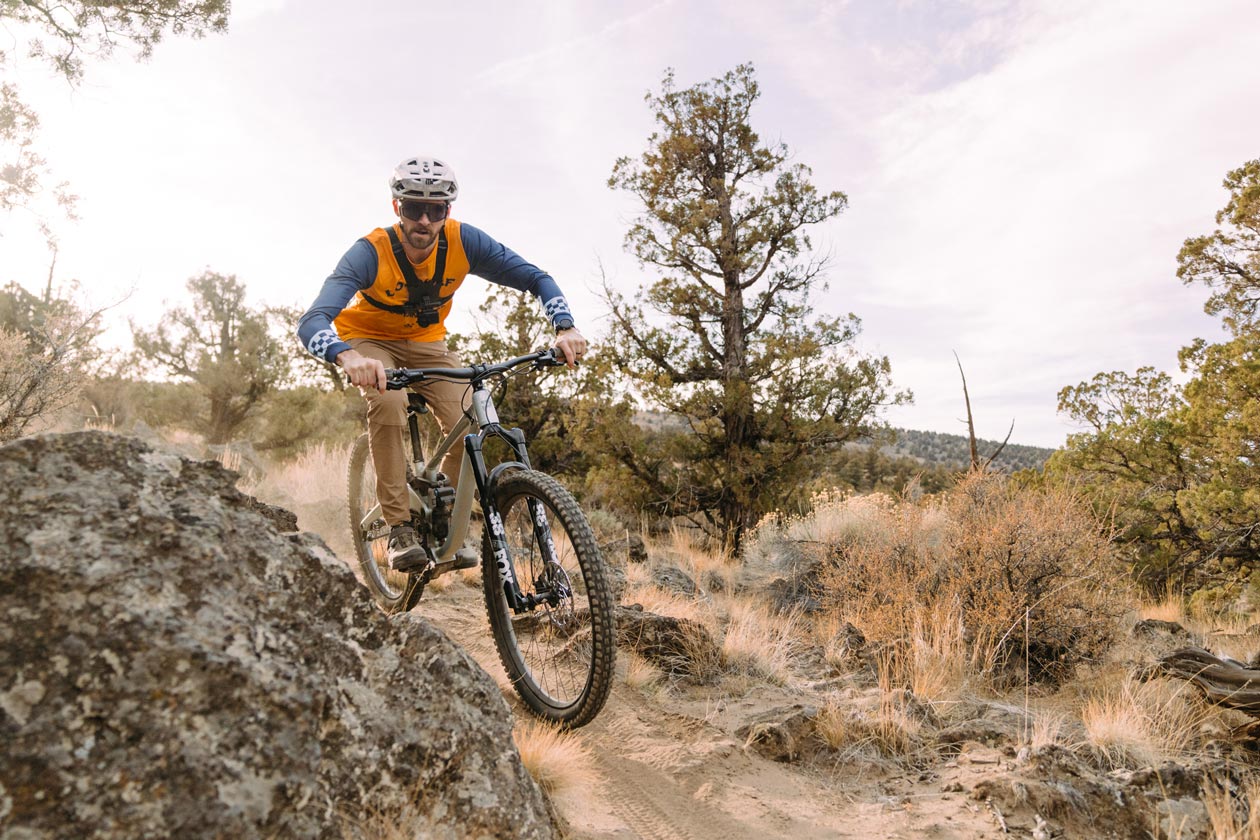
DESCENDING | 41 pounds. Gearbox. High pivot. Rearward axle path. A suspension system with its own name. On paper, the Priority Vanth reads like a bike engineered by people who wanted to win an argument. The first thing all our testers said, almost universally, was “magic carpet.” Not a technical assessment. Not a geometry compliment. Just that magic carpet underfoot feel. And honestly? It’s still the most accurate description we’ve got.
The Stillpoint rear suspension system’s completely rearward axle path is doing something that feels almost unfair on the Priority Vanth. Small chatter disappears immediately. The mid-stroke stays smooth and linear, without a harsh wall as you get deeper into the travel. When you manage to reach bottom out, the bike does not get unsettled or transmit any hard feedback, even when under sprung. We had to check the shock’s indicator ring after runs just to confirm we actually bottomed out.
The bikes’ 41lb weight does not make itself known on the descents. For as much terrain eating capability the Priority Vanth has, it remains surprisingly active and easy to move around. Pumping through rollers is surprisingly effective, something I would not have guessed. Momentum feels like it is constantly building, only to be thwarted by my lack of commitment into technical sections.
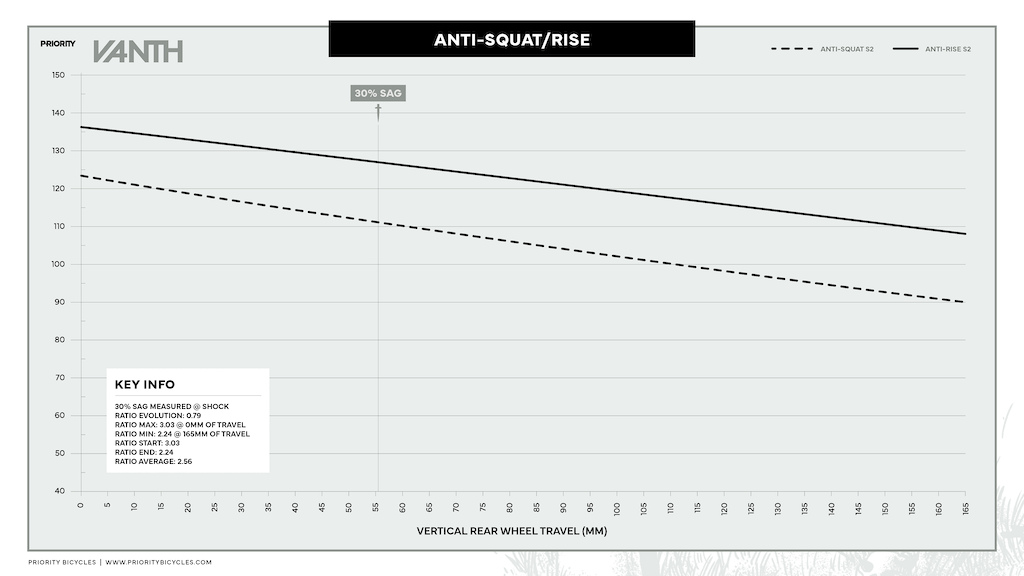
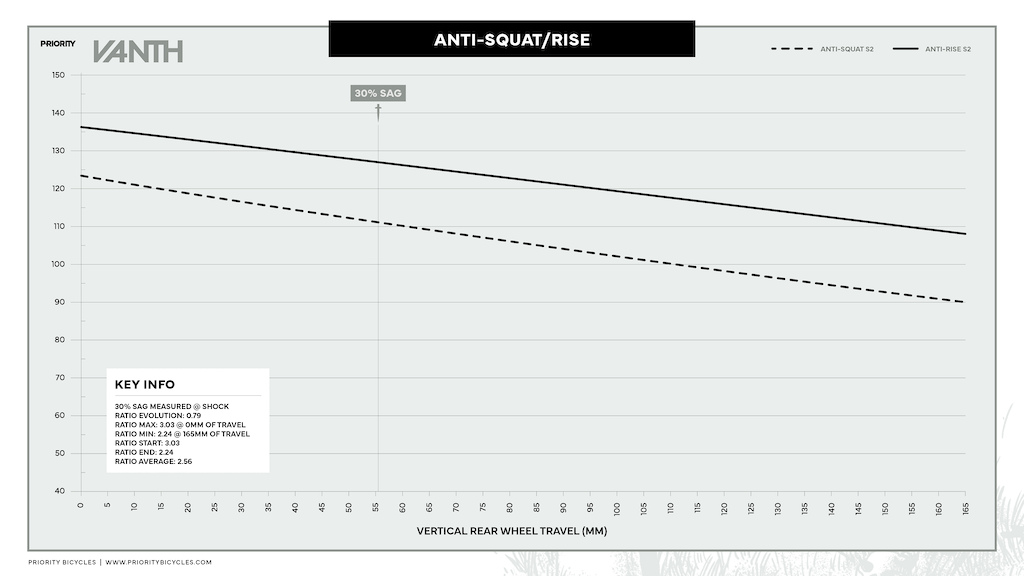
The braking kinematics deserve real attention here. Dragging the brakes into steep and unfamiliar corners, the bike stayed composed and traction held. The “stand-up” sensation that is felt on some other designs never showed up, which means you can use the suspension’s capabilities instead of spending mental energy managing its side effects.
On square edges and rocky trails, the rearward axle path does exactly what it’s supposed to. The rear wheel gets out of the way and irons out the roughness below. The result is that it rides more like a 200mm DH bike than a 165mm enduro. Rocks you would normally feel through your feet disappear beneath you. There’s a springy quality to the rear end that keeps it from feeling dead. Load the suspension deliberately, pop off a lip, unweight over a root, the bike behaves predictably. Plush when you want it, lively when you ask it to work.
Cornering the Vanth is more predictable than I would have expected given its 35mm rearward axle path. That figure brings the 448mm rear center all the way to a whopping 483mm towards bottom out. I did not have any fuss when getting used to the bike on normal trails. When corners get a bit sharper, some body English has to happen to maximize traction, but it was not a standout thing I was constantly thinking about.
One area that warrants more time is rear-end compliance. The Carbon swingarm looks burly, but there’s a feeling of lateral flex that might be contributing to cornering traction in ways that aren’t immediately obvious. Conditions have been soft and loose, so getting the bike on some hardpack turns will really give us the chance to take note of the compliance out back. The other thing worth noting, because it’s genuinely strange at first, is how quiet the Vanth is. No chain slap. No derailleur rattle. Just tires on dirt and whatever noise you’re making with your mouth. It is wild how much of the grip you can audibly hear when riding, it for sure is a different experience even compared to some of the quietest chain-driven bikes out there. The closest we have found is the Yeti LTE with SRAM’s Eagle 90 Transmission.
FINISH AND VALUE | At $5,999, the Priority Vanth undercuts most boutique builds and brings a fully sealed gearbox with a 6,000‑mile oil‑service interval. Electronic shifting lasts 20,000 shifts or 100 hours per charge. While our model does not have Factory suspension, we are not mad about it.
Sure, it’s a tank at around 41 pounds, but once you’ve climbed on it a few rides, that simply becomes the new baseline. The combination of noise‑free drivetrain, minimal maintenance, and massively capable suspension makes the trade-off worthwhile, for the right rider.
The frame pivot hardware has stayed tight, and the clear coat on the paint is holding up great, really notable to report on here.
COMPONENT REPORT
- Pinion Smart.Shift Drivetrain: The Pinion gearbox has a solid 568% gearing range, but the big jumps between ratios can take some getting used to. Impressively smooth shifts, even under load.
- Gates Carbon Belt Drive: Extremely low maintenance, though vulnerable to rock strikes (now protected with updated skid plate). Rubber band-like feel also takes some time to understand and get used to, but is not a deal breaker.
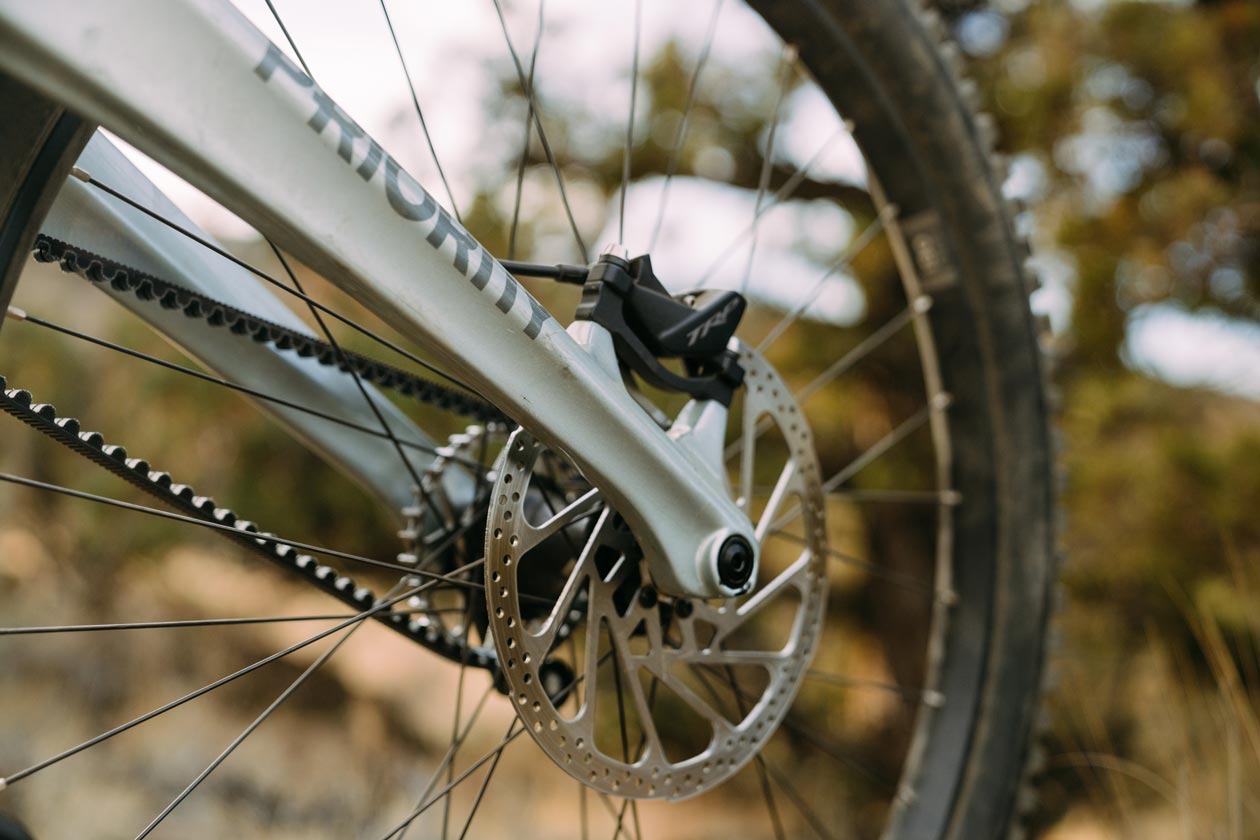
- TRP Evo Trail Brakes: Consistent power and plenty of it. Would spec on my own bike.
- 210mm OneUp Dropper: Not long enough for me, but the frame has loads insertion depth for 250mm versions.
- Maxxis Minion EXO Tires: Lightweight OEM spec to keep price down and weight down. Must be changed to support the Vanth’s capabilities.
The Wolf’s Last Word
The Priority Vanth is a bike built for gravity‑first riders. The ones who climb service roads just to point it straight down again. It’s not here to get climbing KOMs, and it doesn’t pretend to. But for shuttlers, park rats, or anyone chasing silence and traction in rough terrain, the Priority Vanth is excellent in its own right. 
Price: $5,999 to $7,999
Website: Prioritybicycles.com
SHARE THIS REVIEW
ABOUT THE WOLF

Cole’s den is in Spokane WA, where he relocated a few years back. Growing up in the lush, loamy playgrounds of the PNW, his soul is forever tied to steep, rooty descents and that unmistakable squish of perfect dirt. After 19 years of shredding, Cole’s been on every kind of rig out there. Once a die-hard fan of big travel bikes, he’s now on a quest for the mythical short-travel do-it-all machine. And yes, skids may be for kids, but this middle-aged manchild is here to prove they’re also for anyone who loves having a damn good time.
Rank: Professional Amateur
Size: 6’1” / 185cm | 170lbs / 77kg
Social: @adventuresbycole
SUPPORT AND JOIN THE LOAM WOLF PACK
Did you find this review helpful? Would you like the chance to review (and keep) products? Are you interested in saving big bucks by getting exclusive Members Only discounts from industry brands all while helping support a small, rider-owned media crew? We have big plans for our members beyond big discounts and product giveaways! To learn more and help support small, independent media, visit our Member’s Page.