

WE DIG
WE DON’T
ABOUT THE TRANSITION SPUR
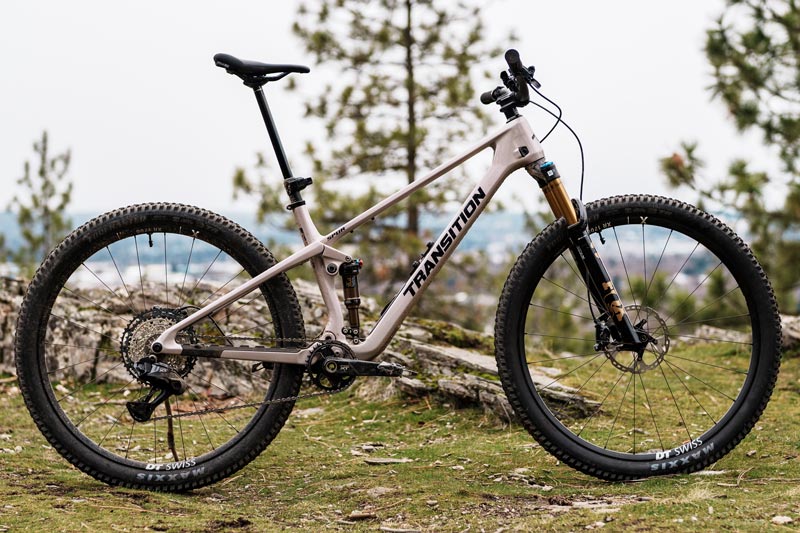
Transition’s Spur has always been about keeping it light, fast, and fun. The bike was aimed at blurring the line between XC efficiency and trail bike playfulness, and continues to hit that fun zone into 2026. For the Spur V2, Transition didn’t completely start from scratch, but they gave the Spur a healthy dose of updates to make it more capable without losing its original character. With a bump to a 130mm fork, refined frame design, flip-chip adjustability, and built-in frame storage, the new Transition Spur hits the mark when it comes to rider requests. After a few solid weeks of riding, we’ve got some good first impressions on how these changes play out on the trail.
FRAME & FEATURES |
The Transition Spur has long been a rider favorite for its lightweight, fun, and efficient demeanour, and Transition has opted to refine rather than reinvent the platform. Out back, it still sports 120mm of rear travel, now paired with a 130mm fork up front for a little extra confidence when pushing the limits.
The new Spur frame borrows design cues from Transition’s modern line-up, with a more aggressive, angular aesthetic. Transition also beefed up both the front and rear triangle stiffness, addressing previous feedback about the Spur’s flexy flex-stay feel.
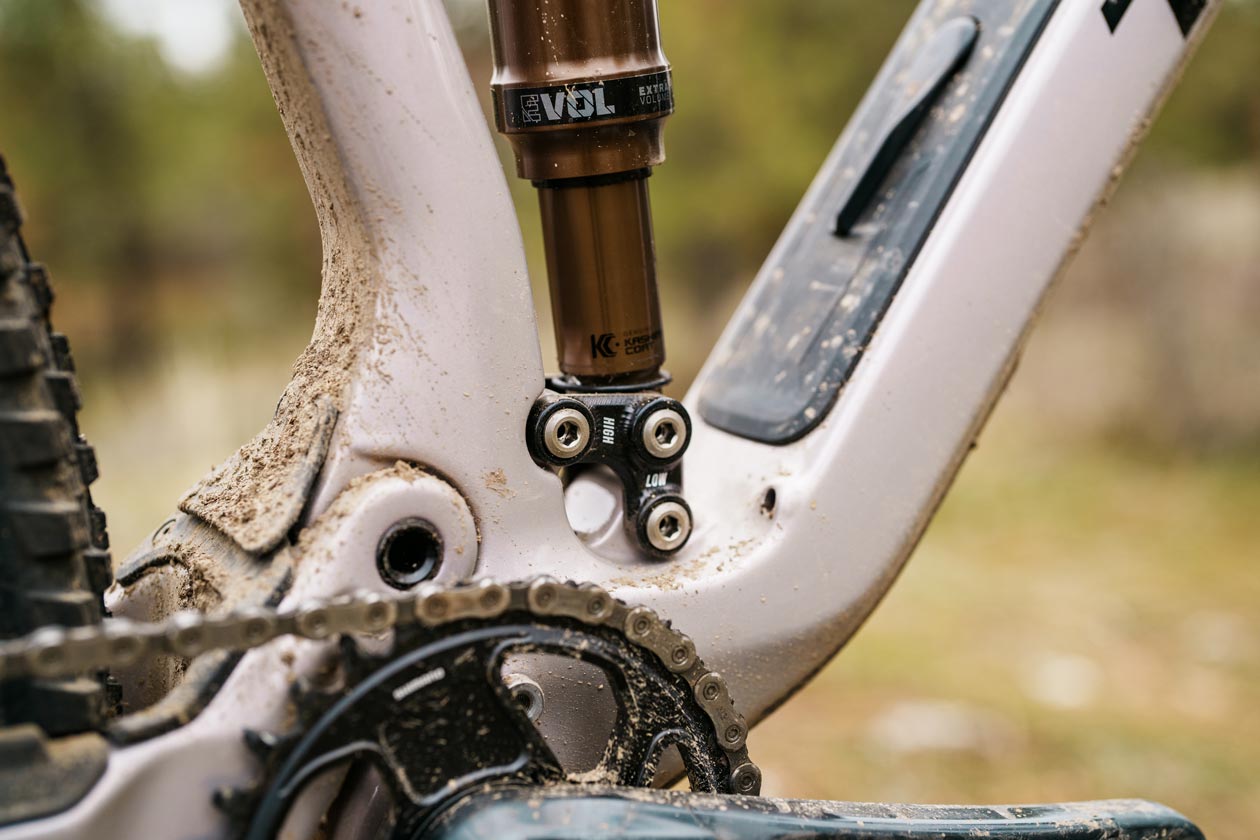
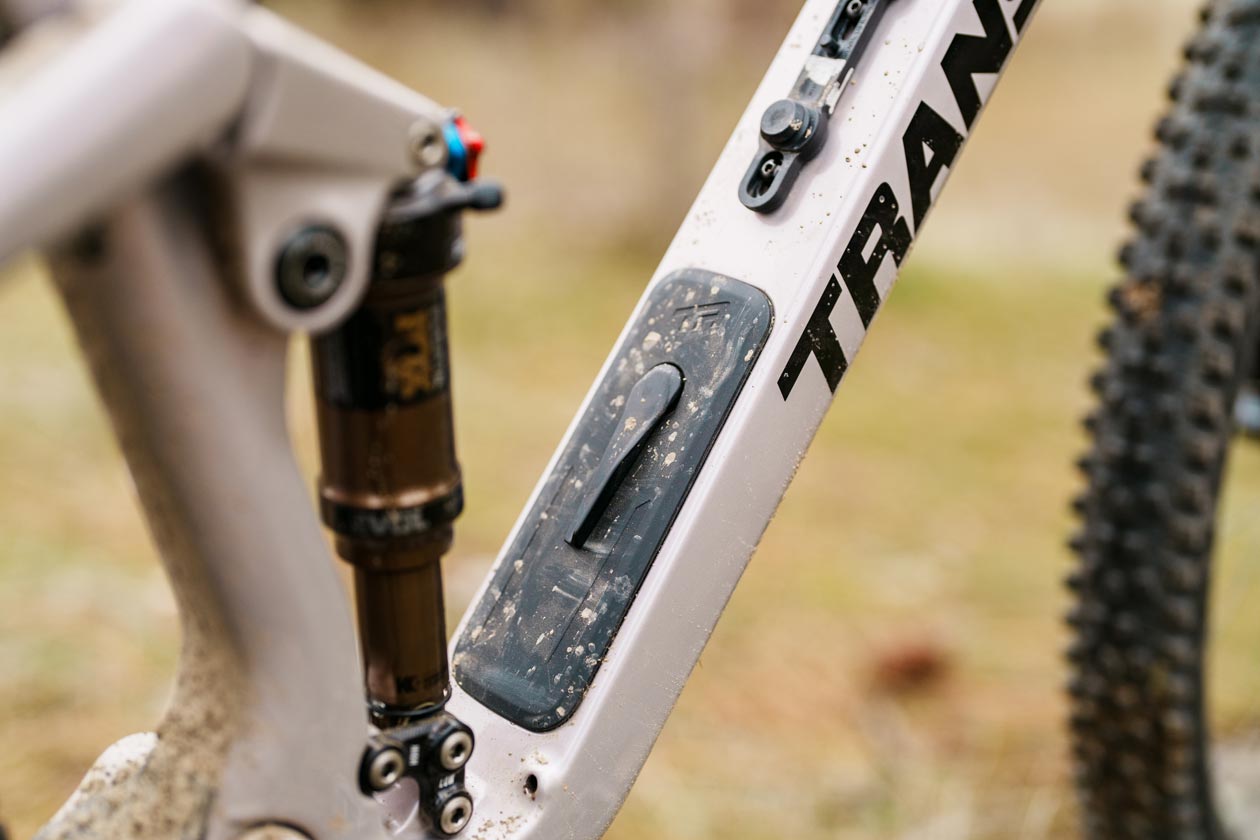
A new high/low flip chip at the lower shock mount allows riders to tweak geometry by 0.5° in head angle and 7mm in bottom bracket height. Despite adding new features like fully internal cable routing and Boom Box in-frame storage, Transition managed to only increase frame weight by 0.2lbs. Total frame weight comes in at a claimed 5.6lbs or 2.54kg. Our bike, as tested with some minor spec changes, weighs in at 28.9lbs.
Other updates to the Transition Spur include hidden hardware on the rocker link, accessed from behind the seatstay to keep the lines clean and shield the pivots from mud. Transition also added somewhat size-specific rear ends, with chainstays growing as frame sizes increase from Small and Medium to Large and X-Large.
SUSPENSION |
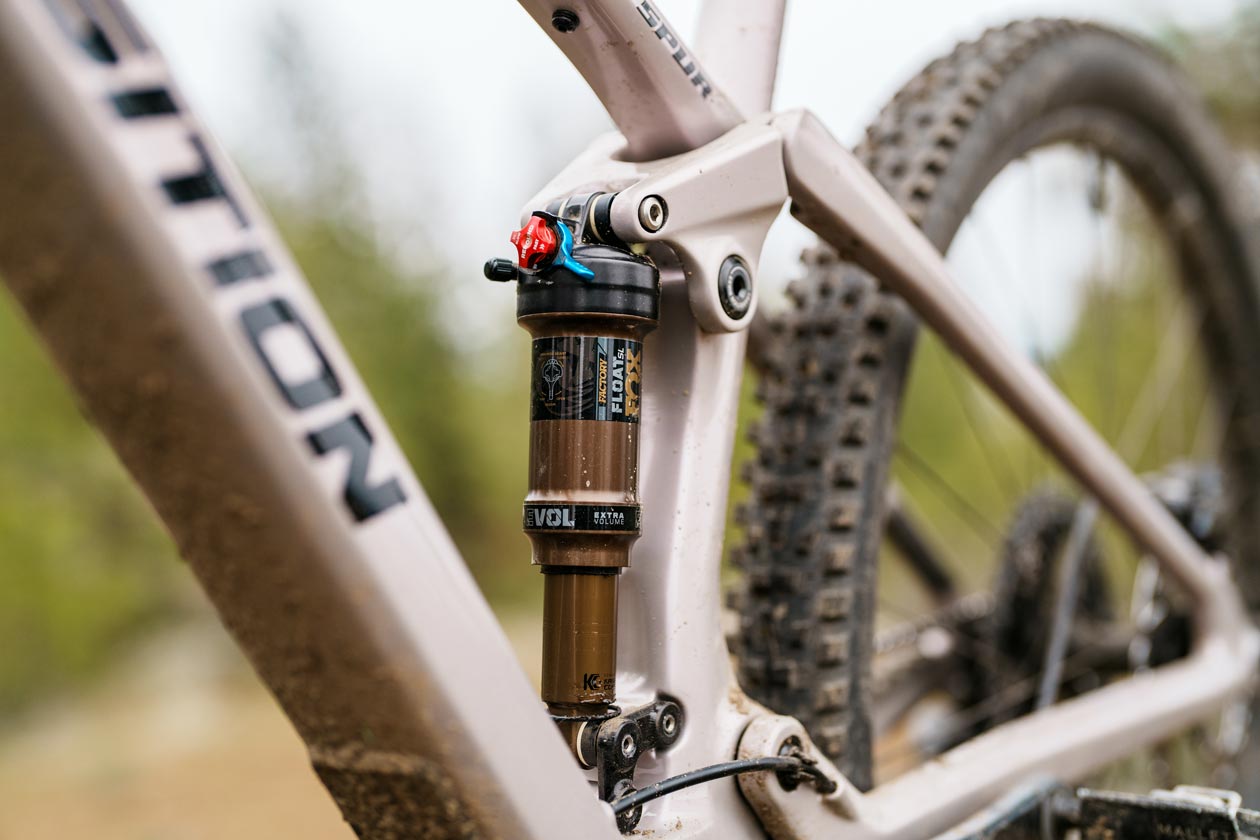
Transition’s signature GiddyUp four-bar suspension returns here, with 30% progression, notably high for a short-travel bike. On trail, that translates into excellent bottom out support while producing a good amount of small-bump sensitivity.
The rear shock feels active and supple off the top and ramps up firmly at the end of its travel, but still provides enough midstroke support to keep it zippy. It maintains good traction under braking and doesn’t feel harsh through repetitive hits. For a 120mm platform, the Spur provides a fun blend of liveliness and control, keeping it spirited without feeling twitchy or nervous.
The 130mm fork has been added to make the bike a bit more capable when things get rowdy. While this is the Transition version of an XC bike, they understand their customer base is more rooted in gravity riding, which we love!
GEOMETRY |
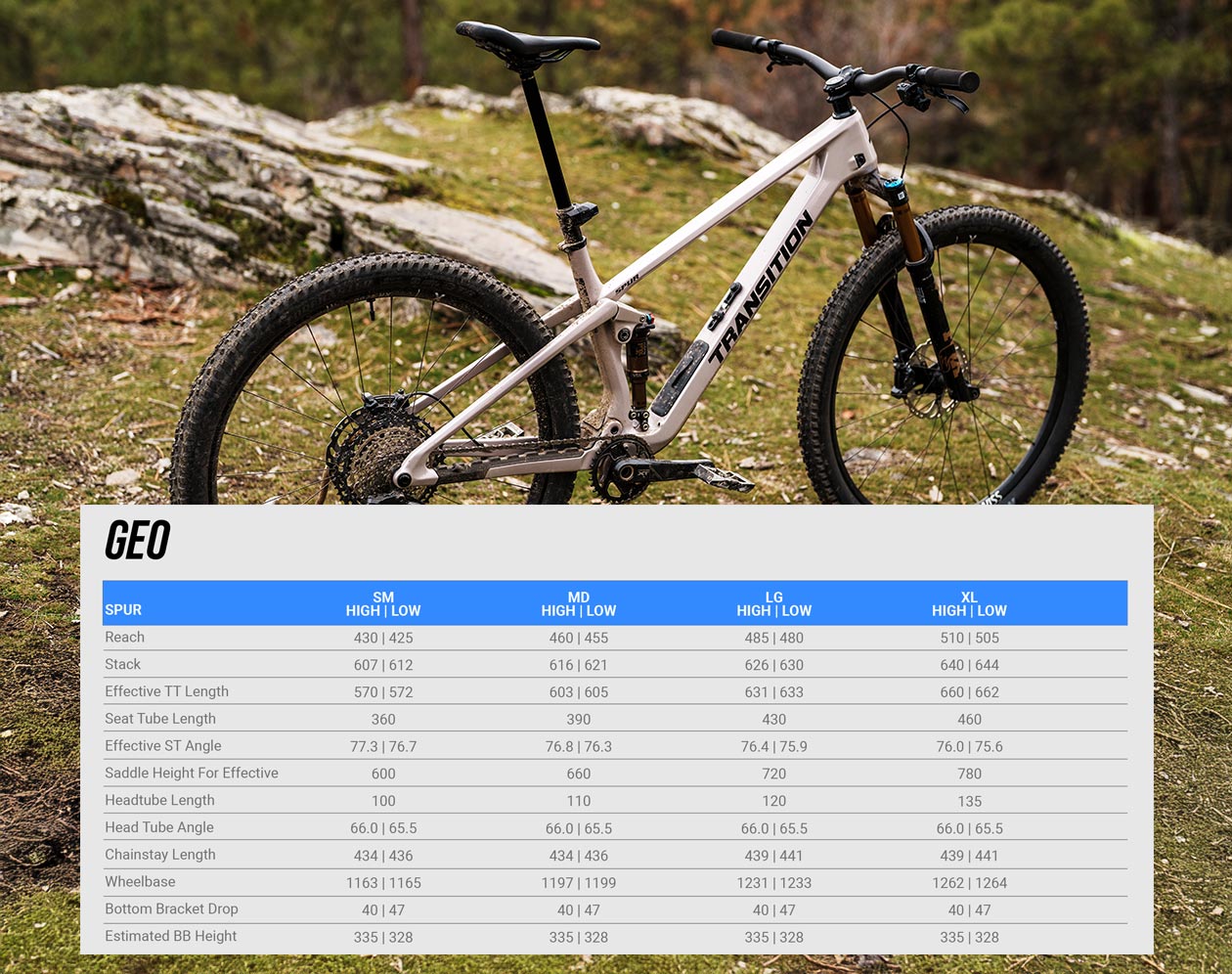
Or size large frame has a 480mm reach in the low position of the flip chip, which is where we spent most of our testing time. There’s a 626mm stack and 439mm Chainstays, with a 65.5º Head Tube Angle and 75.9º Seat Tube angle. Altogether, this brings the Wheelbase to 1231mm. The Geometry has been tweaked from the outgoing model, but not drastically. The frame was built around the 130mm fork and was adjusted accordingly.
BUILD SPEC |
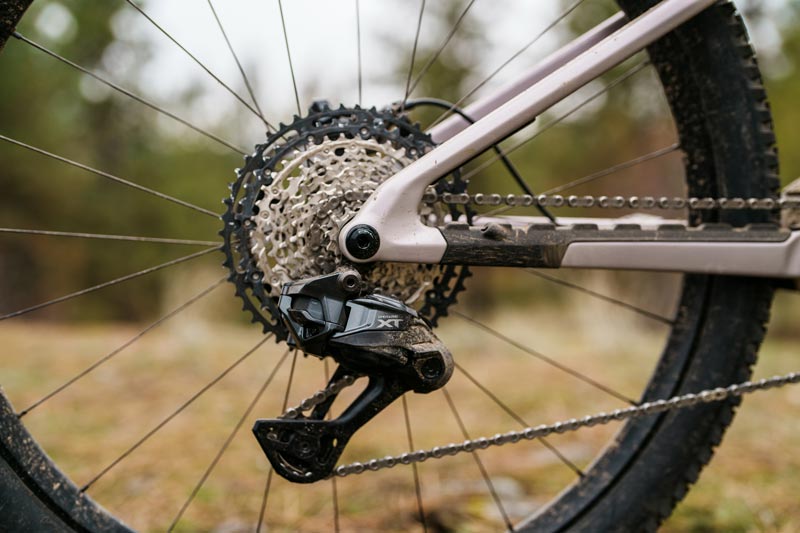
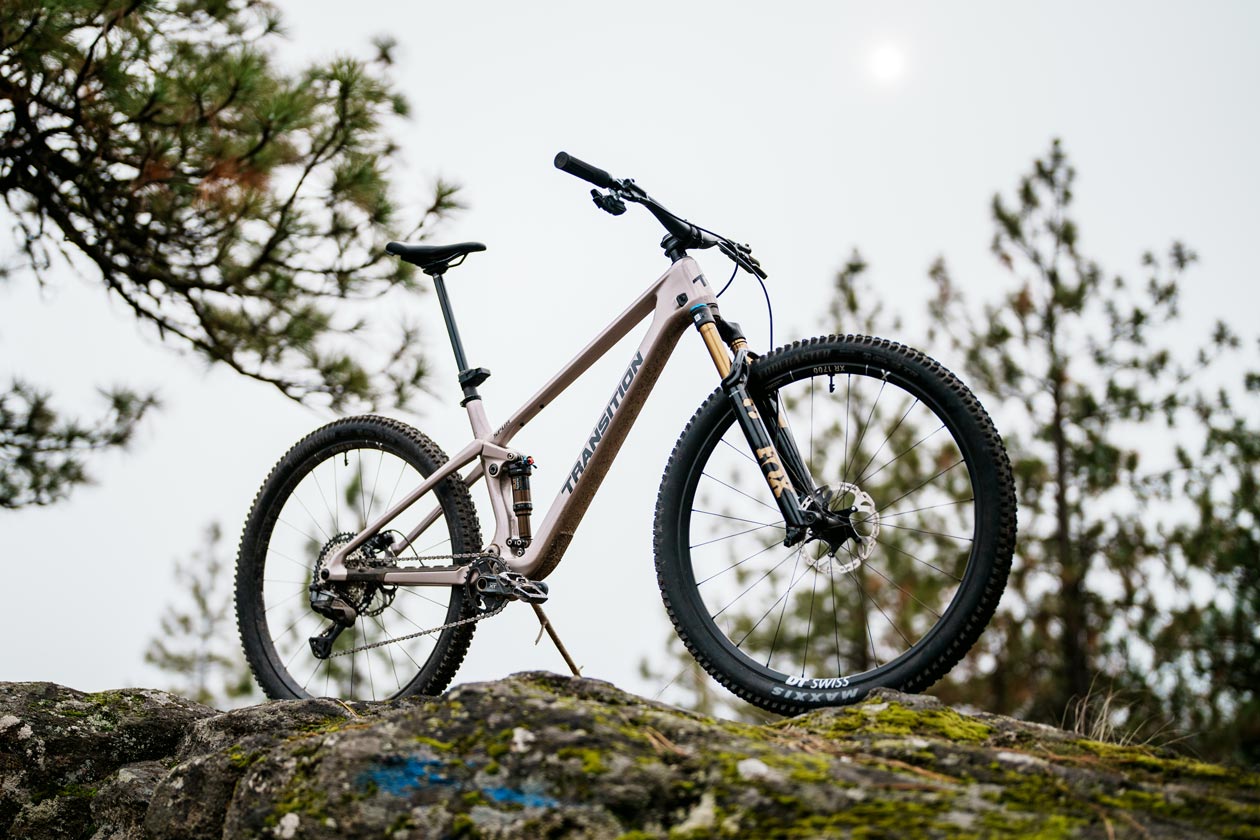
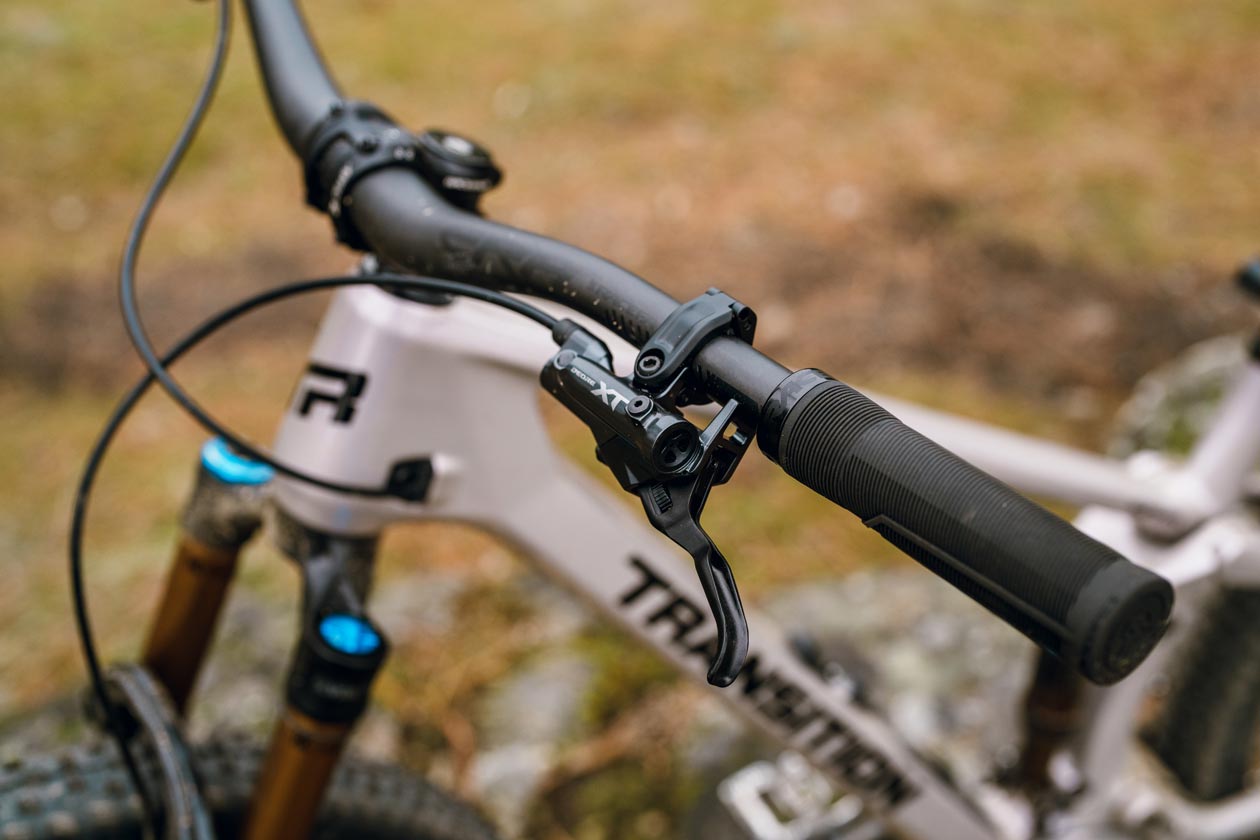
Our test bike is Transition’s XT Di2 build, landing at $7,499. This build features a Shimano XT Di2 derailleur, XT brakes, and a Fox Factory 34SL fork with a Factory Fox Float SL outback. Both large and XL frames get a 210mm OneUp dropper, which, for me, was still not enough. That said, we welcome 200mm droppers on size large frames with open arms! The wheels are DT Swiss XR 1700’s wrapped in a pair of Maxxis Forekaster EXO+ tires.
Transitions offers five complete builds along with a frameset option:
XTR Di2: $10,999
XT Di2: $7499
Eagle 90: $6499
Eagle 70: $5499
Frameset: $3599
Our size Large with Crankbrothers Mallet DH pedals, a 250mm Rockshox AXS dropper, and SQ Lab saddle weighed in at just 28.9 pounds (13.1kg).
THE DIRT
SET UP |
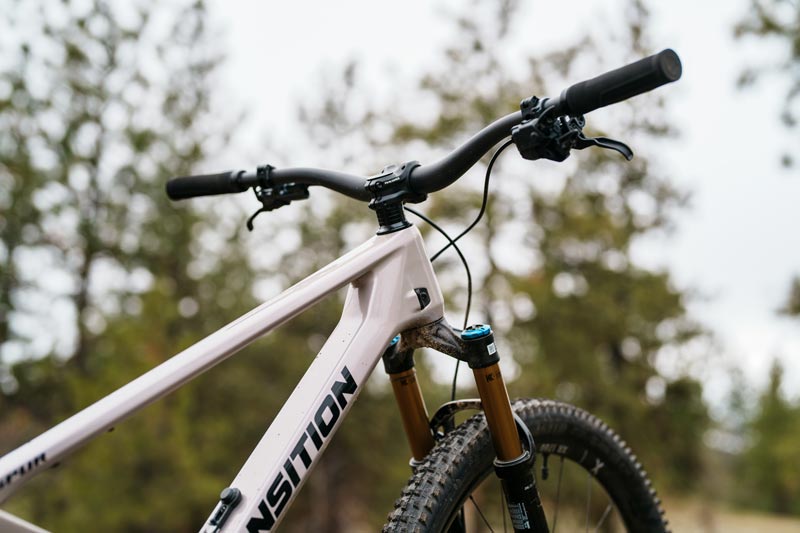
The setup of the Transition Spur XT Di2 build came together quickly. The Spur didn’t take long to feel dialed; the only change made was moving a 5mm spacer to under the stem to bring the bar height up a little for the climbs. After a few shakedown rides, I added an additional volume reducer to the fork. The rear shock setup remained unchanged throughout testing, sitting happy at 30% sag. I fitted my 250mm RockShox Reverb AXS dropper and preferred SQLab saddle. The Transition Spur has excellent seatpost insertion, allowing me to enjoy the clearance provided by the 250mm dropper.
The first three rides were performed in the High flip-chip position. Once I moved to the Low option, it remained in that position for the remainder of testing so far. In both high and low settings, the Spur maintains its characteristic connection to the trail. The low setting became our preference, offering a slightly slacker, more “in-the-bike” feel, while still preserving responsiveness for rolling terrain.
CLIMBING |
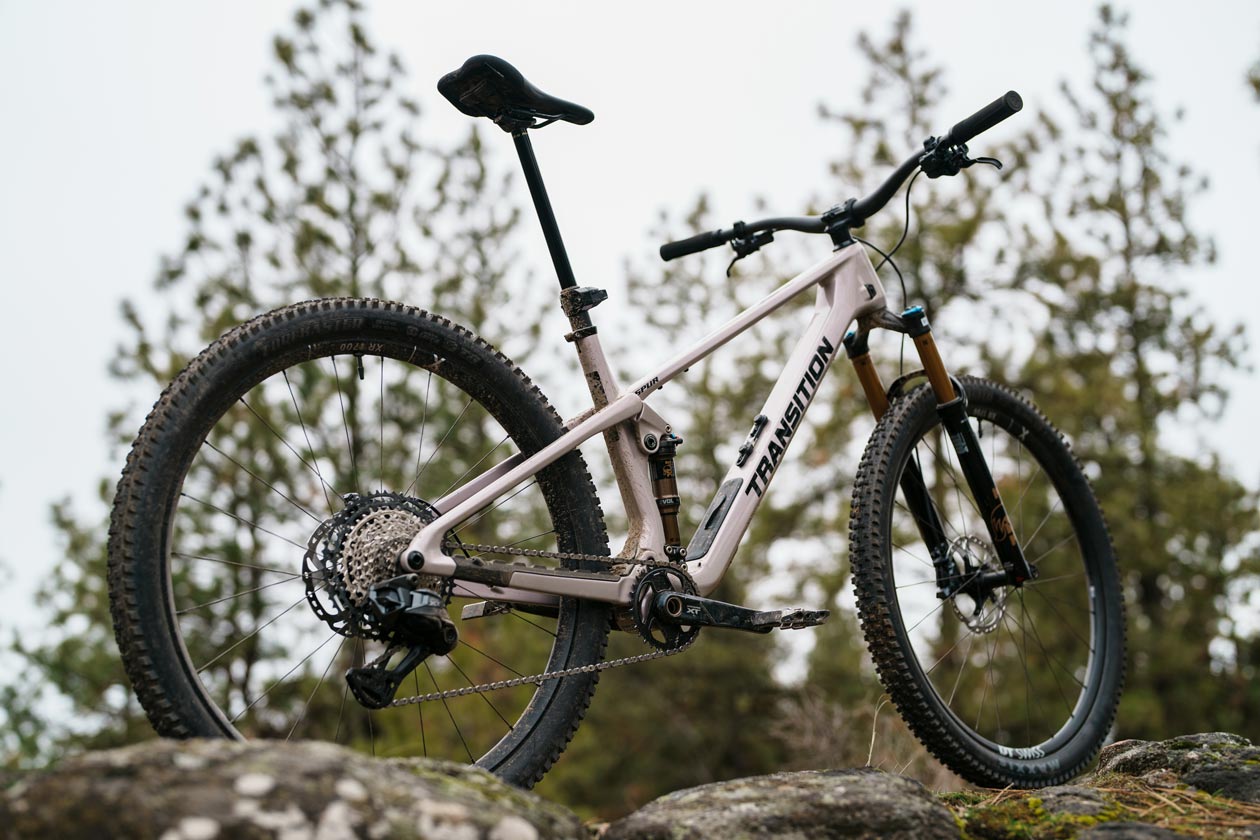
The Transition Spur hasn’t lost its climbing prowess. It is light, efficient, and eager to gain speed. Transition managed to make the new Spur more confident downhill without sacrificing its climbing zest. The forward bias riding position keeps plenty of weight over the front wheel for ultra-steep sections of trail. On flatter, more undulating climbs, it puts more pressure through my hands than I generally aim for, but it has not kept me from choosing the bike for regular rides in varied terrain. This forward position is great for those who really want to put the power down, and for those seeking a more upright position, a taller bar can be fitted to quickly remedy it.
While it doesn’t deliver tons of traction on loose, ultra-steep grinds, its efficient initial stroke allows for maximum power transfer without feeling overly harsh. When up and out of the saddle, the bike manages pedal bob quite well, but does not demand you to push for your best time up the climbs. Going from the initial part of the stroke to the midstroke is smooth, with a balance towards efficiency over small-bump compliance. I opted to run the shock fully open at all times, with the low-speed compression dial set to position 1 out of 3.
The Maxxis Forekaster tires delivered a great balance of traction without sacrificing rolling speed. I really like that Transition opted for EXO+ tire casings both front and rear, over the EXO. While the latter would be a bit lighter for the climbs, the extra sidewall protection is welcomed to let this bike get rowdy when it comes to going down.
DESCENDING |
On the descents, the Transition Spur may surprise riders expecting a traditional short-travel feel. Despite having only 120mm rear travel, it feels remarkably composed and confident, especially compared to the outgoing model. Much of this is thanks to the beefed-up frame construction. The combination of increased stiffness and high levels of rear suspension progression means you can push harder without feeling like you’re outriding the bike. It’s poppy, playful, and balanced; a rare mix that makes flow trails and jump lines come alive. When riding the Transition Spur, it feels like you are simply riding a mountain bike; it has no weird traits or quirks to catch you off guard. It is a bike that took me only a few turns to feel comfortable on, and begin to push towards its limits.
The Transition Spur is not the plushest short-travel bike out there, but it also doesn’t feel harsh. The platform’s progression keeps it controlled on big drops and repetitive hits. When pushing the bike outside its target use you can find its limits, but the geometry helps to keep the confidence up. Generally speaking, you can ride whatever trail you want, and I have not turned away from any of the gnarlier trails on my local testing ground of Beacon Hill, WA.
Jumping the Transition Spur is very intuitive; easy to flick around without feeling sketchy. The “in-the-bike” feeling transitions into plentiful confidence when yanking for trailside gaps and even hitting large stepdown jumps.
The Spur’s frame geometry delivers a strong connected feel to the front end in its stock configuration. This provided a large amount of confidence in the grip that the front Maxxis Forekaster delivered. I was never worried about washing the front end. Adding 15mm of bar height dulled that sensation a touch, but not enough to outweigh the benefits the taller bars added in other areas.
FINISH & VALUE |
Transition nailed the finish details. The fully internal cable routing is rattle-free thanks to guided channels; the Boom Box storage is convenient and secure; and the slick hidden hardware provides a polished, modern look.
Considering these upgrades, the fact that the frame’s weight has only gone up .2lbs is seriously impressive. Five build options plus the availability of a frameset mean the Transition Spur caters to different budgets and priorities. It is worth noting that Transition offers a lifetime warranty on the frame, should you encounter any issues down the trail.
COMPONENT REPORT
Tires | EXO+ Maxxis Forecaster: Good rolling speed and overall grip, though limited side knobs require some learning when pushing hard in corners. A smart choice for the bike’s intended “rowdy short-travel” crowd.
Dropper | RockShox Reverb AXS (250mm): RockShox Reverb AXS (250mm): The bike’s ample insertion depth allowed me to run my choice of dropper for my extra-long inseam. Having full saddle height for climbs and a slammed saddle for descents is a major usability win.
Controls: Shimano XT Di2 performed predictably and crisply. There is a bit of noise that happens on big hits, this is the derailleur snapping back to place, but there was no chain slap during normal trail riding.
HOW THE SPUR COMPARES
Compared to other short-travel options like the Trek Top Fuel, the Spur feels more aggressive and “in the bike,” but does not match the Spur’s supple suspension feel. The Norco Revolver may have more travel out back, but it has a more XC-focused geo that lets you know when you are pushing past the limits rather abruptly. None of these bikes are a bad choice; they just offer different strengths depending on what you are looking for. Our upcoming Short Travel Group Test will dive into the details on how these bikes compare and which is right for each style of rider.
The Wolf’s Last Word
The new Transition Spur evolves into a more confident and capable short-travel trail bike without losing an ounce of the pep that made the original so beloved. It’s smoother, stiffer, yet just as grinningly fun to ride on mellow terrain or flowy singletrack days.
Transition’s tweaks hit all the right notes — modernized geometry, useful frame updates, and component choices that highlight its “ride everywhere” nature. If you want a bike that turns your local XC loops into a jump playground and still crushes climbs, the Transition Spur V2 might just be your dream whip.
Stay tuned for its showdown appearance in our upcoming Short Travel Group Test. 
Price: $7,499 as tested
Website: Transitionbikes.com
SHARE THIS REVIEW
ABOUT THE WOLF

Cole’s den is in Spokane WA, where he relocated a few years back. Growing up in the lush, loamy playgrounds of the PNW, his soul is forever tied to steep, rooty descents and that unmistakable squish of perfect dirt. After 19 years of shredding, Cole’s been on every kind of rig out there. Once a die-hard fan of big travel bikes, he’s now on a quest for the mythical short-travel do-it-all machine. And yes, skids may be for kids, but this middle-aged manchild is here to prove they’re also for anyone who loves having a damn good time.
Rank: Professional Amateur
Size: 6’1” / 185cm | 170lbs / 77kg
Social: @adventuresbycole
SUPPORT AND JOIN THE LOAM WOLF PACK
Did you find this review helpful? Would you like the chance to review (and keep) products? Are you interested in saving big bucks by getting exclusive Members Only discounts from industry brands all while helping support a small, rider-owned media crew? We have big plans for our members beyond big discounts and product giveaways! To learn more and help support small, independent media, visit our Member’s Page.