

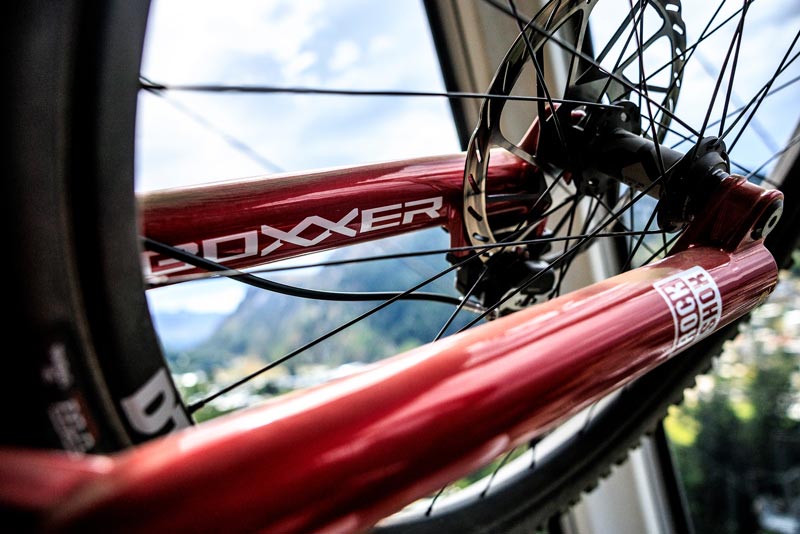

ABOUT THE MY27 ROCKSHOX BOXXER ULTIMATE
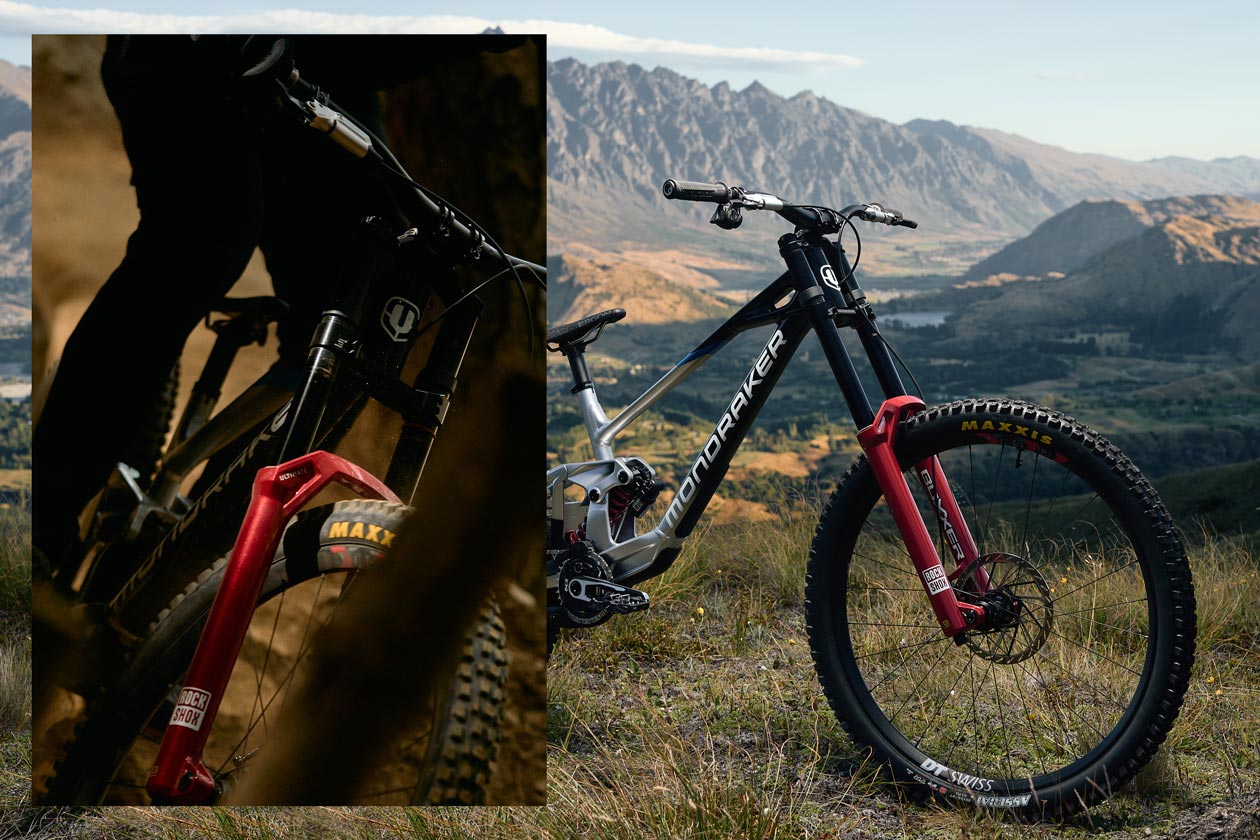
RockShox overhauled the Boxxer to produce a fork with more consistency and increased composure. With multiple not-before-seen elements, the new RockShox Boxxer is an interesting and exciting product to hit the downhill space.
LINEAR XL AIR SPRING
The development process RockShox undertook when designing the new Boxxer led to a new understanding of the air spring in a conventional suspension fork. They now consider both the air spring and the lower legs to contribute to the overall spring force. The lesser controlled ramp-up of the lowers reduces the linearity and predictability of the system if not addressed, so RockShox set about lessening its effect.
To obtain a more linear overall spring curve, RockShox produced a new cartridge air spring, allowing them to tune the positive and negative air volumes and the piston and shaft sizes. With a smaller piston diameter, the air pressure required to obtain the same level of support has increased. RockShox suggests this makes setup easier, as it takes a larger change in spring pressure to deliver the same level of spring rate adjustment, increasing fidelity with typical shock pumps.
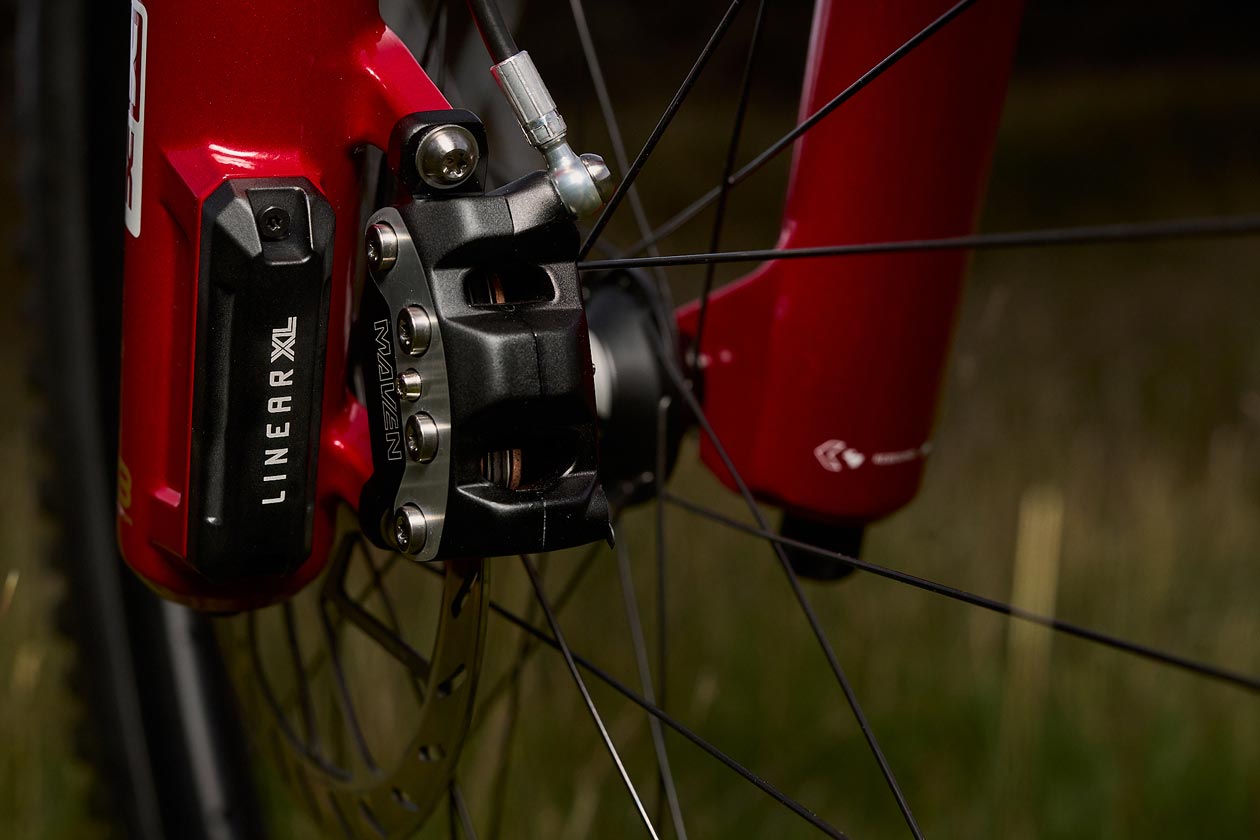
The new cartridge air spring increased volume in the main air spring, but reduced air volume in the air side lower leg. To mitigate the effects of lower leg air ramp up, they added an Air Annex to increase the volume in the non-driveside fork leg. This was tuned to deliver the same lower leg air volume as the damper side leg.
To ensure air would equalize between the three air volumes of the lower legs created by the bushings, RockShox added cavities to the upper tubes to allow for equalization as the fork moves through its travel.
The Linear XL air spring is a system of the main air spring and the lower legs. The air spring cartridge continues to receive RockShox proprietary ButterCup technology to reduce the small vibrations transmitted to the rider. At the end of the travel, there is still a jounce rubber bottom-out bumper, which is not tunable.
FRICTION REDUCTION
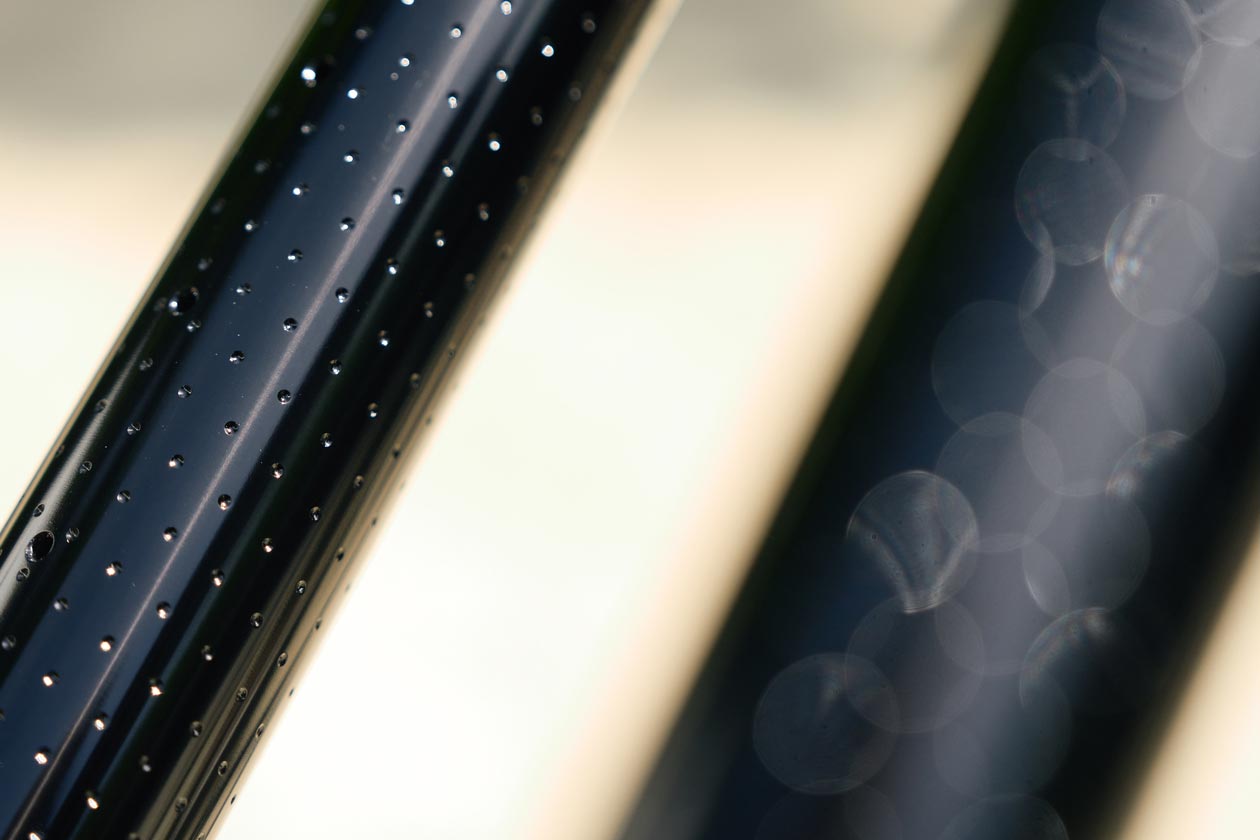
To add further predictability and performance to the new Boxxer, RockShox went on a friction-reduction mission, analyzing and optimizing all elements of the fork. The new ButterWagon tech adds dimples to the fork stanchions, below the dust seals. These dimples are designed to transfer lubricating oil up the lower legs, aiming to improve lubrication between the upper tubes and lower leg bushings.
RockShox continues to use Maxima fluids for their suspension, but modified the fluids in use. A mid-weight 15w lubricating bath oil was used to reduce friction, in combination with the Maxima SG-920 grease, used to reduce breakaway friction.
Identifying that pressure increases in the lower legs could create the stanchion seals to squeeze and grab onto the stanchions as the fork approached the end of its travel, RockShox worked with SKF to develop a new low-grab fork seal. The result is a seal that delivers reduced friction and improved consistency, improving the friction properties of the fork deeper in its travel.
CHARGER 3.2
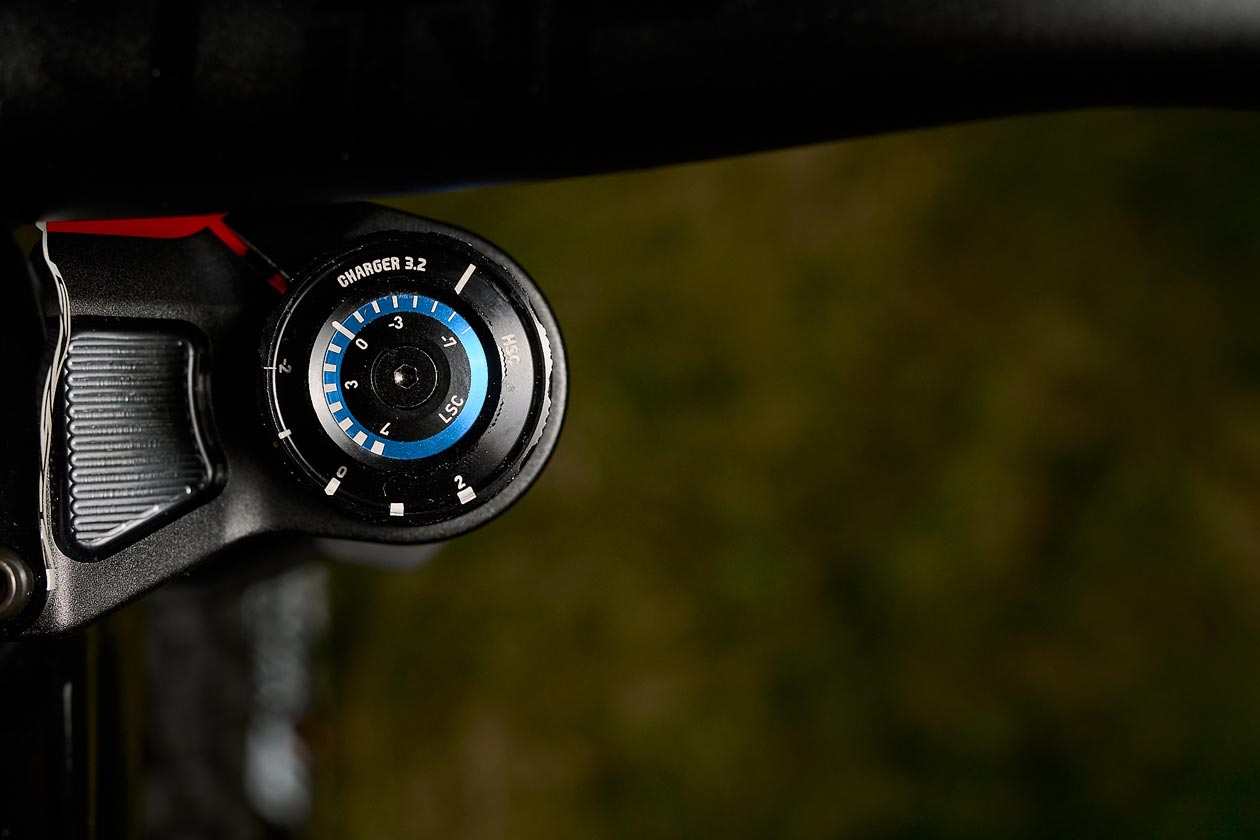
To retain the fork’s support with the reduced friction and more linear air spring, RockShox tuned their damper, producing the Charger 3.2. They kept the Charger damper architecture mostly the same, but increased damping levels to improve the support and control that the new Boxxer delivers.
RockShox has updated the graphics on their dampers to make it more easy to decipher where in the range you have the compression dials set to. Using a numbered system, adjustments are made that little bit easier to visualise.
As with the Linear XL air spring, the Charger 3.2 damper retains the ButterCup technology to reduce the transmission of small vibrations.
SPEC OPTIONS
RockShox is offering two levels to choose from in the new Boxxer: the Ultimate ($ 1,999, € 2,180*, £ 1,945*) and the Select ($ 1,499, € 1,635*, £ 1,460*). The Select receives the same Charger 3.2 damper, Linear XL air spring with air annex-equipped lower legs, updated Maxima fluids, and SKF low-grab seals. However, it loses the ButterCups and ButterWagon featured in the Ultimate level fork.
The RockShox Boxxer Ultimate and Select forks share the same offset, wheel size, and travel options; with 180mm to 200mm lengths, 44mm or 48mm offset for 27.5” wheels and 48mm or 52mm offset for 29” wheels.
THE DIRT
My testing was performed over three intense days around Queenstown, New Zealand, during which I worked with the SRAM mechanics and engineers to optimize the setup and get the Mondraker Summum equipped with the MY27 RockShox Boxxer running as good as possible.
THE SETUP AND OPTIMIZATION PROCESS | I let SRAM take the wheel on the initial setup of the Boxxer, based on my body weight. Given that such a large change was made to the air spring, damper, chassis…well, just about everything…it was impossible to carry over any settings from the previous generation fork. That said, the baseline of setting the high and low-speed compression dials to the middle position is still encouraged, so that’s where I began.
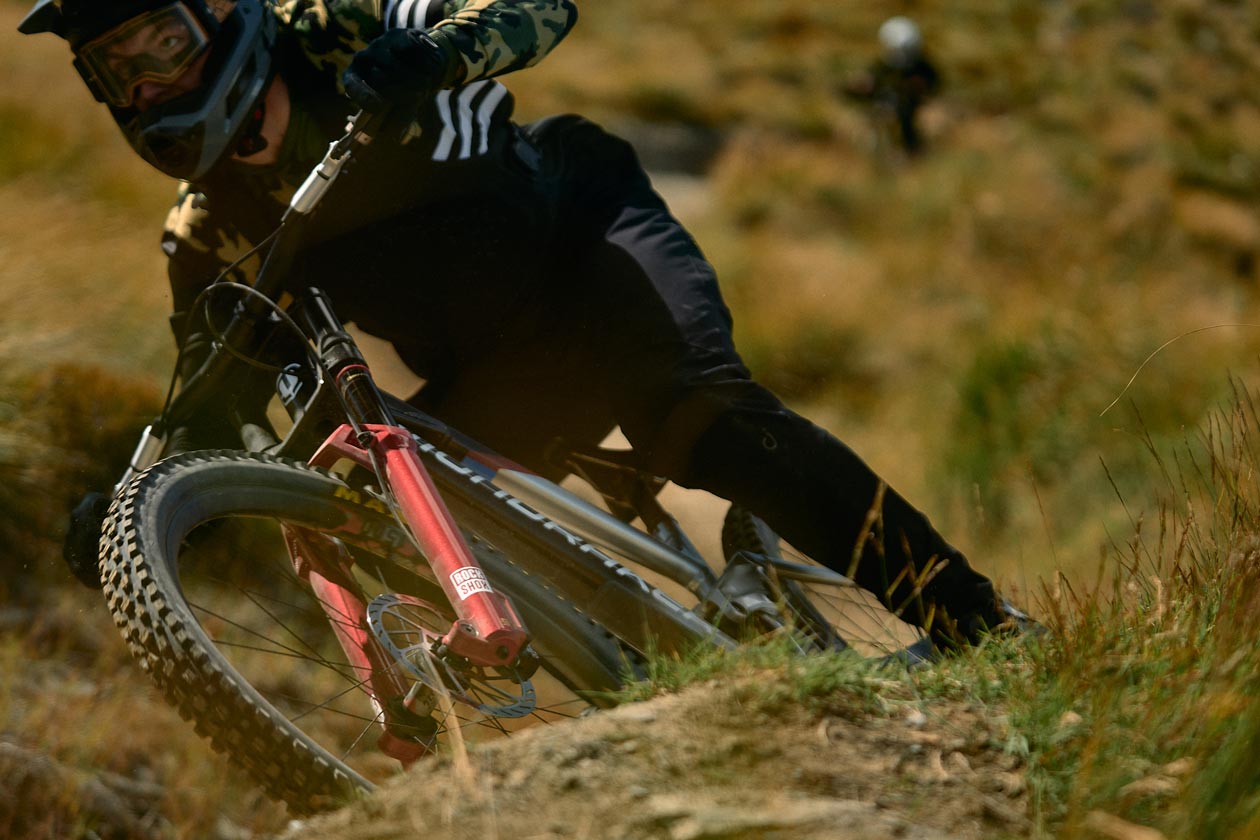
Dropping into Coronet Peak on day 1 of testing, the feeling was intuitive from the first lap. Coronet Peak’s two DH bike-worthy trails are fairly smooth as downhill tracks go, but feature some of the highest cornering forces and compressions of anything I’ve ridden. Over the course of the day, I made some small tweaks to the air pressure, which dropped from 185psi to 180psi to balance the Summum fore and aft. I then dialled up the compression damping to match how brave I was feeling.
The new RockShox Boxxer Ultimate offered exceptional support, with the impression that I’d never be able to push the fork hard enough to phase it. There was no time to cruise at Coronet – the sheer excitement of riding this incredible spot on a killer downhill bike ensured that I spent each of the 13 laps pushing my limits, and trying to unlock the most speed out of the track as I could hold on for. As such, I was left wondering about the ability of the fork to eat up small bumps and maximize traction, but no doubt that it was as capable as you like when pushing hard.
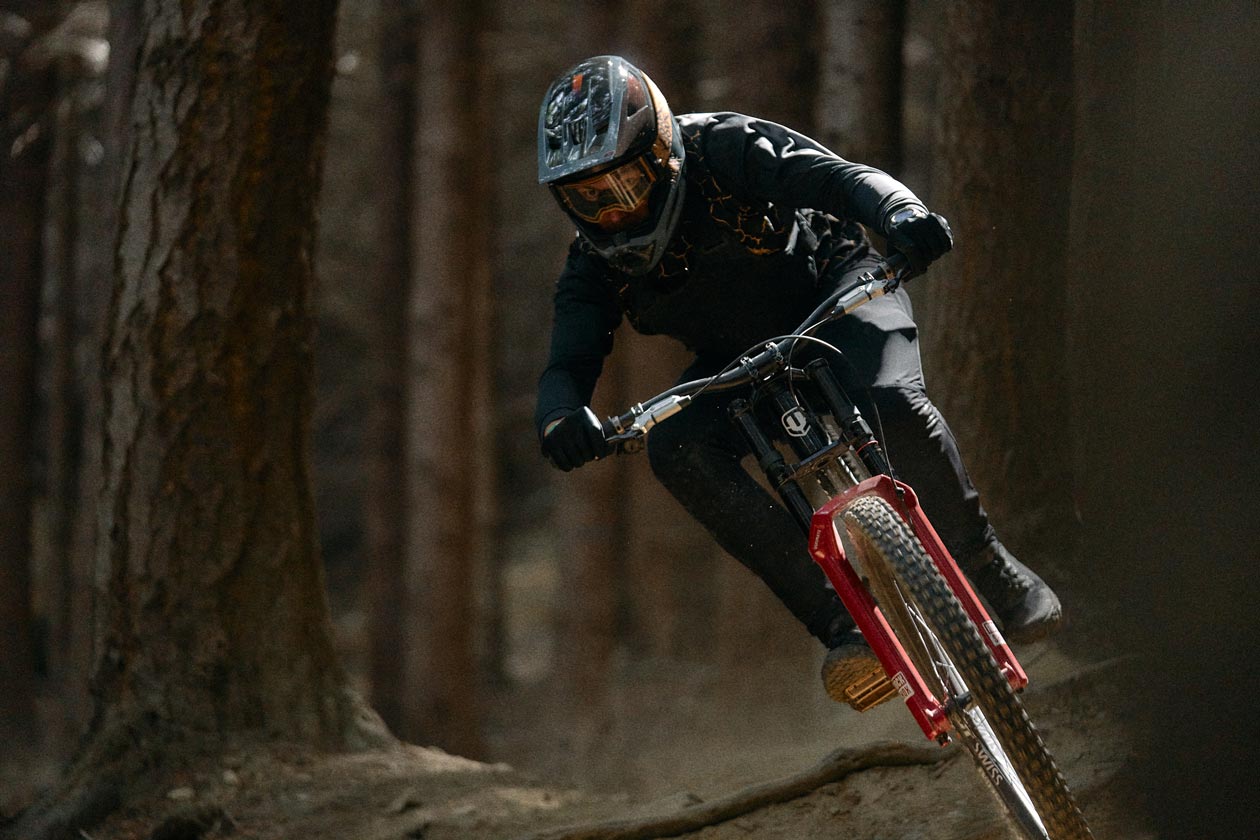
Day 2 and 3 of testing really challenged the Boxxer, lapping the blown-out yet excellent Ben Lomond Trails, accessed by Skyline. Choosing a couple of black tech trails to use as my testing grounds, I spent the first half of the first day working on the setup to optimize the handling in this very different terrain. I was struggling to hold on in the chunk, but still felt an impressive level of sensitivity for the micro chatter. With tired arms and rough trails to hold on through, I sought a comfortable “cruiser” setup. Air pressure dropped to 170psi (which was matched with a 25lbs rear coil reduction), and compression damping was backed off.
As my hands came back to life, my lines were locked in, and I got a little braver again, I began to desire more support. Rather than go back up in spring rate on both ends, I opted to use the damping instead, seeking a “Goldilocks” setup that blended traction and support. Much to my enjoyment, I found exactly that by increasing the High Speed Compression damping. Blending stellar comfort and support, the Boxxer came alive, and I found myself extremely impressed by its poise as I attacked the rough and rowdy downhill tracks.
HOW DID THE ROCKSHOX BOXXER ULTIMATE PERFORM?
The two riding locations and varying levels of bravery I possessed over the testing of the RockShox Boxxer so far have given me some very useful beta. The adjustability that it offers presented meaningful tuning possibilities to tailor the bike to the trail, which is exactly what you would hope from a premium downhill fork. Not only that, but these adjustments came without quirks, encouraging experimentation without fear of a setup that simply doesn’t work.
Going through this setup and tuning journey, the elements that remained were smoothness and predictability. There was no change in feel over the course of a full run, no unexpected spikes when getting weird in janky terrain, and no hint of a harsh bottom out. I was enjoying manipulating the fork’s character so much that it was at the forefront of my mind when riding, but I could have stuck the adjustments in the middle and happily enjoyed the trails if I didn’t want to dive into the tuning.
The Wolf’s First Impression
The $2,000 RockShox Boxxer Ultimate is a serious amount of money, make no mistake. But with all of the technologies and effort that they have put into their new flagship downhill fork, you are at least rewarded with one of the most advanced mountain bike forks produced to date. With predictability and adjustability at the highest level, I wasn’t able to come close to exceeding the capabilities of the new Boxxer, and I’ve come away rather impressed. 
Website: Rockshox.com
SHARE THIS REVIEW
ABOUT THE WOLF
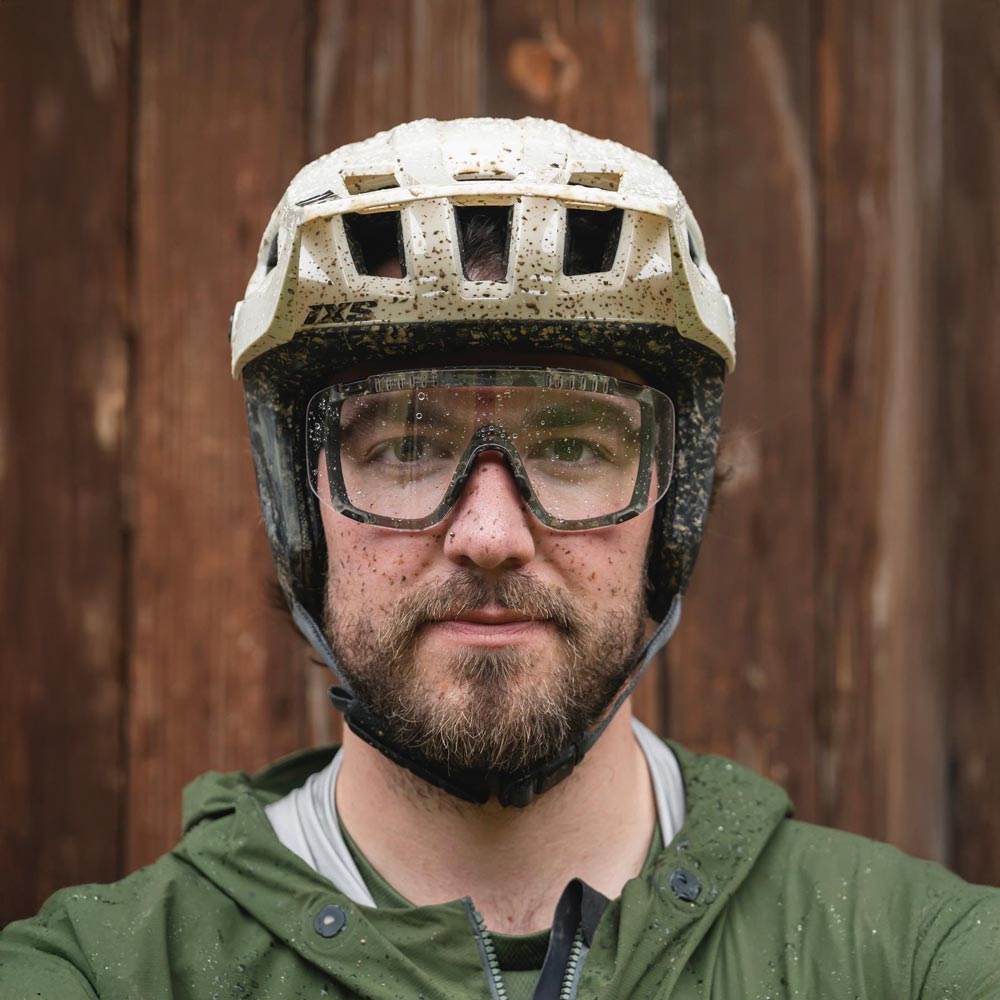
Robert’s habitat is the Tweed Valley, Scotland, which is renowned for its root-littered enduro mountain bike trails. Robert has been developing his bike handling skills for the last 16 years. Since he was a pup, he’s been riding everything from BMX through to enduro and downhill bikes. Combining a playful style with occasional speed-focused aggression, he favors supportive bikes, and does his best to push them hard.
Rank: European Tech Editor
Size: 6’2” / 189cm | 220lbs / 100kg
Social: @robert_johnston
SUPPORT AND JOIN THE LOAM WOLF PACK
Did you find this review helpful? Would you like the chance to review (and keep) products? Are you interested in saving big bucks by getting exclusive Members Only discounts from industry brands all while helping support a small, rider-owned media crew? We have big plans for our members beyond big discounts and product giveaways! To learn more and help support small, independent media, visit our Member’s Page.