

ABOUT THE SRAM MAVEN B1 BRAKES
WHAT’S NEW WITH THE SRAM MAVEN B1?
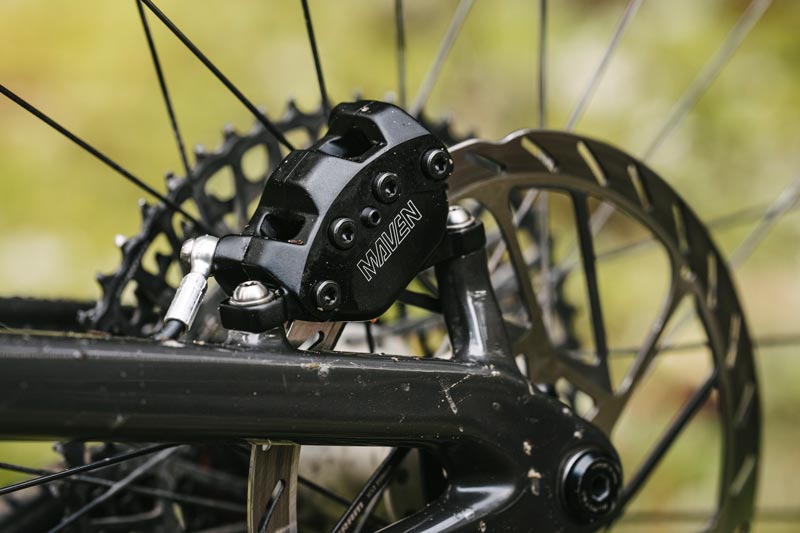
With the SRAM Maven B1, SRAM has focused on refining the original formula rather than reinventing it. From a redesigned SwingLink cam and updated hydraulic ratios to revised lever blades and small but meaningful friction reductions, the changes aim to make the brakes easier to control across a wider range of riding scenarios.
THE NEW SWINGLINK
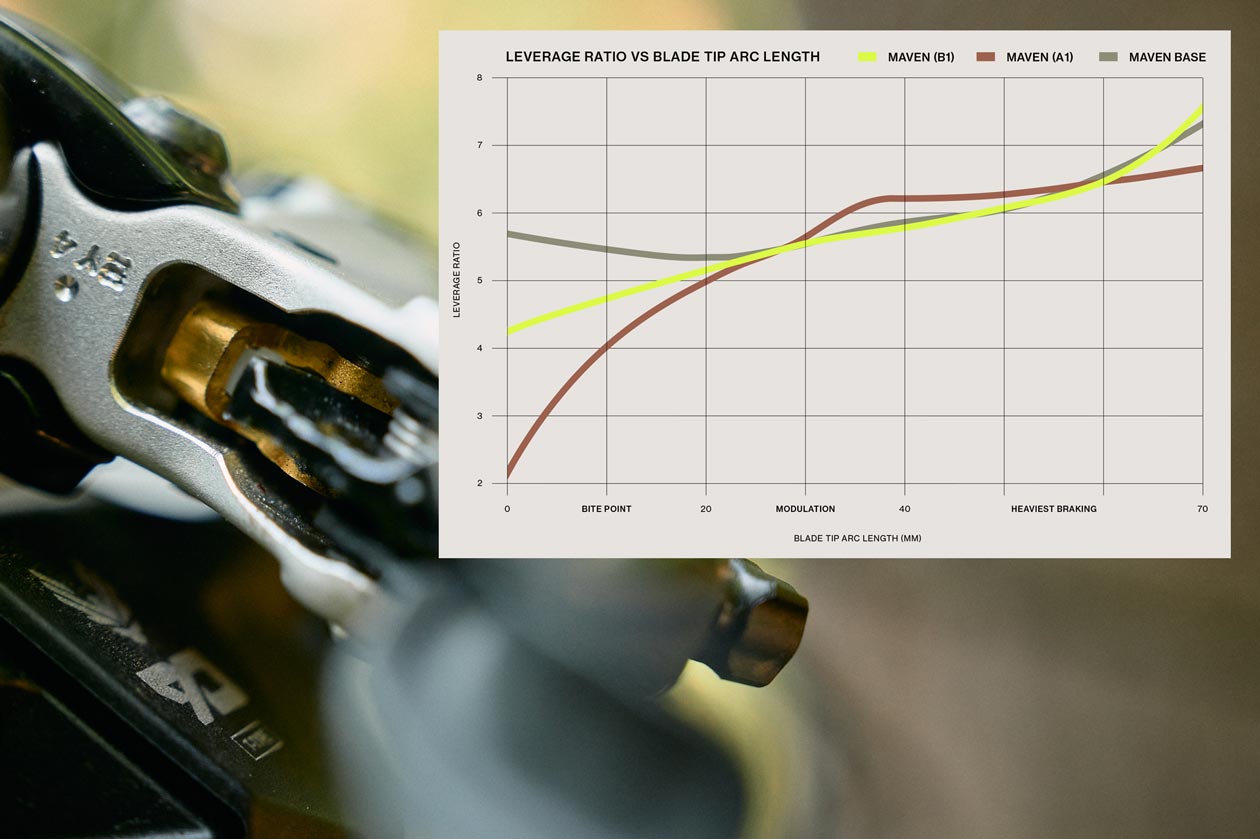
The Maven A1 SwingLink (red cam) leverage ratio was extremely progressive, giving a high breakaway force but short deadband (the lever travels until the pads make contact). Once contacting the rotor, there was a spike in the leverage ratio that delivered a large amount of mechanical advantage from the cam, which delivered brutal power when combined with the high hydraulic ratio. While some riders appreciated this power delivery, some suffered with locking the wheels up too frequently.
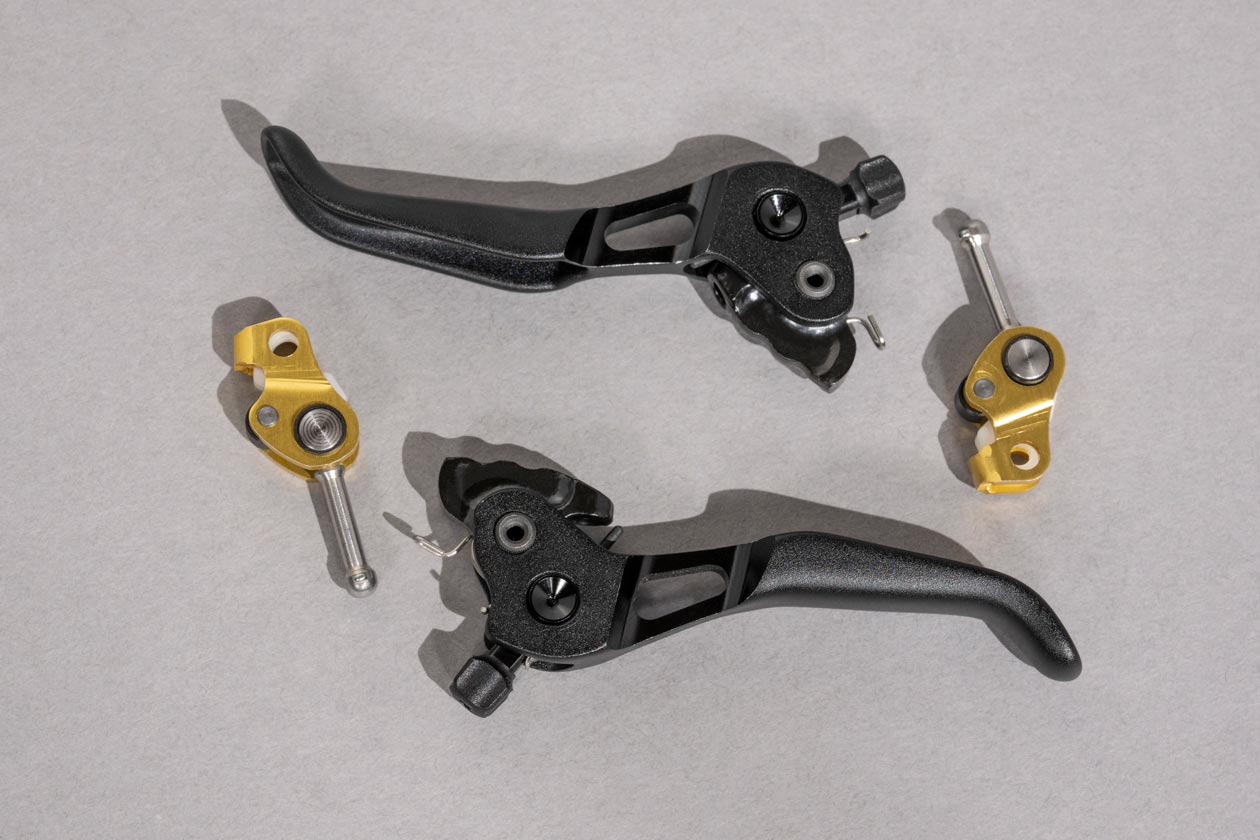
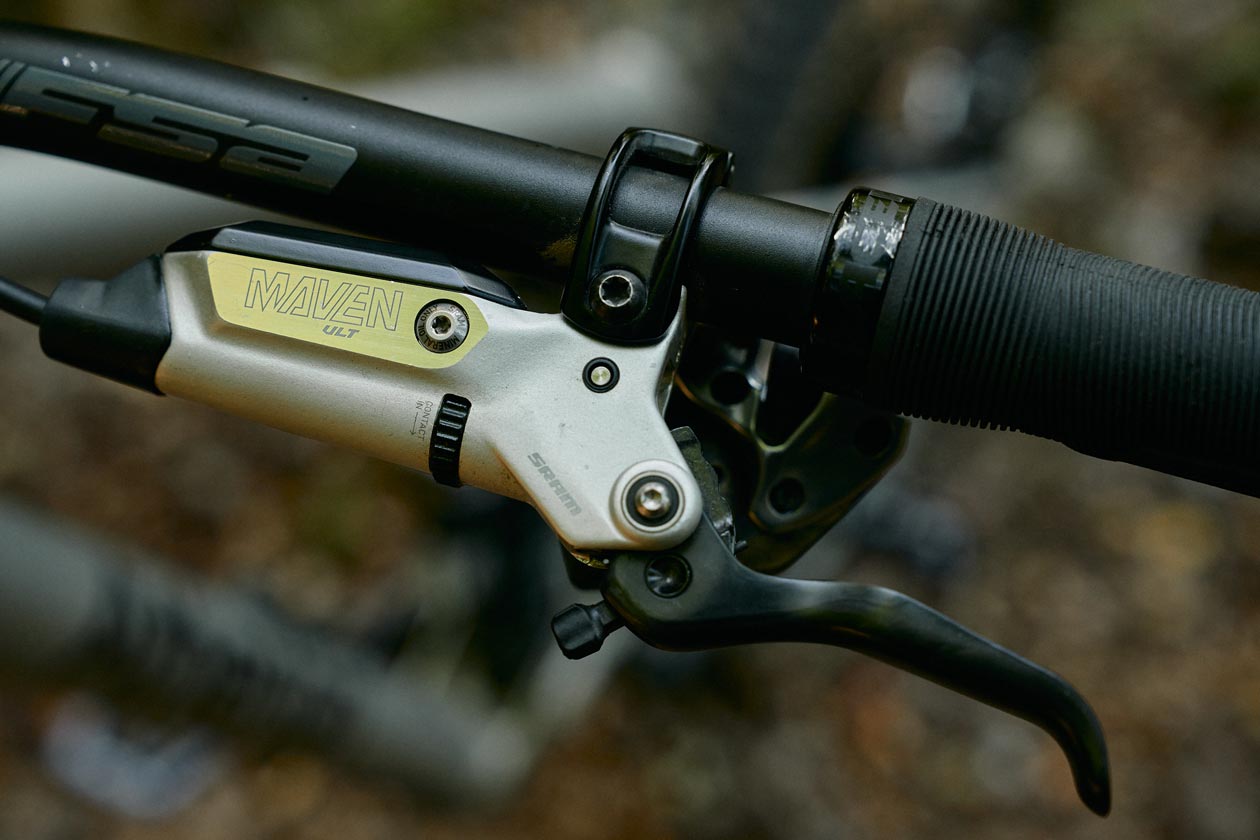
With the new gold SwingLink Light Action Cam, SRAM has made a significant change to the leverage ratio in the Maven B1 lever. The starting leverage is higher, reducing lever breakaway force by nearly half, from 8N to 4.25N, and thus reducing finger fatigue on initial brake activation.
The leverage ratio of the new gold SwingLink is still progressive (delivering proportionally more power for a further lever pull), but in a more consistent and linear fashion to increase predictability. At the end of the lever stroke, the leverage ramps up to deliver a final boost of power under the hardest lever pulls.
ADJUSTED HYDRAULIC RATIO
With an increased mechanical advantage at the end of the lever pull, SRAM was able to reduce the hydraulic ratio and retain similar maximum power levels. To reduce the hydraulic ratio, they moved to four 18mm pistons in the caliper instead of the 2×19.5mm and 2x18mm found in the Maven A1. This likely contributes to reliability improvements too, with more even piston advancing and pad contact.
UPDATED LEVER BLADES
Each of the new Maven B1 brakes receives an upgrade to the lever blade finish. The Ultimate level receives a new carbon fiber lever blade to solidify its position at the top of the range, shaving weight and improving cold weather feel. The Silver receives a new forged and machined lever with stealth hardware. The Bronze gets a new forged lever and is now black to offer a cleaner look.
SRAM MAVEN A1 VS B1: MUCH HAS REMAINED THE SAME
Retained from the Maven A1 are the Stealth lever bodies with MMX clamps. There are still the stiff four-bolt calipers with four phenolic plastic pistons. SRAM’s custom Maxima mineral oil brake fluid is used, with the Bleeding Edge system remaining in the caliper for mess-free brake bleeds.
MAVEN TUNING KITS
For riders with first-generation Maven A1 brakes, SRAM is making a tuning kit available to add the Light Action Cam and new lever blades to their existing systems. The Ultimate and Silver level kits are cross-compatible, whereas the Bronze must be fitted to a Bronze A1 lever due to the bushing pivot. These kits can be installed in around ten minutes with no need to bleed the system.
Pricing of these tuning kits is $109 for the Ultimate Tuning Kit (for a pair of brakes); $89 for the Silver Tuning Kit, and $69 for the Bronze Tuning Kit. These kits are not compatible with the Maven Base, which uses the DirectLink system.
SPEC OPTIONS
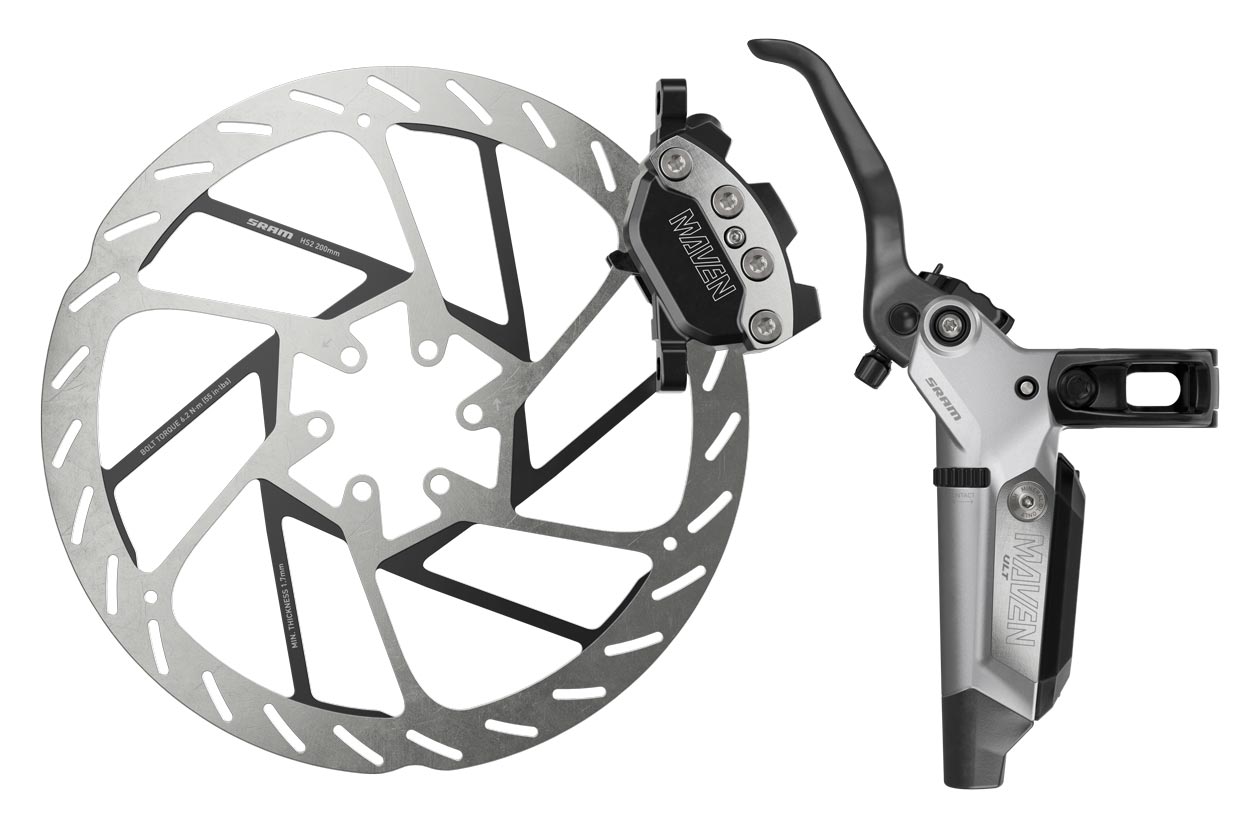
The $299 SRAM Maven Ultimate is the pinnacle of the Maven lineup, with all of the bells and whistles. There is the Carbon Fiber lever blade and runs on a cartridge bearing for smooth action; there’s titanium hardware, and machined finishes are used throughout to give a premium look and reduce weight. The Maven Ultimate features tool-free Reach and Contact Point adjust, helping to get them dialled in. The Maven Ultimate brake weighs in at 363g per end.
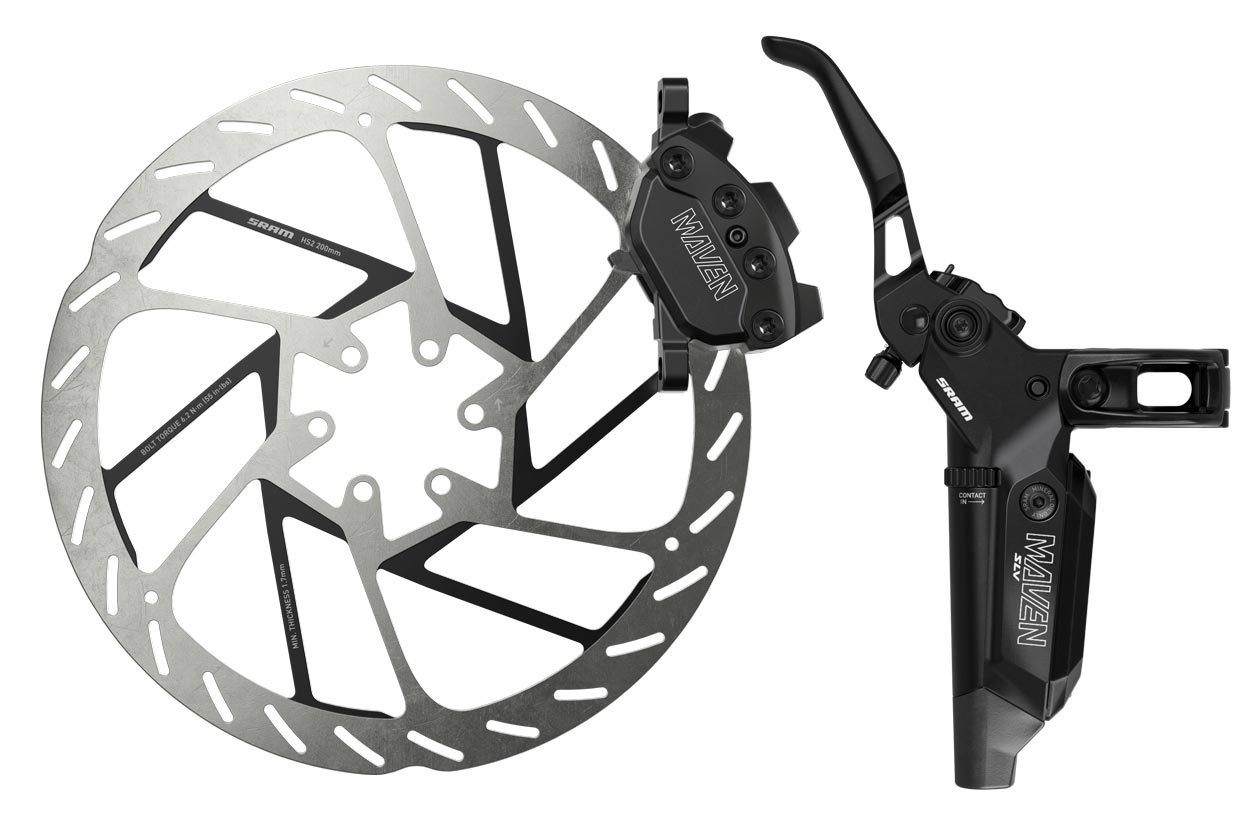
The $265 SRAM Maven Silver B1 carries over the same features as the Ultimate, but with slightly more affordable materials and finishes to reduce the price slightly. The lever blade is forged and machined, running on a cartridge bearing, and hardware is stainless steel with a black coating applied for stealth looks. The same tool-free Reach and Contact Point adjustments are retained. The Maven Silver B1 brakes weigh 379g each.
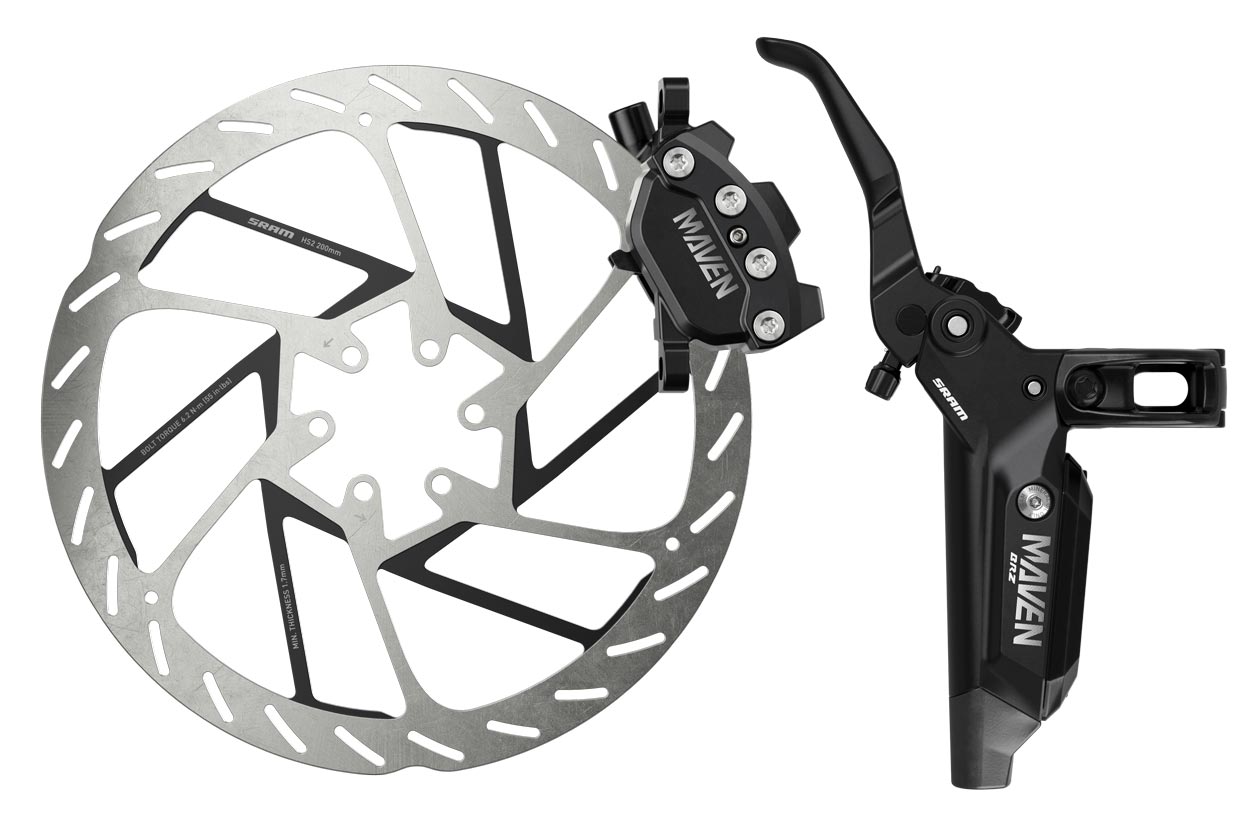
The OE-only Maven Bronze B1 retains the same gold Light Action Cam in the SwingLink system, but the forged alloy lever blade runs on a bushing rather than a cartridge bearing setup. The Maven Bronze loses the tool-free contact point adjust, but retains the reach adjustment. The black colorway gives a cleaner look, with a weight of 381g.

THE DIRT
For this early SRAM Maven B1 review, I was sent a set of the new Maven brakes a couple of months before their launch, which I fitted to my Atherton S170 test rig. My testing time on the SRAM Maven B1 brakes was split between my Scottish home trails and Queenstown, New Zealand.
THE SETUP AND OPTIMIZATION PROCESS | When SRAM Maven A1s were set up and working good – which sadly wasn’t a given – I was a fan. As a meaty pawed rider who runs the bite point close to the grip, it was mainly pumping up or pulling to the bar that occasionally took the shine off the first gen Maven brakes. So far, it would appear the updated Maven brakes are less prone to these issues. The two sets of Maven B1 brakes I have tested – one of which were installed by myself – and the majority on the fellow journalists’ bikes at the launch event have suggested so. I am yet to have the Maven B1 pull through to the bar with a solid bleed, or the bite point change. But of course, the long-term test and a wider sample size will tell.
The Maven B1 lever felt notably different from the first pull. Much smoother and lighter in action, the quality of feel has elevated considerably. I was able to get the brake biting close to the bar without pulling all the way to the grip, but the initial lever position had to be slightly further out to account for the increased deadband. As a rider who typically rides with their brake levers pulled slightly to get the system as close to the bite point as possible, this was not an issue. Riders who will have to pull the lever from rest position through to the bite point may not favor the increased deadband that the B1 lever produces, but most will likely accept this compromise.
HOW DID THE SRAM MAVEN B1 BRAKES PERFORM? |
Aside from their reliability and consistency, I believe the handling characteristics of the updated Maven B1 will suit a wider range of riders. Throughout this SRAM Maven B1 review, the updated brake feel meant considerably less force is required to get the lever moving and hit the bite point, so the control over the braking power is improved and finger fatigue reduced. There were instances on long descents where overcoming the lever force of the Maven A1 would produce finger fatigue, and the Maven B1 has addressed this effectively.
You no longer get the high initial spike of stopping power, instead easing in and offering considerably improved modulation. As such, a small subset of riders who loved that strong bite feeling may be less impressed. SRAM may offer an A1 tuning kit for riders with B1 brakes who feel that way.
As for top-end power, it was not lacking. Even with the slightly reduced piston size, I was able to stop on a dime regardless of the trail scenario. While the initial pull of the lever does not deliver this power so abruptly, enough power was accessible to lock my wheels in the steepest terrain when required.
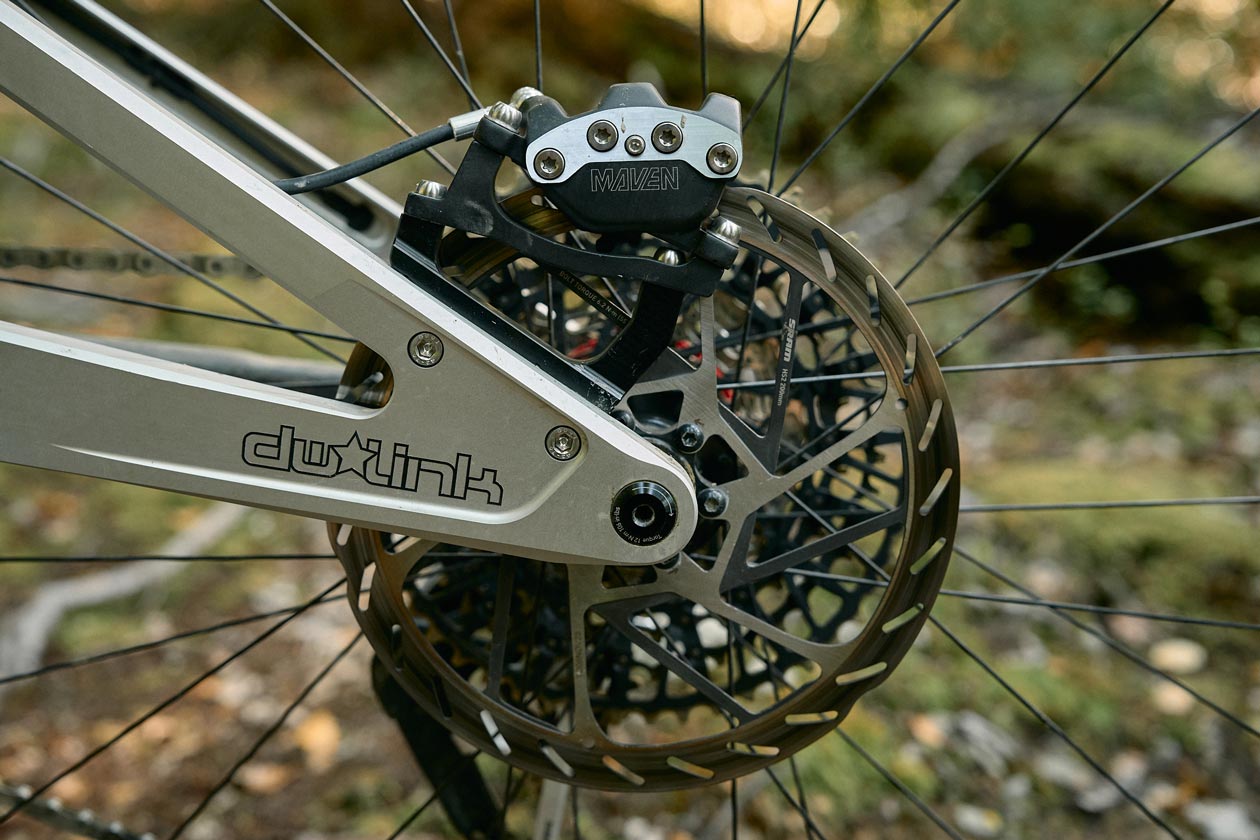
I managed to get considerable heat into the rear brake setup with a 200mm rotor on a top-to-bottom run of some of Queenstown’s steeper downhill trails. The bite started to fade by the end of this long brake-burning downhill run, which was slightly disconcerting. Switching out to a 220mm rotor gave me the extra heat resistance my brake-heavy descents were demanding, and braking consistency returned. There was no change in lever feel during this fading incident, so it was the pad and rotor interaction that was suffering, and it only served to impress me further about the SRAM Maven’s heat resistance and consistency. If the brake can survive heat that glazes sintered brake pads with a 200mm rotor with no change in lever feel, then you’d consider them rather resistant to heat fade.
Is the SRAM Maven B1 Worth It?
Based on its first rides, the SRAM Maven B1 makes a strong case for itself, especially for riders who found the original Maven a bit too demanding. The B1 delivers a more controlled and accessible braking experience without sacrificing the stopping power the Maven is known for. While it no longer hits with quite the same abrupt bite as the A1, the tradeoff is a more predictable and usable power delivery that will suit a wider range of riders and trail conditions.
The Wolf’s Last Word
Provided their reliability holds up over the long term, you can consider me very impressed by the updates SRAM has made to their Maven brakes. Offering considerably improved modulation and reduced finger fatigue, but still offering the top-end power and heat resistance that has made the Maven brake popular, SRAM has answered the prayers of many riders. 
Website: SRAM.com
SHARE THIS REVIEW
ABOUT THE WOLF

Robert’s habitat is the Tweed Valley, Scotland, which is renowned for its root-littered enduro mountain bike trails. Robert has been developing his bike handling skills for the last 16 years. Since he was a pup, he’s been riding everything from BMX through to enduro and downhill bikes. Combining a playful style with occasional speed-focused aggression, he favors supportive bikes, and does his best to push them hard.
Rank: European Tech Editor
Size: 6’2” / 189cm | 220lbs / 100kg
Social: @robert_johnston
SUPPORT AND JOIN THE LOAM WOLF PACK
Did you find this review helpful? Would you like the chance to review (and keep) products? Are you interested in saving big bucks by getting exclusive Members Only discounts from industry brands all while helping support a small, rider-owned media crew? We have big plans for our members beyond big discounts and product giveaways! To learn more and help support small, independent media, visit our Member’s Page.