

WHAT IS OCHAIN?
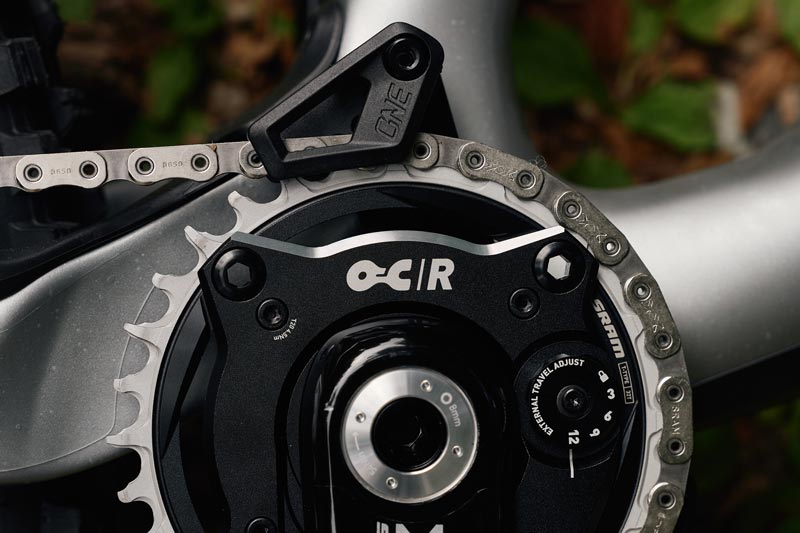
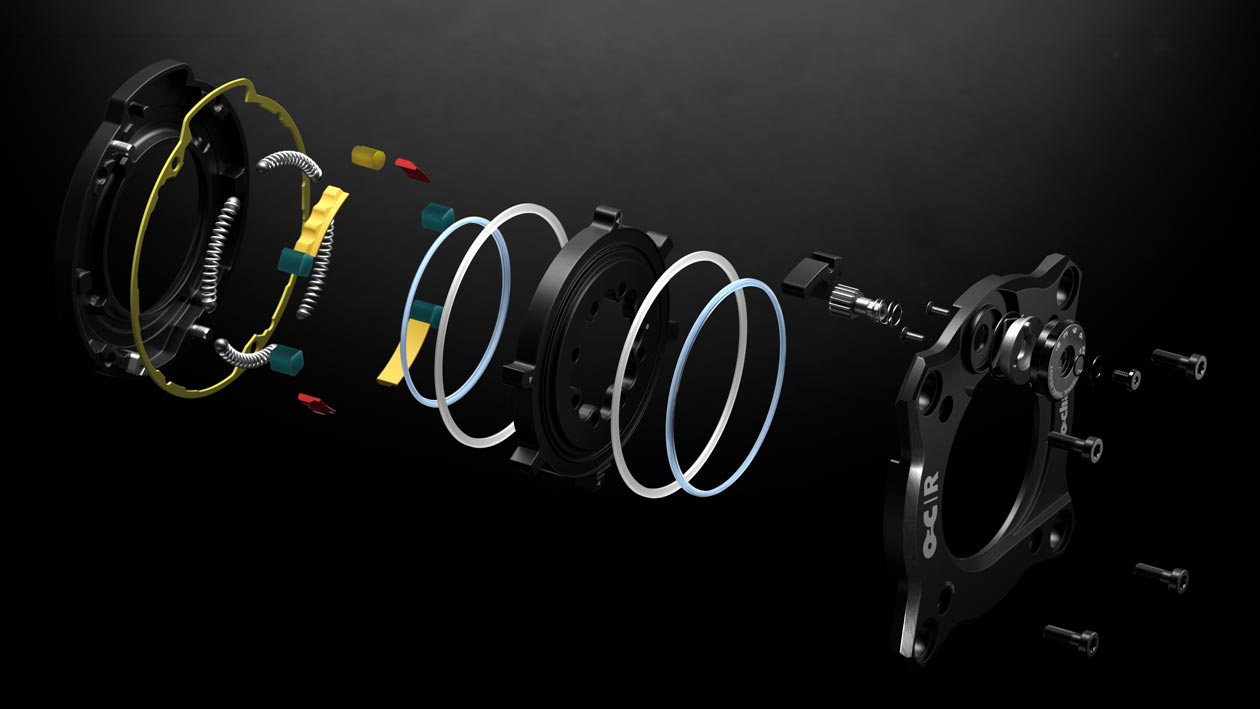
The Ochain is a damper device that is mounted between the cranks and chainring. It allows for the controlled backward rotation of the chainring under load, thanks to four springs and elastomers. The controlled movement is designed to isolate chain forces from the riders’ feet and reduce the effects of chain turbulence.
WHAT DOES OCHAIN HELP WITH?
Using a data logger mountain bike equipped with over 20 sensors – the “most complicated data acquisition bike” they’ve made – SRAM identified three mechanisms of unwanted pedal feedback. With their studies, SRAM found that Ochain addressed all of these, with less drawbacks than the competing pedal feedback solutions.
Pedal Kickback
While conventionally understood Pedal Kickback cannot technically occur at speeds above walking pace (since the wheel rotation is faster than the chain can extend under compression), Ochain is claimed to alleviate its effects in any instances when it does occur, such as a slow speed drop.
Cassette Backwards Slap
Cassette Backwards Slap is the mechanism of the cassette rotating forwards and back, due to the forces from a bouncing chain. As it hits the extreme of its rearward rotation, the angular momentum applies a force to the chain, which in turn applies a force rotating the cranks backwards. Ochain’s damped movement helps to reduce the translation of these forces to the rider.
Rear Wheel Lockup
When a rider is braking, and the rear wheel is unloaded, the wheel locks up. At the same time, the rider is typically bracing rigidly against the bike to handle the braking forces. The combination of these gives resistance on the cranks, which then releases once the rear wheel is able to rotate, giving inconsistent force spikes through the pedals. The Ochain helps to smooth out these forces, giving improved stability and consistency.
TUNABLE FOR THE TERRAIN AND BIKE
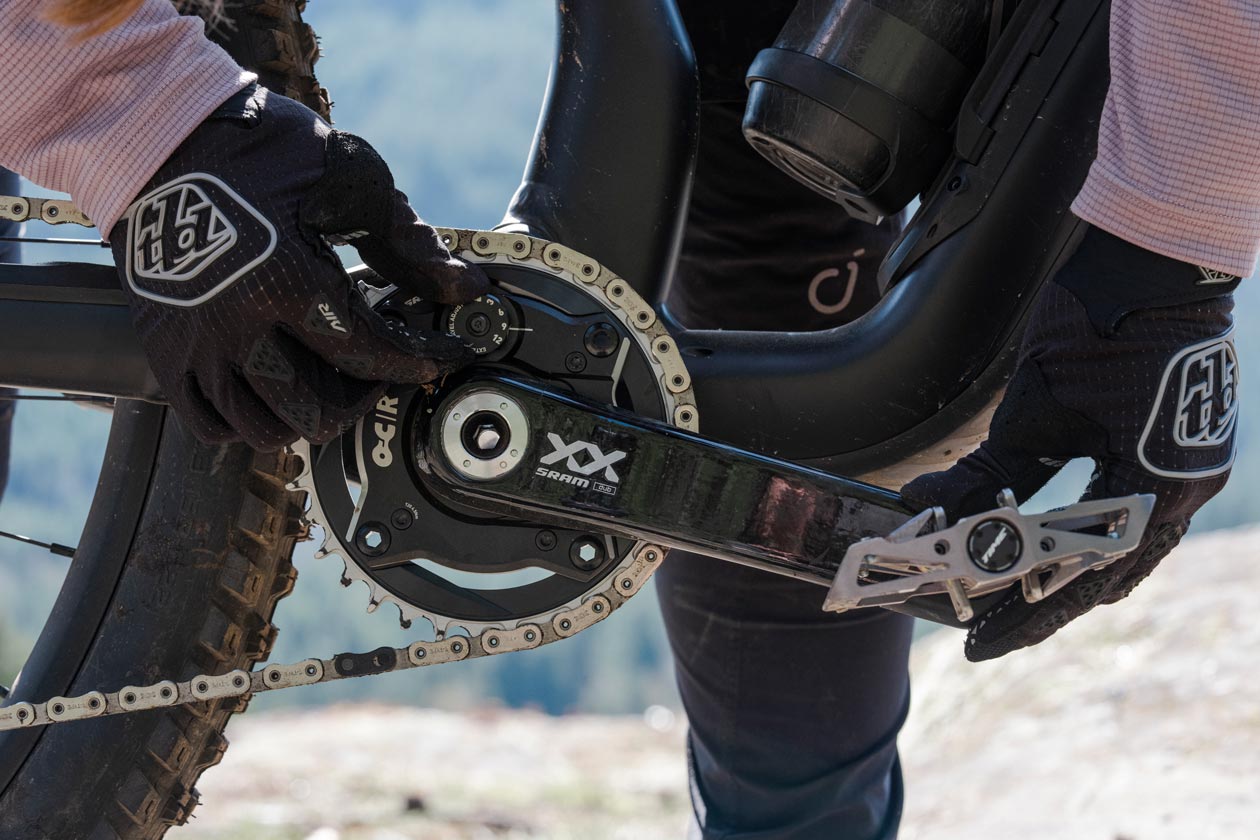
When using the Ochain R or Ochain S, the user can adjust the angle of rotation that the system will allow, using the external dial. Giving the range between locked and 12° in 3° increments, the rider can tune the handling characteristics of the Ochain to the terrain and their preferences.
With the Ochain N and Ochain E, there is no external adjustment, but different chips can be swapped out internally to adjust the travel between 6° (OChain N only), 9° (stock) or 12° options.
CONSISTENCY IS KEY
SRAM’s studies concluded that the spider damping solution was superior to hub-based pedal feedback mitigating systems for numerous reasons.
The first is the consistency of the chain damping. A hub-based system has varying effects when the gear is changed, giving a larger rotation allowance at the crank when in climbing gears and progressively less moving down the cassette. Ochain claims that using a high engagement hub with their system can give the best of both worlds, with the chain feedback reduction still taking place, but the slack minimized for improved technical climbing.
Also, thanks to the elastomer bump stops, Ochain has a smooth engagement feel. Instead of a hard metal-on-metal clunk when the hub engages, Ochain can help to cushion the initial pickup and provide a smoother pedaling feel.
WHAT’S NEW ON OCHAIN GEN B?
SRAM worked to improve durability on the Ochain Gen B, conducting more stringent ISO and in-house testing to increase strength in key areas. SRAM says it’s beyond DH tough, and we have little reason to disagree so far.
The sealing was improved, with new gasket materials and a double lip silicone seal used to keep water out for a longer, quieter service life.
Service intervals have been extended to a major service every 200h, matching typical RockShox suspension service intervals. With the readily available service kits and clearly documented service procedure, most home mechanics should be able to perform this service at home.
OCHAIN VERSIONS
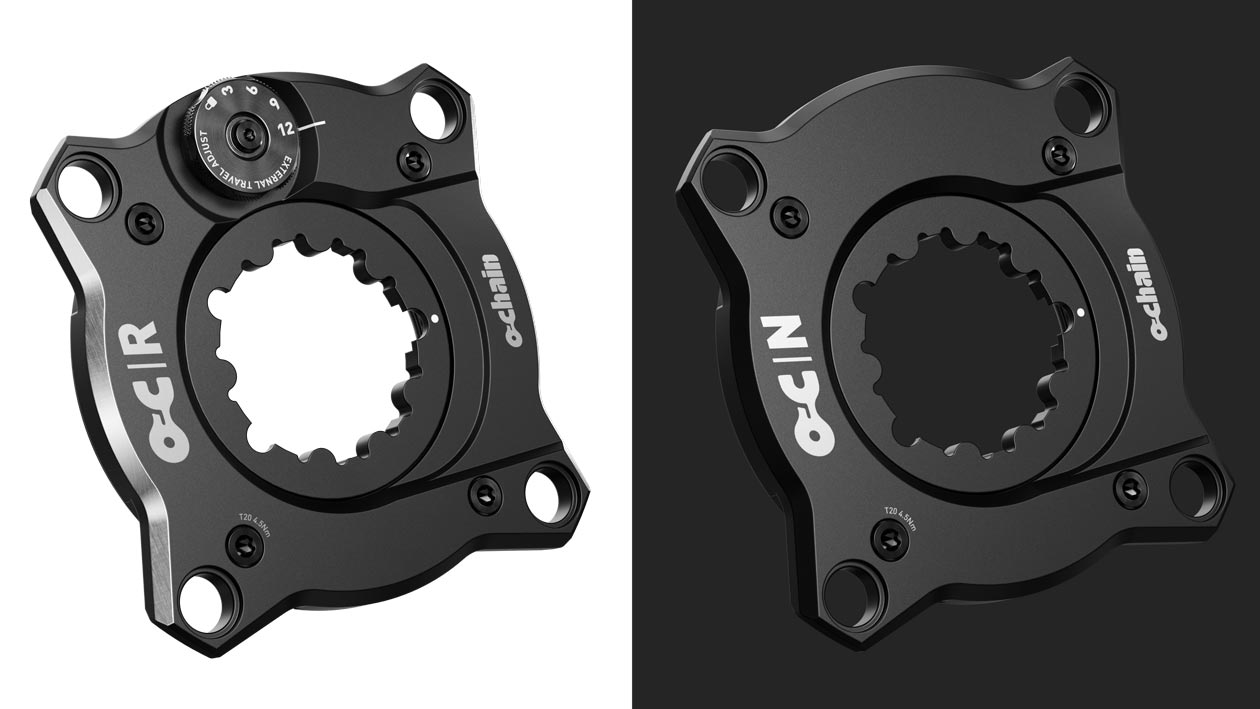
OCHAIN R: Adjustable Analog Spider Damper
The Ochain R is the adjustable version of the spider damper, available to fit mountain bikes with either the SRAM 8-Bolt or SRAM 3-Bolt direct mount chainring standards. The 104bcd chainring standard gives a range of chainring size options, with offsets available to fit 55mm or 56.5mm chainlines.
The External Travel Adjust dial gives the choice of five degrees of travel to tailor the feel to the terrain and bike: Lock, 3º, 6º, 9º, 12º for more bike and terrain types.
OCHAIN N – Fixed Analog Spider Damper
The Ochain N is the fixed version of the spider damper, available to fit mountain bikes with either the SRAM 8-Bolt or SRAM 3-Bolt direct mount chainring standards. The 104bcd chainring standard gives a range of chainring size options, with offsets available to fit 55mm or 56.5mm chainlines.
The internally adjustable travel chip offers a choice of three degrees of travel to tailor the feel to the terrain and bike. The factory setting is 9º, with 6° and 12° travel chips available aftermarket.
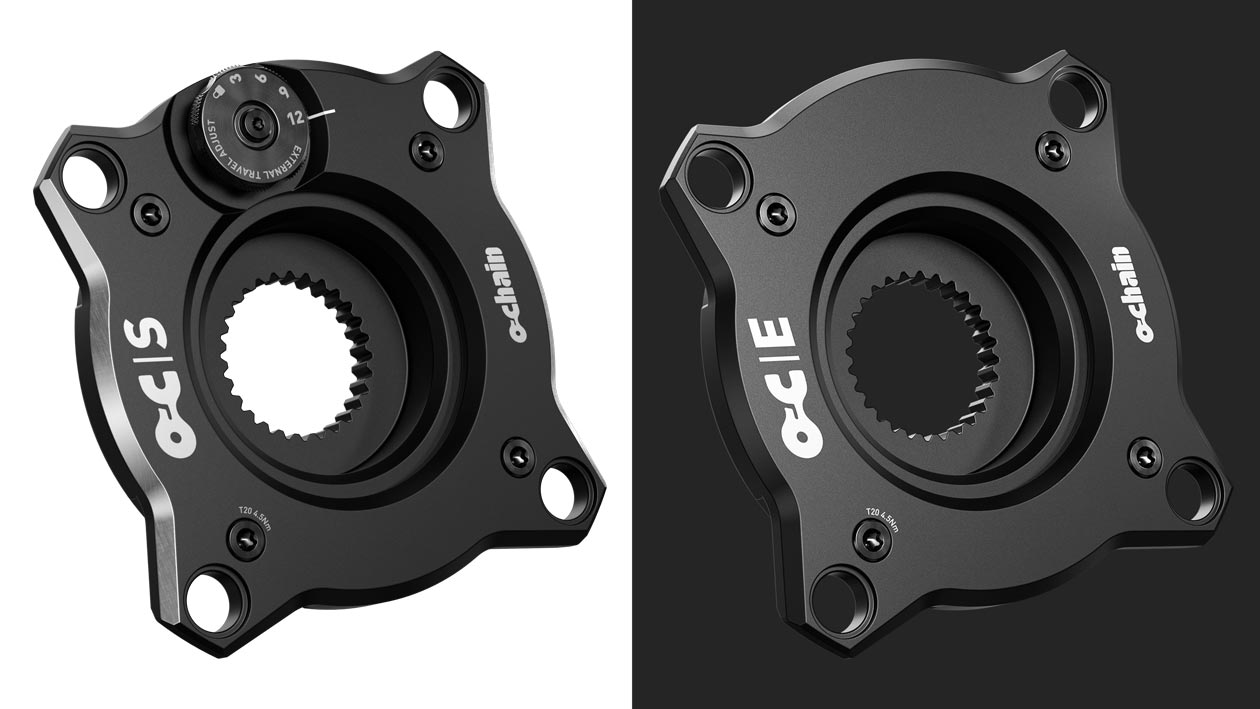
OCHAIN S – Adjustable eMTB Spider Damper for Bosch Gen 5
The Ochain S is the adjustable version of the spider damper to fit the Bosch BDU38 (Gen 5) eBike drive unit. The 104bcd chainring standard gives a range of chainring size options.
The External Travel Adjust dial gives the choice of five degrees of travel to tailor the feel to the terrain and bike: Lock, 3º, 6º, 9º, 12º for more bike and terrain types.
OCHAIN E – Fixed eMTB Spider Damper For Bosch Gen 5
The Ochain E is the adjustable version of the spider damper to fit the Bosch BDU38 (Gen 5) eBike drive unit. The 104bcd chainring standard gives a range of chainring size options.
The internally adjustable travel chip gives a choice of two degrees of travel to tailor the feel to the terrain and bike. The factory setting is 9º, with a 12° travel chip available aftermarket.
Ochain External Travel Adjust Upgrade Kit
The Ochain N and Ochain E are upgradeable to the Ochain R and Ochain S, respectively, with the aftermarket External Travel Adjust Upgrade Kit. By replacing key components, this kit adds the external travel adjustment dial to the stock units, giving the choice of five degrees of rotation on-the-fly: Lock, 3º, 6º, 9º, 12º.
THE DIRT
Ride Impressions On The SRAM Ochain Gen B
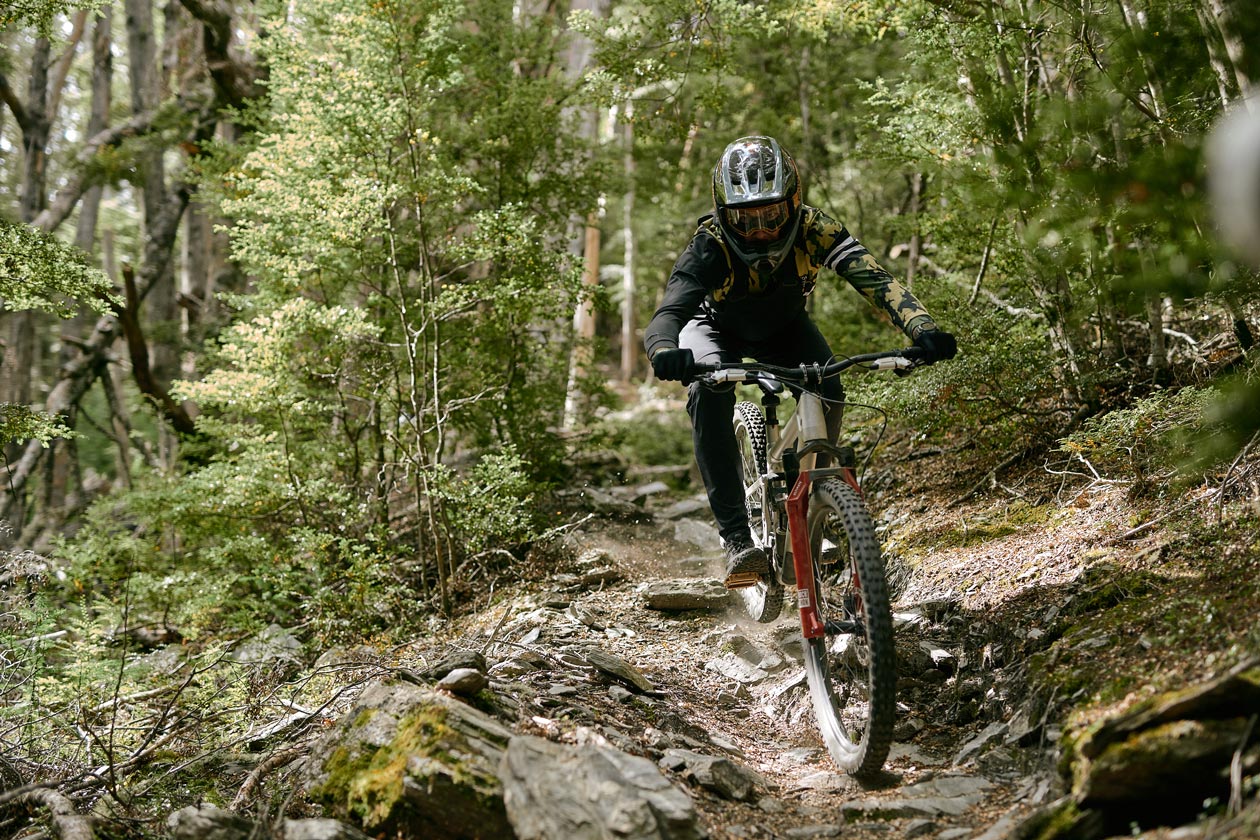
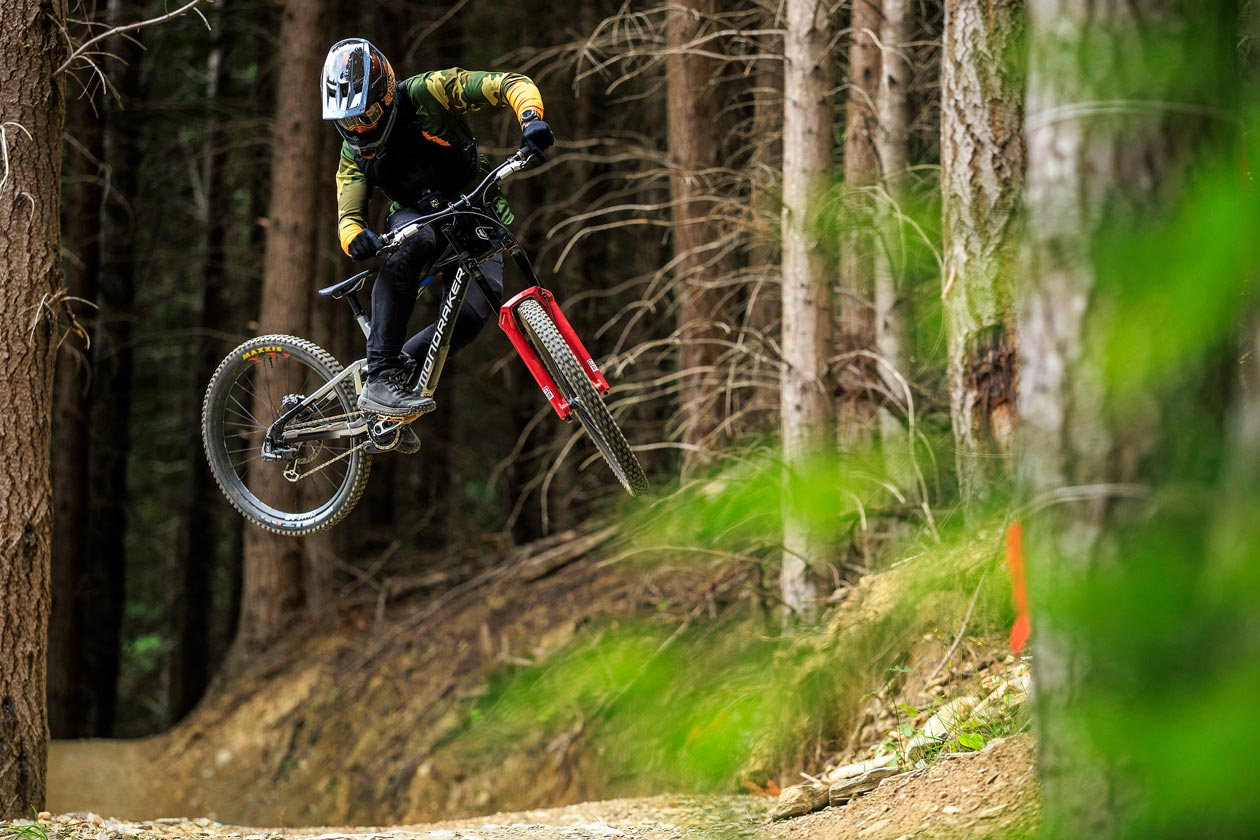
I fitted the Ochain Gen B to my Atherton S170 test rig earlier this year. The bulk of its testing time was conducted across bikeparks and pedal-fed enduro trails around Queenstown, New Zealand, but it was subjected to the abuse of the Scottish Winter and Spring in the lead-up to the release date. I also spent time on the Ochain-equipped Mondraker Summum, which endured some full-gas testing in Queenstown. Through it all, both Ochains have been silent and free of issues, and I was thankful for them when attacking the trails.
What Does The Ochain Feel Like When You Pedal?
Immediately, you feel the effects of the soft engagement provided by the elastomers of the Ochain when it is fitted to your bike. Not all riders are going to love this feeling, but it isn’t too extreme to the point that you can’t become accustomed to it after some trail time.
On the 9° and 12° settings, there is a pronounced dead zone, with a delay until you get forward drive the first time you begin to pedal after coasting or backpedalling. This isn’t much different to the dead zone you get on a low-engagement rear hub, albeit more consistent and softer on engagement. While there is no denying that the more direct response of a faster engagement is preferable for the most technical and ratchet-heavy climbs, I was able to adapt my timing to get by on mildly technical climbs, even in the 9° or 12° settings.
While there is a small amount of energy lost to the damping effects of the elastomer on first engagement, I found there to be no perceived loss of efficiency overall when pedaling, since the light springs of the Ochain ensured that it spent most of its time bottomed out.
What Does The OChain Feel Like On Descents?
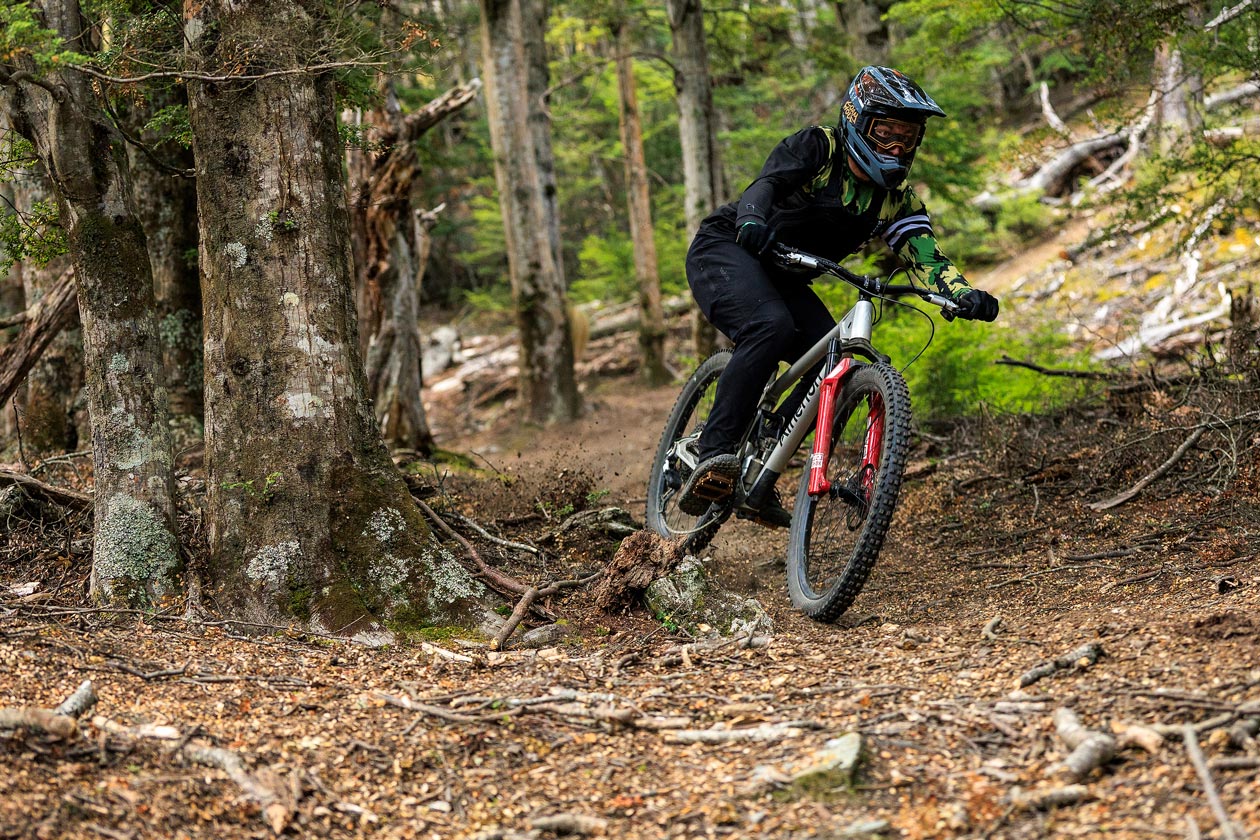
The Ochain instills a much-welcome sense of calmness to the bike when in its more aggressive settings. Preventing much of the micro-chatter from being transmitted through the pedals, it effectively removes a degree of distraction, and gives the sense of a more supple and composed suspension response. The Ochain is both audible and physical in its effects, reducing the chain noise produced in rough terrain and filtering some of the smaller forces at the pedals.
I found myself inclined to add a click or two of compression damping when running the Ochain on my bike. Having discussed with a few riders, I don’t believe this is a physical demand to reinstate chain-induced support. Instead, I believe it is a response to the reduced vibration transmission through the bike. Every rider will have their threshold for acceptable feedback, and by removing some of it with the Ochain, they can then endure more feedback from the suspension. With this increased damping comes the potential for more speed with the same level of fatigue overall. It suggests that a shorter travel bike may gain capability overall with the device fitted, but I haven’t yet tested this theory.
I haven’t spent much time on hub-based pedal feedback systems yet, having only had a couple of rides on a DT Swiss DF hub. As such, I don’t want to be too damning on the hub solutions, but I can see where SRAM are coming from with their supporting reasoning for crank-based systems.
Compared with the Rimpact Chain Damper with its stock springs, the Ochain flew under the radar more, for better and for worse. The Ochain provided a more natural pedaling experience and felt to be more effective in addressing the trail buzz. The Rimpact felt more effective under harder compressions, but took more energy and aggression to get the benefit from, primarily acting on the bigger hits.
So far, the Ochain Gen B is holding up excellently, with no change in performance over the first quarter of this year in a wide range of conditions. While I might still be a little short of major service interval time, I’ve got little reason to doubt its durability. It seems as if SRAM has added a small touch of their engineering sensibility to an already solid product, and it continues to deliver on its trail-calming promises. 
Website: SRAM.com
SHARE THIS REVIEW
ABOUT THE WOLF

Robert’s habitat is the Tweed Valley, Scotland, which is renowned for its root-littered enduro mountain bike trails. Robert has been developing his bike handling skills for the last 16 years. Since he was a pup, he’s been riding everything from BMX through to enduro and downhill bikes. Combining a playful style with occasional speed-focused aggression, he favors supportive bikes, and does his best to push them hard.
Rank: European Tech Editor
Size: 6’2” / 189cm | 220lbs / 100kg
Social: @robert_johnston
SUPPORT AND JOIN THE LOAM WOLF PACK
Did you find this review helpful? Would you like the chance to review (and keep) products? Are you interested in saving big bucks by getting exclusive Members Only discounts from industry brands all while helping support a small, rider-owned media crew? We have big plans for our members beyond big discounts and product giveaways! To learn more and help support small, independent media, visit our Member’s Page.