

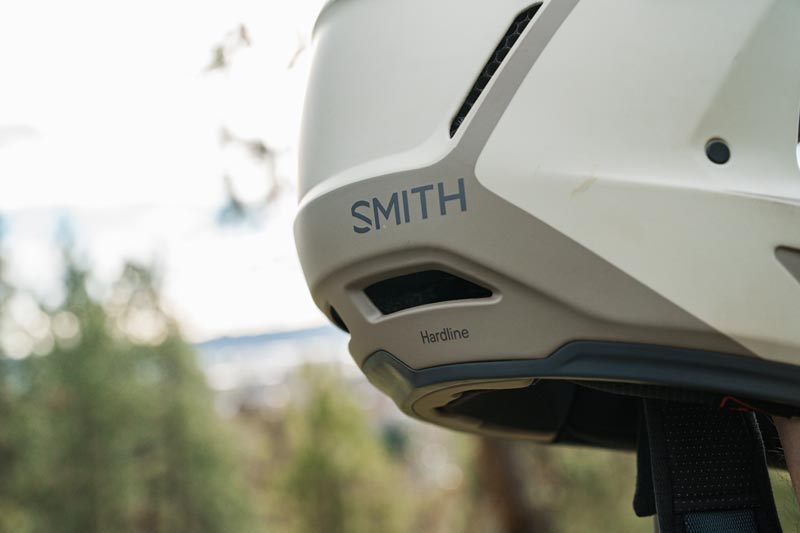
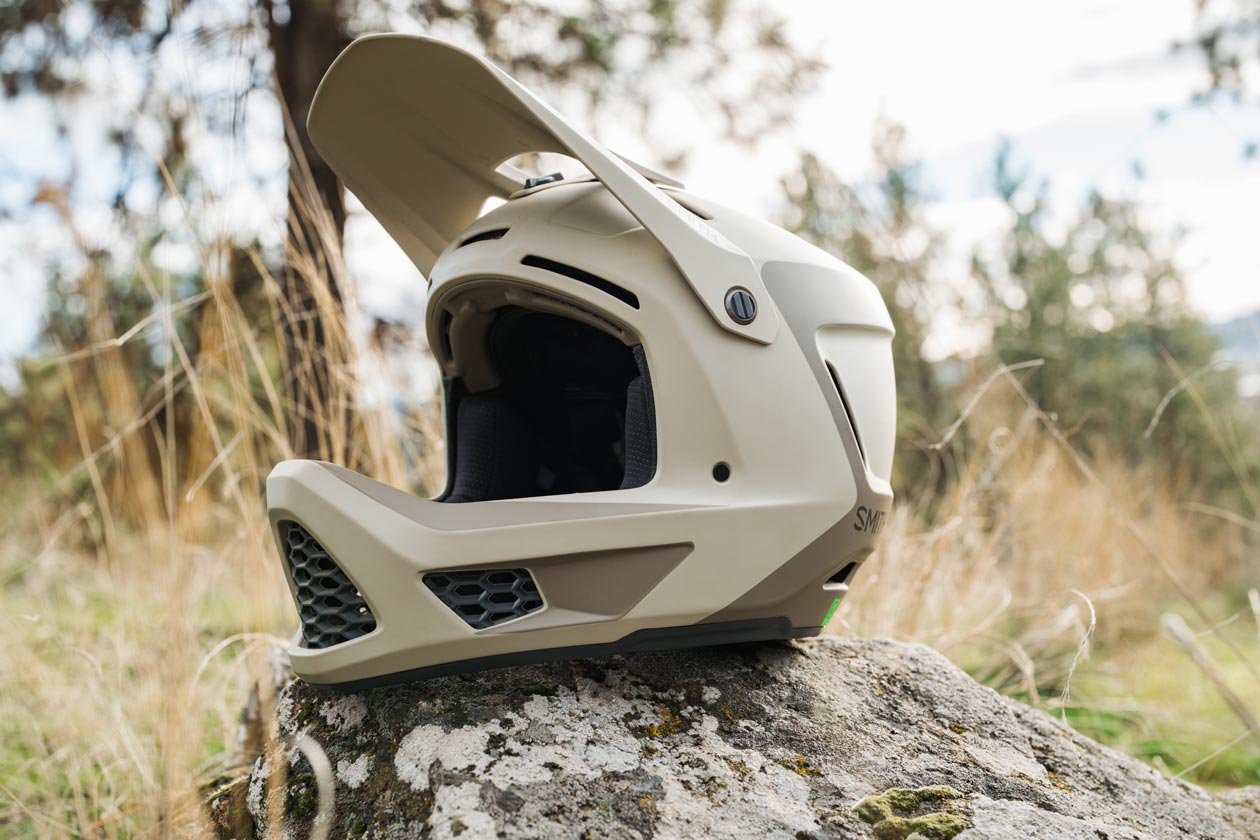
ABOUT THE SMITH HARDLINE MIPS HELMET
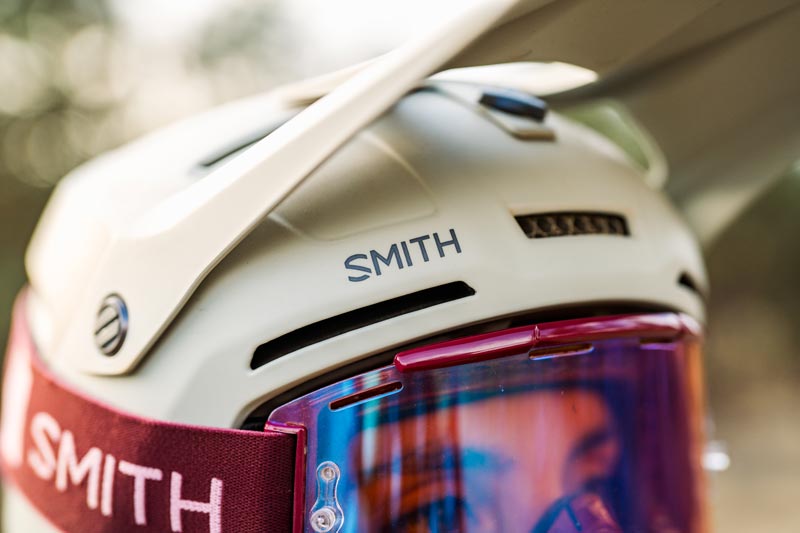
Smith’s pinnacle downhill helmet, the Hardline, comes in two options and three colorways: a carbon version only available in matte black, and their standard composite version available in matte black, matte chalk, or matte pine / rust / sagebrush. The lighter, carbon Hardline will run you $600 USD, while their standard Hardline comes in at $450 USD. In comparison, Smith’s Mainline enduro full face helmet costs $350 USD.
SAFETY STANDARDS
All of Smith’s full-face helmets comply with the CPSC Safety Standard for Bicycle Helmets, as well as the European certification CE EN 1078. The Hardline helmet is also AS/NZS2063 certified, which is a joint standard for Australia and New Zealand. All of these are standard certifications required to sell the helmets in the respective countries/continents. Additionally, Smith’s full face helmets are ASTM F1952 Downhill certified, meaning they have been more rigorously tested. Chin bars are required to pass deflection tests, and the helmets must withstand greater drop heights and impact energies, requiring more coverage around the sides and rear of the helmet. The Mainline helmet underwent specific testing to be NTA8776 E-Bike certified. This new certification came around in 2016 with the onslaught of e-bikes on the market and the limitations of CPSC, allowing e-bike riders to select a helmet that is more suitable for their riding than the average bike helmet.
SMITH HARDLINE VS MAINLINE DETAILS
The Weight Difference
The Hardline helmet is designed for downhillers, so it’s intended to provide more coverage and protection. A size medium standard Hardline weighs approximately 35 oz or 990 grams, while the carbon version is a whopping 80 grams lighter for a total of 32 oz or 910 grams. In contrast, the Mainline is 27 oz or 770 grams, making for a meaningful difference swapping between the Mainline and standard composite Hardline, especially after full day of use at bike parks or on big enduro rides.
Venting Ports
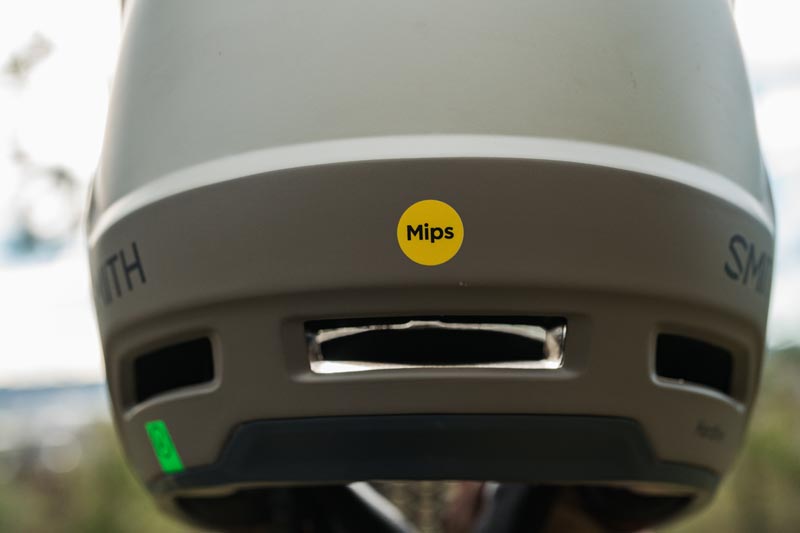
The Mainline also has more, larger venting ports compared to the Hardline, which makes sense for its focus on enduro and climbing uphill. The chin bar on the Mainline has several openings for ventilation and allows the wearer to access hydration easier on the trail, whereas the Hardline looks more like a typical downhill helmet and does not provide the same ventilation or access points. Still, it maintains some ventilation in these areas.
SMITH MAINLINE VS HARDLINE HELMET FEATURES
Technology
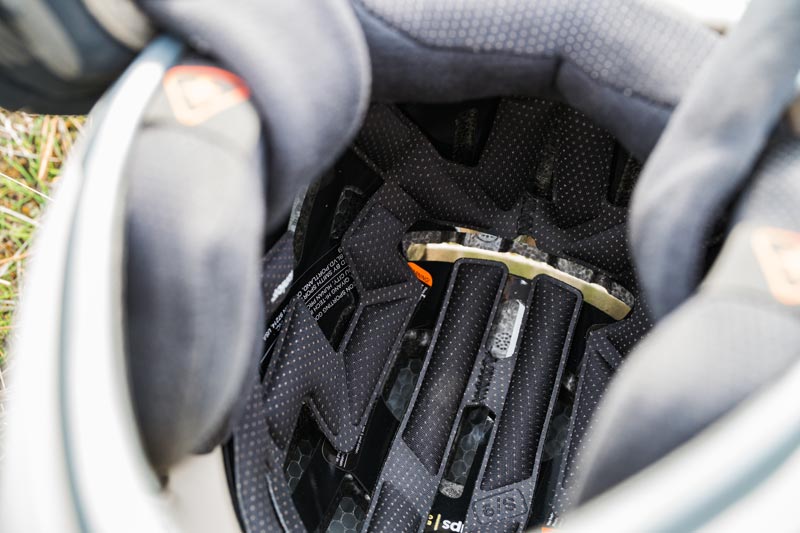
The Mainline and Hardline helmets use Koroyd® and Mips® safety systems. Koroyd – the technology that convinced Smith to venture into mountain bike helmets – is a system of heat-welded tubes that crumple upon impact. The takeaways of the Koroyd technology are that the tubes can be optimized in several different ways depending on the use and expected impact; it has a large compression volume available; it absorbs both linear force and rotational energy, thereby reducing rotational motion; there’s less rebound than foam protection systems, and it’s a system that can provide airflow and is lightweight given that its 95% air. These helmets are also equipped with a low-friction Mips® layer to reduce the effects of rotational energy on the head.
Design
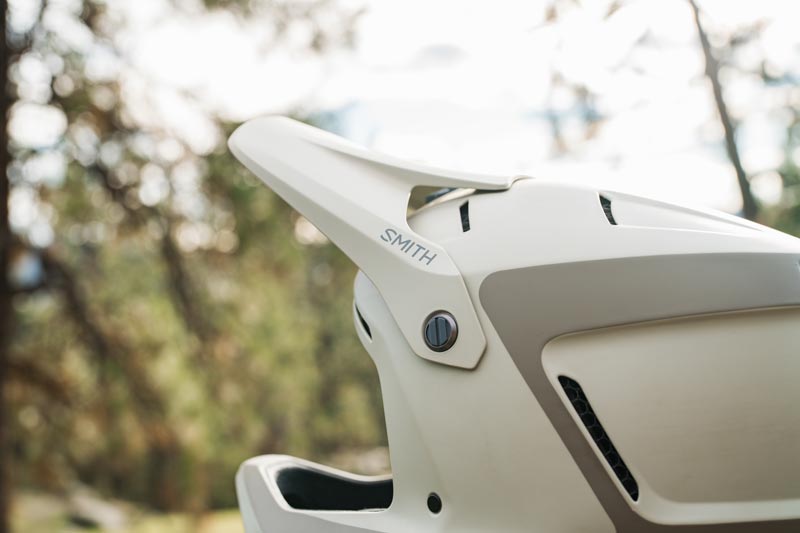
All the helmets have visors that can be adjusted, with a breakaway design. They include removable cheek pads that use Ionic+® anti-bacterial performance lining for odor resistance. The cheek pads can be washed and still retain their anti-bacterial performance, and can be taken out quickly with the helmet on, which can be helpful in emergencies. The fit of the helmets can be tailored to the riders’ head with two different thicknesses of padding, for both the cheeks and neck roll. The helmets are all fastened using the standard D-ring chin fastener.
Adding to the features on the Hardline is the collarbone impact protection zone, and there’s room for an under-visor action camera.
THE DIRT
Sizing on the Smith Hardline
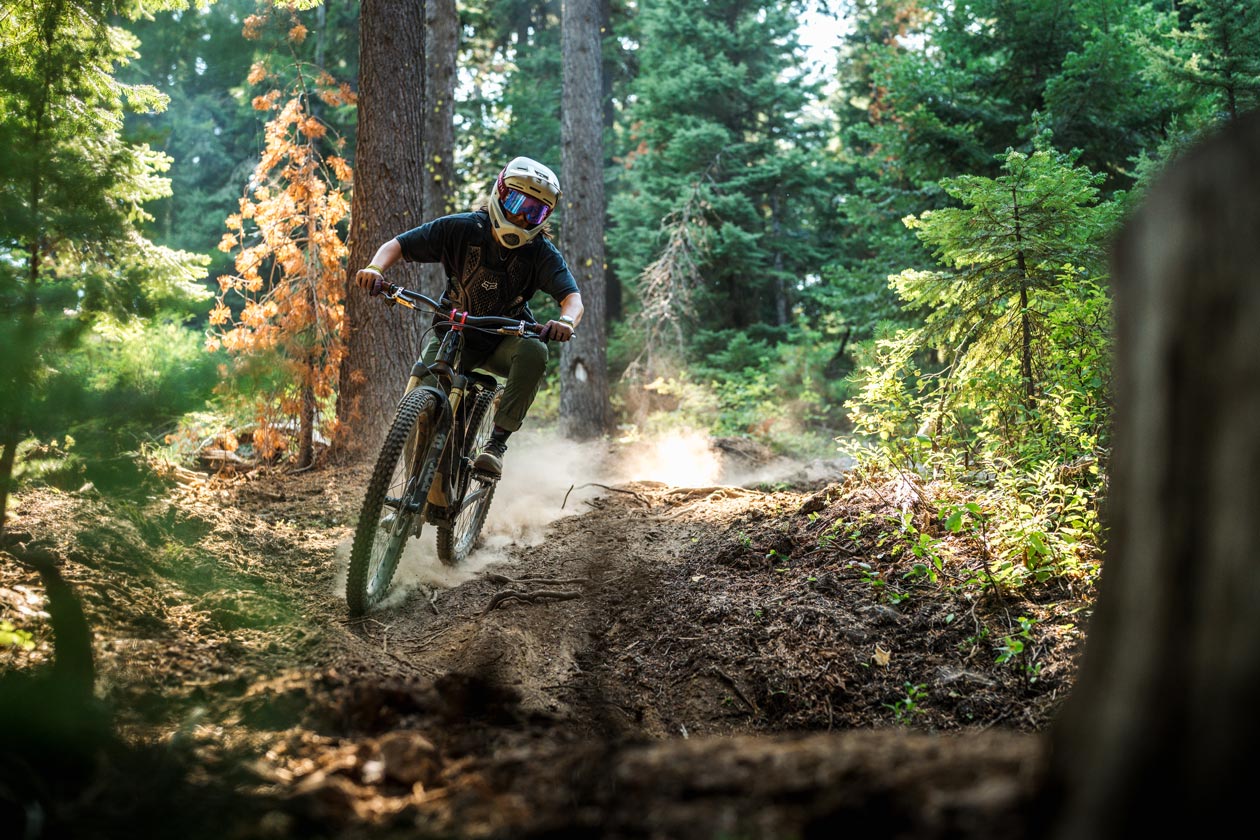
I tested the size small standard (composite) Smith Hardline helmet for this review, and I’ve been wearing their Mainline for enduro racing and bike parks since 2022. I’ve been happy with the Mainline’s performance, whether I’m riding at the bike park, racing enduros, or enjoying bigger days that demand a little more safety assurance.
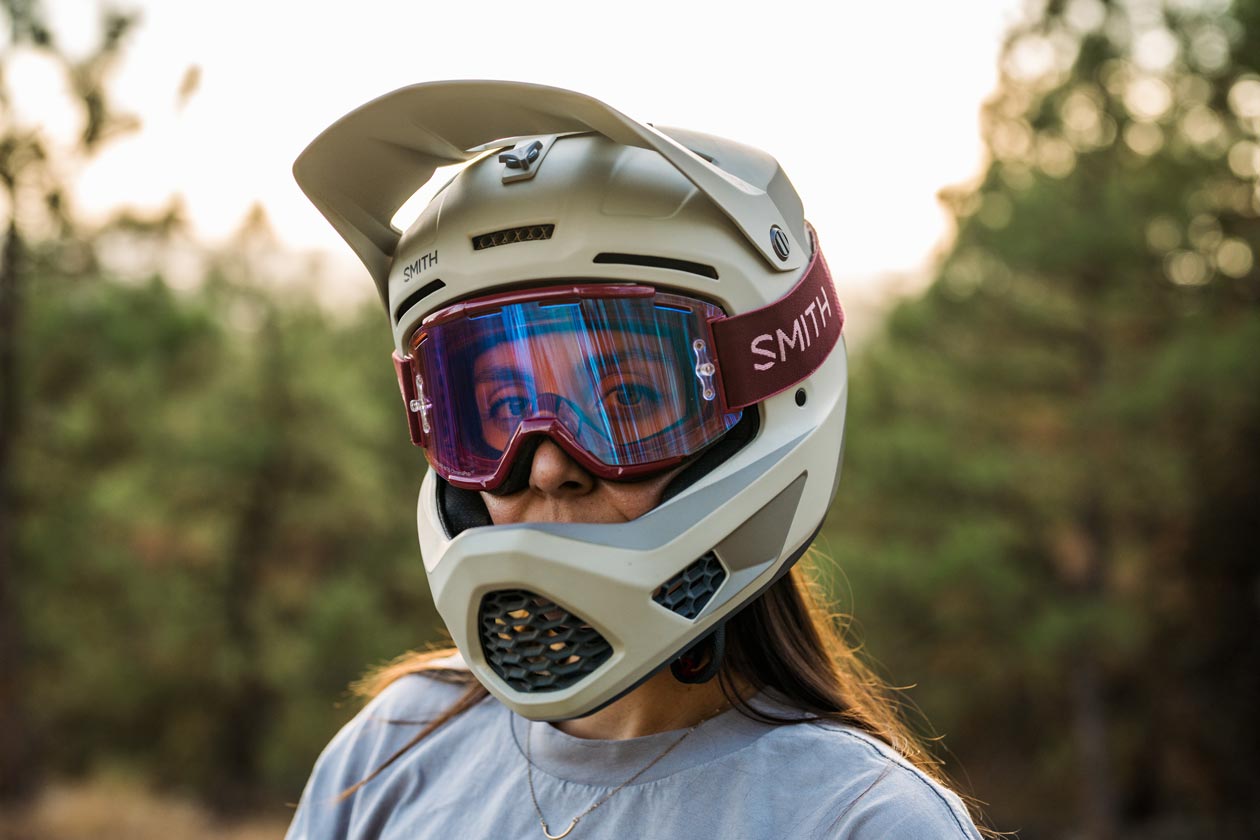
I did find that my usual size small in all Smith helmets, be it trail or enduro mountain bike helmets or ski sport helmets, was not true for wearing the Hardline. My cheeks were squeezed harder than my grandmother greeting me on Christmas, even when using the smallest cheek inserts they provided. It wasn’t so bad that it didn’t truly fit, but it was uncomfortable sliding the helmet on/off, trying to talk, or taking a decent photo. I adjusted to the tightness while riding and never once caught myself thinking about it on the trail. I can’t say that the fix is to size up. I’d recommend that folks try to find an opportunity to try on the helmet if possible, because sizing up could result in the helmet not fitting with your head properly, even with thick cheek inserts.
The Mips® Liner System & Goggle Fit
Many people complain about how loud the Mips® liner system is, which is valid, but it has not been something I’ve registered, honestly. I have not had issues with the Hardline, either. I did find it slightly more difficult to hear while wearing the Hardline, since it provides a thicker buffer than the Mainline.
I typically wear Smith eyewear and both the Hardline and Mainline are designed to accommodate Smith’s goggles, obviously. So, my goggles fit snuggly with the helmet and I never experienced any issues with significant fogging. The AirEvac system on both helmets appears to work well for me.
Riding Wearing the Smith Hardline vs Mainline
The Mainline is lighter than the downhill-oriented Hardline, which was noticeable at the end of a long day. I don’t feel the weight impacts my riding nor does it discourage me from wearing either helmet. I personally find that the obscured vision of full-face helmets is what deters me from wearing them on every-day rides, like we all should honestly consider. In this case, though, there is no difference for me between the Hardline and Mainline. The weight difference between the carbon Hardline and standard composite Hardline was negligible to me and I don’t imagine a day where that impacts my riding, so the increased price just isn’t worth it to me to upgrade. I did experience significantly more airflow wearing the Mainline, which is a serious advantage when climbing. Many people end up foregoing wearing a helmet on climbs due to lack of airflow or because the helmet is uncomfortable, so if you’re one of those people, the Mainline is a great full-face option to encourage helmet use. Accidents happen, even while climbing.
What to Consider About the Smith Hardline
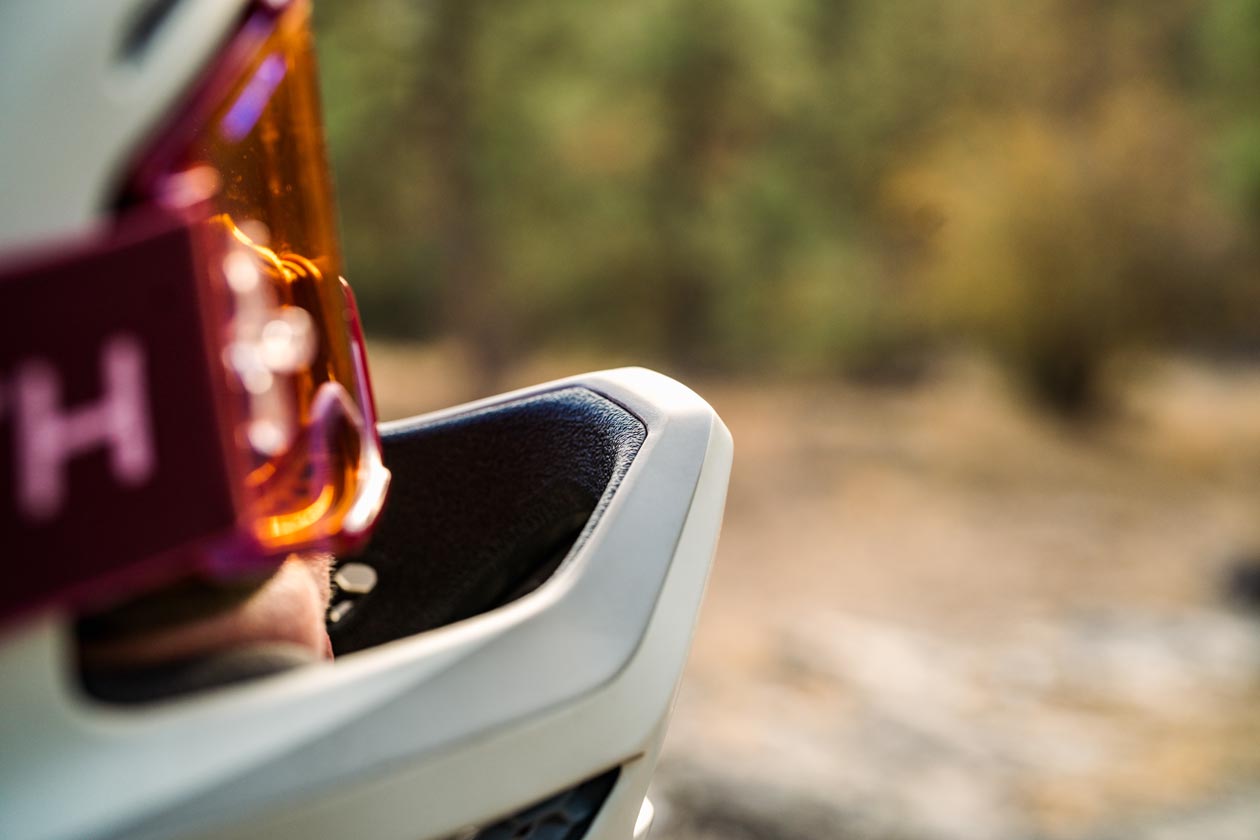
One of the biggest advantages of the Mainline over the Hardline for me was the opening on the chin bar to squirt some water from a bottle at the end of a lap. I usually ride with a hydration pack, which solves the problem for both helmets, but if I don’t, which is more likely to be at a bike park, the Hardline’s chin bar doesn’t have any openings. The helmet for me was also quite tight (which was great in that I couldn’t shift it around much, something that we don’t want in case of impact…), creating a difficult situation that resulted in me drinking less water on those days. Alternatively, the Hardline’s vented chin probably did cause me to eat less dirt and accumulate less mud on the face.
My biggest gripe – which extends beyond these two helmets – is focused at the Mips ® safety liner. No matter what I do or how I style my hair, it always pulls at my hair, removing plenty of strands each time I take off the helmet. It’s frustrating, and I wish we’d find a solution for that, as I know I’m not the only long-haired person to experience this. Luckily, one day I will be bald after using helmets for so long, so I will no longer have to complain. That being said, I was able to put my hair in a low ponytail or bun and have the helmet fit fine.
SMITH HARDLINE VS MAINLINE: WHAT TO CHOOSE
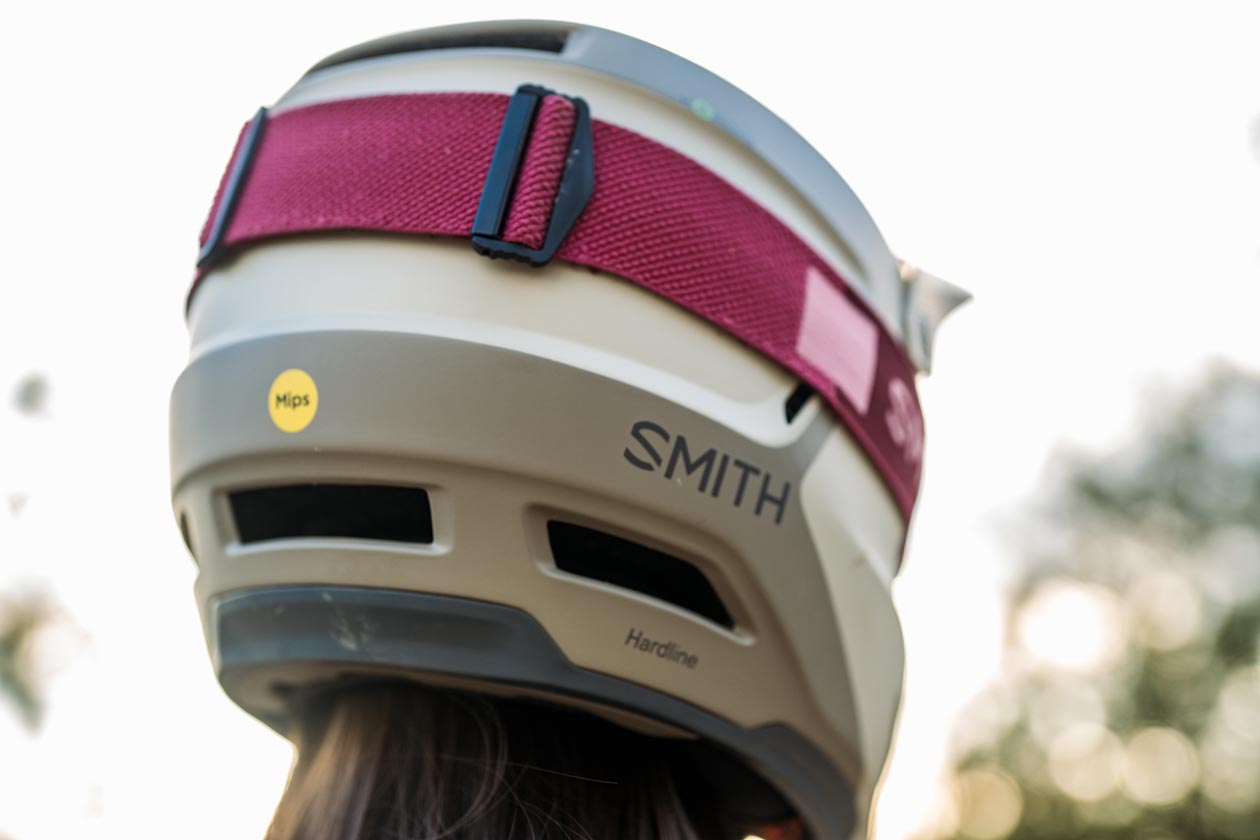
Given that I have these two helmets now, I will continue using them for their respective categories – the Mainline for enduro riding and the Hardline for downhill, bike park riding. Even with the disadvantages of lacking an opening on the chin bar for hydration and a tight squeeze due to inconsistent sizing, I’m still fairly happy with the Hardline for bike park days. If I have to pedal, I’ll be opting for the Mainline since it’s lighter, has more ventilation, and I can more easily access water. Depending on how you look at it, this could be great that they provided products that met the needs for their designated use-case without one overshadowing the other and making it useless, but it’s not necessarily a win for everyone, given that you’d have to buy two separate products to reap the advantages for both bike park and enduro riding. However, if you were to bend my arm and make me choose, I’d always recommend people take safety more seriously than anything else, leading me to say that if the Hardline fits your head, you don’t do huge climbing days, and you only have enough money for the one helmet, go with it.
The Wolf’s Last Word
Our review of the Smith Hardline found it right in line with the rest of its mountain bike helmets, providing comprehensive safety for your head. If you’re a fan of the brand, the Hardline is a solid full-face, downhill oriented helmet with sleek color options available. However, Smith’s first full-face helmet, the Mainline, is also an excellent option for people that need a slightly cheaper helmet with more ventilation. 
Price:
Mainline – $350 USD
Hardline – $450 USD
Carbon Hardline – $600 USD
Website: Smithoptics.com
SHARE THIS REVIEW

*FREE US SHIPPING*
for all orders over $69

*FREE 3-DAY SHIPPING*
On Orders Over $50

SUPPORT AND JOIN THE LOAM WOLF PACK
Did you find this review helpful? Would you like the chance to review (and keep) products? Are you interested in saving big bucks by getting exclusive Members Only discounts from industry brands all while helping support a small, rider-owned media crew? We have big plans for our members beyond big discounts and product giveaways! To learn more and help support small, independent media, visit our Member’s Page.