

WE DIG
WE DON’T
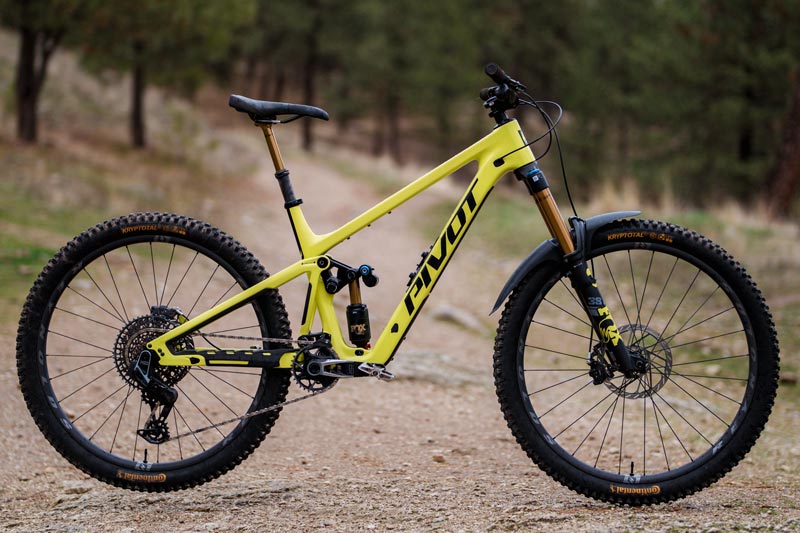
ABOUT THE PIVOT FIREBIRD GEN 5
The Firebird lineage goes back to 2009, when the original launched with a hydroformed 6000‑series aluminum frame, 26” wheels, 71.5º seat tube angle, and a wild floating front derailleur mount. 2013, 2019, and then 2021 saw generation two, three and four come through, with huge leaps in progression between models.
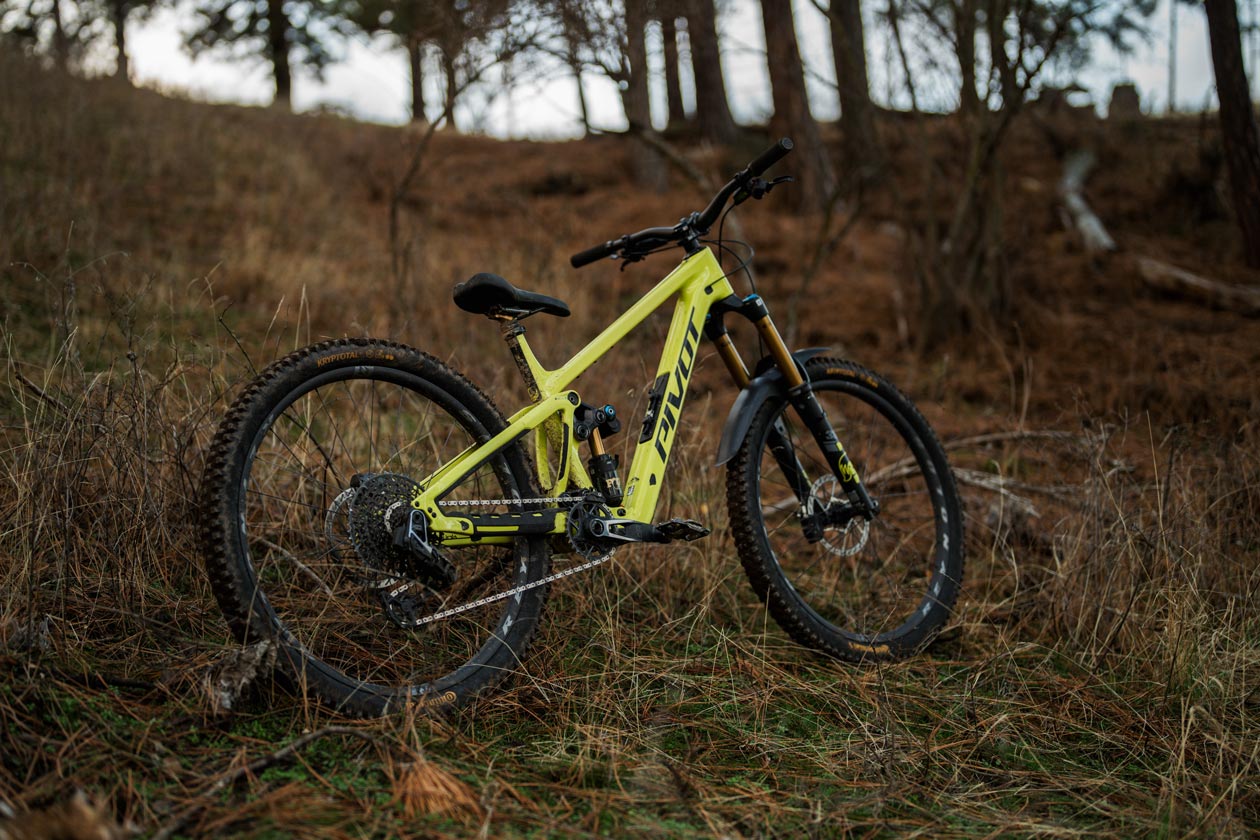
This new gen‑5 Firebird doesn’t look radically different from gen-4 at first glance, but it quietly adopted meaningful updates to geometry, adjustability, suspension tune, and on‑trail capability to broaden its appeal. It’s a bike that both Drew and I kept reaching for in nearly every scenario, and one that we thoroughly enjoy riding.
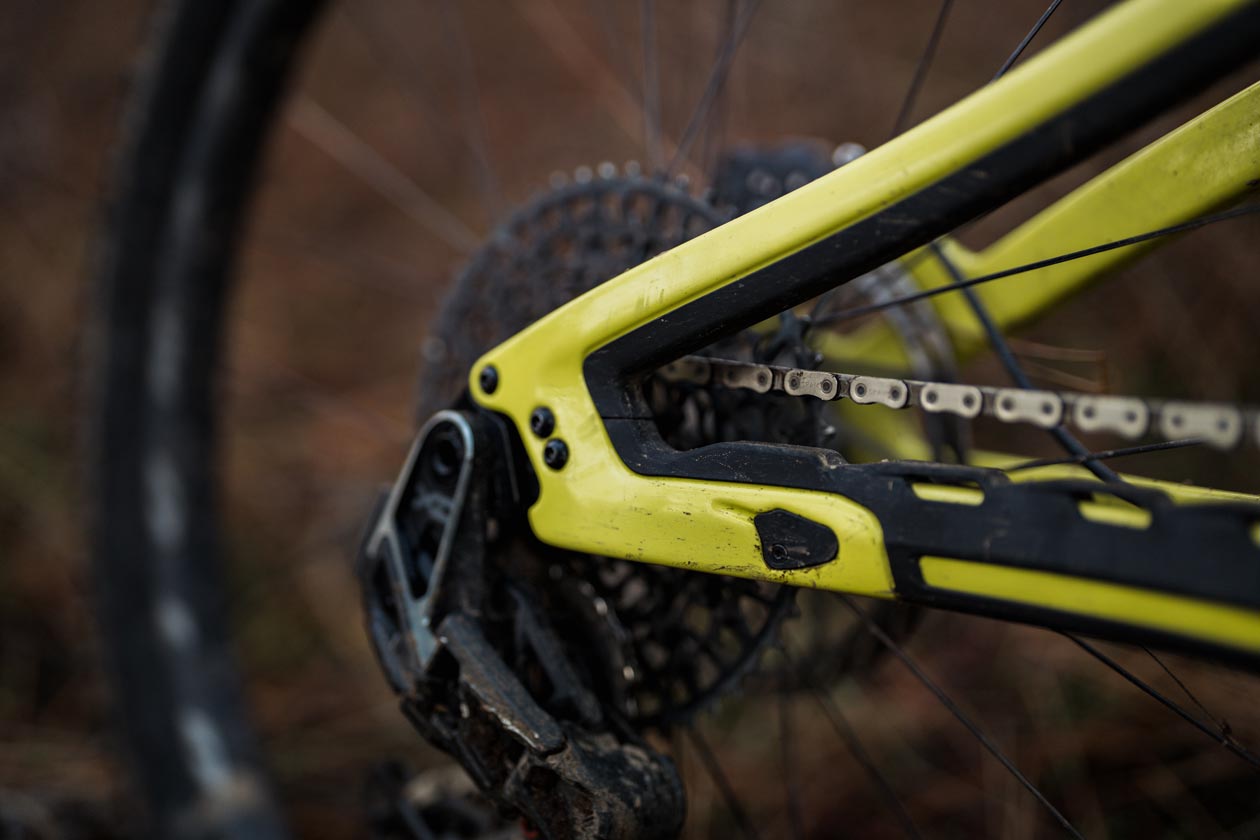
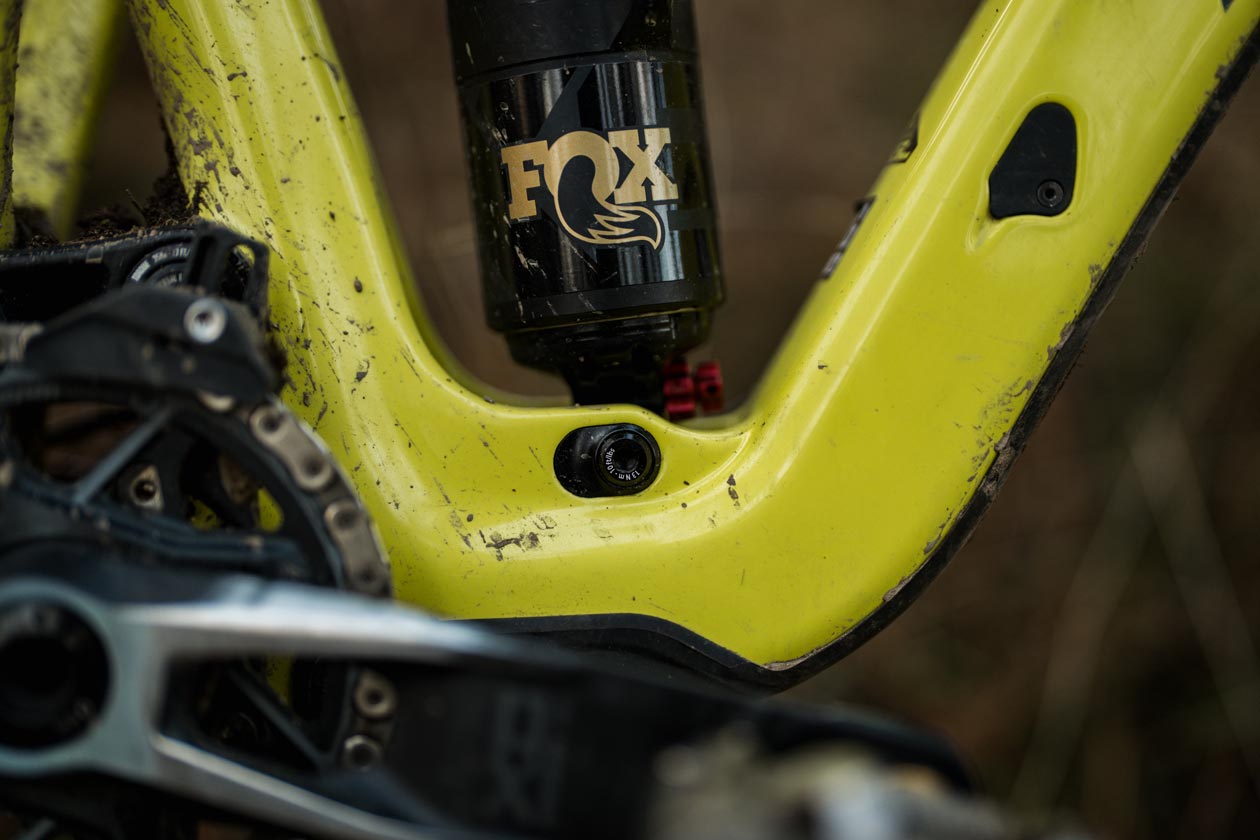
FRAME & FEATURES | The latest Pivot Firebird continues with the Hollow Core carbon fiber construction, yielding a light chassis for the category and contributing to a complete weight of 32.3 lb for a size medium XT build. Our size large Pro XO test bike came in at 35.25 lb without pedals, but with a Mudhugger. Pivot tunes stiffness per frame size via individual front triangles, then pairs them with a one‑piece rear triangle. The front‑triangle layout manages size‑specific rear centers instead of changing the rear triangle, making for easier spares availability.
The frame now incorporates in‑frame storage, complete with frame bags for tools. This helped keep weight off our backs, and made bigger days feel that bit more manageable. Injection‑molded rubber is placed throughout the frame, helping to protect against rock strikes and reduce noise from chain slap, with coverage extended even along the upper inside of the rear triangle. Cable routing stayed quiet and rattle‑free over a season’s worth of abuse, and hardware remained tight after an estimated 75,000 feet or more of descending.
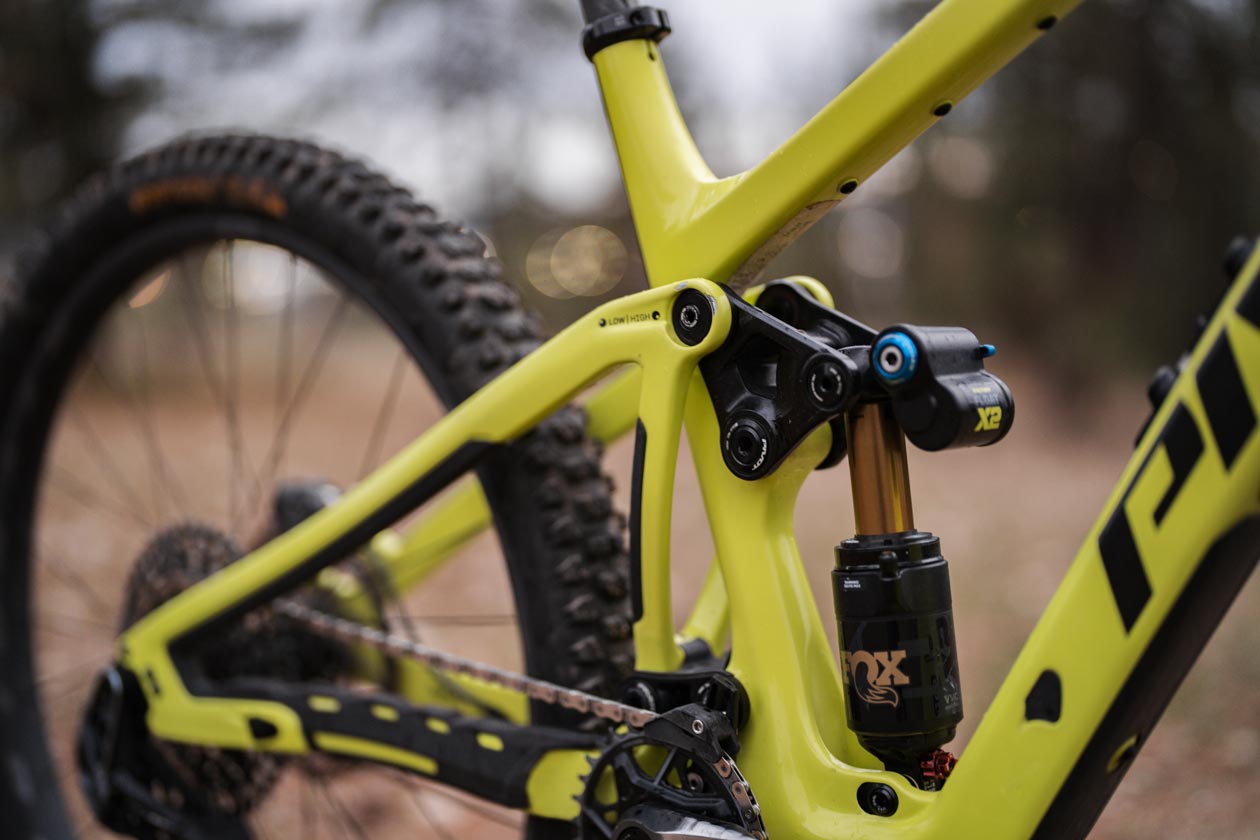
SUSPENSION | The Pivot Firebird delivers 165mm of travel via Pivot’s DW‑link suspension, designed to work equally well with both coil and air shocks. A progression adjustment at the lower shock mount lets riders choose between 26.9% and 31.8% progression settings.
Our test bike ran a Fox Float X2 shock with a new Pivot‑specific tune that impressed both Drew and me across a huge range of conditions. Drew, who spent time with Alex from Fox (who helped develop the tune with Pivot), noted that from Finale Ligure to his home trails and everything in between, he rarely needed more than one or two clicks of adjustment from his baseline settings. He consistently found a wide window of “happy” settings across pressures and compression adjustments, which contributed to the bike’s neutral, composed feel.
Overall, the suspension character landed in a sweet spot between support and compliance: confident and comfortable hammering through rough, chunky terrain, yet still lively and playful when popping off features or linking flowy sections.
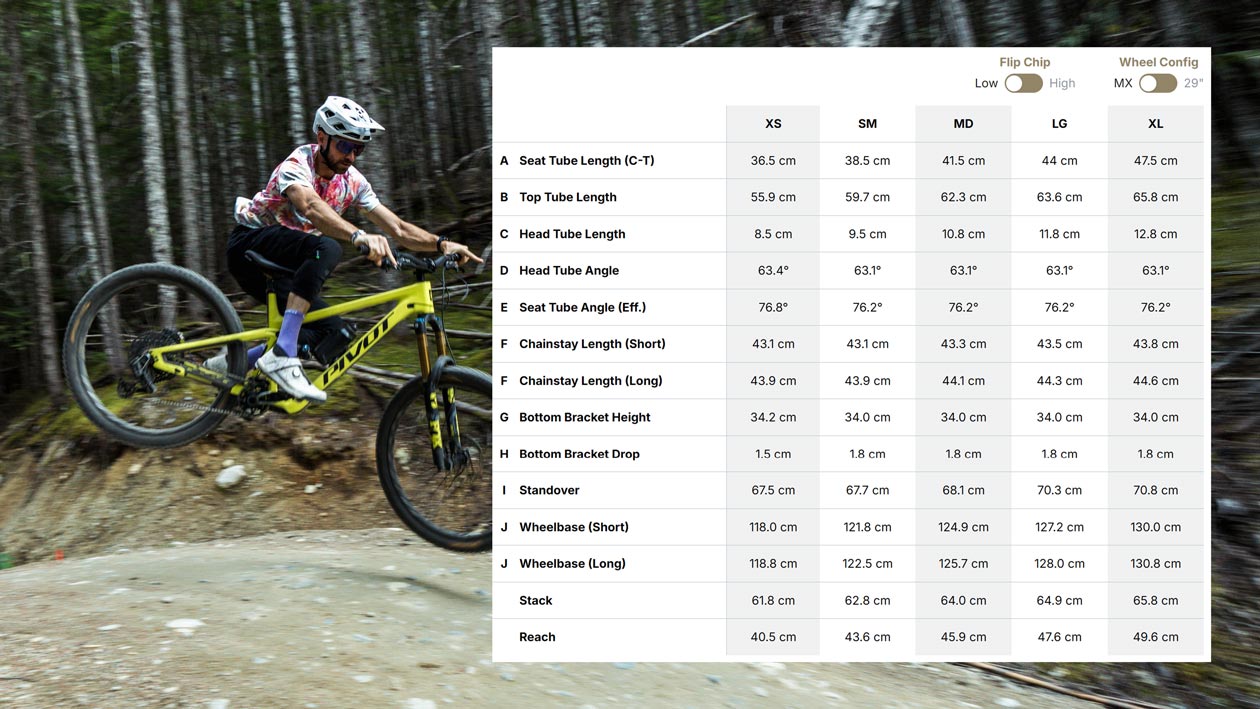
GEOMETRY | On our size large Pivot Firebird in the low setting, where it spent the majority of testing. The Firebird posts a 485mm reach, 443mm chainstays in the long dropout position, a 642mm stack, a 64º head tube angle, and a 77º effective seat tube angle. Pivot offers size‑specific rear center lengths, growing 2-3mm between larger sizes to improve weight distribution.
The Pivot Firebird gives three key geometry adjustments. Their “Swinger” dropout offers an 8mm chainstay length adjustment, moving from 434mm in short to 442mm in long. Pivot advises adding a 3 chain links when switching to the longer setting for optimal shifting performance.
The high/low flip chip at the upper link allows further fine‑tuning of bottom bracket height and Headtube angle, and is also used to compensate for an MX wheel setup. This lowers the BB by 5mm and slackens the headtube angle by .4º. Finally, there is the ZS56 upper and lower headset cups. This oversized bearing allows for the use of either an angle set or reach-adjust headset.
Both Drew and I experimented extensively and ultimately landed on slightly different preferred setups. I preferred “long, low and progressive” with the bike in the low setting, while Drew ran “long, high and linear” to obtain more pedal clearance on chunky tech climbs.
BUILD SPEC | North American riders can choose from 14 complete builds plus a frame‑only option, with pricing starting at $6,899 and topping out at $15,099 for the highest‑spec model. Sizes range from small through extra‑large in both 29 and mixed‑wheel configurations, with the extra‑small offered only as a mullet. For riders wanting to tweak front‑end fit and handling further, the Firebird is also compatible with angle or reach‑adjust headsets, using ZS56 upper and lower cups.
Our Pro X0 Eagle Transmission test bike sat in the middle of Pivot’s build range, with Fox Factory‑level suspension, just without extras like Live Valve or a Fox Podium. Component changes during the test period were minimal. We kept the stock bars, grips, and tires, only swapping the saddle due to personal preference. With that said, Pivot’s own saddle is genuinely quite good.

THE DIRT
CLIMBING | Throughout this Pivot Firebird review, the bike consistently impressed us on the climbs. For a 165mm travel enduro bike, the Pivot Firebird climbs very well, delivering the predictable DW‑link efficiency that we expect from Pivot. We really have no complaints when it comes to getting the ‘Bird up the hill. Drew found the Low position to cause pedal strikes on chunky, technical climbs, but I typically avoid the gnarly climbs he likes. This highlights the benefit of the frame’s adjustability, with the high position keeping Drew happier.
The steeper seat tube angle represents a big step forward from earlier generations of Pivot mountain bikes, and addresses my criticisms as a long‑legged rider about older Pivots’ slacker seat angles. On extended climbs, the position felt suitably upright and comfortable, so plenty of big days were had without lower back pain.
Traction on steep, loose climbs is a strong suit for the Firebird. The combination of the DW‑Link’s kinematics and the longer chainstay keeps the rear wheel driving into the ground rather than skittering across it, especially when up and out of the saddle. Grip was aided by the Continental Kryptotals tire spec, which is my favorite tire on the market currently.
Add in the solid stock tune on the Fox Float X2 rear shock, and the Firebird feels more like a big‑travel trail bike on the way up, rather than a mini‑DH rig. It’s not the bike for chasing KOMs on your XC loop, but if your idea of an enduro bike includes getting to the top under your own power without hating the process, the Pivot Firebird clears that bar with room to spare.
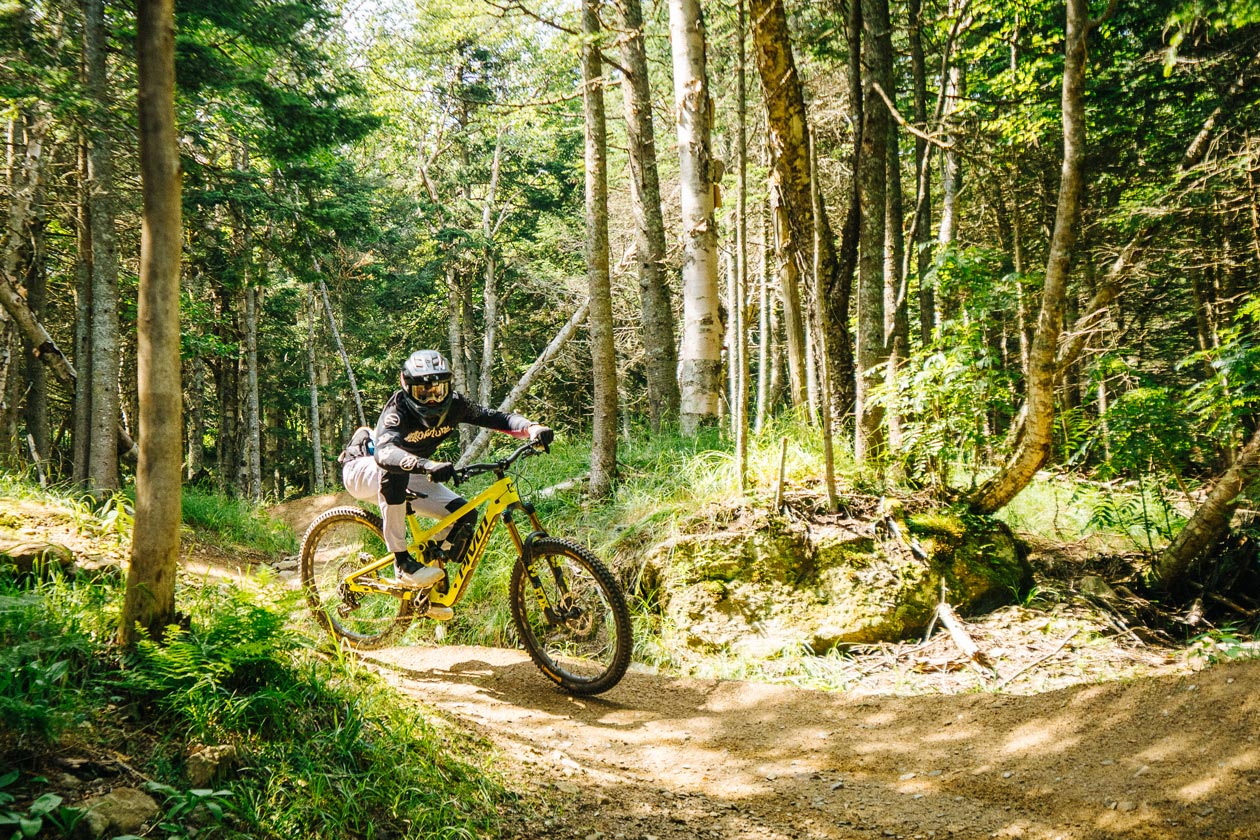
DESCENDING | Descending is where the Pivot Firebird truly shines in our review, and both Drew and I repeatedly came back to this bike for everything from home trails to full‑gas bike‑park laps. Pivot was a sponsor of our Bike Park Tour last year, and I opted to take the Firebird for the trip to Killington and Thunder Mountain. I had the opportunity to switch to a Phoenix, but chose to stay on the Firebird because I felt “at home” and was genuinely having the best time on it.
Compared with many long-travel enduro bikes, the Pivot Firebird manages an impressive blend of confidence and playfulness. It stays calm and composed, blasting through rough lines, yet remains lively and fun on mellower, blue‑rated (and even green) trails. The shorter chainstay position boosted playfulness and made it easier to maneuver the bike, popping up and over logs, gaps, and flicking it around. This came with a downside in high‑speed cornering, where I found that I was less connected to the front wheel. This occasionally resulted in the front end pushing, and some confidence being lost. Switching to the long chainstay position lengthened the wheelbase and immediately gave me the cornering feel I was after, especially at speed. The long chainstay setting delivered a more settled, precise connection to the front wheel.
On steep, off‑camber, rooty trails with thin catch‑ruts, the Firebird let me stand tall, wait until the last second, and then push into the bike, trusting it to rail the corner. That sensation of feeling centered and low in the bike gave me newfound confidence to take higher, more exposed off‑camber lines without constantly losing the front and dropping into safer low lines, something I previously struggled with. Both Drew and I think the Firebird is one of our favorite “do‑it‑all” bikes, surprising given its 165/170 mm travel figure. We had a hard time thinking of a bike we’d rather ride in most real‑world scenarios.

FINISH & VALUE | The Firebird’s finish isn’t flawless. After what I consider a full season’s worth of riding, heel‑rub areas showed paint wear, there were light scratches, and a noticeable chip from a rock strike on one side. The paint’s clear coat is a bit “light,” with some visible hazing, which may be amplified by the lighter, brighter frame color tested. If it were my bike, I would invest in a RideWrap or similar frame protection, which should solve most of these cosmetic concerns.
Is the Pivot Firebird worth it? Value depends heavily on what you prioritize. If you define value as the highest spec parts for the least money, the Firebird is not the obvious bargain. It’s an expensive bike; however, if your definition includes a robust dealer network, high construction quality, and tight tolerances, the Firebird represents strong value in terms of long‑term ownership. There are few brands putting together quality and strength-to-weight that rivals what Pivot is able to deliver.
The test build is the spec I would personally choose if buying. It does not use Fox’s Live Valve suspension or the ultimate level SRAM brakes with an XX Transmission, but performance was more than adequate. Pivot’s reputation for well‑built, reliable, problem‑free bikes, backed by a strong dealer network, makes the Firebird a solid, if pricey, investment.
COMPONENT REPORT OF THE PIVOT FIREBIRD
Over the course of testing, the Firebird’s components mostly behaved themselves, with very few issues beyond normal wear and tear. The SRAM Maven brakes needed the classic piston massaging at the beginning of testing, but after this, they did not need to be touched again.
A bent derailleur cage was the only notable failure during a roughly ten‑day bike‑park stint. I feel this is considered acceptable collateral damage, given my poor line choices and sheer amount of riding we did. The wheels stayed tight and true despite significant abuse, and the frame hardware remained secure with no loosening over time.
The Fox Float X2 shock tune was a standout positive, offering a broad usable range of pressures and compression settings where the bike felt composed and supportive. Pivot’s latest carbon fiber handlebar was another highlight, lining up with my favorites from RaceFace and OneUp when it comes to comfort and feel. The Continental Kryptotal enduro‑casing tires did not let us down: they saw everything from heli drops in Whistler’s backcountry to gnarly East Coast terrain without a single flat, and after a ton of miles, they still look barely broken in.
The Wolf’s Last Word
After a full season of testing for this Pivot Firebird review, the latest Pivot Firebird had a high bar to clear, but it managed to jump high enough. While it may not be objectively “the best” in every single category, it gets very close in many, and more importantly, it avoids any glaring weaknesses. I can’t really think of another bike I’d rather ride in most scenarios, and in this travel class, there was no bike in the test fleet I wanted to grab more this past year.
With countless miles, massive vert, and a wide variety of terrain behind it, the Pivot Firebird left us very stoked and genuinely sad to see it go. 
Price: $9,499
Weight: 32.25 lbs
Website: Pivotcycles.com
SHARE THIS REVIEW

*FREE US SHIPPING*
for all orders over $69
ABOUT THE WOLF

Cole’s den is in Spokane WA, where he relocated a few years back. Growing up in the lush, loamy playgrounds of the PNW, his soul is forever tied to steep, rooty descents and that unmistakable squish of perfect dirt. After 19 years of shredding, Cole’s been on every kind of rig out there. Once a die-hard fan of big travel bikes, he’s now on a quest for the mythical short-travel do-it-all machine. And yes, skids may be for kids, but this middle-aged manchild is here to prove they’re also for anyone who loves having a damn good time.
Rank: Professional Amateur
Size: 6’1” / 185cm | 170lbs / 77kg
Social: @adventuresbycole
SUPPORT AND JOIN THE LOAM WOLF PACK
Did you find this review helpful? Would you like the chance to review (and keep) products? Are you interested in saving big bucks by getting exclusive Members Only discounts from industry brands all while helping support a small, rider-owned media crew? We have big plans for our members beyond big discounts and product giveaways! To learn more and help support small, independent media, visit our Member’s Page.