

LEATT REAFLEX CHEST PROTECTOR
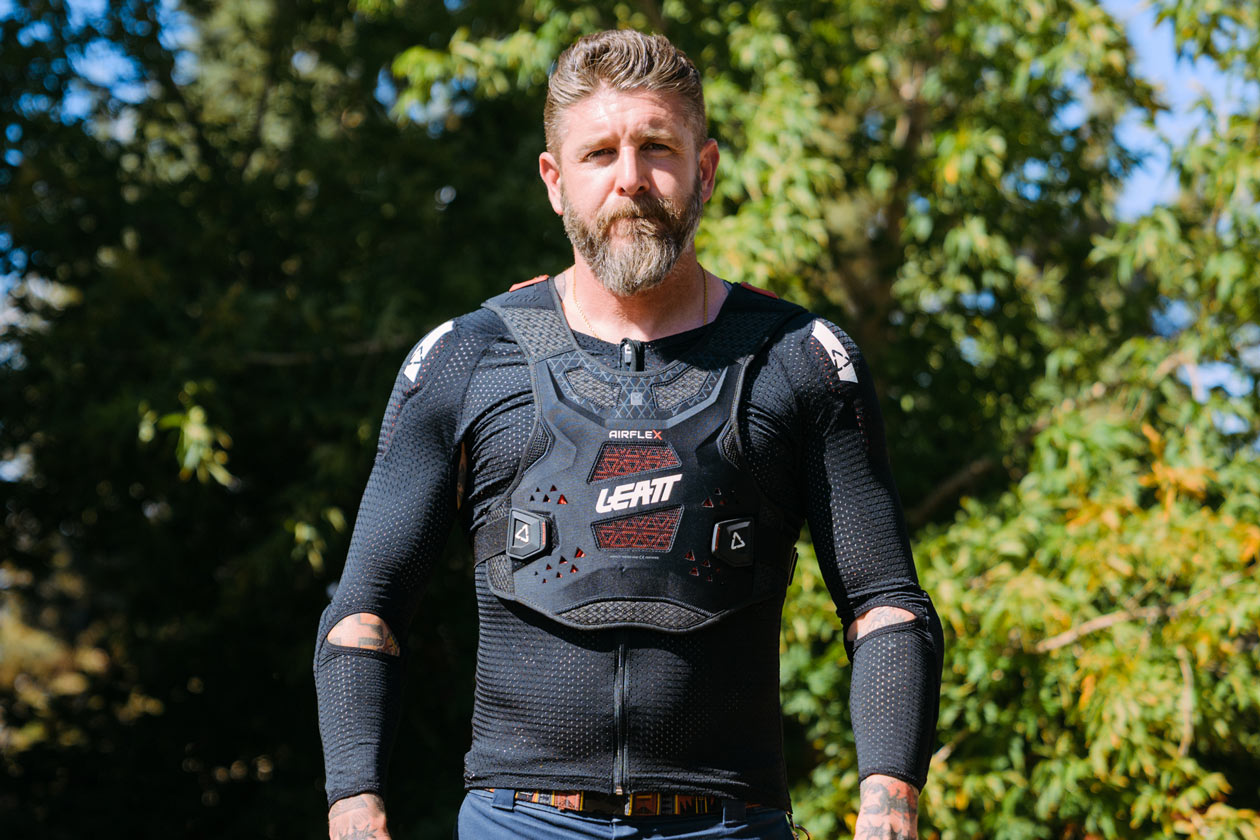
Note: The “AirFlex” Body Protector shown has been renamed to “ReaFlex”
Price: $219
Tested size: L/XL
Measured weight: 762g
Back Panel Length: 49cm
Protection: CE Level & Panels: Level 1 front and back
Best suited for: Slim, minimalist DH/Park rider or a more safety-minded eMTB/Enduro rider.
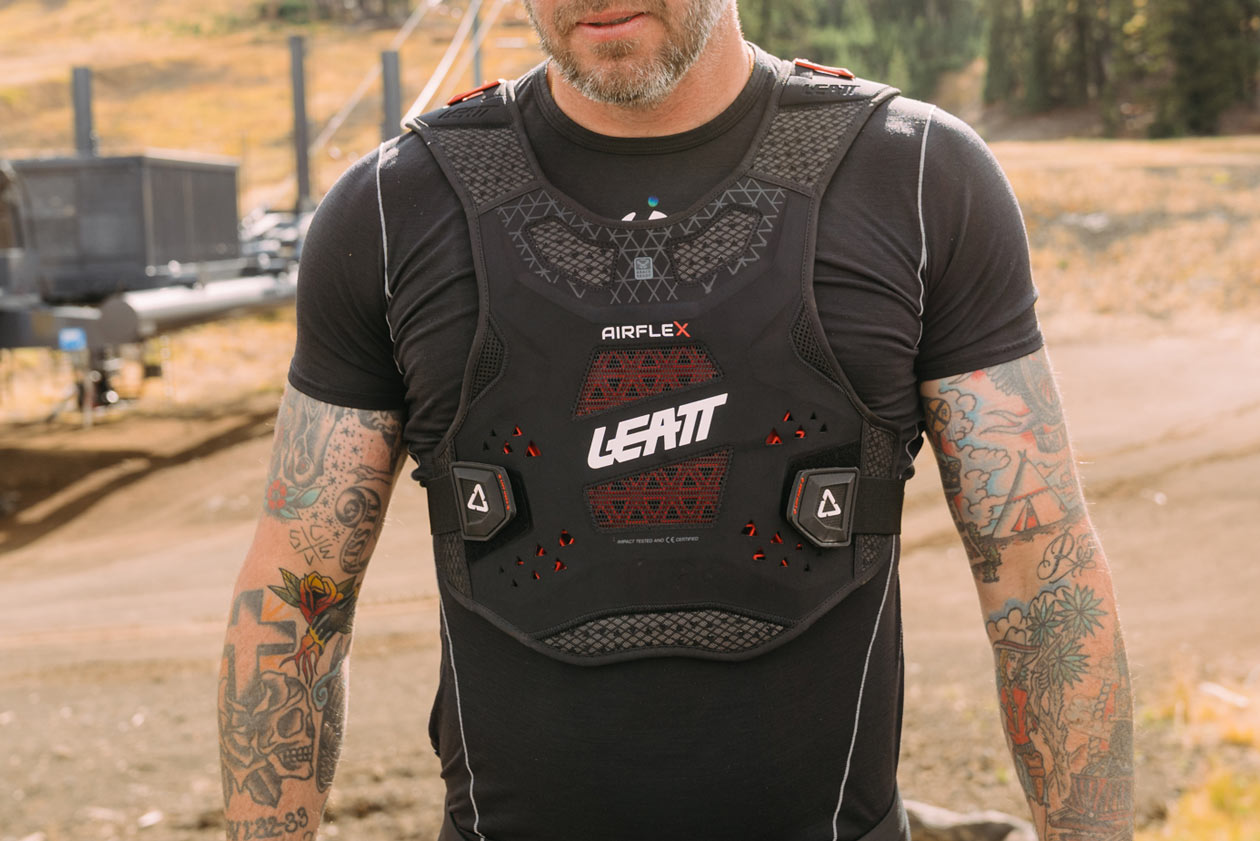
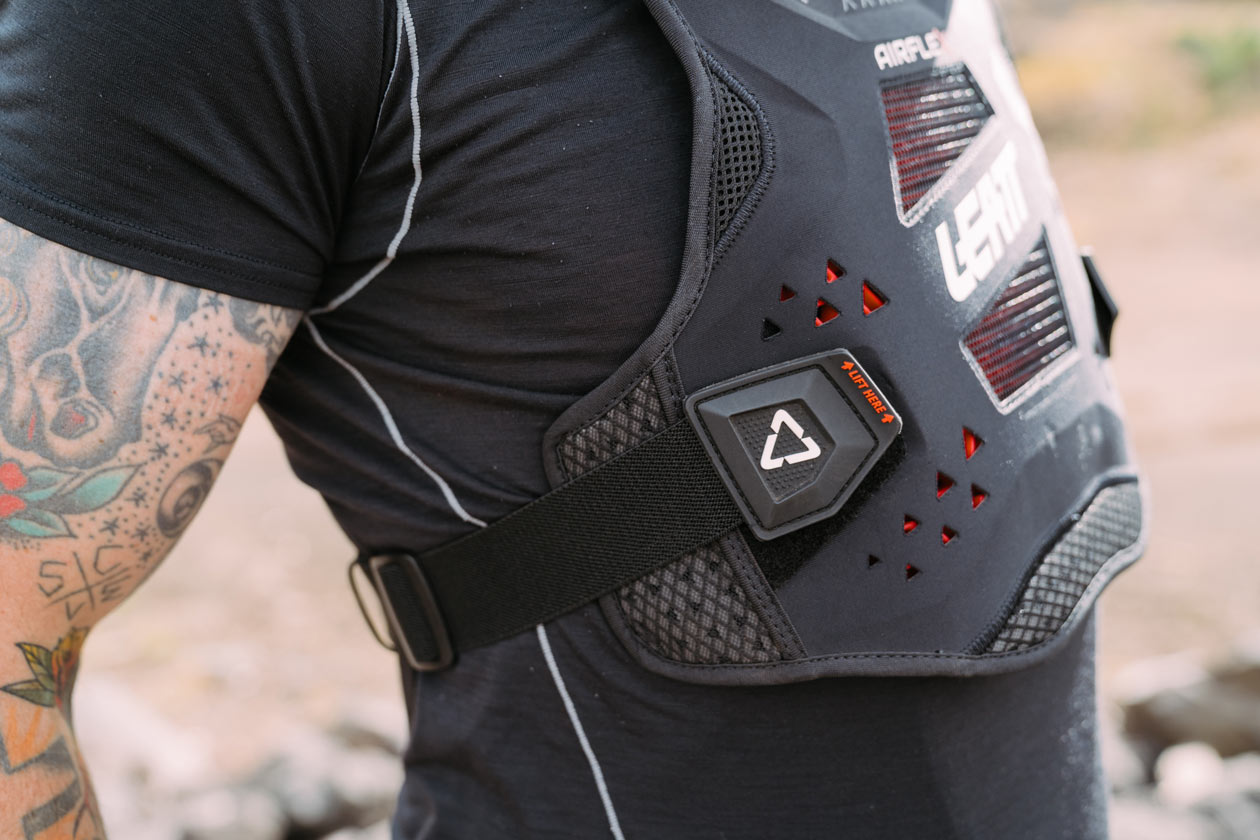
The Leatt ReaFlex Chest Protector is the more streamlined of the two Leatt systems in this test. It combines flexible ReaFlex impact material on the front and rear with some light padding around the outer edges of the spine protector and a relatively slim chassis. ReaFlex (previously called AirFlex) is an impact-absorbing gel that is flexible until it hardens on impact.
Leatt lists the front protector as certified to EN 1621-3 Level 1 and the back protector to EN 1621-2 Level 1. The design also features substantial ventilation openings, adjustable side straps, and a longer rear section intended to extend coverage farther down the back. Leatt’s BraceOn system is included for compatibility with the brand’s neck braces.
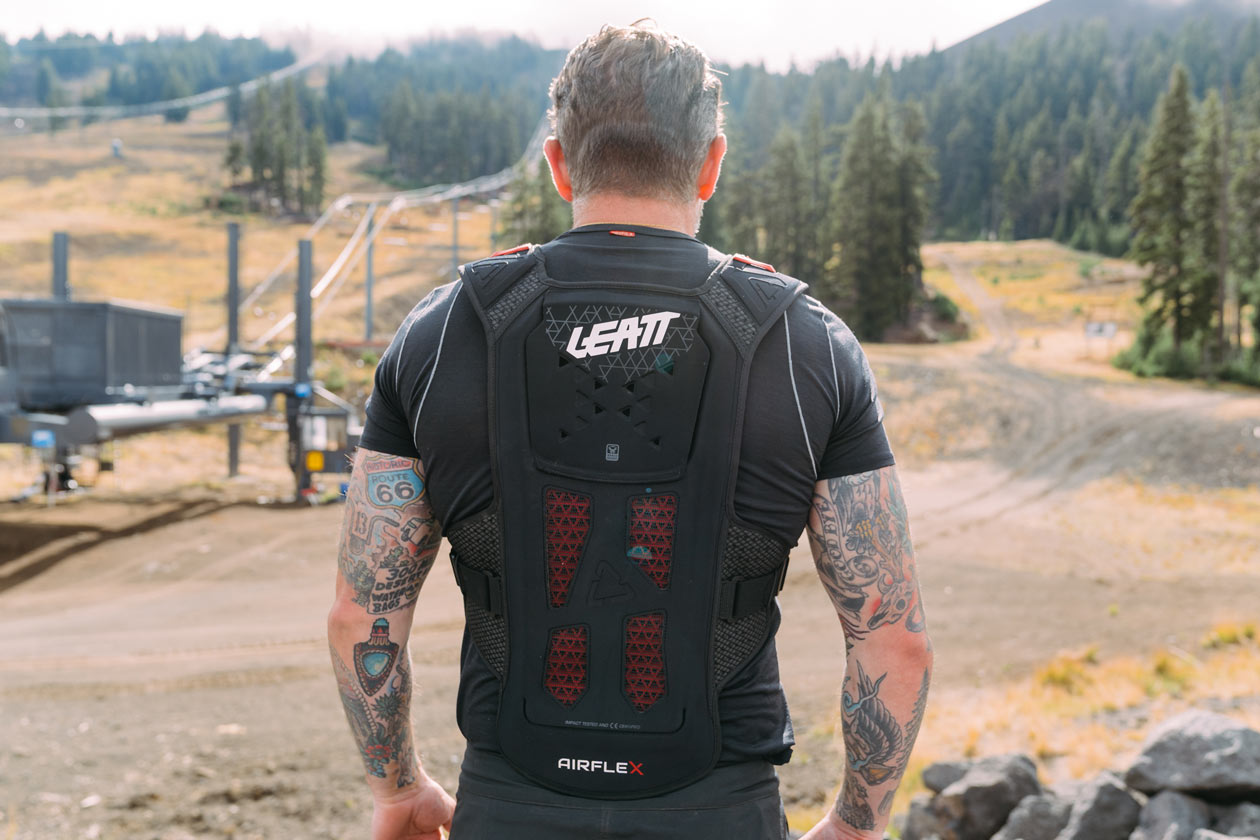
Unlike a compression-style body suit, the Chest Protector ReaFlex can be removed quickly and worn either above or below a jersey depending on rider preference, sizing, and intended use. One of my favorite things about this unit is the length of the spine protector, and that I can use it with or without the upper body shirt, shown below.
CONSTRUCTION AND FEATURES
- Flexible ReaFlex impact material
- CE Level 1 chest protection
- CE Level 1 back protection
- Ventilated front and rear panels
- Adjustable side straps
- Leatt neck-brace compatibility
- Extended back coverage
- Three primary adult size ranges
RIDE IMPRESSIONS
Fit | I like the fit of Leatt ReaFlex Chest Protector most of all. I like the length of the spine protector, and while some riders may want a Level 2 certification, I find this to unit to be a comfortable, easy on and off solution for a more minimal mindset.
Comfort and mobility | Very good. I like the way it sits against the body and doesn’t impede movement. Some shorter riders may not love the longer spine plate, but at 5’11, I like it.
Ventilation | Primarily worn under a jersey, I think it breathes as well as you could hope a chest protector like this would. It’s light and airy enough that even when you do sweat, it remains comfortable.
Coverage and stability | Two thumbs up. It stayed in place well, with no need to adjust mid-ride.
Under or over the jersey | I prefer this under, but have worn it over; I just don’t think it looks that cool.
THE WOLF’S LAST WORD
This is my favorite individual chest protector, but I most often wear it in conjunction with the Body Protector Shirt, shown below. It’s slim enough that I can wear it daily, but it still gives me peace of mind for charging hard. Leatt also offers a Level 2 vest that I wear on my moto or when it’s a particularly gnarly day, or during cooler Fall temps at the bike park.
Pros
- Slim fit
- Easy on/off
- Feel safe in it
- Comfortable
- Length of spine protection
Cons
- Velcro attachment lacks a ton of adjustability for snugging it up.
LEATT REAFLEX BODY PROTECTOR
Note: The “AirFlex” Body Protector shown has been renamed to “ReaFlex”
Price: $399
Tested size: L/XL
Measured weight: 1310g
Back Panel Length: 49cm
Protection: CE Level 1 chest, back, shoulders and elbows
Best suited for: DH, Bike Park riders who want low-profile, full coverage without limiting mobility
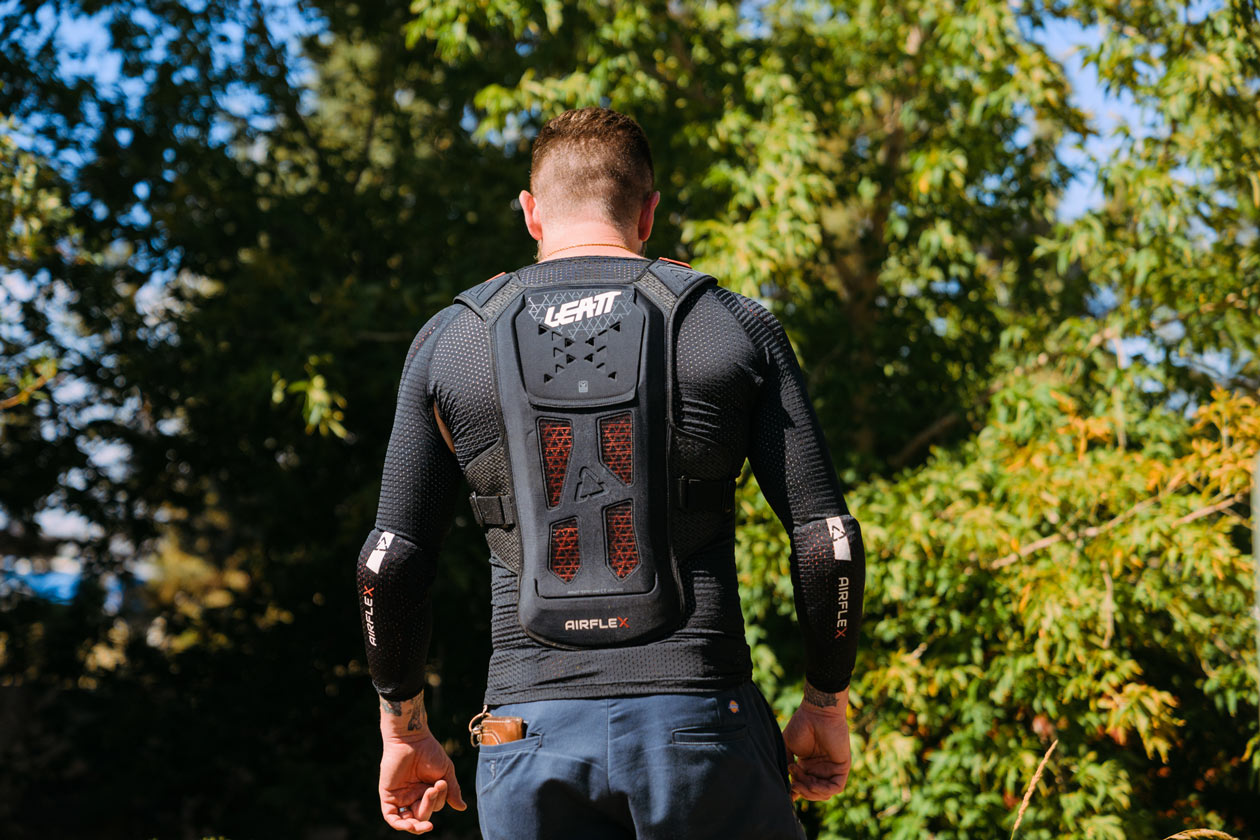
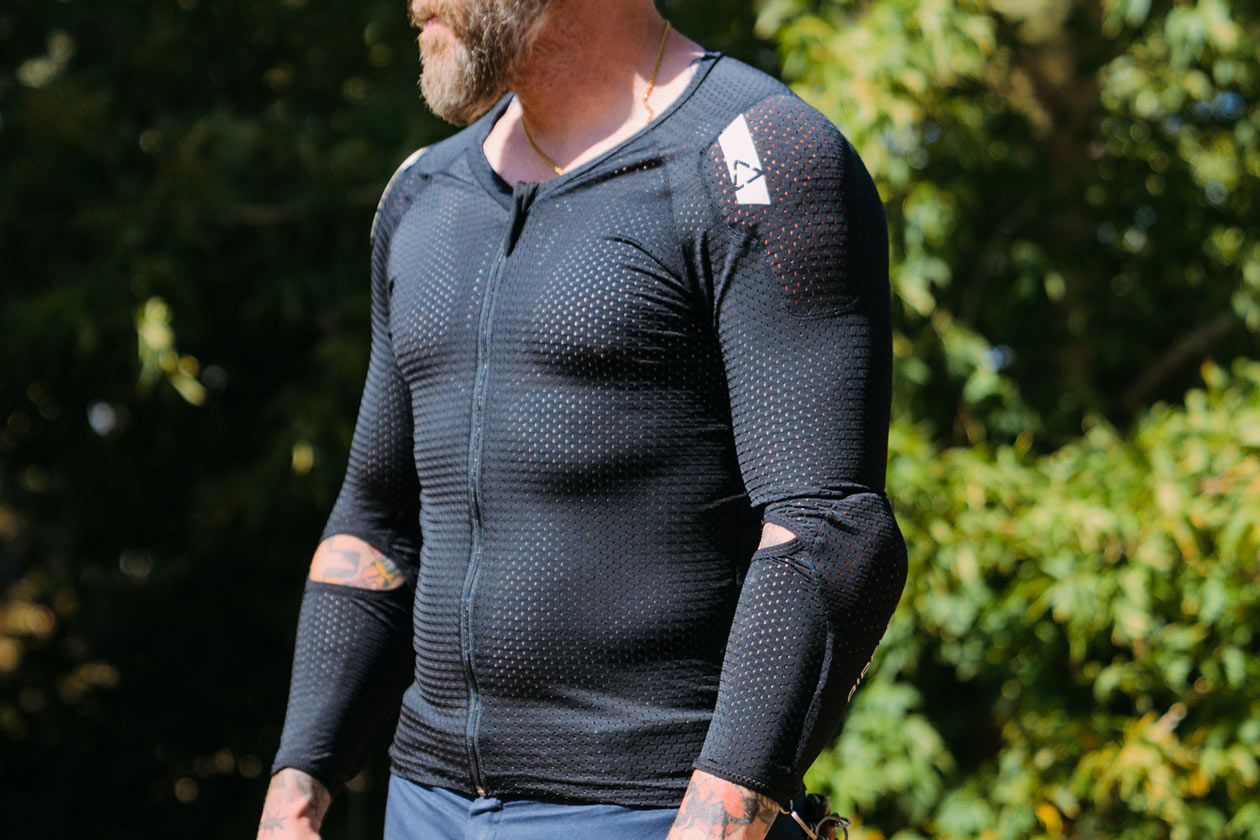
The Leatt ReaFlex Body Protector expands on the chest and back-protector platform by adding a separate zipped compression layer with integrated shoulder and elbow protection. This base layer is then topped with the ReaFlex Chest Protector to provide a modular protective system.
The outer portion provides flexible ReaFlex chest and back panels, while the inner garment adds certified protection to the shoulders and elbows. Leatt lists the chest, back, shoulder and elbow protectors as CE Level 1 certified. The company also uses moisture-wicking mesh fabrics, adjustable straps, padded flanks and floating chest and back panels designed to improve mobility.
The modular two-piece construction is noteworthy. Riders can separate the primary chest-and-back protector from the sleeved underlayer, potentially making the system more adaptable than a permanently integrated suit.
It is also the most comprehensive Leatt option in this test and one of the most coverage-oriented products in the group. It’s also one of my favorites.
CONSTRUCTION AND FEATURES
- Two-piece modular construction
- Flexible ReaFlex impact material
- CE Level 1 chest protection
- CE Level 1 back protection
- CE Level 1 shoulder protection
- CE Level 1 elbow protection
- Zippered compression underlayer
- Moisture-wicking mesh fabrics
- Padded flanks
- Adjustable chest and back positioning
- Leatt neck-brace compatibility
RIDE IMPRESSIONS
Fit | At 5’11 I’ve worn this size L/XL unit more than any others on test. I’ve worn this kit when I weighed 170lbs and I’m still wearing it now at just over 190lbs without any issues. I love that it has a longer spine protector than many of the other protectors on test, which is another reason it’s one of my go-to MTB torso protection units.
Comfort and mobility | Compared to just using the vest alone, the Leatt Body Protector is a bit warmer as it covers a lot more of my body and adds a layer. The upside is I feel much safer, more protected, and still have a great range of mobility in this suit. The padding on the elbows and shoulders is slim enough to be relatively stealthy under my jersey, but thick enough that it can take a hit. Whether it’s glancing a tree when I’m off line, or landing after an unforeseen ejection, I’ve tested this unit and its thicker sibling on my Husqvarna FE 350 more than a few times.
Ventilation and moisture management | For a full torso protector, I think the heat management, ventilation and moisture management control are very competitive. It’s not overly slimy or wet-feeling like some kits can be, and removing it in the parking lot after a day of sweaty laps isn’t a shoulder-dislocating nightmare! Thumbs up in this department too.
Modular versatility | One of my favorite aspects of this kit is how versatile it is
THE WOLF’S LAST WORD
I love being able to choose between using the complete suit, just the chest protector, and in many instances, just using the shoulder/elbow protection shirt and then putting a bulkier chest protector over the jersey on for real gnarly days.
This is a kit I’ve had for at least 2 years and I plan on keeping it in my regular rotation.
Pros
- Versatility of coverage
- Comfortable & protective
- Slim, low profile
- Long spine protector
- Easy to don and doff
Cons
- Would always love a lower price, but it’s worth it.
FOX AIRFRAME CHEST GUARD
Price: $ 194.95
Tested size: L
Measured weight: 1043g
Back Panel Length: 45cm
Protection: Level 1
Best suited for: DH, Enduro, Bike Park and eMTB riders looking for a breathable, over or under jersey option that’s easy to take on and off.
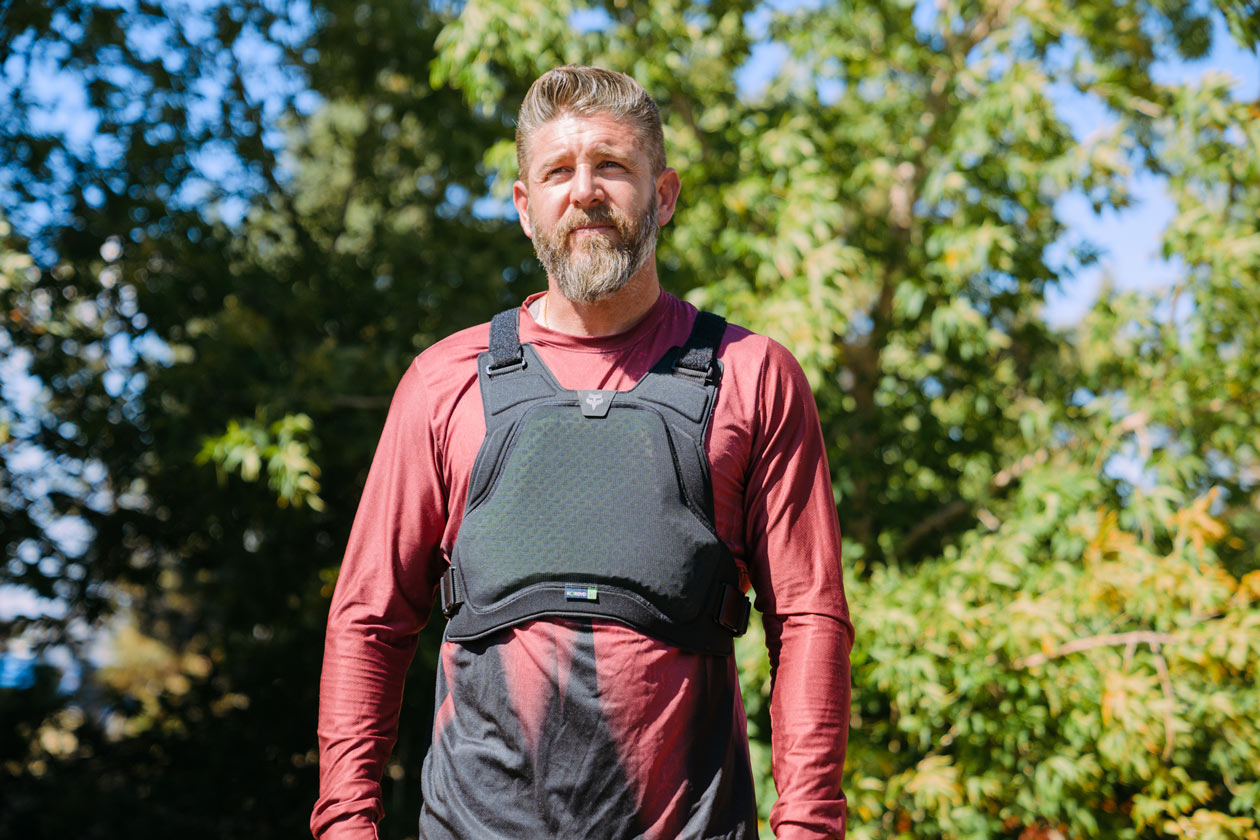
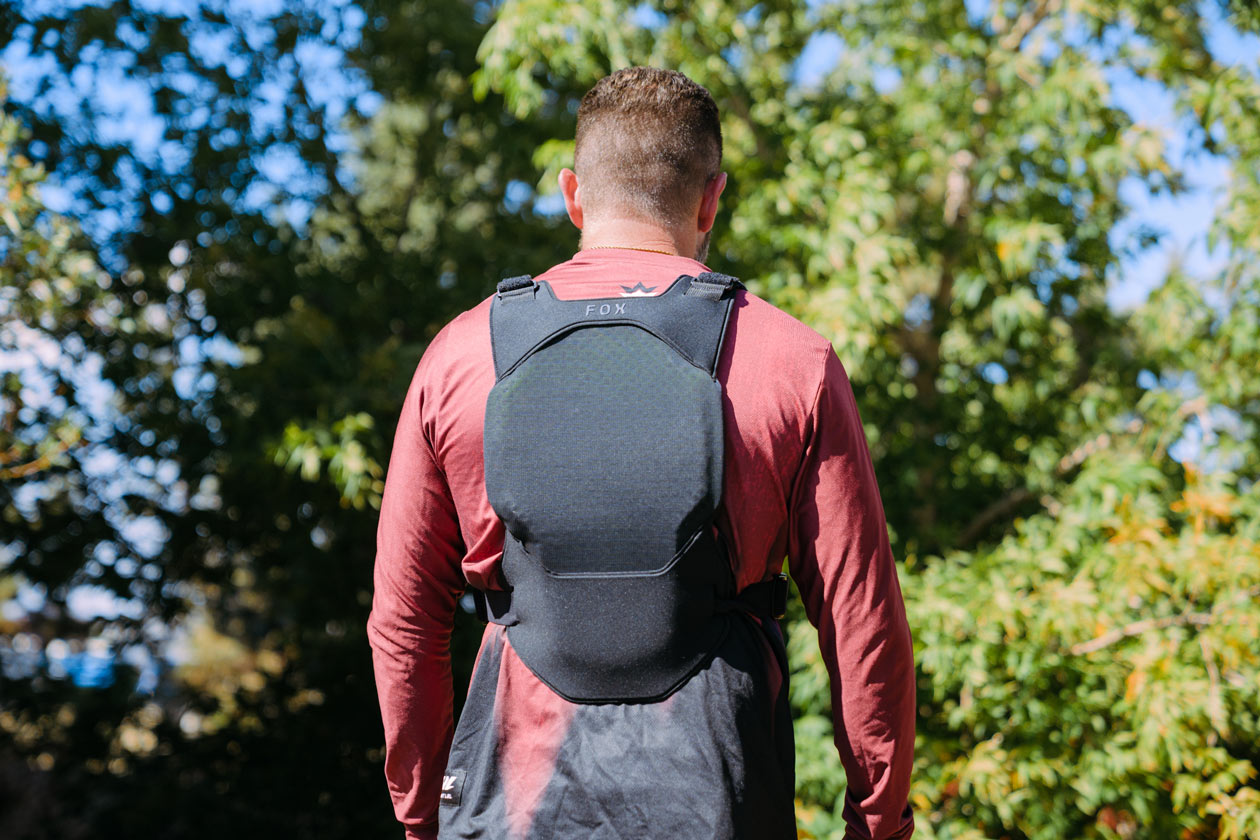
The Fox Airframe Chest Guard takes a more structured approach than many of the soft, vest-style protectors in this test. Its design centers around shaped chest and back panels intended to provide coverage while maintaining enough articulation and ventilation for aggressive riding.
Koroyd inserts are used in the back and chest assembly, and Fox offers these inserts as replacement components specifically for the Airframe.
Compared with full compression jackets, the Airframe leaves the arms exposed and minimizes the amount of fabric wrapped around the rider. That could make it appealing to riders who want substantial torso coverage without adding integrated shoulder and elbow pads. Fox then boosts protection with a removable collarbone and upper chest pad.
CONSTRUCTION AND FEATURES
- Replaceable and removable Koroyd inserts
- Structured chest and back panels
- Open-sided vest configuration
- Adjustable shoulder and waist fit
- Low-fabric construction
- Designed for chest-and-back coverage without sleeves
RIDE IMPRESSIONS
Fit | It’s a good-fitting piece of protection for my body size. I like the slight flare or width of the back protection plate. It’s wider than some, like the Leatt, which I do like; however, I wish it was a bit longer and offered more lower-spine protection. The front panel offers a nice wide and wrapping coverage area, making me feel safe while wearing it.
Comfort and articulation | Two thumbs up. It’s a very comfortable chest and spine protector, but I do wish the over-the-shoulder straps were executed a bit better. They just aren’t as low-profile as I’d like for under-the-jersey wear, but it has no comfort ramifications, only looks.
Ventilation | The Fox Airframe is one of the best ventilated and most breathable MTB and moto chest protectors.
Under or over the jersey | I would prefer this under the jersey if the straps would sit flatter. So, I tended to go over-the-jersey, which looked okay and performed well.
THE WOLF’S LAST WORD
The Fox Airframe is definitely one of my favorite torso protectors overall. I do wish the spine was a bit longer, but otherwise the ventilation, comfort and price make this a unit I recommend to a lot of riders wanting a comfortable, easy to wear chest protector.
Pros
- Breathable
- Comfortable
- Over or under jersey wearability
- Best value pick
Cons
- I’d like a longer spine panel
- Shoulder straps don’t sit flat
DHARCO GRAVITY VEST
Price: $230
Tested size: L/XL
Measured weight: 887g
Back Panel Length: 43.8cm
Protection: CE Level 1 chest and back
Best suited for: DH, Freeride, Shuttle, or eMTB riders who want low-profile protection
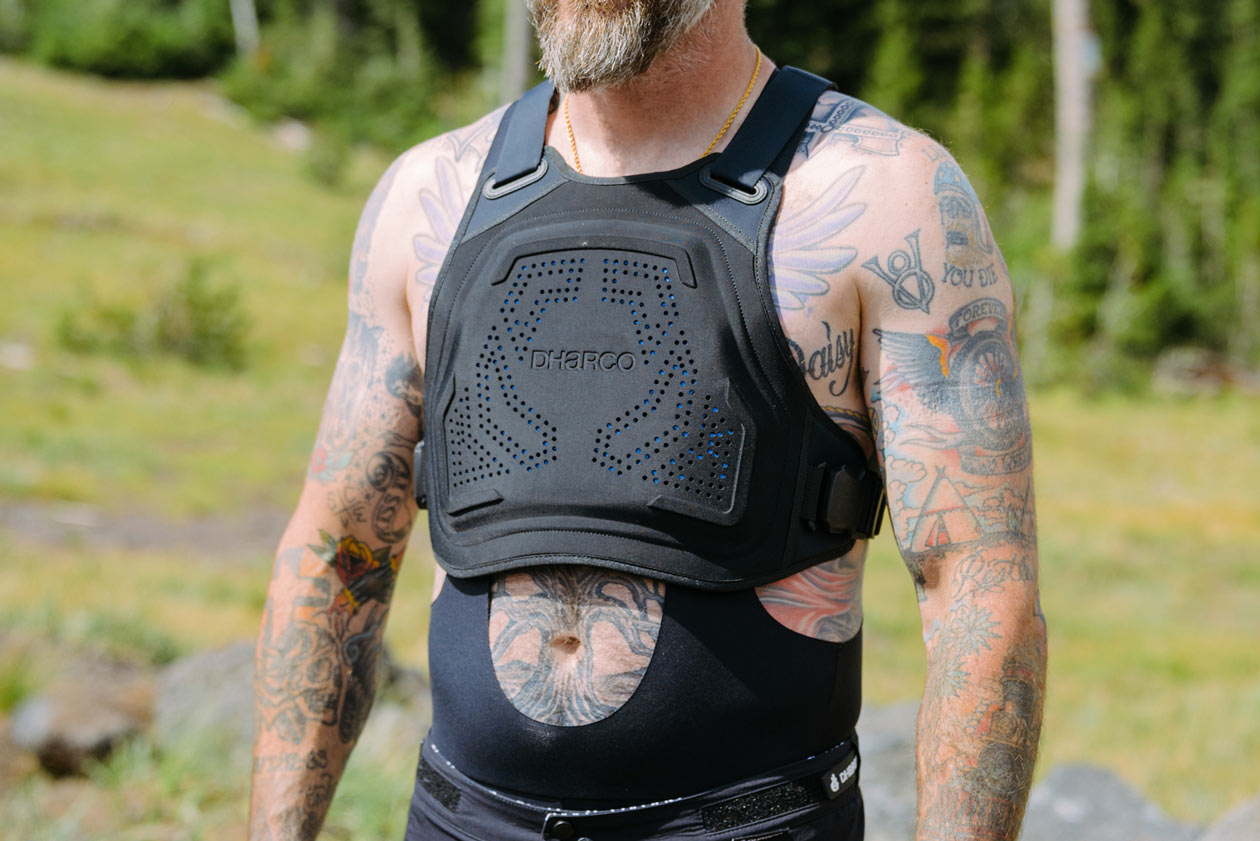
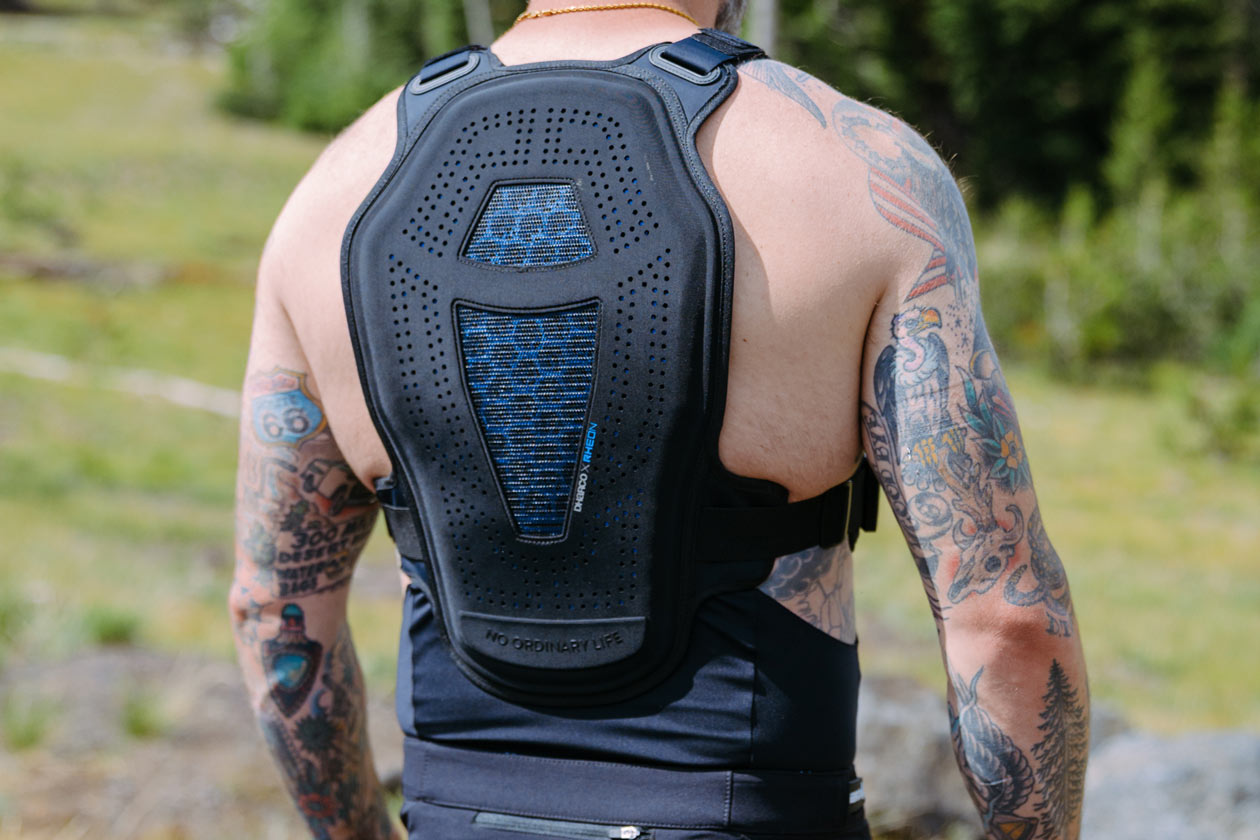
The DHaRCO Gravity Vest is built with a soft RHEON chest and back protector housed in a molded EVA chassis. The result is a minimalist design that can be worn above or below a jersey.
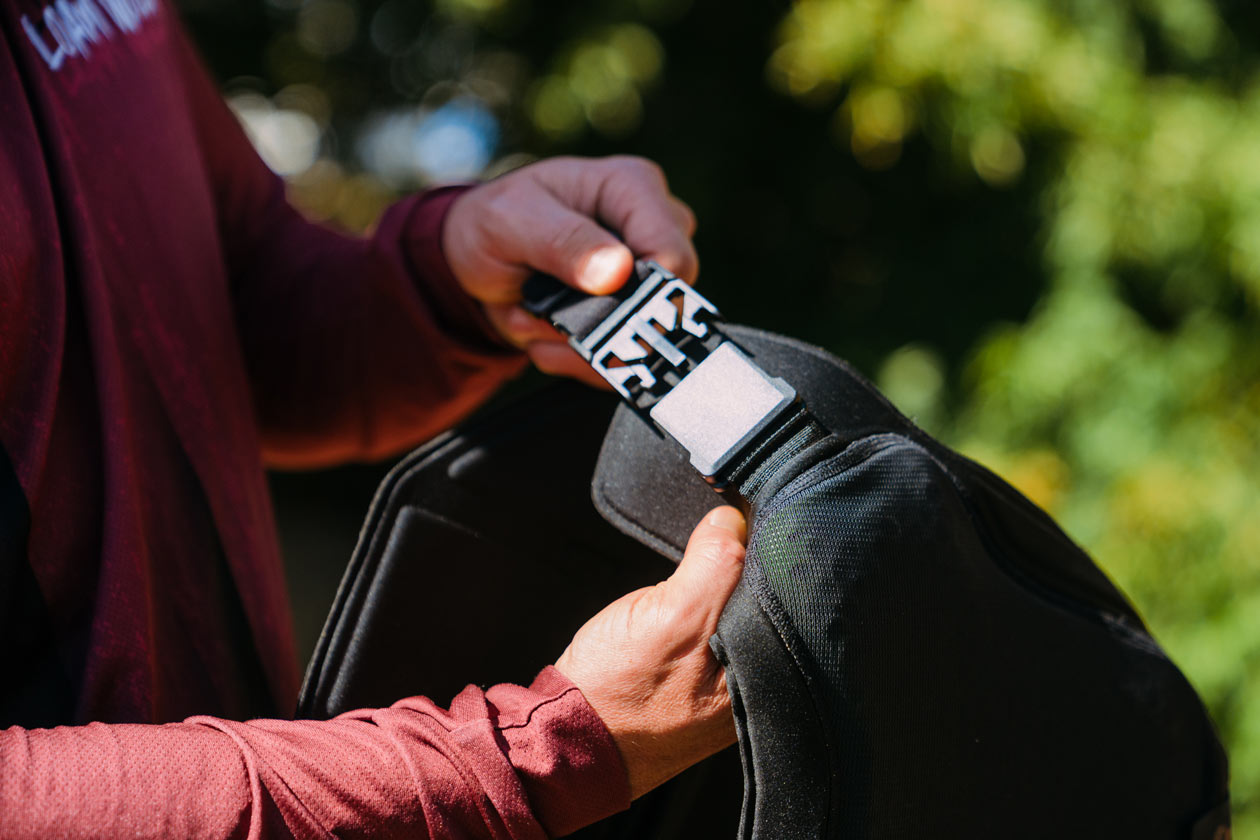
Both RHEON panels are CE Level 1 certified, with the back tested to EN 1621-2 and the chest tested to EN 1621-3. DHaRCO uses laser-cut ventilation, mesh panels, adjustable elastic side straps and low-profile shoulder adjustments. Magnetic quick-release buckles secure the vest around the torso.
DHaRCO bases the two primary sizes largely around rider height and back length, while the adjustable waist straps accommodate differences in body shape.
CONSTRUCTION AND FEATURES
- RHEON chest and back protectors
- CE Level 1 chest and back certification
- Molded EVA body
- Magnetic quick-release buckles
- Mesh panels and laser-cut ventilation
- Adjustable elastic waist straps
- Adjustable shoulder straps
- Can be worn above or below a jersey
- Non-removable impact pads
RIDE IMPRESSIONS
Fit and sizing | DHaRCO’s Gravity Vest fits very well and I find it to be appropriately sized. The Gravity Vest has a nice wrap-around feel that hugs the rib cage and sits nice and flat over the back, with good coverage around the sides of the chest. As we’re seeing in many protectors now, I’d like to have a longer spine protector panel to cover some of the lower vertebrae.
Comfort and flexibility | I’m a big fan of the comfort overall. DHaRCO nailed the shoulder straps in my opinion, they’re likely the best of all chest protectors I’ve ever tested. Super comfortable, flat, and low profile.
Ventilation | While the RHEON material is quite breathable, the cover over the chest protector isn’t the most breathable. It’s not bad by any means, but compared to the Fox unit, which we’d say isn’t as “cool looking,” it’s not as breezy. When you’re moving it’s fine, but we think that DHaRCO made a choice between a protector that looks better with more black material over a “dorky,” techy piece with bright blue holes and see-through mesh…Pick your battles: Fashion or Function?
Magnetic buckle system | Another big win for DHaRCO on this one. The easiest system to buckle. Eyes closed, easy – we’re big fans.
Under Or Over Jersey? | DHaRCO nailed the design of the Gravity Vest, making it equally happy under or over-jersey.
THE WOLF’S LAST WORD
This is a solid and easy-to-recommend piece for me. I like it a lot and think a lot of riders will enjoy it. I’d primarily rate this as an over-jersey protector, but I did wear it underneath just fine.
Pros
- Good coverage in terms of width and wrap
- Shoulder straps lie flat and low profile
- Easiest buckle closure system
- Fast on and off
Cons
- Not the most breathable
- Would love lower rear coverage
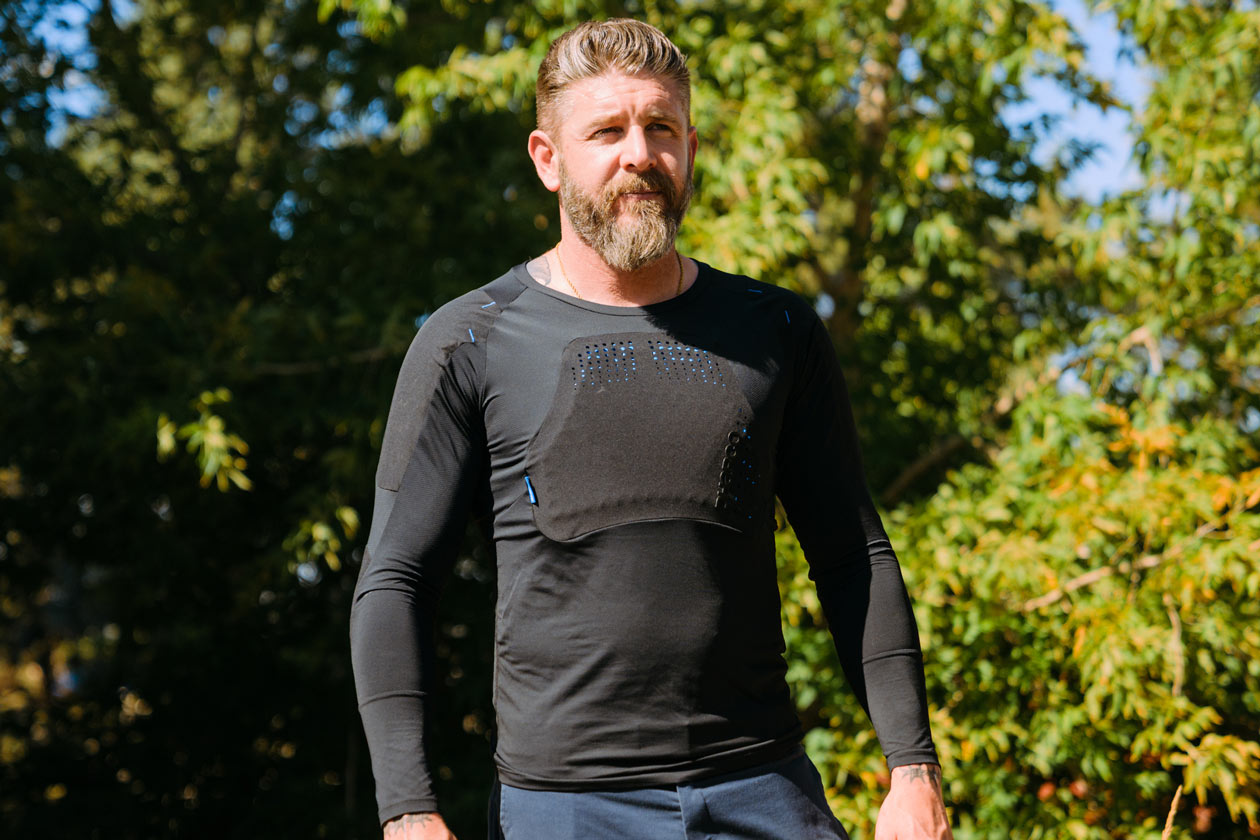
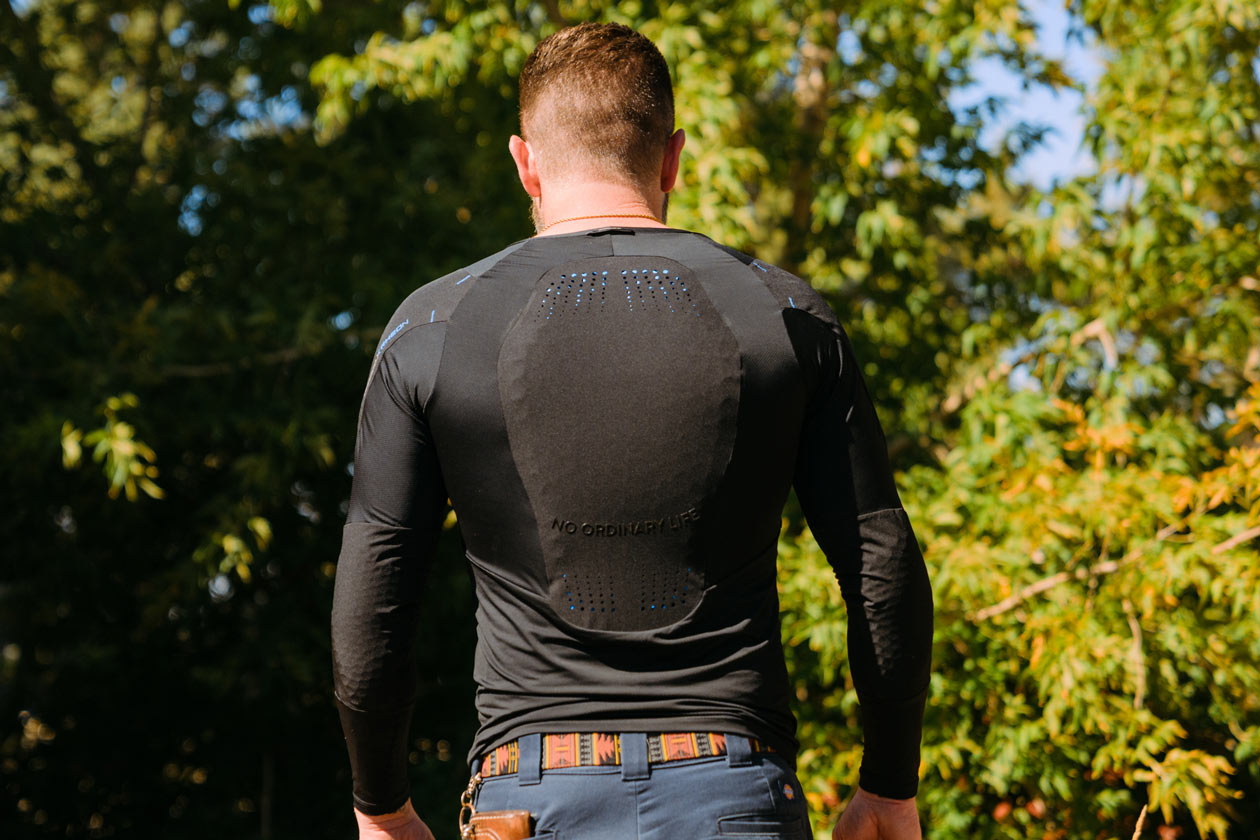
DHARCO LONG SLEEVE BODY ARMOR
Price: $304
Tested size: XL
Measured weight: 1220g
Back Panel Length: 43.8cm
Protection: Level 1 Shoulders, Back, Chest & RHEON CE Elbows
Best suited for: Downhill, Bike Park, Shuttle
The DHaRCO Long Sleeve Body Armor is the brand’s more comprehensive alternative to the Gravity Vest. By adding shoulder and elbow protection to the torso package, it targets riders looking for wider coverage from a single garment.
Where the Gravity Vest emphasizes minimal bulk and easy removal, the Long Sleeve Body Armor uses a fitted garment to hold its protectors close to the body. This style of construction can provide consistent pad placement and a cleaner under-jersey fit, although it generally adds more fabric and retains more heat than an open vest.
CONSTRUCTION AND FEATURES
- Integrated RHEON chest and back protection
- Shoulder protection
- Elbow and forearm protection
- Long-sleeve compression-style chassis
- Under-jersey design
- RHEON Level 1 Chest, Shoulder and Back
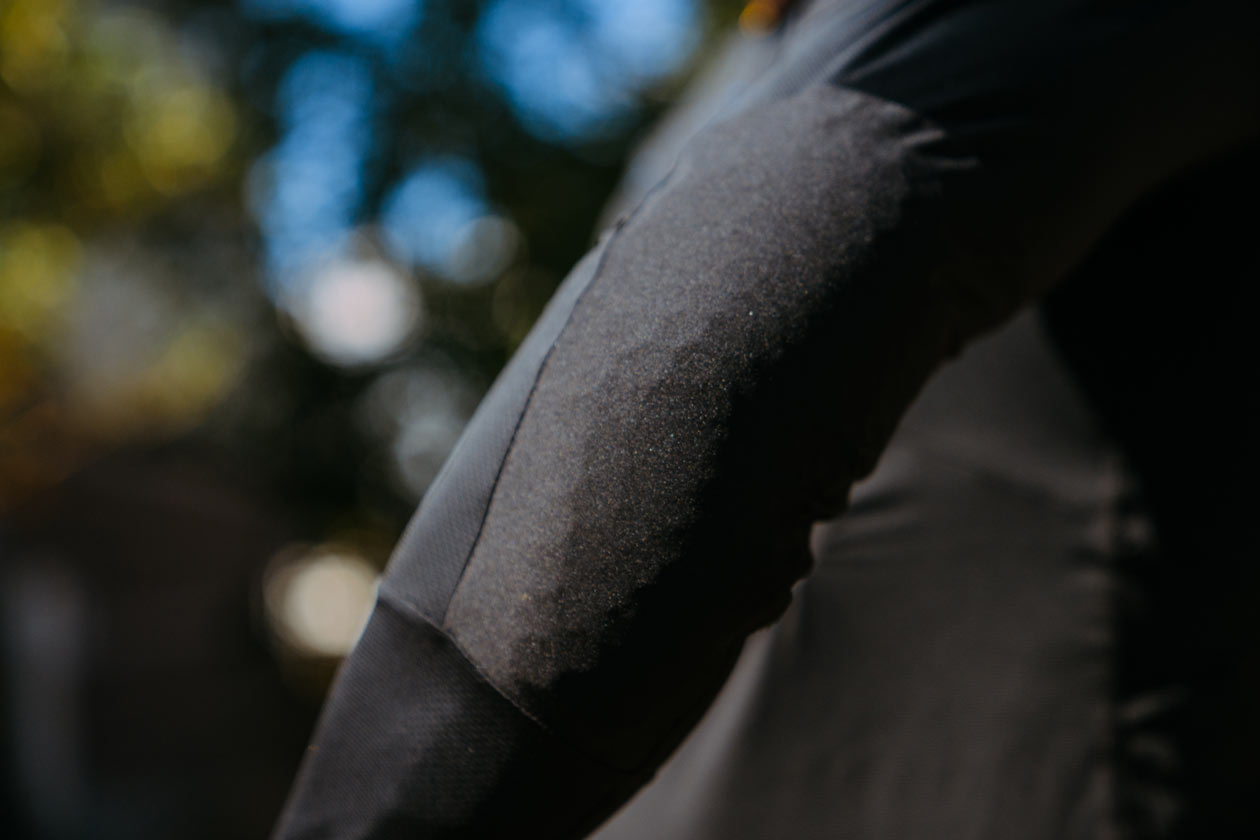
- RHEON CE Certified Elbow pads
- Nylon/Elastane Quick Dry Mesh
RIDE IMPRESSIONS
Fit and entry | At 5’11, 192lbs, the XL is comfortable and fits well, though I could see some riders opting for a Large if they like a more compressed fit. I’m happy with the XL, as it doesn’t cut into my forearms or elbows when riding or bending my arms. Removing it is pretty easy considering it’s a non-zipped torso protector. I think the flexible material has a lot to do with this.
Shoulder and elbow-pad placement | I really like the side of the shoulder pad placement! These have a larger, more enveloping pad shape than many other protection shirts I’ve worn. They cap the shoulder nicely. The elbow padding is also nice and offers good coverage.
Comfort and mobility | DHaRCO’s Long Sleeve body armor shirt is very comfortable and offers uninhibited mobility. Solid ratings here for sure.
Ventilation and heat management | The material is thin, does a decent job with moisture wicking, but it would be interesting to see how perforations or mesh would help with moisture in key areas around the belly and sides.
Coverage versus bulk | The coverage is very good everywhere apart from the length of the spine protector. It’s one of the shorter panels in the group review, and I think that riders who are looking for a long-sleeve protection shirt would want the most protection possible. The padding is slim, pliable, and is not bulky at all.
THE WOLF’S LAST WORD
Aside from my personal preference for a longer spine protector, I really like this body protector. Unfortunately, spine protection is one of my main goals when wearing a piece of MTB protection like this, so this unit does sometimes get a back seat to others with a longer spine pad. If you aren’t very tall, or don’t want a long spine pad getting in your way, I would absolutely recommend this MTB torso protector.
Pros
- Comfortable
- Not bulky
- Flexible and great mobility
- Shoulder pad coverage area
Cons
- Shorter spine protection panel
BLUEGRASS VENTURE VEST
Price: 250 Euros
Tested size: L
Measured weight: 850g
Back Protector Length: 45cm
Protection: Type B Level 2 Back and Level 1 Chest
Best suited for: Aggressive trail, enduro, freeride, hike and huck
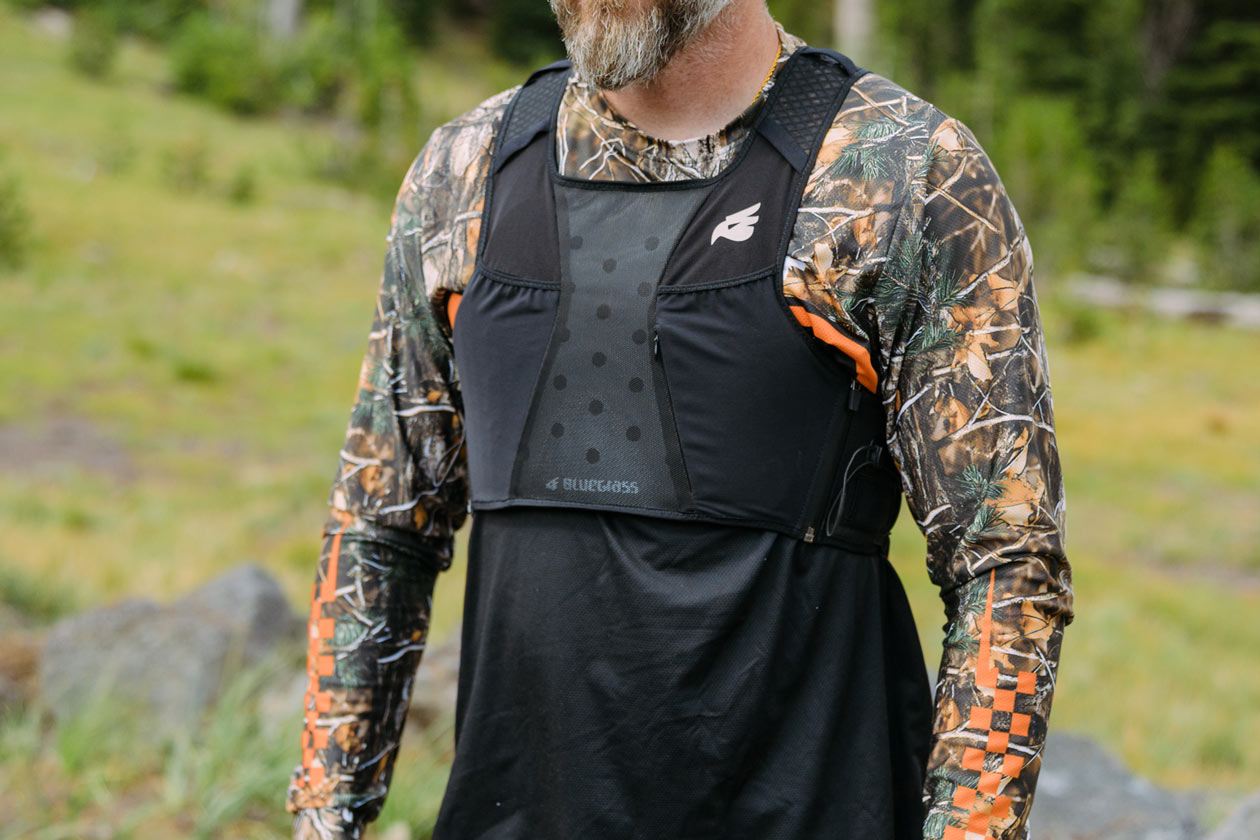
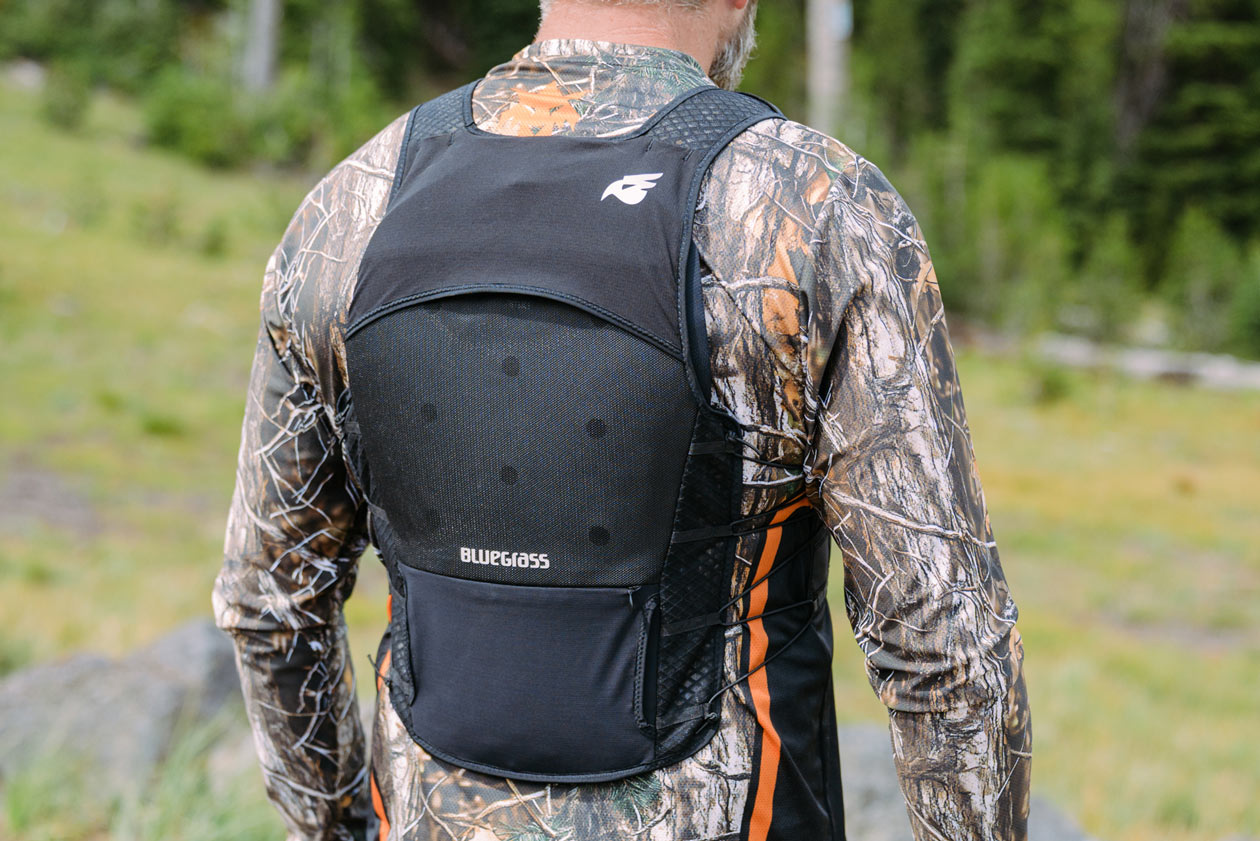
The Bluegrass Venture Vest is a torso-focused protector developed for gravity mountain biking. It sits within Bluegrass’ current protection range as a dedicated chest-and-back vest with some truly unique features.
The Venture Vest is one of the most exciting pieces of mountain bike protection this year, in my opinion. It blends Level 2 and Level 1 protection for high-speed downhiller and aggressive eMTB or enduro riders, but offers storage and even hydration solutions that few others do. The Vest offers a cool cinch system to snug the unit up against your body, has zipper storage pockets, storage pouches and is extremely well ventilated.
CONSTRUCTION AND FEATURES
- Removable chest-and-back protectors
- Low-profile torso protection
- EN1621 Type B Level 2 Back
- EN1621 Type B Level 1 Chest
- Zipper closure system and cinches for sizing adjustment
- Ability to run 1.5L bladder and hydration hose
- Five storage pockets
RIDE IMPRESSIONS
Fit and entry | At 5’11 and 190lbs, the Large Bluegrass Venture Vest was a good fit. The zippered side entry and cinch pulls made entry and adjustment easy, getting a solid fit that still allowed for good mobility and breathing.
Comfort and mobility | The Venture Vest was comfortable in use, whether the pockets were loaded or not. The coverage across the chest towards the side of the ribs was much appreciated, without feeling bulky or restrictive.
Ventilation and heat management | The material around the protectors is light and breathable. While the SAS-TEC protectors are not the most breathable, they have sufficient ventilation to keep things comfortable in use.
Versatility | The ability of the Bluegrass Venture Vest to replace a separate torso protector and backpack is awesome. It offers solid protection while also carrying the essentials for a backcountry ride as well as many hydration packs or hip packs. Having the SAS-TEC impact protection material between your back and the items you are carrying gives an extra level of peace of mind, too.
THE WOLF’S LAST WORD
The Bluegrass Venture Vest is an excellent product for eMTB or enduro riders looking to stay protected while carrying the essentials for their ride. The versatility and execution of this hydration pack and torso protector combo is stellar, and it’s a genuinely awesome product to have for many rides outside the bikepark, and even for occasional bikepark laps.
Pros
- Incredibly Versatile
- Protection and Storage
- Solid Coverage
- Reasonable Comfort
Cons
- Not The Ultimate Bikepark or DH Choice
EVOC TORSO PROTECTOR
Price: $190
Tested size: L/XL
Measured weight: 1077g
Back Protector Length: 47cm
Protection: Level 2 Back and Level 1 Front
Best suited for: DH, Freeride, Park, Shuttle, eMTB
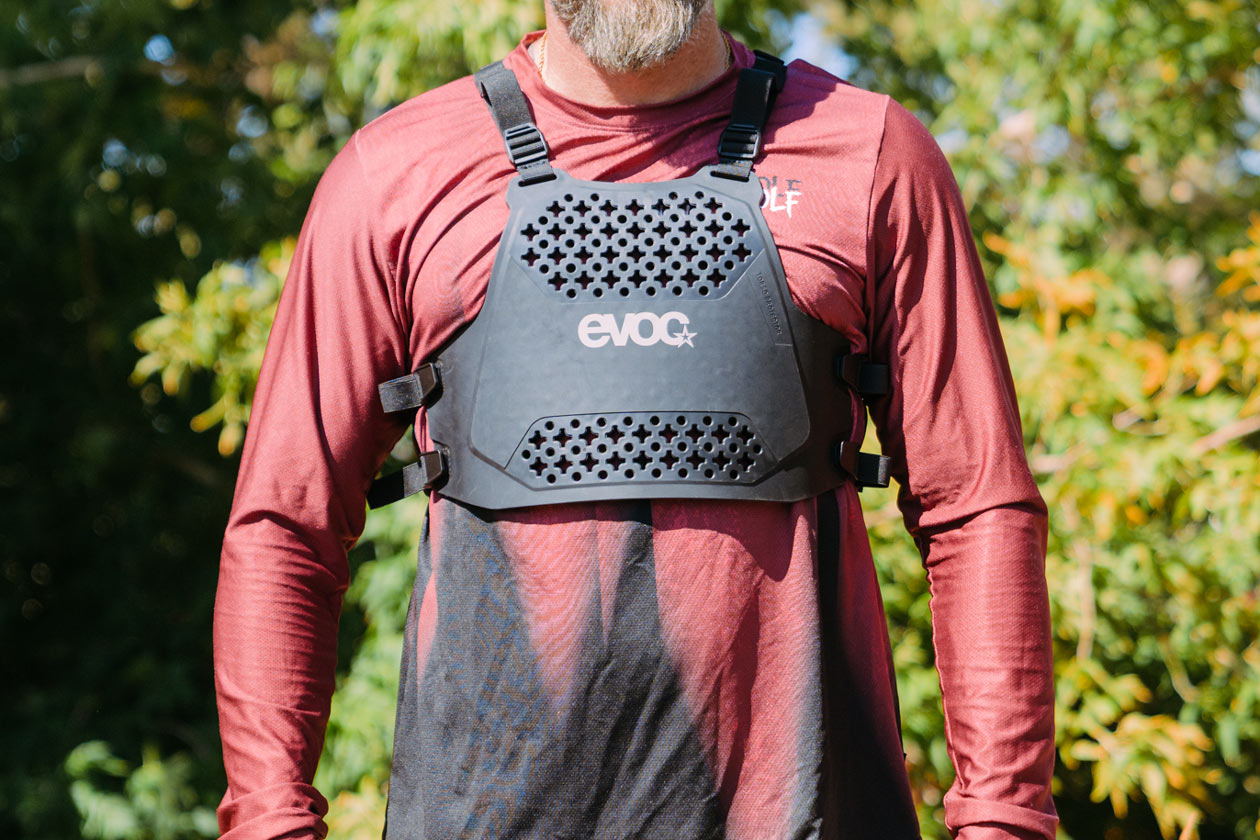
The EVOC Torso Protector takes the brand’s experience with wearable protection and applies it to a standalone chest-and-back system. Its inclusion in this group gives riders another alternative to both traditional hard-shell chest guards and full-sleeve compression jackets.
A torso-only protector lives or dies by its fit. Without sleeves or a full compression garment to anchor it, the adjustment system needs to hold the protective panels firmly in place without creating pressure points or restricting breathing. This unit does a good job staying in place, and the airflow for so much coverage is solid.
We like the way the vest sits over the jersey and the coverage over the wearer’s body quite a bit and we really like the added option to install a magnetic storage pouch on the back panel. However, our testers didn’t love the material or buckle system quite so much.
CONSTRUCTION AND FEATURES
- Standalone chest-and-back protection
- EN1621-2 Level 2 Back
- EN1621-3 Level 1 Chest
- Liteshield Flex Technology – temperature-insensitive material
- Magnetic Buckles
- Action Cam Compatible
- Optional Magnetically Mounted Storage Pouch (1.5L Pin Pack)
- Quick Wash and Easy Drying material
RIDE IMPRESSIONS
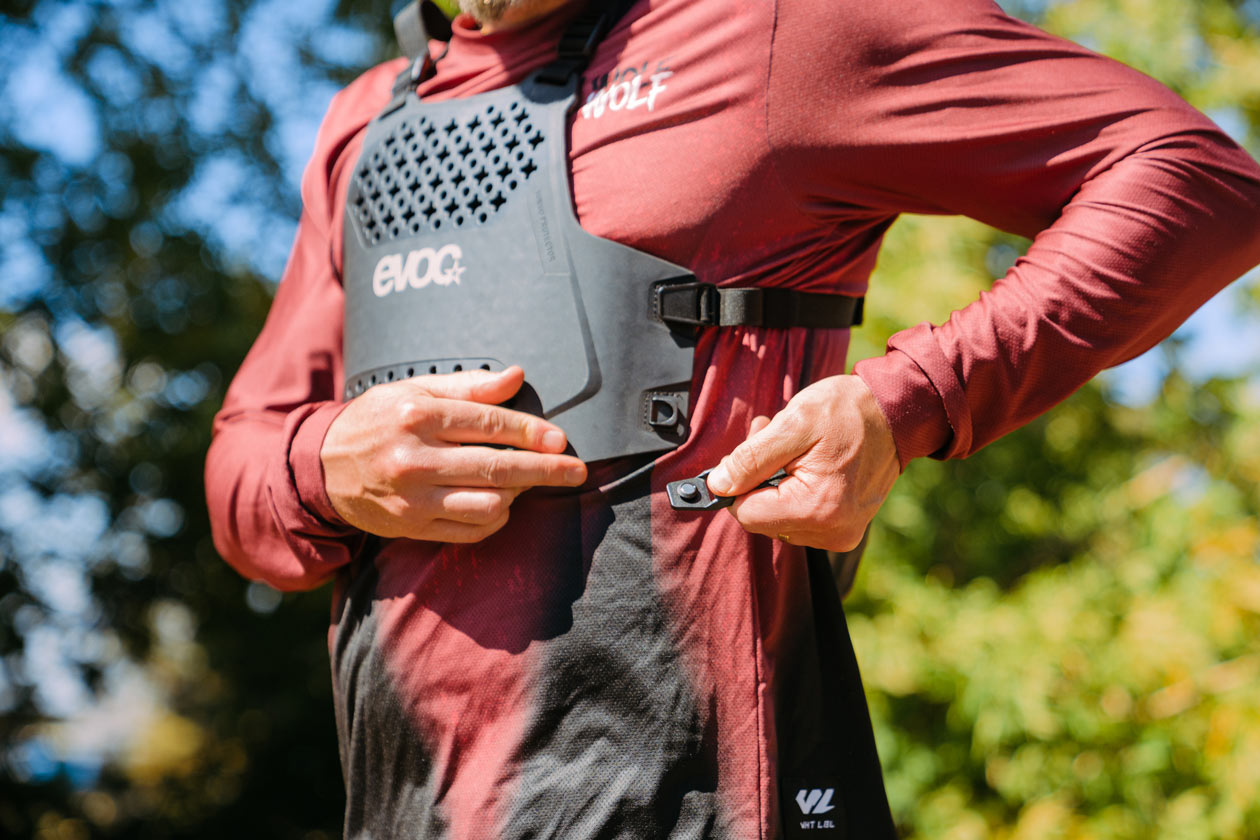
Fit and adjustability | Evoc’s Torso Protector fits well and is adjustable via rib and over-the-shoulder straps.
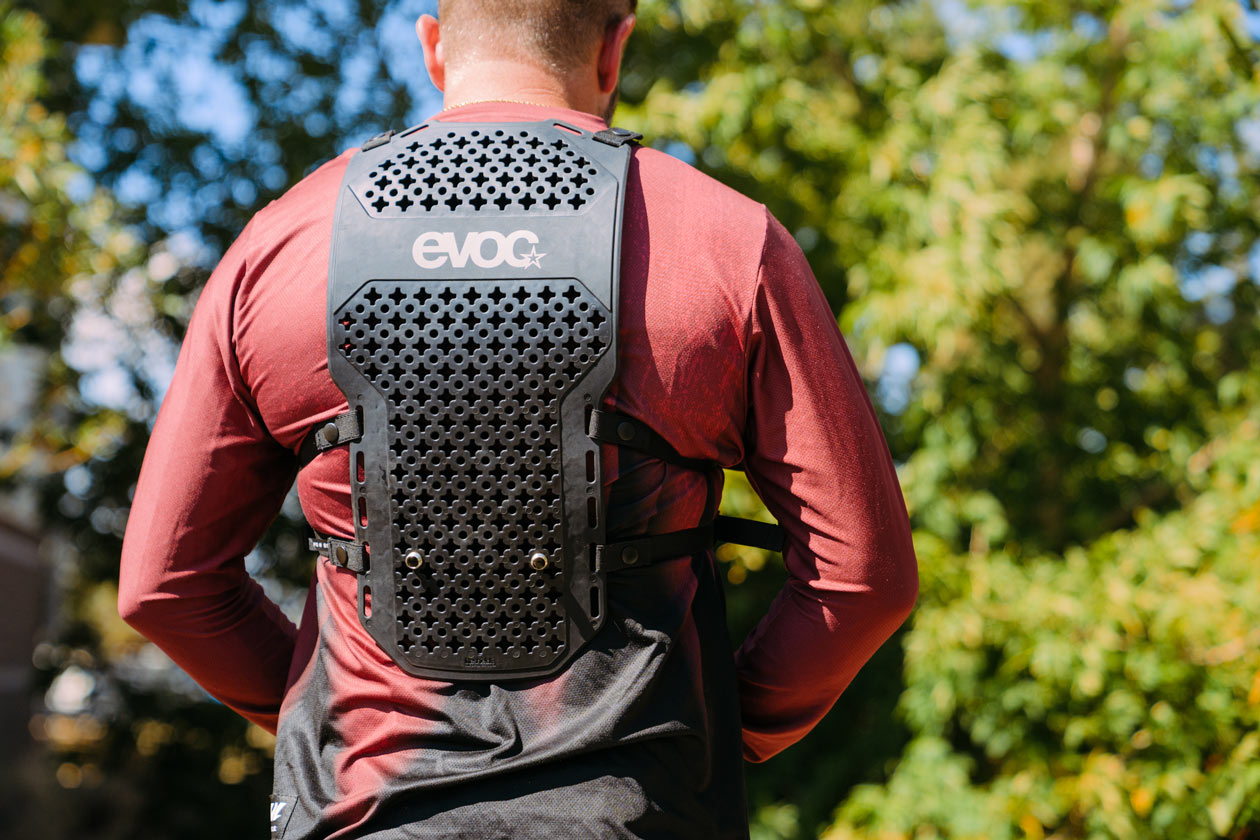
Comfort and flexibility | Despite the “this can’t be comfortable” comments when initially pushing on the hard plastic knobs of the Liteshield Flex tech protector, the Torso Protector feels comfortable enough over the top of our jerseys. We haven’t crashed on the panels, so we can’t say how it’d feel if we slammed our spine into a tree, but we suspect the last thing on our mind would be comfort compared to taking the impact. This material does seem like it would dissipate energy over a wide range thanks to its stiffer chassis compared to some of the other softer materials on test.
Ventilation | This one should be easy enough to guess. There’s a lot of coverage area, but the holes are plentiful and if you’re moving, you can feel the airflow.
Chest and back coverage | Solid coverage all around. Nice wide back panel, and we like the length as well. The front panel has a nice wrap and feels comforting.
Compatibility with packs and riding apparel | You can mount an action cam to the chest, and Evoc also sells a cool hip pack that is easy to pull on and off your back panel.
THE WOLF’S LAST WORD
While there’s plenty of neat stuff about the Evoc Torso Protector, this one just isn’t for me. Shallow and ignorant as it may be, the looks don’t do it for me, and the stiffness of the construction just doesn’t exude comfortable cushion. That said, technology has evolved over the years, and softer doesn’t always mean better. I’m sure this protector does as well as, if not better than, many protectors out there, so maybe Evoc just needs to tell that educational story a bit better and I’d be a convert. Lastly, the side buckles are not that easy to put on. As a rider with shoulder injuries, I find it difficult to reach way back to grab the two thin straps and pull them forward without crossing them up or twisting them.
Pros
- Coverage area
- Hard material slides across hard surfaces
- Level 2 certification out back. More energy dispersed.
- Breathable
- Easy to maintain, clean and dry
- Action cam mounting
- Magnetic hip pack add-on is cool
Cons
- Straps are hard to reach
- I don’t love the looks or “hardness” of material
WHY WEAR A MOUNTAIN BIKE CHEST PROTECTOR?
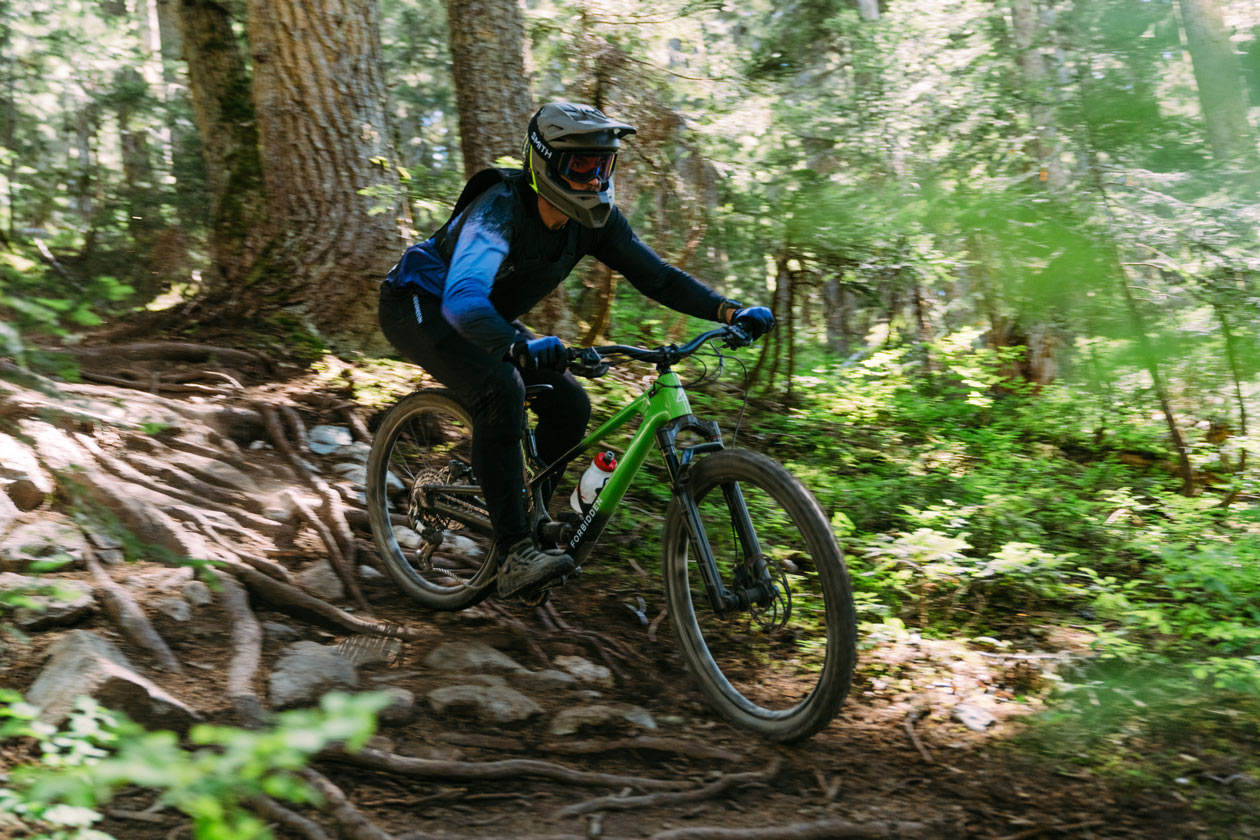
A helmet and knee pads may be the first pieces of protection most mountain bikers reach for, but the torso contains several vulnerable areas that can be exposed during a hard crash. Chest and back protectors are designed to help manage impact forces around the sternum, ribs and spine, while more comprehensive body armor may add coverage around the shoulders, elbows and sides of the torso.
Chest protection makes the most obvious sense for downhill racing, bike-park riding and high-speed enduro terrain. However, newer lightweight designs are making torso protection more practical for aggressive trail riders and eBike riding as well. A perfect example of that is the Bluegrass Venture Vest, which impressed with its versatility.
WHICH MOUNTAIN BIKE CHEST PROTECTOR IS BEST FOR YOU?
When it comes to protection, we’re fans of picking the most protective item you can commit to wearing regularly. The safest, most bubble-wrapped body armor won’t do you any good sitting in a gear bag because it was too hot or restrictive to wear. On the flip side, we’ve seen a lot of riders going absolutely ape in little more than a glorified layer of foam and lycra who feel safe because, “I’m wearing pads, bro!”
It is important to find the right level and type of protection for your needs and speeds.
It is also important to distinguish what level of protection you are seeking out. CE standards, coverage areas, and protection levels vary between products, so riders should evaluate where a protector is certified, what sections of the body it covers, and whether that coverage suits their riding.
If you’re scratching your head right now, check out this educational feature. Robert put together a nice video and story to help folks understand Protection Classifications.
Even with all the certifications in the world, body armor can never eliminate the risk of injury. The purpose is to reduce exposure and help manage impact energy when things go wrong.
HOW WE TESTED THE MOUNTAIN BIKE CHEST PROTECTORS
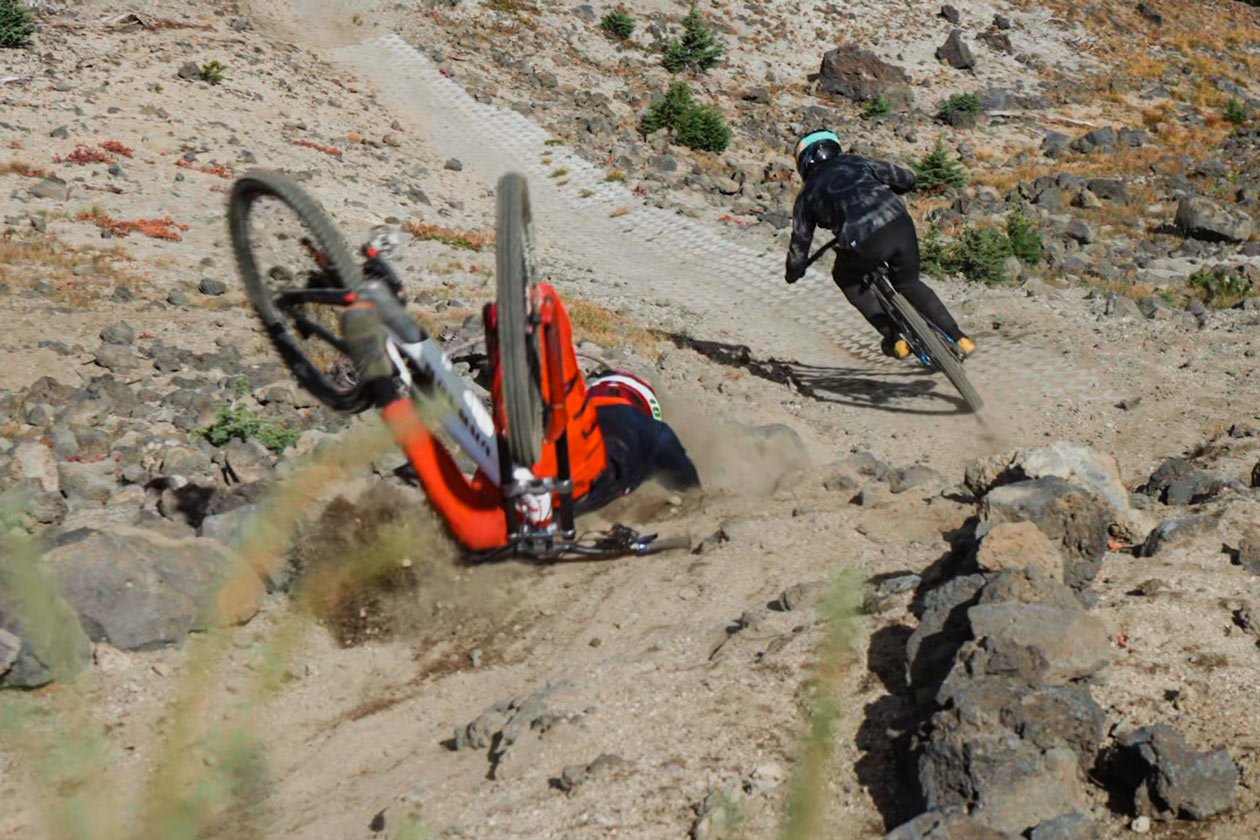
We tested each protector across a range of gravity-oriented mountain bike conditions, including:
- Downhill and bike-park laps
- Enduro-style descending
- Technical trail and eMTB riding219
- Pedaling and extended transfers
- High-speed and rough terrain
- Warm-weather riding
- Repeated removal and installation
- Under-jersey and over-jersey configurations, where applicable
Each protector was evaluated using the following criteria.
FIT AND ADJUSTABILITY
We looked at how securely each protector sat against the body, how easily it could be adjusted, and whether the protective panels remained properly positioned while riding.
We also considered torso length, shoulder clearance, side-strap placement, jersey compatibility, and whether the protector created pressure points or needed a layer beneath to prevent chafing or discomfort.
COMFORT AND MOBILITY
A protector needs to move with the rider rather than against them. We evaluated freedom of movement while standing, seated, pedaling, cornering, and moving dynamically on the bike. And of course, how it felt sitting on a chairlift.
Any interference around the neck, shoulders, waist, or hips was noted, along with rubbing, bunching, and movement of the pads during rough descents.
VENTILATION AND HEAT MANAGEMENT
Body armor will almost always be warmer than riding without it, but the differences in airflow between models can be substantial. We compared ventilation through the protective material, moisture management, fabric coverage, and the amount of heat retained during climbing and repeated laps.
COVERAGE
More coverage is not automatically better for every rider. We considered the size and positioning of the chest and back protectors, along with any additional shoulder, elbow, rib or flank protection.
The most useful option depends on the terrain, speed and level of consequence involved.
EASE OF USE
This category included fitment and removal, buckle operation, zipper access, washability, pad removal and how easily the protector could be paired with different jerseys and riding layers.
HOW TO CHOOSE THE RIGHT MTB SPINE, CHEST OR TORSO PROTECTOR
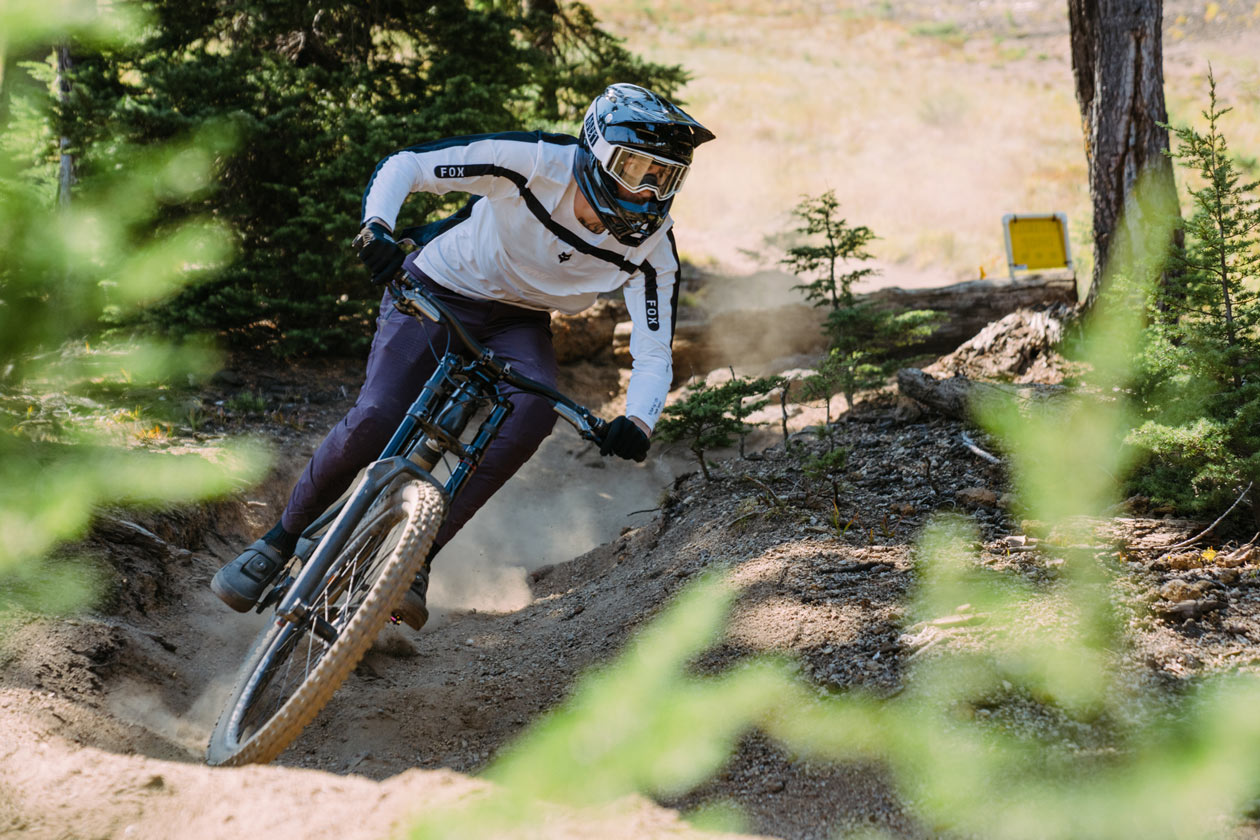
The best mountain bike torso protector is not necessarily the one with the most material. It is the protector that matches your body, protection and comfort goals, your climate, and tolerance for added bulk.
FOR BIKE-PARK AND DOWNHILL RIDING
Riders spending most of their time on lifts, shuttles or race tracks may benefit from broader coverage. Chest, back, shoulder and elbow protection can be easier to justify when climbing is limited and descending speeds are high.
Full body protectors such as the Leatt Body Protector ReaFlex and DHaRCO Long Sleeve Body Armor are designed for riders who want to consolidate several areas of protection into one system.
FOR ENDURO RIDING
Enduro riders often need a compromise between descending protection and pedaling comfort. A lightweight chest-and-back vest may provide useful coverage without trapping as much heat as a sleeved pressure suit.
Ease of removal can also be valuable during long transfers or stages where protection requirements change.
FOR TRAIL RIDING
For trail riders, low weight, ventilation, and comfort may be more important than maximum coverage. A protector that disappears beneath a jersey and remains comfortable during climbing is more likely to be worn consistently.
FOR HOT CONDITIONS
Look for large ventilation openings, minimal fabric coverage, and space for air to move between the protector and body. An open-sided vest will generally feel different from a full compression jacket, even when both use highly ventilated impact pads.
FOR MAXIMUM COVERAGE
Look beyond the chest and back panels. Shoulder, elbow, flank and lower-spine coverage can vary considerably. Make sure the additional pads remain properly positioned while riding and do not interfere with the helmet, neck, or waistband of your riding pants.
UNDER OR OVER THE JERSEY?
Wearing a protector beneath the jersey creates a cleaner appearance and may help keep it close to the body. However, the jersey needs enough room to avoid compressing the protector or restricting movement.
Wearing armor over the jersey makes it easier to remove between laps and can improve airflow, but not every protector is shaped or secured for external use, and it just may not look all that cool.
Whichever configuration you choose, verify that all protective panels remain correctly positioned to help ensure your chances of staying safe the next time you hit the dirt.
DREW’S TOP PICKS
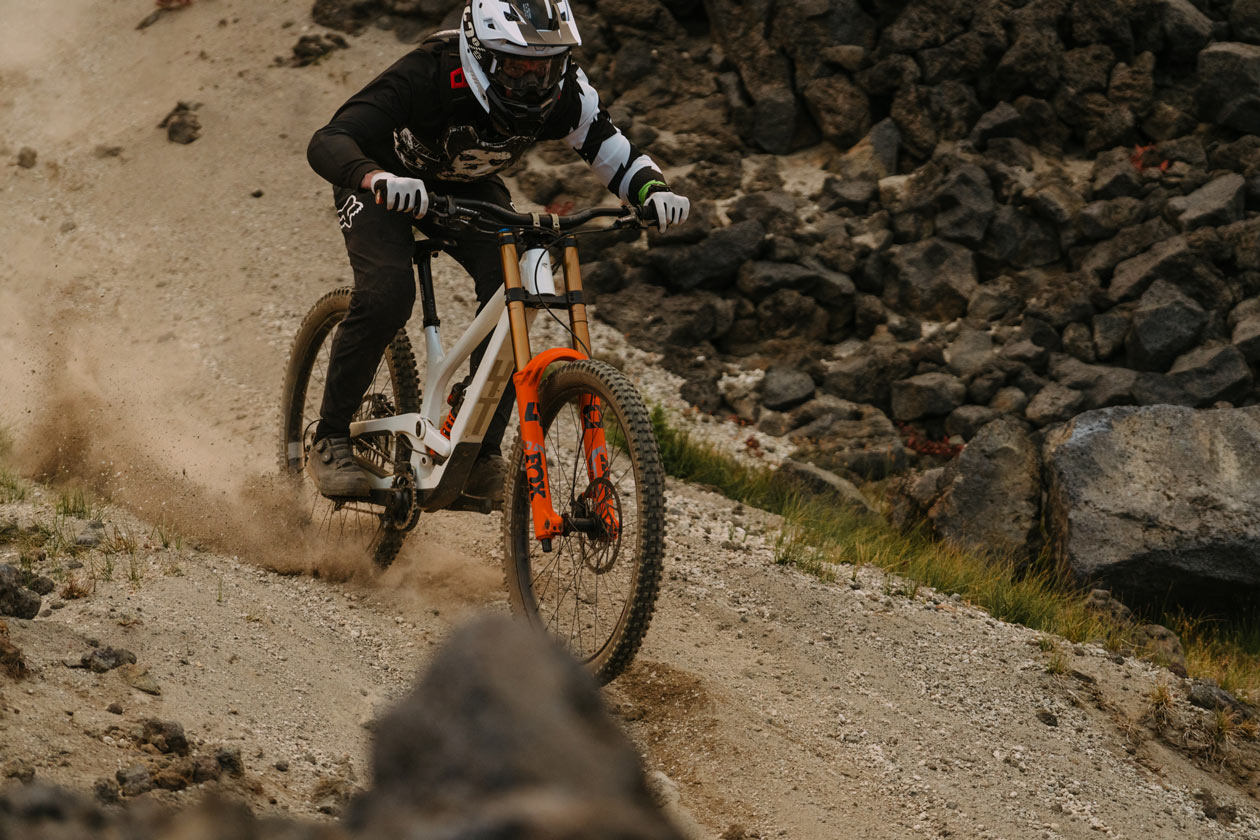
BEST OVERALL MTB UPPER BODY PROTECTION
Leatt ReaFlex Body Protector
As stated above, the versatility of this package makes it an easy pick. I love that I can have a complete package for days when I want the most coverage, or simply wear the chest protector on hotter or mellow days when I’d rather wear nothing else or just slim elbow pads. I like the zippered access, and the perforated material breathes nicely on the LS shirt protector. Combined with the low-profile visibility and the length of the spine protector on the vest, everything on the list of my “Must Haves” is ticked.
BEST TORSO ONLY PROTECTOR
DHaRCO Gravity Vest
I think the Gravity Vest is my favorite in terms of looks and what I’d like to wear over a jersey. It was a bit of a battle against the Leatt and Fox. The Leatt and Fox have a longer spine protector, which matters a lot to me. However, DHaRCO’s Gravity Vest has better shoulder straps and easier side buckle system. Fox’s Airframe has removable pads and is a bit more affordable. I wear all of these vests regularly and wouldn’t be afraid to recommend either one of them to my friends, or you.
The DHaRCO takes the edge if you want more coverage on the chest, a more “blacked out” look, and the easiest to take on and off. It’s a solid all-around MTB protection vest.
BEST VALUE
Fox Airframe Chest Guard
The Fox Airframe comes with licensed Koroyd Level 1 material and offers a stellar package for $194.95. It offers solid coverage, and while I have a few little nitpicks about the shoulder straps and wish the length of the spine protector was a bit longer, it’s hard to deny that it’s a solid value option from a reputable brand.
MOST VERSATILE, BEST EMTB / ENDURO CHEST PROTECTOR
Bluegrass Venture Vest
If you’re looking for good protection, but haven’t wanted to give up the ability to carry water or supplies on your rides, the Bluegrass Venture Vest could be your dream come true. Whether you’re an eMTB rider, enduro shredder, or trail ripper looking for protection and the ability to carry a bladder, tools, a thin shell jacket and more, the Bluegrass Venture Vest may be the most versatile MTB chest and spine protector option for you. I know that I’ll be wearing this thing a ton on my local rides!
The Wolf’s Last Word
Chest protectors have traditionally forced riders to choose between bulky protection and riding without torso coverage altogether. The latest generation of mountain bike body armor makes that decision considerably less, but simultaneously more challenging.
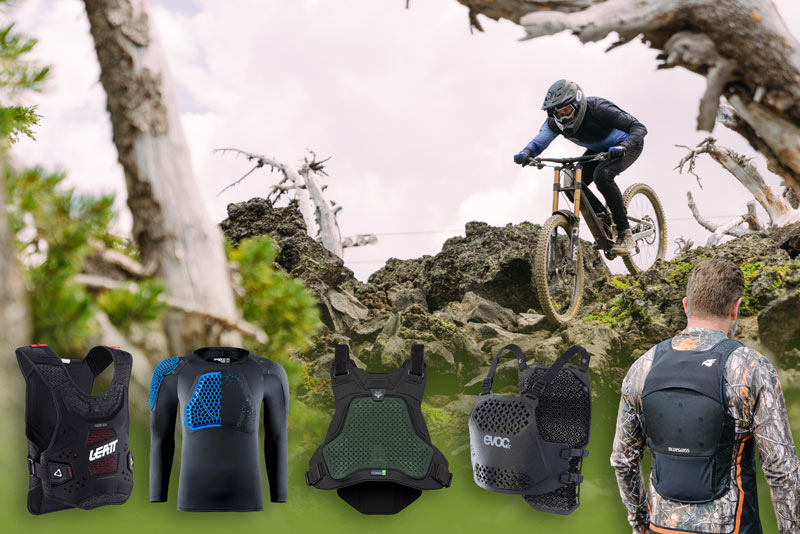
Across these seven protectors, we found meaningful differences in fit, ventilation, pad stability, and overall coverage. Some models were easy to forget about after the first descent, while others made a stronger case for riders who prioritize protection over pedaling comfort.
Ultimately, the right chest protector is the one that offers enough protection for the terrain while remaining comfortable enough to wear consistently. Maximum laboratory coverage is not much use when the protector stays in the truck because it is too hot, restrictive, or difficult to put on. 
SHARE THIS REVIEW
SUPPORT AND JOIN THE LOAM WOLF PACK
Want to test products for The Loam Wolf or be a Guest Tester at one of our Shootouts? Join here and be entered into monthly giveaways, have access to industry discount codes, sneak peaks of new products and more!
This is a new and positive MTB community that directly impacts future of MTB product development, shares helpful tips, setup suggestions and more.
Check out our NEW community here.